Using Lemon Oil Around the House: Best and Worst Jobs
Lemon oil has a reputation as the do-everything bottle for the house. We think it is better understood as a scent first, and the home uses that make the most sense are the ones that play to that strength. It smells, as we describe it, zesty, sparkling and sunny, like scoring a ripe peel with your thumbnail. Here is how we would decide where it belongs.

Organic Lemon Essential Oil
Our own Organic Lemon Essential Oil, in sizes from 0.5 oz to bulk.
From $15.99
Shop Now →Start with the scent jobs
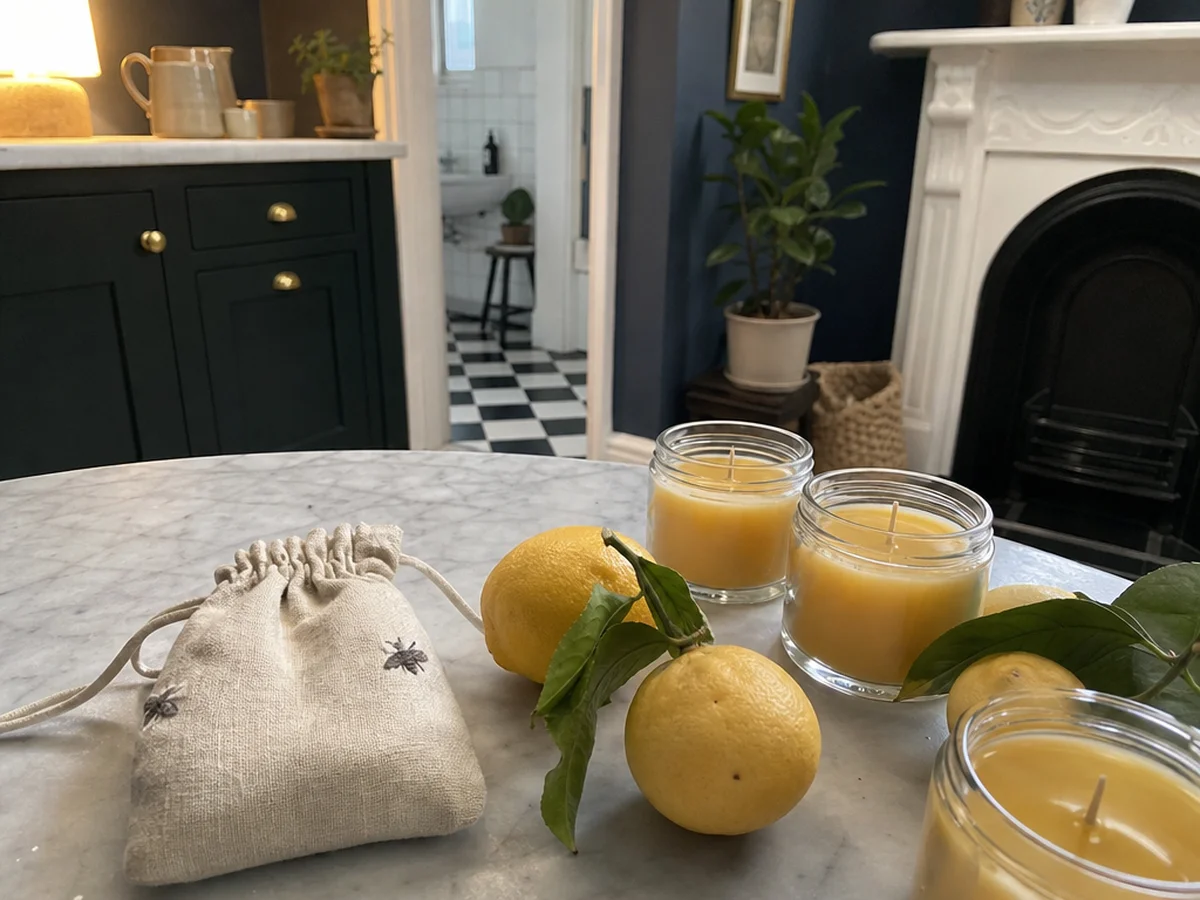
A closet, a drawer, a linen spray, a diffuser blend, a handmade candle or soap: these are all places where a bright top note is welcome and the oil never has to do anything but smell lovely. Lemon is a top note, so it is the first thing you notice and the first to fade, which is why it pairs so happily with peppermint, basil, lavender, rosemary, bergamot and sweet orange. If you are planning a spray, our room spray post works out the grams and drops by weight.
One practical point shapes every recipe: oil does not dissolve in water. Drops tipped into a bottle of water will float on top, so a water-based spray needs a partner that disperses the oil, such as a solubilizer or alcohol, and the water needs a preservative. Those are available from craft and cosmetic-supply shops.
A drawer or closet, gently scented
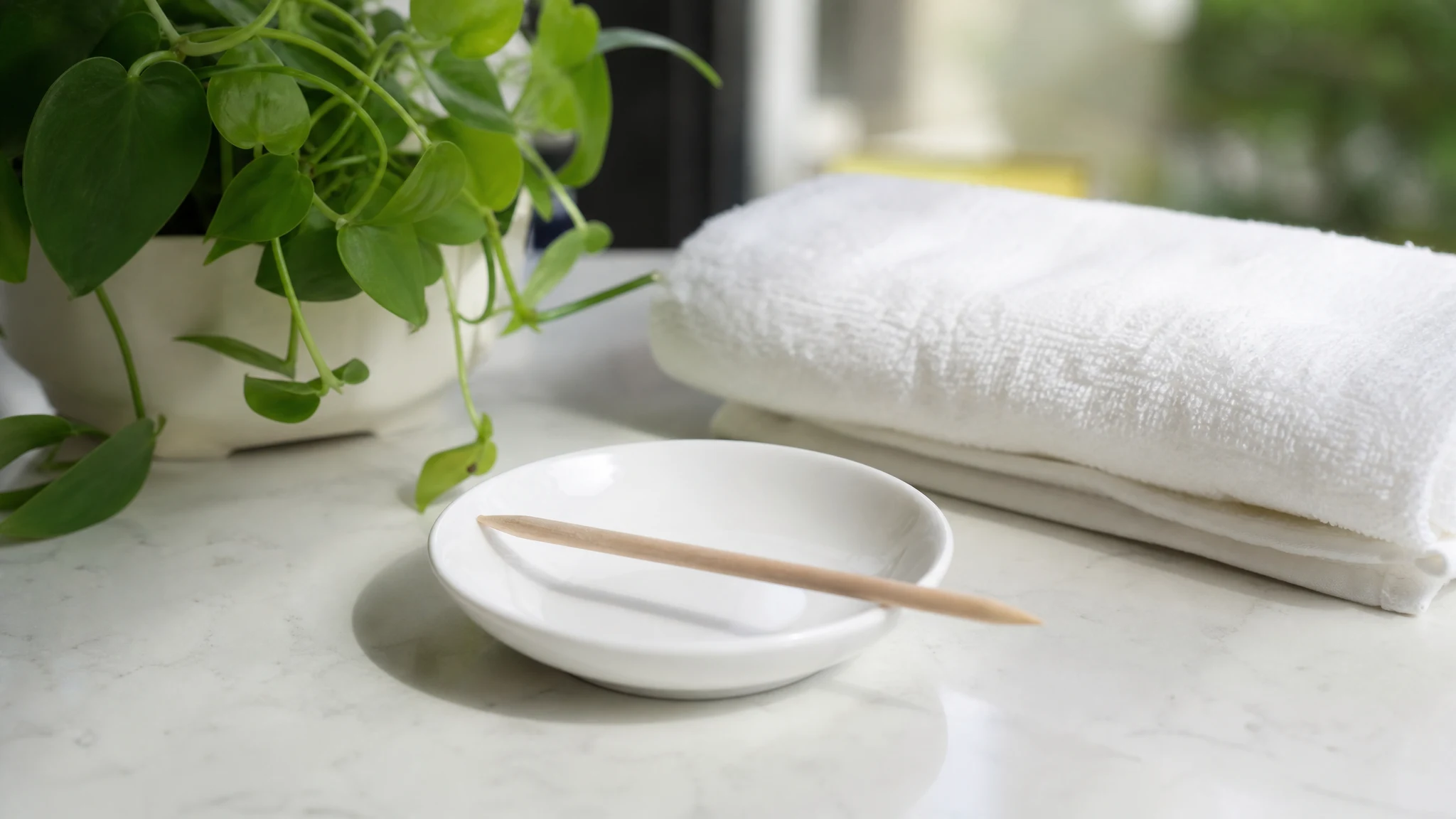
For a gentle, lingering hint of lemon, put one or two drops on a cotton ball and tuck it in a small saucer or a little open dish on a shelf. Keep the oil off fabric and wood directly, since neat oil can leave a mark. Replace the cotton ball when the scent has faded, which will happen sooner than you expect because lemon is a top note.
Cleaning is a separate question
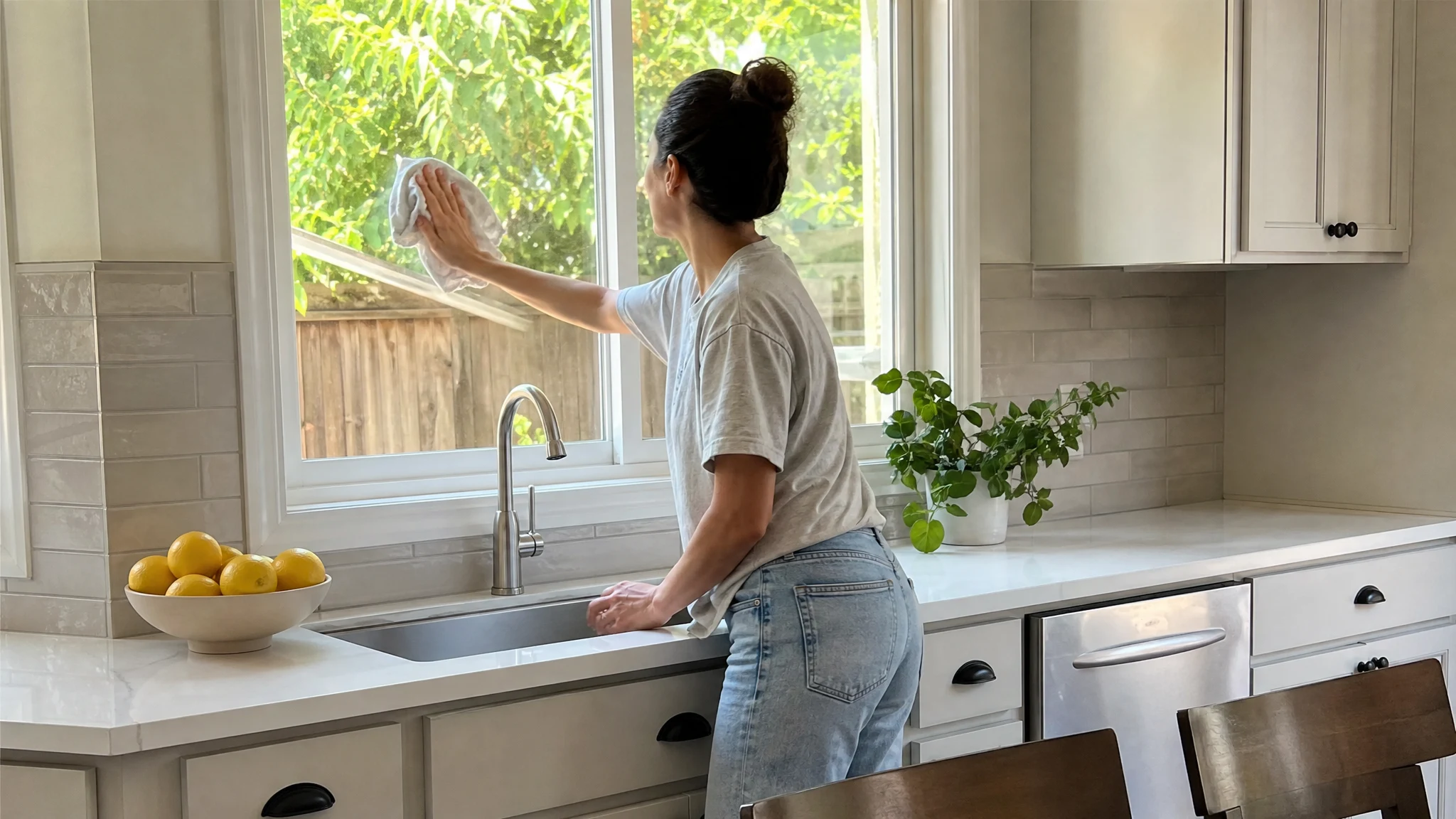
We describe lemon oil as a source of a "sunny, just-cleaned scent", and that is where we leave it. We do not present it as a disinfectant, and a cleaner that smells of lemon is not automatically doing more than a plain one. If you like the idea of a lemon-scented cleaning routine, our posts on cleaning versus disinfecting and counters, glass and sticky residue go into the details. Treat the oil as the fragrance in the routine, not the engine of it.
If it might touch skin, decide the percentage first
A damp cloth, a wet counter, a pump bottle in hand: household products touch skin more often than we notice. Cold-pressed lemon is phototoxic, so the usual advice about sun applies. The Tisserand Institute gives the IFRA limit as 2% and describes it as "the safe maximum, not a recommended amount, which might be less" (dilution guidance), and suggests keeping skin out of UV light for at least 12 hours after a phototoxic amount (phototoxicity). Our guidance for skin is 0.5% to 2% in a carrier oil with a patch test, and we would begin at the lower end. As a bit of arithmetic, 1% in 100 g of base is 1 g of oil, which at the density of the batch on our Certificate of Analysis is roughly 24 drops.
Freshness changes the answer
Lemon oil is mostly limonene, and limonene reacts with air. Air-exposed limonene sensitised guinea pigs in a 1992 study while unexposed limonene did not (Karlberg and colleagues), and a larger patch-test study of 2,900 people with dermatitis found 5.2% reacted to oxidised limonene (Bråred Christensson and colleagues, 2013). Those tests do not describe our bottle, but they do suggest a sensible habit: keep the cap on, keep the bottle cool and dark, and keep older oil for scent-only jobs. For larger containers, decanting into smaller airtight glass bottles saves reopening the big one. More in our storage guide.
Scent in the air, in moderation
When an oil is diffused or sprayed, its limonene joins the room air. A 2006 chamber study of cleaning products and air fresheners found that terpene-rich products used at full strength gave high concentrations, that diluted use gave much lower emissions, and that terpenes can react with ozone indoors. Its practical suggestions were more ventilation and prompt removal of cleaning supplies from occupied rooms (Singer and colleagues, 2006). That is a good reason to use a little, open a window and avoid running a scent all day in a small closed room. If anyone in the house has asthma or a respiratory condition, check with their physician first.
A small, sensible starter shelf
You do not need much to enjoy lemon oil at home. A single bottle, a few small amber or dark glass bottles from a craft shop, a roll of paper strips for sniffing and a marker for dates will carry you through most projects. Write the date you opened each bottle and what you made, and you will soon have a handy record of what you liked. Lemon rewards a light hand, and a little goes a long way.
Jobs for other tools
- Wood furniture: lemon oil is a scent, not a finish. Our wood post explains.
- Laundry: read the fabric care label first; see the laundry post.
- Food and drinks: our guidance is not to take the oil internally, and our ingestion post explains why.
- Disinfecting: use a product made for that purpose.
Keep it away from eyes, children and pets, and a bright lemon note will do what it does best. For a season of ideas built on this approach, the spring cleaning plan is a good next read.
Organic Lemon Essential Oil
Organic Lemon Essential Oil from our own shop, in sizes from 0.5 oz to bulk.
From $15.99
Shop Now →Sources & Further Reading
- Tisserand Institute. Dilution for essential oils. tisserandinstitute.org
- Tisserand Institute. Phototoxicity: essential oils, sun and safety. tisserandinstitute.org
- Karlberg AT, Magnusson K, Nilsson U, 1992. Air oxidation of d-limonene (the citrus solvent) creates potent allergens. Contact Dermatitis 26:332-340. Europe PMC
- Bråred Christensson J et al., 2013. An international multicentre study on the allergenic activity of air-oxidized R-limonene. Contact Dermatitis 68:214-223. Europe PMC
- Singer BC et al., 2006. Cleaning products and air fresheners: emissions and resulting concentrations of glycol ethers and terpenoids. Indoor Air 16:179-191. Europe PMC