Lemon Oil and Vinegar Cleaner: Does It Disinfect?
A spray bottle of white vinegar with a few drops of lemon oil is one of the most charming bits of kitchen folklore: it smells like a lemon grove and it feels like a clean slate. It does a lovely job of cleaning. What it does not do is disinfect, and knowing the difference lets you use it with confidence.
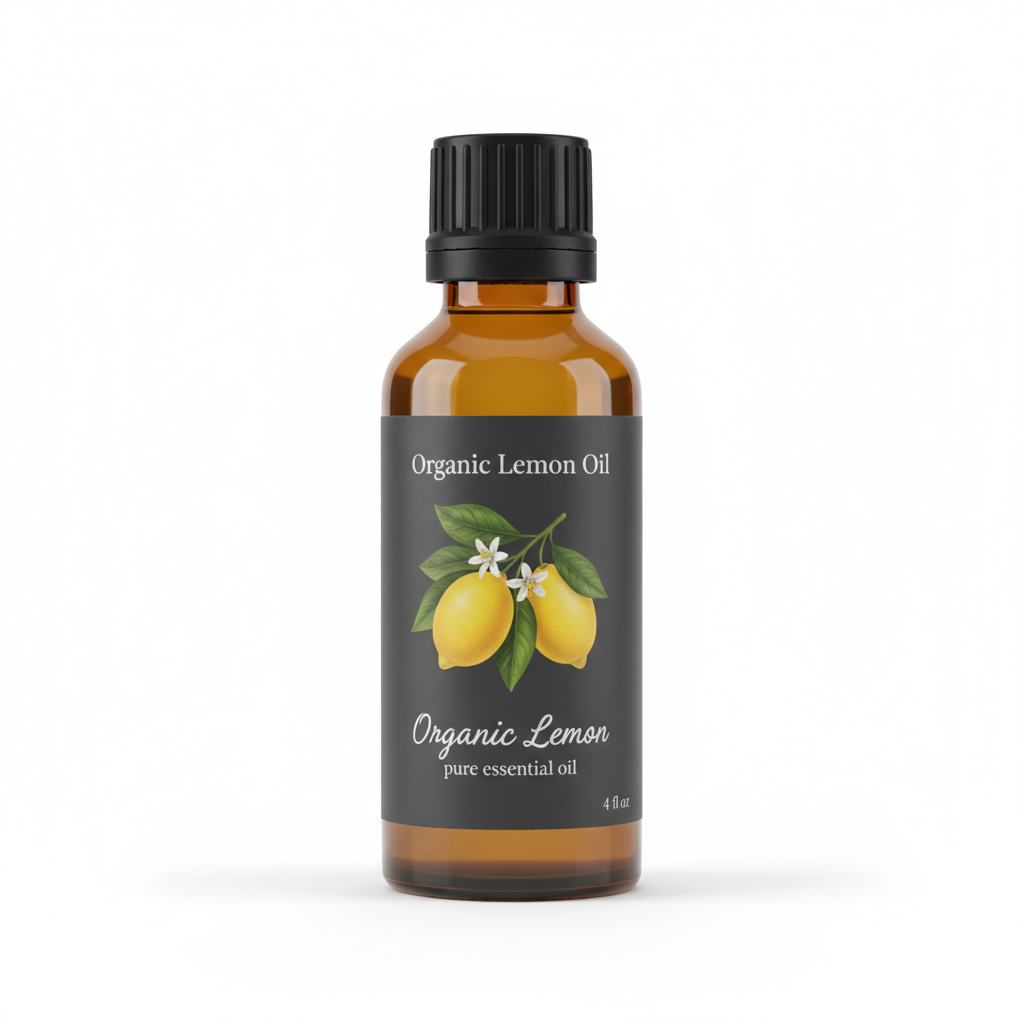
Organic Lemon Essential Oil
Our own Organic Lemon Essential Oil, in sizes from 0.5 oz to bulk.
From $15.99
Shop Now →Cleaning and disinfecting are two different jobs
The CDC separates the steps. Cleaning, with soap or detergent, removes most germs, dirt and impurities from a surface. Disinfecting is a stronger step that kills most germs on surfaces and objects. The CDC advises cleaning first, since dirt can stop chemicals reaching germs, then using an EPA-registered disinfecting product and keeping the surface wet for the full contact time on its label.
The law draws the same line. The EPA treats claims such as "sanitizes, disinfects or sterilizes" as pesticidal claims, while claims about removing dirt, soil or debris generally are not. A disinfectant is a registered product with a label that has been reviewed. A vinegar and lemon spray lifts soil, which is a useful thing to do, and it is a different thing from disinfecting.
What vinegar did when it was tested
In 2000, Rutala and colleagues at UNC Hospitals tested home disinfectants and natural products against four bacteria, with exposure times of 30 seconds and 5 minutes. Several commercial products reduced bacteria by four to more than six logs, where each log is a tenfold reduction. Vinegar reduced Staphylococcus aureus and E. coli by less than three logs, and baking soda by less than three logs of every test pathogen. The authors concluded that the natural products were less effective than commercial household disinfectants. The study tested vinegar by itself, and the abstract does not give its strength, so it says nothing about vinegar with lemon oil added.
And what about the lemon oil?
You will find laboratory papers showing lemon oil inhibiting bacteria. A 2019 study by Yazgan and colleagues, for example, tested a lemon oil nanoemulsion, undiluted lemon oil and a 10% dilution against food-borne and fish spoilage bacteria. Those tests were run in liquid broth, using engineered emulsions or concentrated oil. A spray bottle works differently: the oil floats on vinegar unless something disperses it, and a thin film on a counter is a long way from a bacterium swimming in a test tube. As arithmetic, a concentration like the 25 mg/mL in that paper is 2.5% by weight, about 59 drops in 100 ml of liquid, and that is more than the 2.0% IFRA ceiling for lemon oil in leave-on products. Nothing we have read shows that loose oil in a vinegar spray reaches anything like that effect on a surface.
So we keep our claims where they belong. Our oil is a scent, we make no germ claims for it, and we sell no disinfectant.
What your lemon vinegar spray is good for
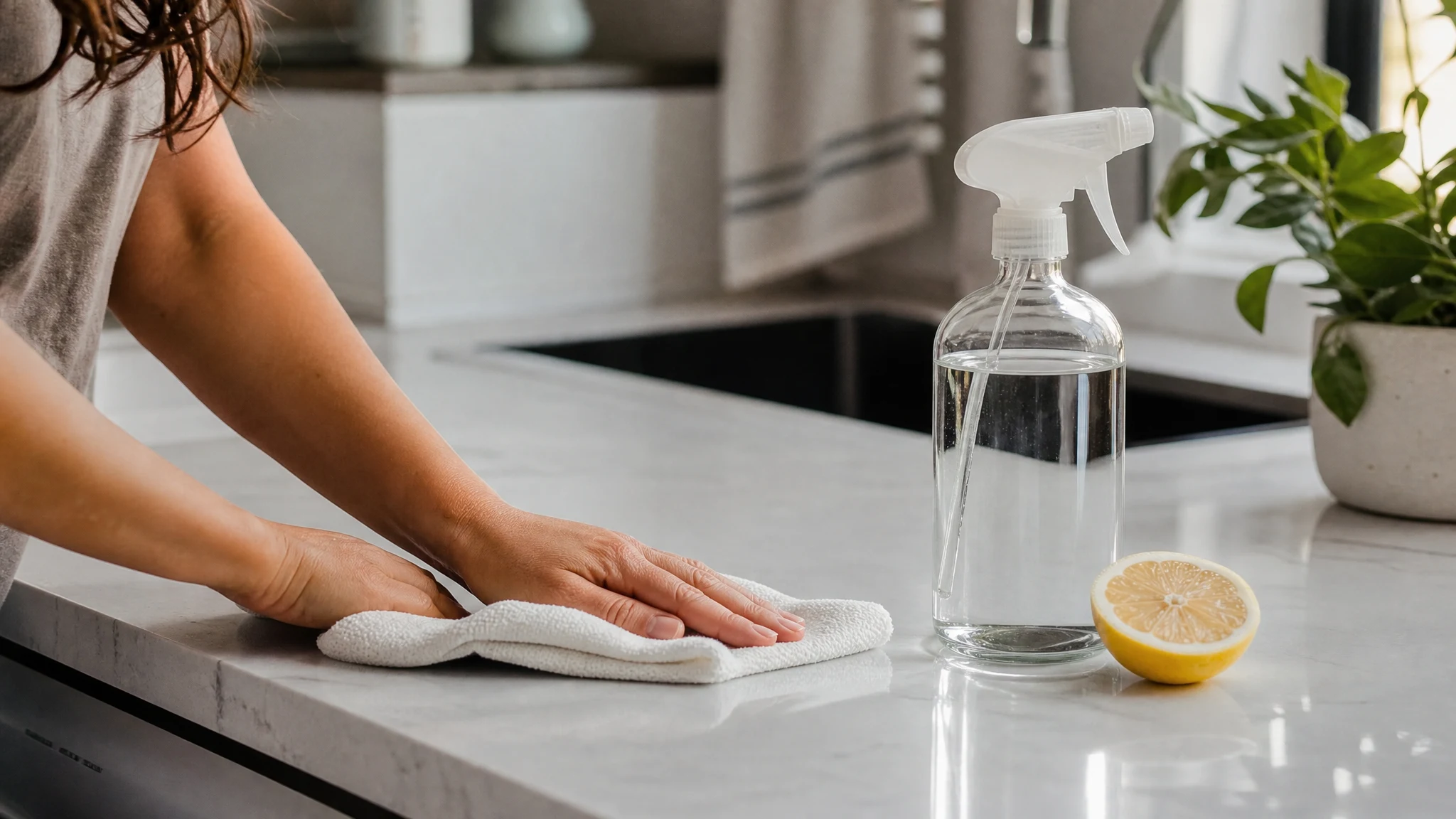
Think of this spray as a wipe-down that happens to smell wonderful. Vinegar has a sharp, sour smell on its own, and a few drops of lemon oil rounds that off into something that feels like a freshly cleaned kitchen. You may find the cleaning more enjoyable when the room smells good, and that is reason enough.
A lemon-scented spray is genuinely pleasant for everyday wiping. It gives a counter that just-cleaned smell, and the oil's bright aroma is what most people are after. A few habits help:
- Shake the bottle before each use, since oil and vinegar separate.
- Wipe with a damp cloth afterward if you want to avoid an oily film, especially on glass.
- Keep the bottle capped and out of reach of children and pets, and away from eyes.
- Do not mix cleaners together. The CDC says plainly not to mix products or chemicals with each other,.
For surface-by-surface advice, our cleaning post looks at the jobs lemon oil suits, and the spring cleaning plan turns it into a room-by-room routine. If you would like a water-based scent for the air rather than a cleaner, the room spray post shows how to disperse the oil.
Making a bottle you will actually use
Start small. A modest spray bottle of vinegar and water, with a few drops of lemon oil, is plenty for a week of wiping. Label it clearly so nobody mistakes it for something else, and keep it out of the way of children and pets. Shake before each use, since the oil will rise to the top as it sits.
Spot test on a hidden corner before you wipe a new surface. Polished wood, stone, sealed finishes and some plastics do not all respond the same way to vinegar or to citrus oil, and a hidden patch tells you in seconds. Then wipe with a damp cloth to finish.
When germs are the actual concern
After raw meat, a stomach bug or any time a pathogen is the point, clean with soap and water first, then use an EPA-registered disinfectant exactly as the label directs, including the wet contact time. Vinegar is still a fine cleaner. The Rutala paper tested it as a disinfectant, not as a cleaner. For anything about illness itself, ask a physician or your local public health department rather than a cleaning label.
Let the lemon oil do what it does best, make the clean smell wonderful, and leave the germ-killing to the products made for it.
The smell fades quickly, as lemon does, and that is part of its charm. If you want it again, wipe again rather than adding more oil to the bottle.
Organic Lemon Essential Oil
Organic Lemon Essential Oil from our own shop, in sizes from 0.5 oz to bulk.
From $15.99
Shop Now →Sources & Further Reading
- CDC. When and How to Clean and Disinfect Your Home. cdc.gov/hygiene/when-and-how-to-clean-and-disinfect-your-home
- US EPA. Determining If a Cleaning Product Is a Pesticide Under FIFRA. epa.gov/pesticide-registration/determining-if-cleaning-product-pesticide-under-fifra
- Rutala WA et al, 2000. Antimicrobial activity of home disinfectants and natural products against potential human pathogens. Infect Control Hosp Epidemiol. pubmed.ncbi.nlm.nih.gov/10656352
- Yazgan H et al, 2019. Antimicrobial influence of nanoemulsified lemon essential oil and pure lemon essential oil on food-borne pathogens and fish spoilage bacteria. Int J Food Microbiol. pubmed.ncbi.nlm.nih.gov/31319195