Lemon Oil Massage and Cellulite: What the Reviews Show
Almost everyone has seen the pitch: massage lemon oil into your thighs and the dimples fade. It is an appealing idea with a pleasant scent attached. Our lemon oil is an aroma and a craft ingredient, not a body treatment, so we set out what the reviews actually say and what a bottle of lemon oil can sensibly do for a massage.
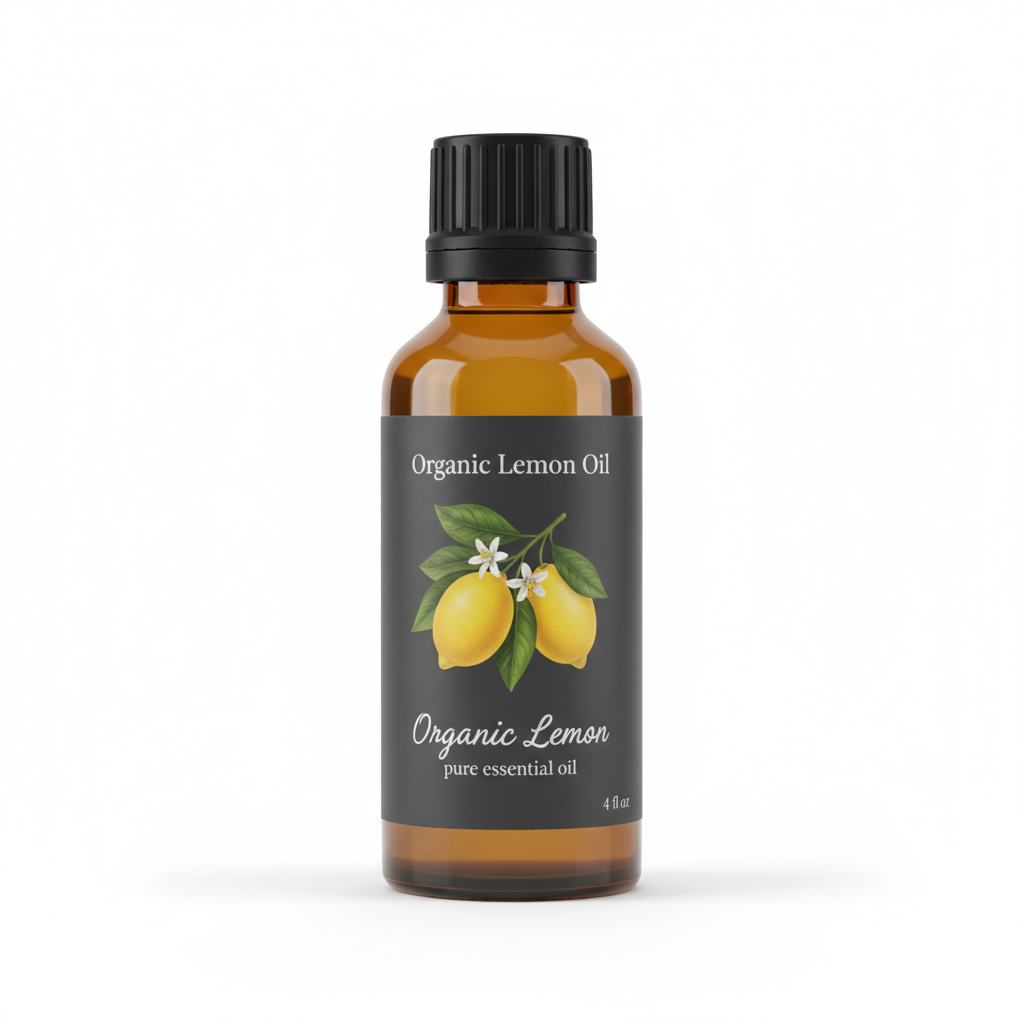
Organic Lemon Essential Oil
Our own Organic Lemon Essential Oil, in sizes from 0.5 oz to bulk.
From $15.99
Shop Now →What dimpled skin actually is
MedlinePlus describes cellulite as fat collecting in pockets just under the skin, mostly on the hips, thighs and buttocks, with bands of connective tissue between fat and skin that can weaken or tighten and let the fat bulge outward. It says plainly that it "is not harmful to your health." The Cleveland Clinic reports it is far more common in women than in men. So this is a very ordinary feature of skin and tissue structure, and nothing a fragrance oil is designed to change.
What the research says about creams
Researchers have looked hard at topical products. A 2014 systematic review and meta-analysis of cosmetic products by Turati and colleagues found a small pooled difference in thigh circumference of about 0.46 cm, and described the efficacy as moderate. A broader 2015 evidence-based review by Luebberding and colleagues examined 67 human studies of all kinds of cellulite treatments and reported no clear evidence of good efficacy for any treatment evaluated, noting that most studies had methodological weaknesses. Put simply: even for products built and tested for the purpose, results are modest and inconsistent.
None of those reviews tested lemon oil. A Europe PMC search for lemon oil together with cellulite returns a single record, a paper on dietary supplements that has nothing to do with skin. The one randomized trial of an essential-oil-containing gel that came up, by Ngamdokmai and colleagues in 2021, used a herbal gel with a blend of seven oils, camphor and tea and coffee extracts. Lemon was not among them. Thigh circumference improved on both the herbal side and the base-gel side, which the authors attribute to the base formulation. A seven-oil blend is a different material from a single oil, so the trial tells us nothing about lemon.
What a lemon oil massage can do
A massage with a pleasantly scented oil is a lovely thing in its own right. The scent is fresh and the massage feels good, and a carrier oil leaves skin feeling soft and smooth. That is the claim we are comfortable making, and it is enough. A good massage oil does not need to promise a change in the skin's structure to be worth making.
If you want to scent a body oil with lemon, the numbers point toward restraint. We recommend diluting to 0.5% to 2% in a carrier and starting at the low end. The IFRA Standard for cold-pressed lemon oil caps body creams, oils and lotions at 2.0% because of phototoxicity, and the IFRA guidance applies its limits to skin that is reasonably expected to meet sunlight. Thighs in shorts or a swimsuit qualify. The Tisserand Institute advises keeping skin out of UV for at least 12 hours after a phototoxic amount of oil, and DermNet describes the reaction as redness one to two days after the sun, sometimes with blisters and darker pigmentation that can last for years. That is why the tip that matters most is timing: massage in the evening, shower afterward if you are heading outdoors early, and keep the oil off legs that will be bare in strong sun.
For a 100 g bottle of body oil, 0.5% is 0.5 g of lemon oil, which is roughly 12 drops at about 20 drops per ml and a relative density of 0.849. That is arithmetic for the batch on our Certificate of Analysis, and droppers vary, so weigh if you can. Carrier oils come from a pharmacy or craft shop, and our carrier oils post compares them.
Setting up a massage you will enjoy
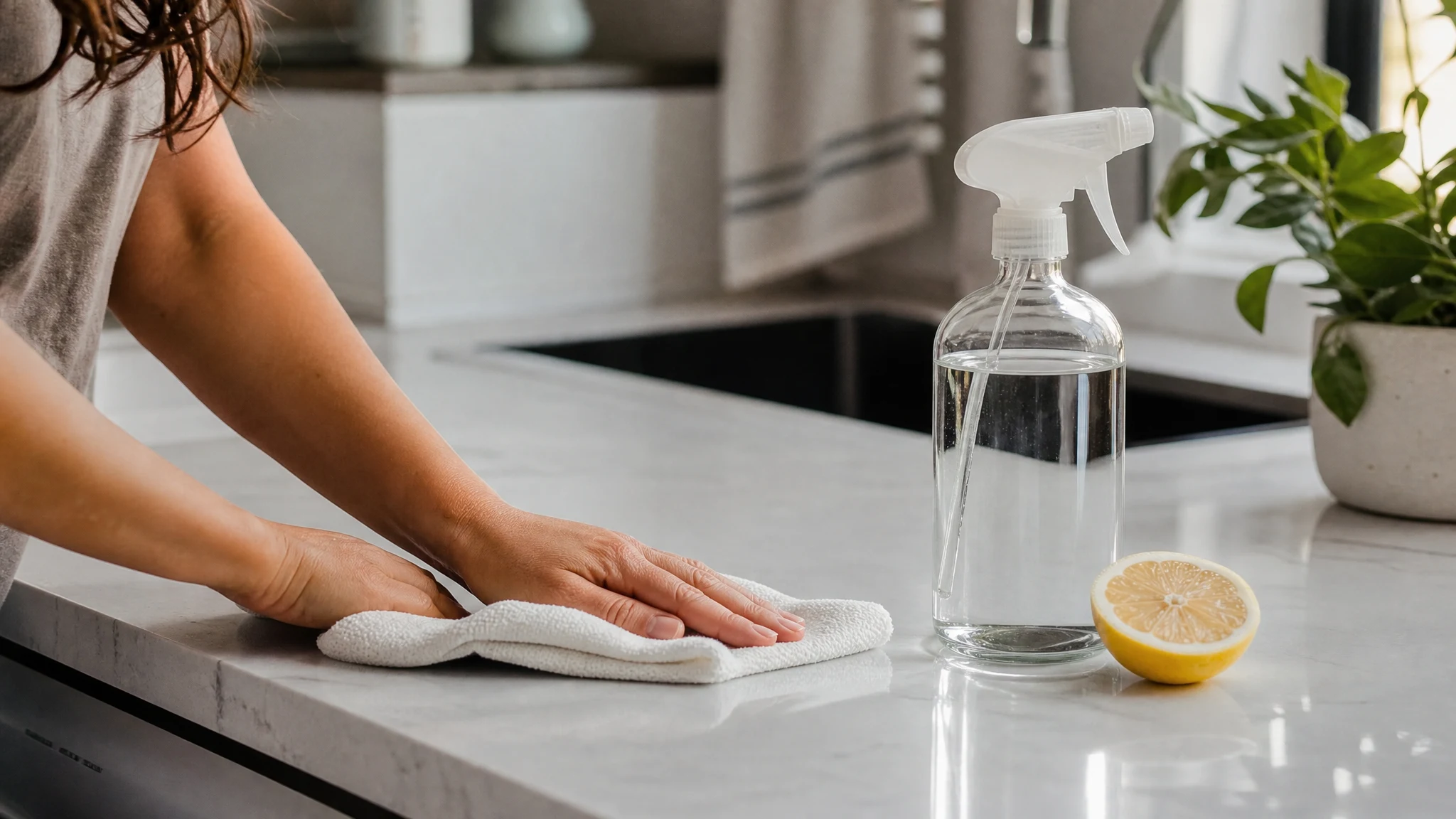
If you make a scented oil, a little preparation makes the whole thing nicer. Mix it in a small clean glass bottle, add the lemon oil to the carrier and swirl gently, then label it with the date and the percentage. Warm a little in your palms before you use it, and you will notice the lemon rise as the oil warms. Lay a towel under whoever is being massaged, because a carrier oil marks sheets, and keep the bottle capped between uses so the scent stays bright.
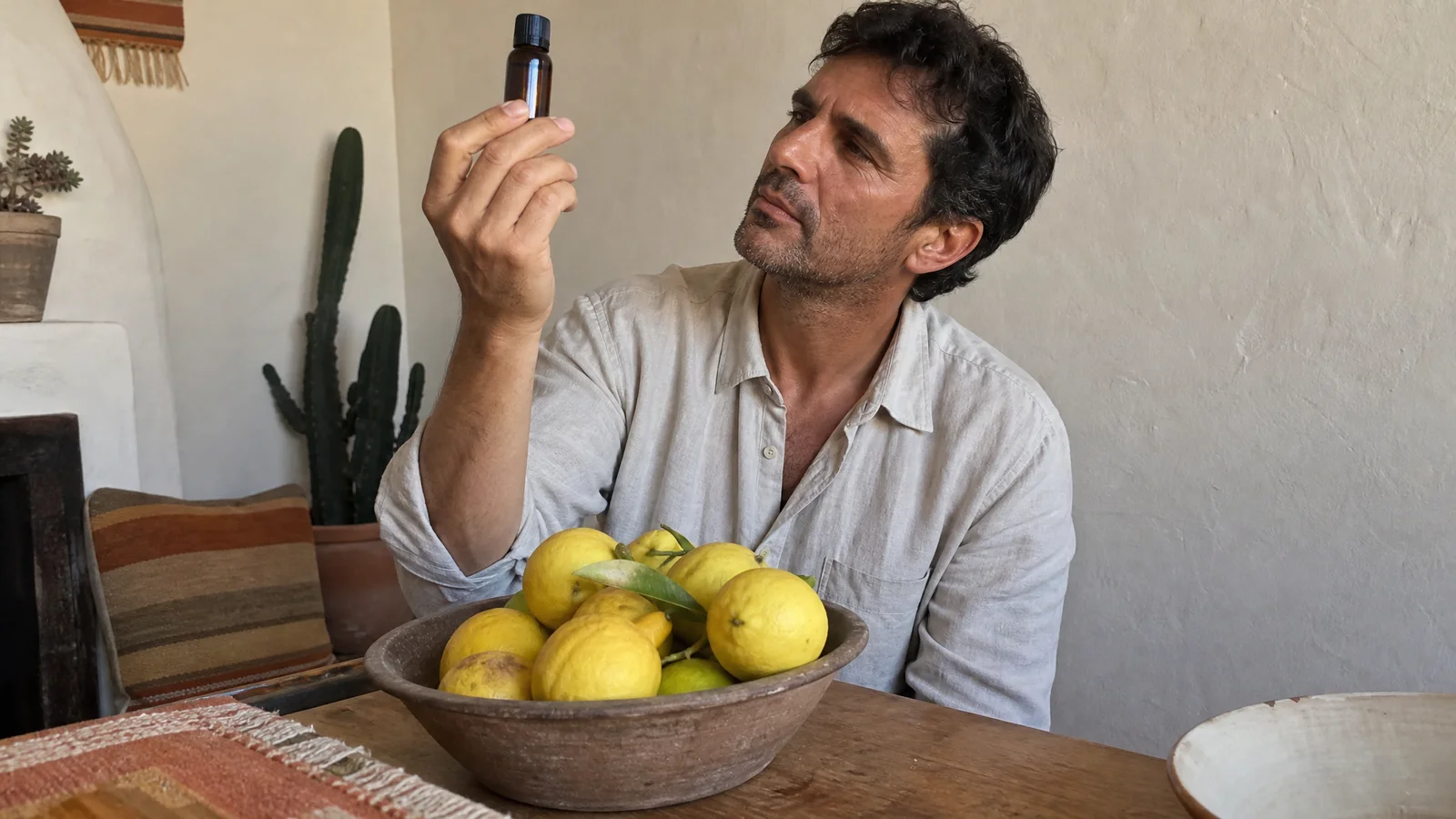
Patch test on a small spot first, keep the oil away from eyes, and remember that a generous massage with a gentle scent is enjoyable at 0.5% without reaching for more.
A scent that suits the mood of the room
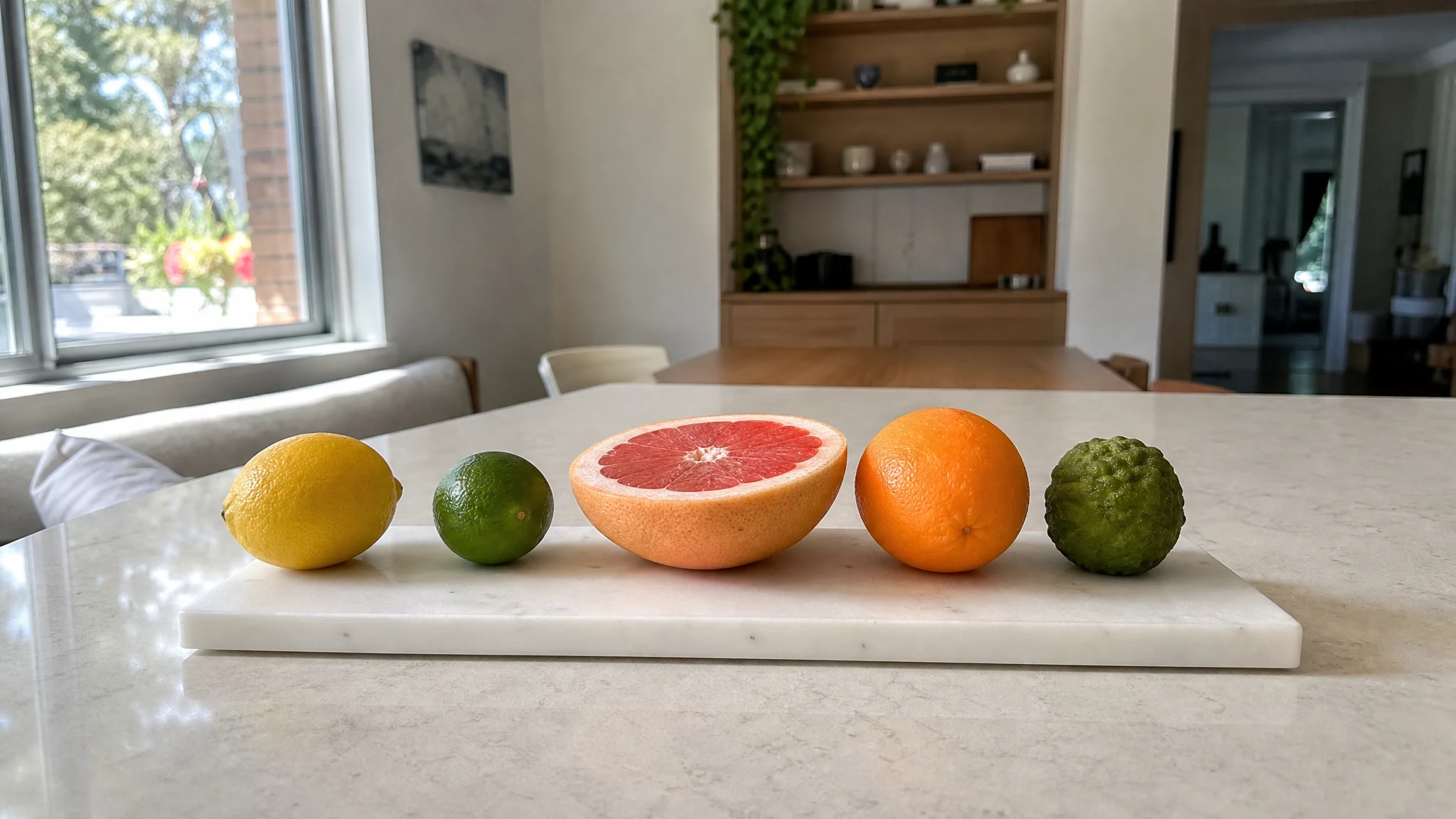
If you like to scent the room as well as the oil, a drop or two in a diffuser works nicely while you set up. Lemon is a top note, bright for the first few minutes and softer later, so it is a good opener rather than a lingering perfume. Pair it with sweet orange or lavender from our blending list if you want a rounder aroma, and keep the room ventilated and the bottle out of reach.
If the skin itself is the question
If dimpled skin bothers you, the reviews above give an honest picture: devices and clinical procedures have more evidence behind them than creams, and a dermatologist is the right person to talk to. Our skin guide covers what lemon oil can and cannot do on skin, and the benefits post collects what it is genuinely good at.
Enjoy lemon oil for the way it smells, and let the massage itself be the treat.
Organic Lemon Essential Oil
Organic Lemon Essential Oil from our own shop, in sizes from 0.5 oz to bulk.
From $15.99
Shop Now →Sources & Further Reading
- MedlinePlus. Cellulite: MedlinePlus Medical Encyclopedia. medlineplus.gov/ency/article/002033.htm
- Cleveland Clinic. Cellulite: What It Is, Causes, Location & Treatment. my.clevelandclinic.org/health/diseases/17694-cellulite
- Turati F et al, 2014. Efficacy of cosmetic products in cellulite reduction: systematic review and meta-analysis. J Eur Acad Dermatol Venereol. europepmc.org/MED/23763635
- Luebberding S et al, 2015. Cellulite: an evidence-based review. Am J Clin Dermatol. europepmc.org/MED/25940753
- Ngamdokmai N et al, 2021. Efficacy of an Anti-Cellulite Herbal Emgel: A Randomized Clinical Trial. Pharmaceuticals (Basel). PMC8308550
- IFRA. IFRA Standards, 51st Amendment (Lemon oil cold pressed). ifra-standards-51st-amendment.pdf
- Tisserand Institute. Phototoxicity: essential oils, sun and safety. tisserandinstitute.org/phototoxicity-essential-oils-sun-and-safety
- DermNet. Phytophotodermatitis. dermnetnz.org/topics/phytophotodermatitis