What Is Lemon Oil Good For? A Realistic Look
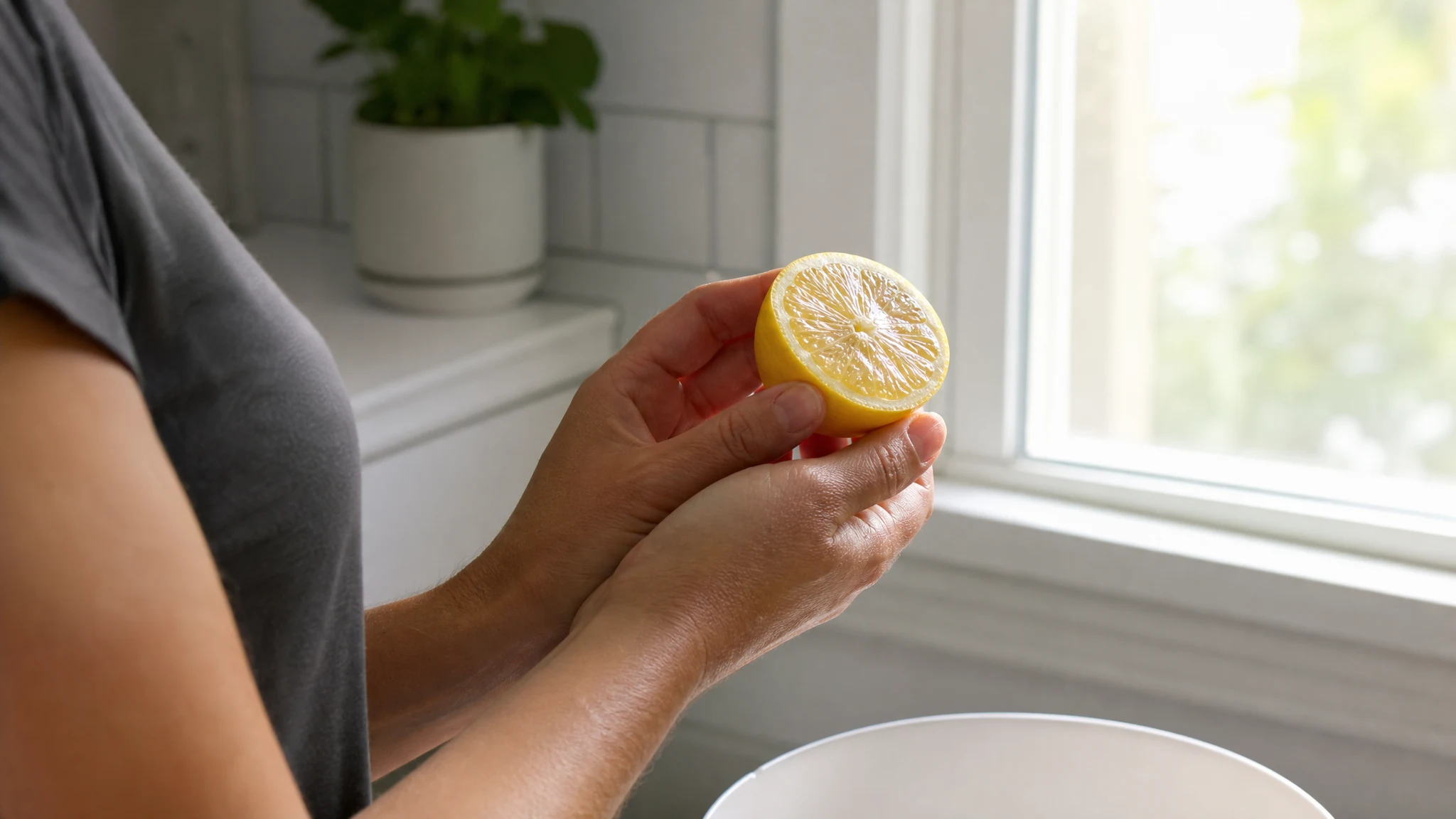
Score a ripe lemon with your thumbnail and the whole kitchen smells like sunshine for a moment. That burst comes from the oil in the peel, and capturing it in a bottle is the entire appeal of lemon essential oil. It is a bright, sparkling scent, and it is very good at that one job. The internet has piled a lot of other promises on top of it, so here is what the oil really is, where it shines, and what is best left to other things.
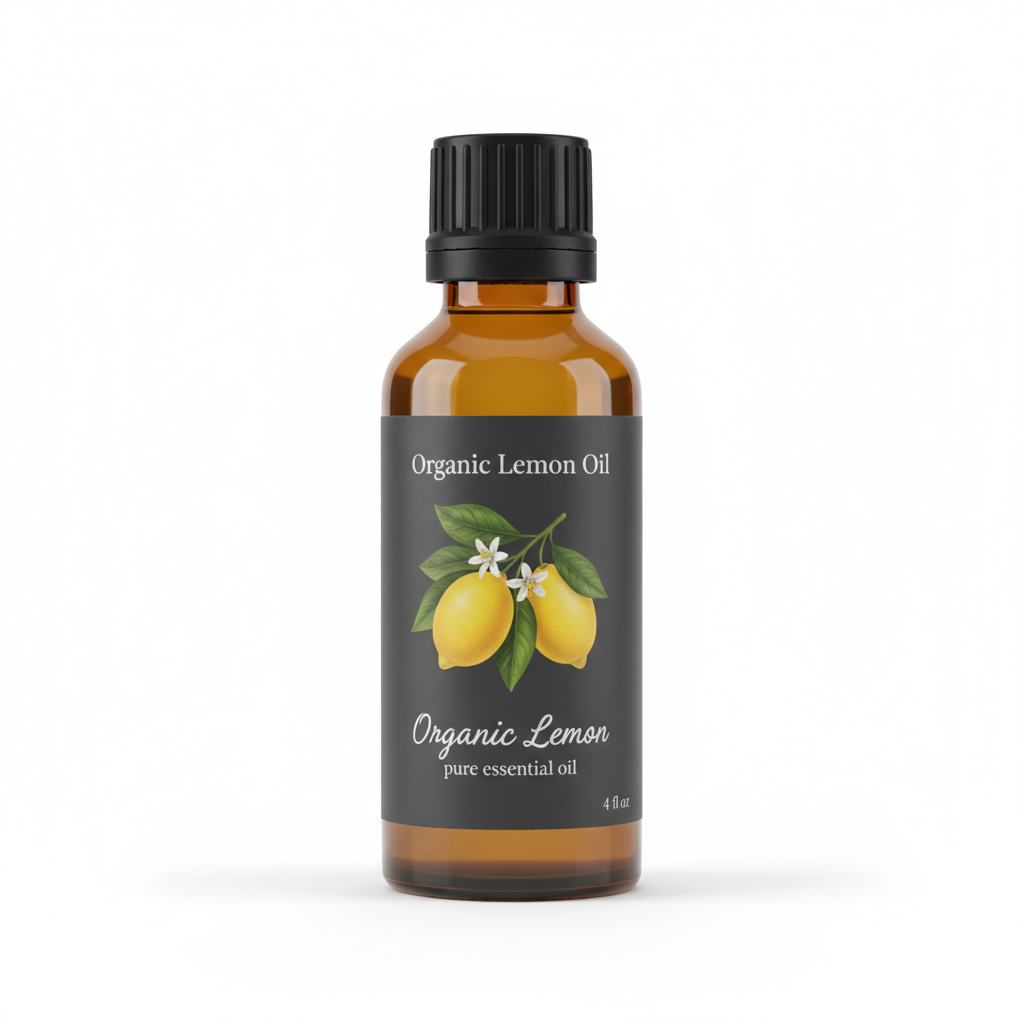
Organic Lemon Essential Oil
Our own Organic Lemon Essential Oil, in sizes from 0.5 oz to bulk.
From $15.99
Shop Now →It comes from the peel, not the juice
Lemon oil is not squeezed from the juice. Cold-pressed oil like ours comes from the peel, where tiny pockets hold the aromatic oil. The European Food Safety Authority's 2021 opinion on expressed lemon oil describes the usual process: the surface of the peel is scarified to break the pockets open, water is sprayed to carry the oil off, the mixture is filtered, and a centrifuge separates oil from water. The pharmacopoeia definition it cites calls for a mechanical procedure without heating.
That means nothing from the juice ends up in the bottle. The acidity and vitamin C that people associate with lemons stay with the fruit, so a claim borrowed from the juice does not travel to the oil. What does travel is the scent, and limonene is the main reason: in the ten batches EFSA reviewed, it made up about two thirds of the oil on average.
Not every lemon oil is the same lemon oil
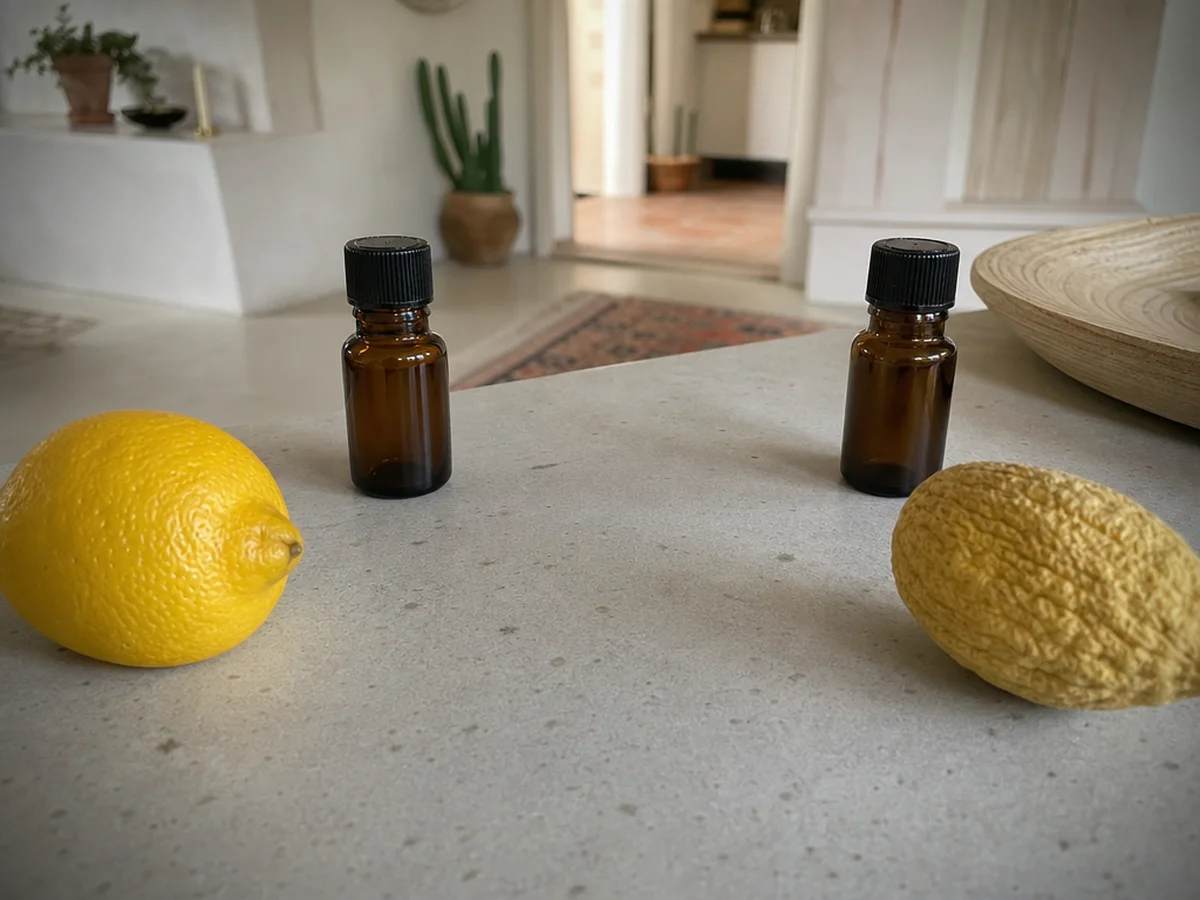
Lemon oils differ by how they are made. A distilled lemon oil and a cold-pressed one smell different, and they behave differently on skin. The Tisserand Institute reports that a distilled lemon oil contained roughly 22 times less bergapten and 930 times less citropten than an expressed one, and says the distilled oil is not phototoxic even though it contains some furanocoumarins. We sell the cold-pressed kind, with the fresh peel character that comes with it, and we do not offer a furocoumarin-free lemon.
Where lemon oil earns its place
The jobs it is genuinely good for are the ones where a bright citrus note is the whole idea.
- Room scent. A few drops in a diffuser, or a linen spray for closets and drawers, give a clean, sunny smell. Our room spray post works through how to disperse it properly.
- Cleaning day. Lemon scent is a pleasant companion to soap and water, and it makes a cleaning cloth smell freshly done. It is a scent for the job, not the cleaner itself, as our cleaning post explains.
- Handmade soap and candles. Lemon is a classic craft scent, though as a top note it fades faster than woodier oils, so makers often blend it with something that holds longer.
- Diluted skin use. Massage and moisturizing blends are possible within limits, covered below.
Lemon also blends happily. Peppermint, basil, lavender, rosemary, bergamot and sweet orange all sit well alongside it. If you enjoy mixing scents, our pairing guide is the place to start.
Getting to know the scent
The best way to understand what lemon oil does well is to spend a minute with it. Put one drop on a paper strip and smell it right away: you will meet that thumbnail-on-peel zing, sparkling and clean. Come back after ten minutes and it is softer, rounder, less sharp. Come back after an hour and it has mostly gone. That arc is the whole personality of a top note, and knowing it helps you plan how to use the oil, whether in a diffuser, a linen spray or a bar of soap.
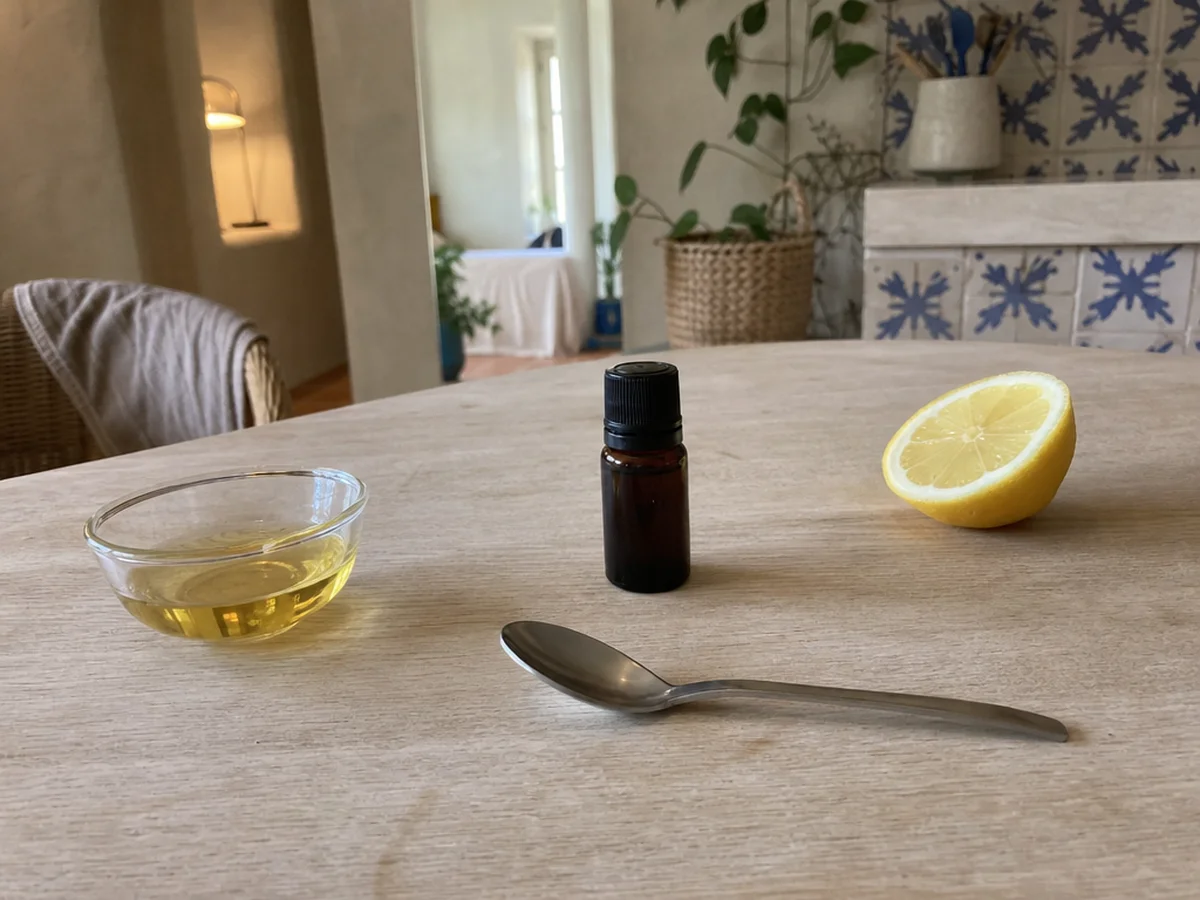
It is also a small pleasure to keep a lemon bottle on the shelf. Open it for a second on a gray afternoon and the whole room feels a little sunnier. We think that is a perfectly good reason to own it, and it needs no extra promises.
Using it well
A little knowledge keeps the oil enjoyable. For skin, we recommend diluting to 0.5% to 2% in a carrier oil and patch testing first. The IFRA Standard for cold-pressed lemon oil caps most leave-on products at 2.0% because of its phototoxic nature, and the Tisserand Institute notes that 2% is the safe maximum, not a recommended amount. So we begin at the low end, and we keep treated skin out of strong sun, as the Tisserand Institute advises, for at least 12 hours. Our skin guide has the details.
Freshness matters as well. Cold-pressed citrus oil oxidizes faster than steam-distilled oils, and oxidized limonene is a known skin sensitizer. A 1992 animal study by Karlberg and colleagues found that air-exposed limonene sensitized guinea pigs while unexposed limonene did not. Keep the cap on, keep the bottle cool and dark, and use it while it still smells like fresh peel. Our oil is for external use and aroma, and we never suggest taking it internally.
What it is not
We sell a scent, so we leave out the health promises that cluster around lemon oil online. We make no medical claims for it. Questions about mood, stress, sleep or the skin itself are best taken to a physician or dermatologist. What we can say with confidence is simpler: it smells wonderful, it is versatile, and a small amount goes a long way.
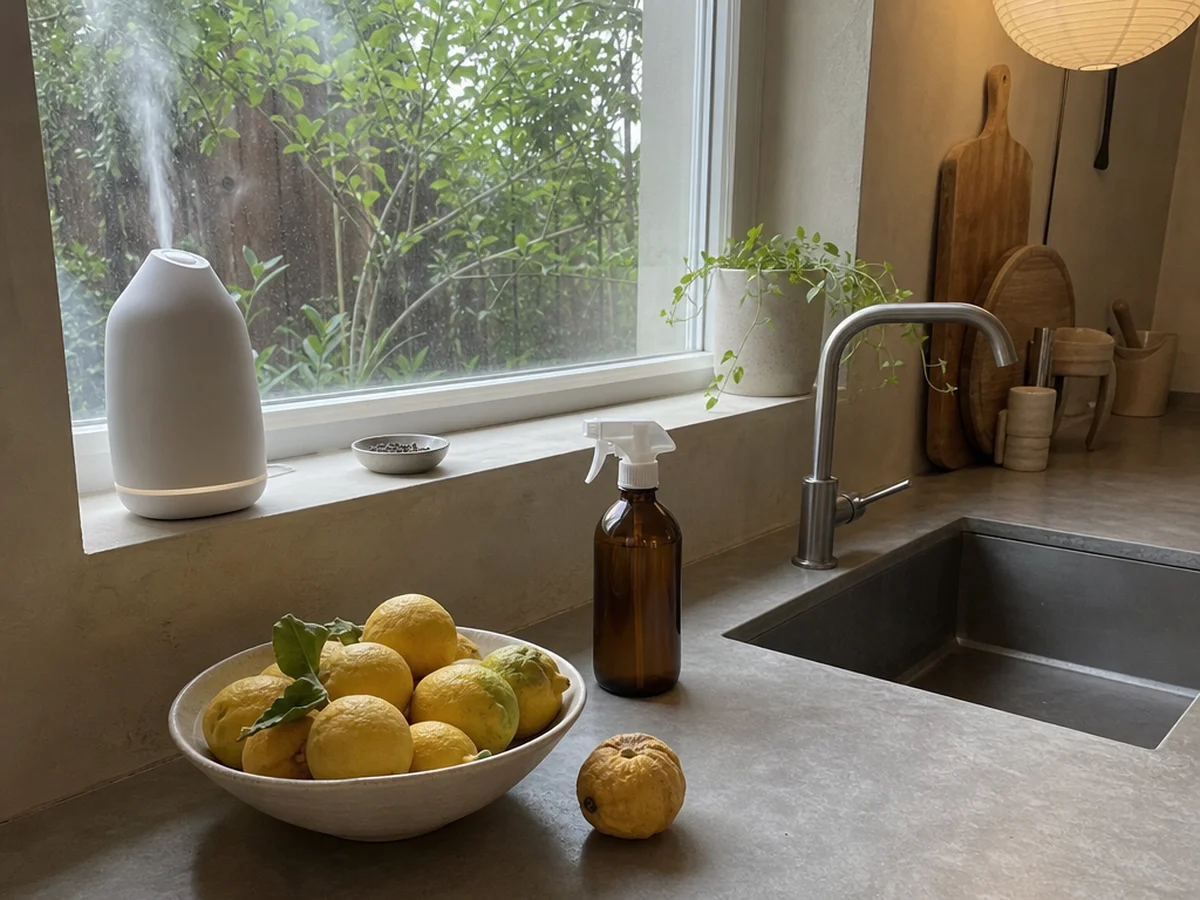
If you remember one thing, make it the thumbnail test. If the oil in your hands brings back that burst of fresh peel, it is doing exactly what it should.
Organic Lemon Essential Oil
Organic Lemon Essential Oil from our own shop, in sizes from 0.5 oz to bulk.
From $15.99
Shop Now →Sources & Further Reading
- EFSA FEEDAP Panel, 2021. Safety and efficacy of feed additives consisting of expressed lemon oil and its fractions from Citrus limon (L.) Osbeck and of lime oil from Citrus aurantiifolia (Christm.) Swingle for use in all animal species (FEFANA asbl). PMC8085978
- Tisserand Institute. Phototoxicity: essential oils, sun and safety. tisserandinstitute.org/phototoxicity-essential-oils-sun-and-safety
- Tisserand Institute. Dilution for essential oils. tisserandinstitute.org/dilution-essential-oils
- IFRA. IFRA Standards, 51st Amendment (Lemon oil cold pressed; Limonene). ifra-standards-51st-amendment.pdf
- Karlberg AT, Magnusson K, Nilsson U, 1992. Air oxidation of d-limonene (the citrus solvent) creates potent allergens. Contact Dermatitis 26(5):332-340. europepmc.org/MED/1395597