What Blends With Lemon Oil? Pairings and Citrus Math
Lemon is the friendliest oil in a blend. It lifts almost everything it touches, and it makes a good first impression, which is also why it fades first. Choosing partners is the fun part of blending, and there is one piece of arithmetic worth knowing before you pour.
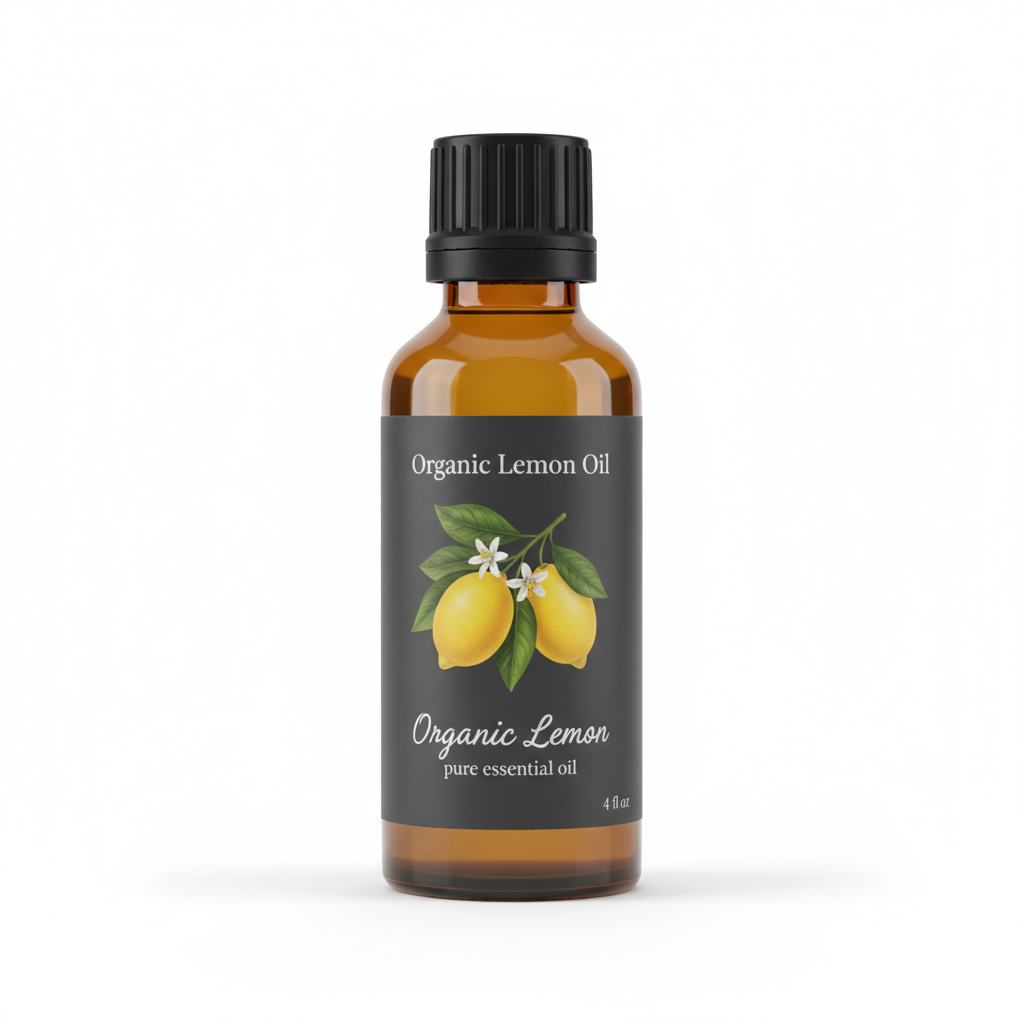
Organic Lemon Essential Oil
Our own Organic Lemon Essential Oil, in sizes from 0.5 oz to bulk.
From $15.99
Shop Now →Partners we reach for
Think of blending the way you think about building a dish: lemon is the squeeze of brightness at the end, and the other oils are what give the dish a body.
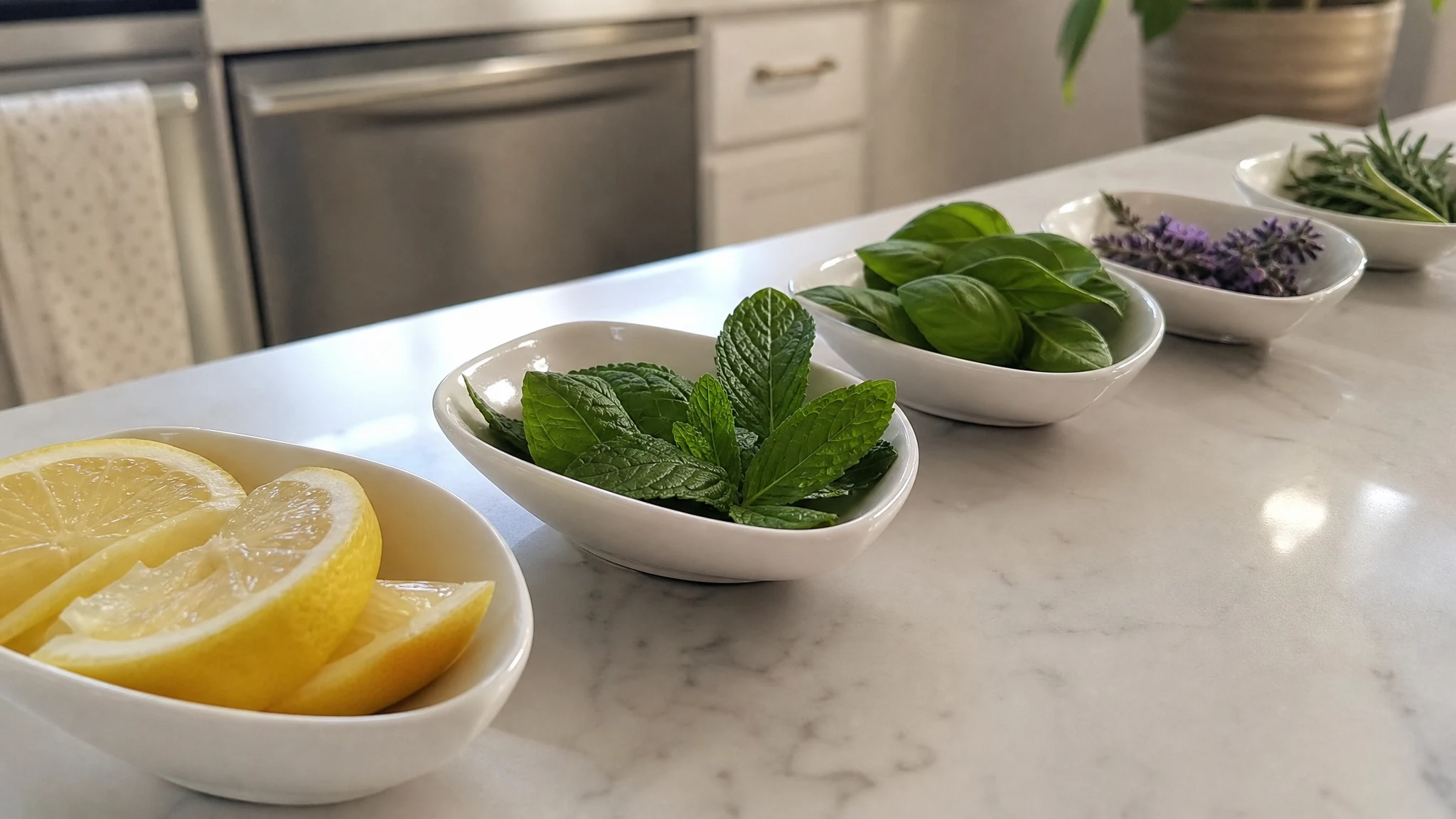
We list peppermint, basil, lavender, rosemary, bergamot and sweet orange as oils that blend well with ours, and each does something different. Peppermint adds a cool edge that makes lemon feel sharper. Basil brings a green, herbal note. Lavender softens the zest into something rounder, and rosemary gives it a clean, camphor-tinged backbone. Bergamot and sweet orange stay in the citrus family, so they feel like the same sunny scene viewed from a different window.
Lemon is a top note, the part of a scent you smell first and that evaporates first. In practice that means a blend built around lemon wants something with more staying power underneath it, so the bright opening has a body to land on. That is perfumery logic rather than a measurement, but it is a good rule when you are choosing a partner. We sell lemon oil only, so partner oils come from a craft or supply shop.
The citrus sum rule
Several citrus oils share the same phototoxic compounds, and the fragrance industry's standards body, IFRA, caps each one separately. For the categories that cover leave-on skin products, the maximum in the finished product is 2.0% for cold-pressed lemon, 4.0% for expressed grapefruit, 0.70% for expressed lime and 0.40% for expressed bergamot. Rinse-off and some household categories carry no restriction (IFRA, The complete IFRA Standards, 51st Amendment, January 2024).
When you combine oils from IFRA's furocoumarin list, which includes lemon, lime, bergamot, grapefruit and bitter orange, the rule is that each oil's concentration, expressed as a percentage of its own limit, must add up to no more than 100. Lemon at 0.5% uses a quarter of its allowance. Bergamot at 0.2% uses half of its allowance. Together that is 75%, and any third oil has to fit in the last 25%.
| Blend in 1 oz (29.57 ml) of carrier | Drops, about | Share of allowance used |
|---|---|---|
| Lemon 0.5% | 3 | 25% |
| Lemon 0.5% + bergamot 0.2% | 3 + 1 | 75% |
| Lemon 0.5% + lime 0.3% | 3 + 2 | about 68% |
| Lemon 1% + grapefruit 1% | 6 + 6 | 75% |
| Lemon 1% + bergamot 0.4% | 6 + 2 | 150%, over the rule |
The drop counts use 20 drops per millilitre and are approximate, and the blends are worked examples from the standards. The last row is the one to remember: six drops of lemon plus two of bergamot look like a small blend and still land over the line. Our suggestion is to aim for half the allowance or less, because the rule is a maximum, and the Tisserand Institute calls the 2% lemon figure "the safe maximum, not a recommended amount, which might be less" (Tisserand Institute, Dilution for essential oils). Our own guidance for lemon alone is 0.5% to 2% in a carrier, with a patch test first and no sun on freshly applied skin, and that range was written for lemon by itself, not a blend. Jot down the drops and carrier volume every time so the sum can actually be checked.
Sweet orange is not on IFRA's furocoumarin list, but a bottle labelled simply "orange oil" can be bitter orange, which is. Check the botanical name and the extraction method on the label.
How to try a pairing
The kindest way to test a blend is on paper, not skin. Put one drop of lemon on a strip, one drop of your partner oil on another, and then wave the two strips together under your nose. Add a third strip with both. If you like the way they meet, write down the ratio. If you do not, try one drop of lemon to two of the partner, or the other way around. This costs almost nothing and tells you a great deal.
Smell again after ten minutes. Lemon will have faded, and you will be left with what the partner brings. That second smell is often the real character of the blend.
What about the others?
Peppermint, lavender and rosemary are not on that phototoxic list, so they do not enter the sum. Each has limits and cautions of its own, so check them for the oil you hold. Basil deserves a specific mention: IFRA has a separate standard for estragole, a compound found in some basil oils, with maximums measured in thousandths of a percent in several product categories. Whether your basil contains it depends on the oil, so ask the supplier for the gas chromatography report and apply the limit to the figure on it.
Distilled lemon is a different material
The Tisserand Institute cites a study in which distilled lemon oil had 930 times less citropten and 22 times less bergapten than the expressed oil, and describes the distilled oil as "not phototoxic, even though it contains some FCs" (Tisserand Institute, Phototoxicity: essential oils, sun and safety). Our lemon is cold-pressed, and we do not offer a distilled or furocoumarin-free version, which smells different too. If you blend with a distilled citrus oil, the sum above does not describe it, and the supplier's documentation does.
For a blend that stays in the air, our room spray post covers what a spray needs. The citrus comparison sets the family side by side, the lemon versus lime post looks at those two limits head to head, and the carrier oil guide helps with what to dilute into.
Pick your partner for the scent, count your drops for the sum, and the blend will take care of the rest.
Keep a small notebook of your favorite ratios, with the drops and the date. A good pairing is worth writing down, and you will thank yourself next season.
Organic Lemon Essential Oil
Organic Lemon Essential Oil from our own shop, in sizes from 0.5 oz to bulk.
From $15.99
Shop Now →Sources & Further Reading
- IFRA. The complete IFRA Standards, up to and including the 51st Amendment (January 2024): Lemon oil cold pressed; Grapefruit oil expressed; Lime oil expressed; Bergamot oil expressed; Citrus oils and other furocoumarins containing essential oils; Estragole. Standards PDF
- Tisserand Institute. Dilution for essential oils. tisserandinstitute.org/dilution-essential-oils
- Tisserand Institute. Phototoxicity: essential oils, sun and safety. tisserandinstitute.org/phototoxicity-essential-oils-sun-and-safety