How to Make a Lemon Room Spray: Drops and Grams
A lemon room spray sounds like the simplest recipe in the world: oil, water, shake. Anyone who has tried it knows how that ends, with golden droplets skating across the top of the bottle. The fix is a bit of kitchen-scale arithmetic, and once you have it, a bright 100 g bottle comes together in a few minutes.
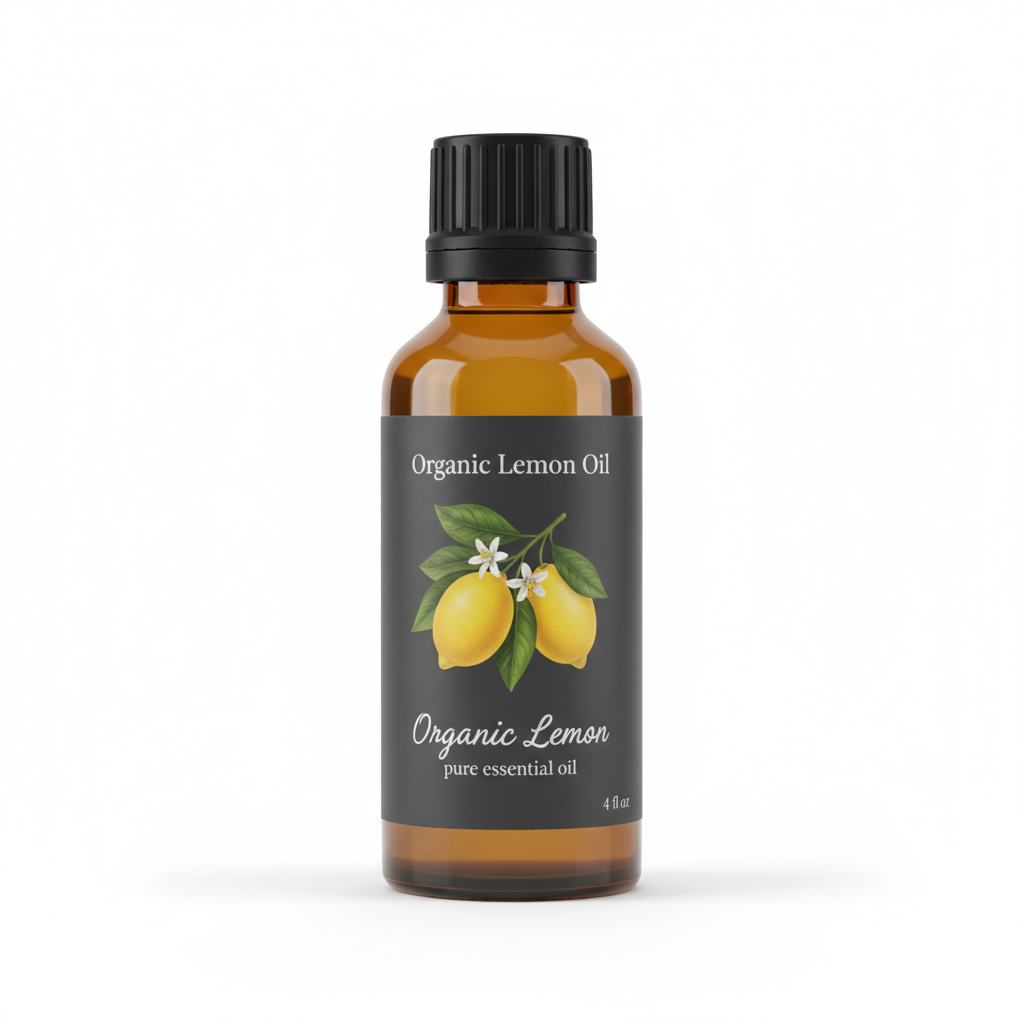
Organic Lemon Essential Oil
Our own Organic Lemon Essential Oil, in sizes from 0.5 oz to bulk.
From $15.99
Shop Now →Why oil and water need a go-between
Picture a salad dressing left on the counter. Shake it and it looks like one thing, wait a minute and the oil is back on top. A room spray behaves the same way, only you are spraying it into the air, so it matters more that every pump delivers the same mix. A solubilizer is what keeps the lemon from separating and sitting in a bright golden film at the top of the bottle.
Essential oil floats on water, so a spray needs a solubilizer to hold the oil in suspension. Polysorbate 20 is a common choice; Croda describes its Tween 20 grade as an "effective solubiliser for essential oils and perfumes" in water-based and water-alcohol systems (Croda Beauty). The question is how much. Makesy says the ratio of solubilizer to oil usually falls somewhere from 1:1 to 5:1, that citrus oils are harder to solubilize so you should start at 3:1 or higher, and that a correct ratio gives a clear mix (Makesy). Our suggestion, reasoning from that, is to begin at 4:1 by weight and move up if the mix looks milky. Cloudiness is a signal that the ratio fell short.
Why the water needs a preservative
A 2018 review of cosmetic preservation calls water "an ideal growth factor for microorganisms" and notes that using essential oils as the antimicrobial is often discouraged because they lose activity when diluted (Halla and colleagues, 2018). At 1% oil, the lemon is there for scent, not protection. Pick a preservative sold for water-based products at a cosmetic-supply shop, check its pH range suits your mix, and weigh it at the rate on its data sheet. For a 100 g bottle, a 1.0% rate would be 1.0 g. If you skip the preservative, treat the bottle as perishable and make only what you will use quickly.
Choosing the oil share
IFRA lists manual air freshener sprays in Category 10B (Guidance for the use of IFRA Standards), and its standard for cold-pressed lemon oil sets 2.0% for that category because of phototoxicity (IFRA Standards, 51st Amendment). We think half of that is a gentler place to start, because a room spray is purely about scent and a lower share means less oil landing on skin, pets and surfaces. The batch on our Certificate of Analysis has a relative density of 0.849, and at about 20 drops per milliliter a drop weighs roughly 0.042 g. Droppers vary, so a scale is better.
| Oil share of a 100 g spray | Oil | Approximate drops | Polysorbate 20 at 4:1 |
|---|---|---|---|
| 0.5% | 0.5 g | 12 | 2.0 g |
| 1% (our starting point) | 1.0 g | 24 | 4.0 g |
| 2% (IFRA 10B ceiling) | 2.0 g | 47 | 8.0 g |
Putting a 1% bottle together
- Weigh 4.0 g of polysorbate 20 into a clean glass container, add 1.0 g of oil (about 24 drops) and stir until uniform.
- Weigh in your preservative at the rate on its data sheet for a 100 g total.
- Add distilled water slowly while stirring gently, up to 100 g.
- If the mix is milky, repeat with a bit more polysorbate; if it is clear, bottle it.
That is a formulation worked out from the sources above rather than a family recipe, and we are happy for it to be a starting point you adjust. We sell the oil only, so polysorbate, preservative and distilled water come from a cosmetic-supply or craft shop. Ask for each material's safety data sheet.
What you will notice as you mix
Stirring the oil into the solubilizer first is the step that feels odd the first time, because the mixture looks thick and slightly cloudy. Keep stirring slowly. Once the water goes in, a good mix turns clear or very slightly hazy, and the lemon scent reads as soft and rounded instead of sharp. If you see droplets or a floating ring, the ratio needs more solubilizer, and it is far easier to fix that before you bottle than after.
Give yourself a clean workspace and a scale that reads to the tenth of a gram. A kitchen scale that only reads whole grams will make a 1% mix guesswork. Label the bottle with the date and the percentage so you remember it next time.
Bottles, fabric and finishes
Limonene is a solvent for some plastics, so glass is the easy choice for a bottle, or check a chemical-resistance chart for the plastic you have. Spot test fabrics and finishes in a hidden corner before spraying generously.
Pets and children
We keep our oil away from eyes, children and pets, and we do not take it internally. The ASPCA says concentrated essential oils can be a danger for pets, that a short diffuser session in a secured area is not likely to be an issue, and lists the Animal Poison Control Center on (888) 426-4435 (ASPCA). Poison Control recommends keeping essential oils out of sight and reach of children and pets, with 1-800-222-1222 for a swallowed product (Poison Control). For a specific animal, a veterinarian is the right person to ask, and our pet post goes through what the authorities say.
This spray is a scent and nothing more. For other ideas, see our home use guide and the spring cleaning plan. Twenty-four drops, a few grams of solubilizer and a preservative are all it takes to make a room smell like a freshly cut lemon.
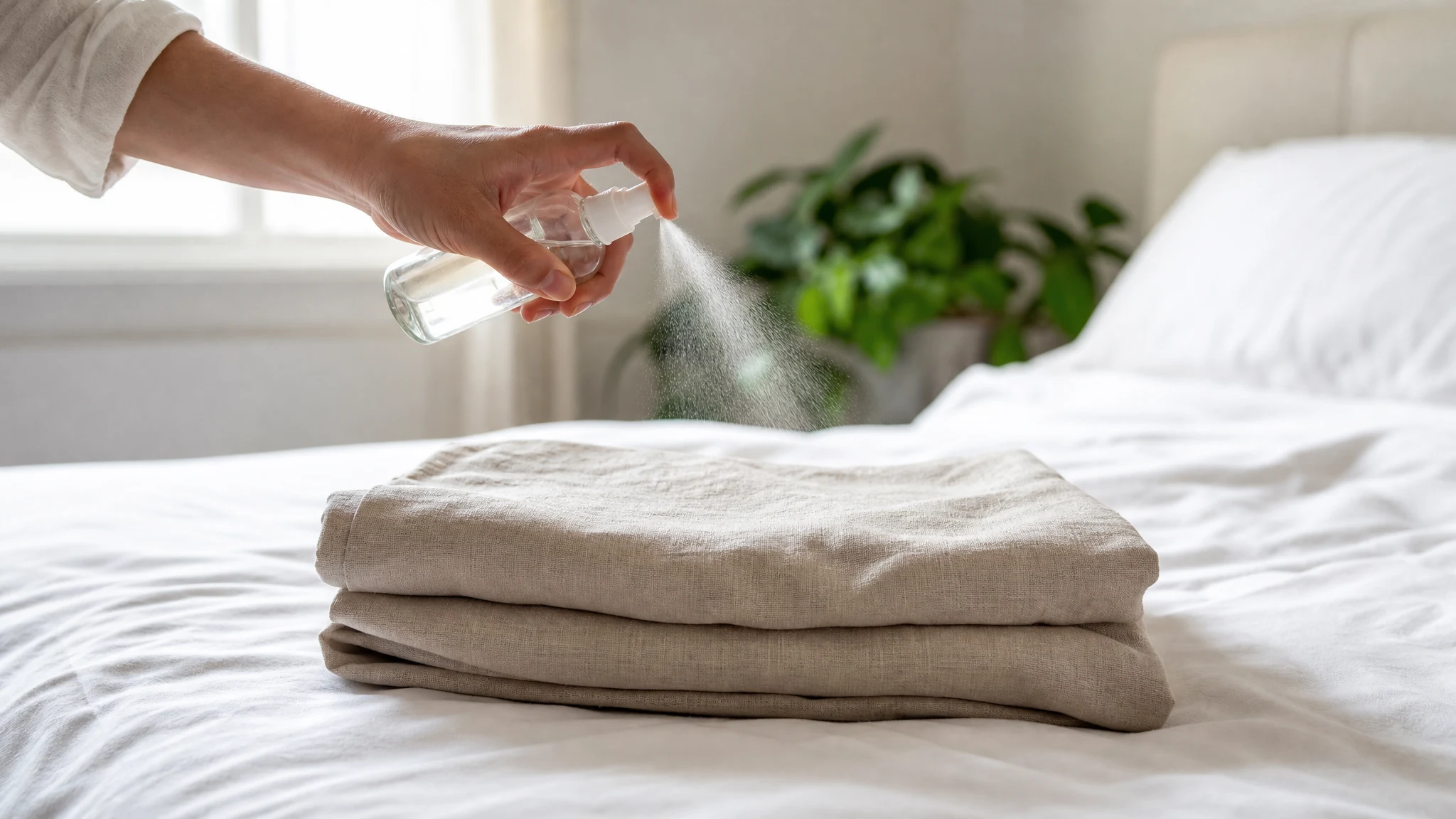
When you spray, aim up and away from you and let the mist drift down. Lemon is a top note, so the brightest moment is the first few seconds, and a light mist twice is nicer than a heavy burst once.
Organic Lemon Essential Oil
Organic Lemon Essential Oil from our own shop, in sizes from 0.5 oz to bulk.
From $15.99
Shop Now →Sources & Further Reading
- IFRA Standards, 51st Amendment (the complete IFRA Standards, January 2024), Lemon oil cold pressed. ifrafragrance.org
- Guidance for the use of IFRA Standards (51st Amendment, June 30, 2023). ifrafragrance.org
- ECO Tween 20 | Croda Beauty. crodabeauty.com
- Makesy. How To Solubilize Fragrances & Essential Oils For Beauty Products. makesy.com
- Halla N et al., 2018. Cosmetics Preservation: A Review on Present Strategies. Molecules. PubMed Central
- ASPCA. The Essentials of Essential Oils Around Pets. aspca.org
- Poison Control (National Capital Poison Center). Essential oils: Poisonous when misused. poison.org