Lemon Sugar Scrub: How Many Drops of Oil to Use
A jar of sugar scrub looks like a lot of sugar and a little oil, and the lemon oil is a whisper inside that. The scent of ripe lemon peel is bright enough that a few drops carry a whole jar, so the real craft is knowing how many drops "a few" should be. Here is the arithmetic, so you can scent a scrub or a shower melt generously without overshooting.
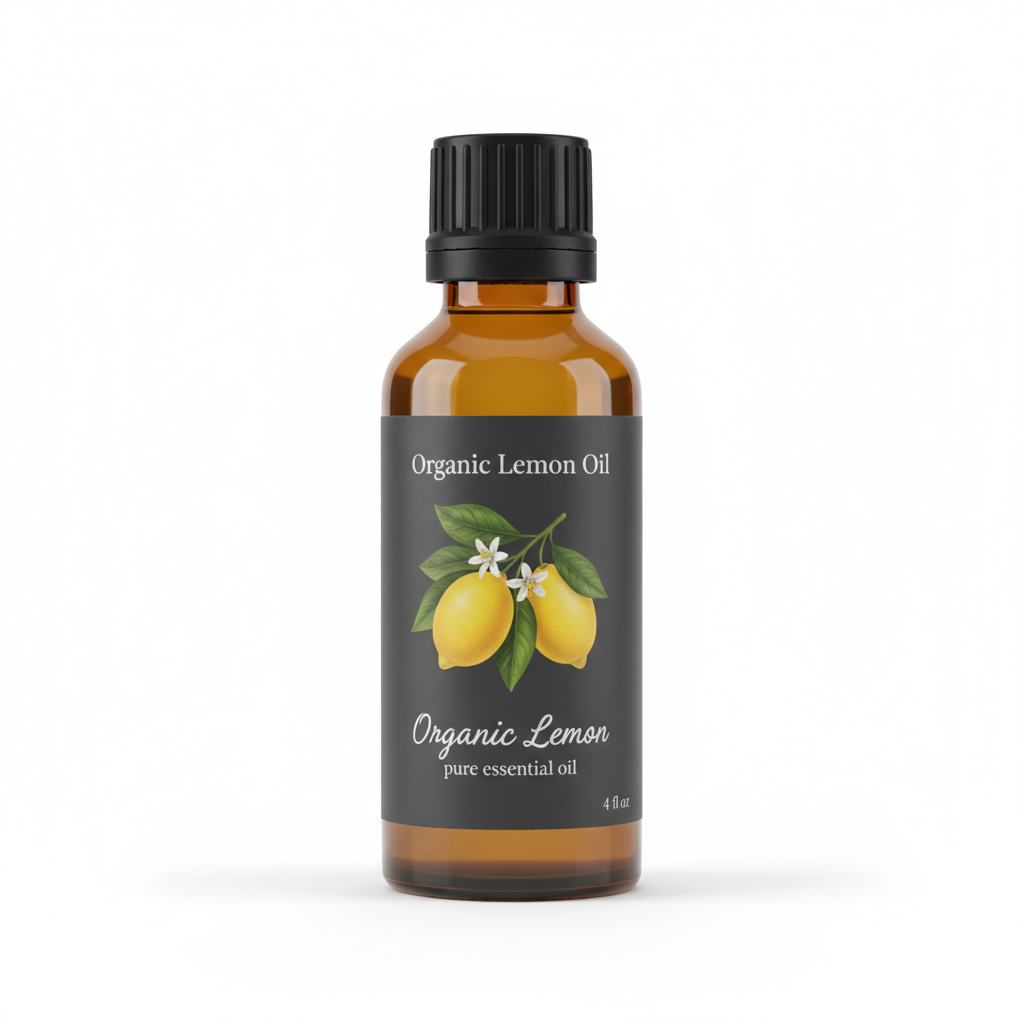
Organic Lemon Essential Oil
Our own Organic Lemon Essential Oil, in sizes from 0.5 oz to bulk.
From $15.99
Shop Now →Start low, and stay low
A little patience here pays off. It is easy to think more drops means more lemon, but a jar that smells overwhelming on the first sniff often mellows once it has sat. You can always add a drop or two to the next jar. You cannot take them out of this one.
We recommend diluting our lemon oil to 0.5% to 2% in a carrier for skin, with a patch test first. For a scrub we would begin at the very bottom, 0.5%, and go no higher than 1%. The reason is the oil itself: cold-pressed lemon is phototoxic, which is why the IFRA Standard for it caps most leave-on products at 2.0%. The Tisserand Institute calls that number "the safe maximum, not a recommended amount," which is exactly how we read it. A ceiling is not a target.
It is tempting to treat a scrub as a rinse-off product and use the higher wash-off range that Tisserand gives for bath and wash-off products, 2% to 4%. Lemon is the exception that matters here, because a sugar scrub is made with a carrier oil and that oil clings to skin after the sugar has rinsed away. Some lemon oil rides along with it. Holding to the lower numbers costs you very little scent and removes the question.
The scrub in grams
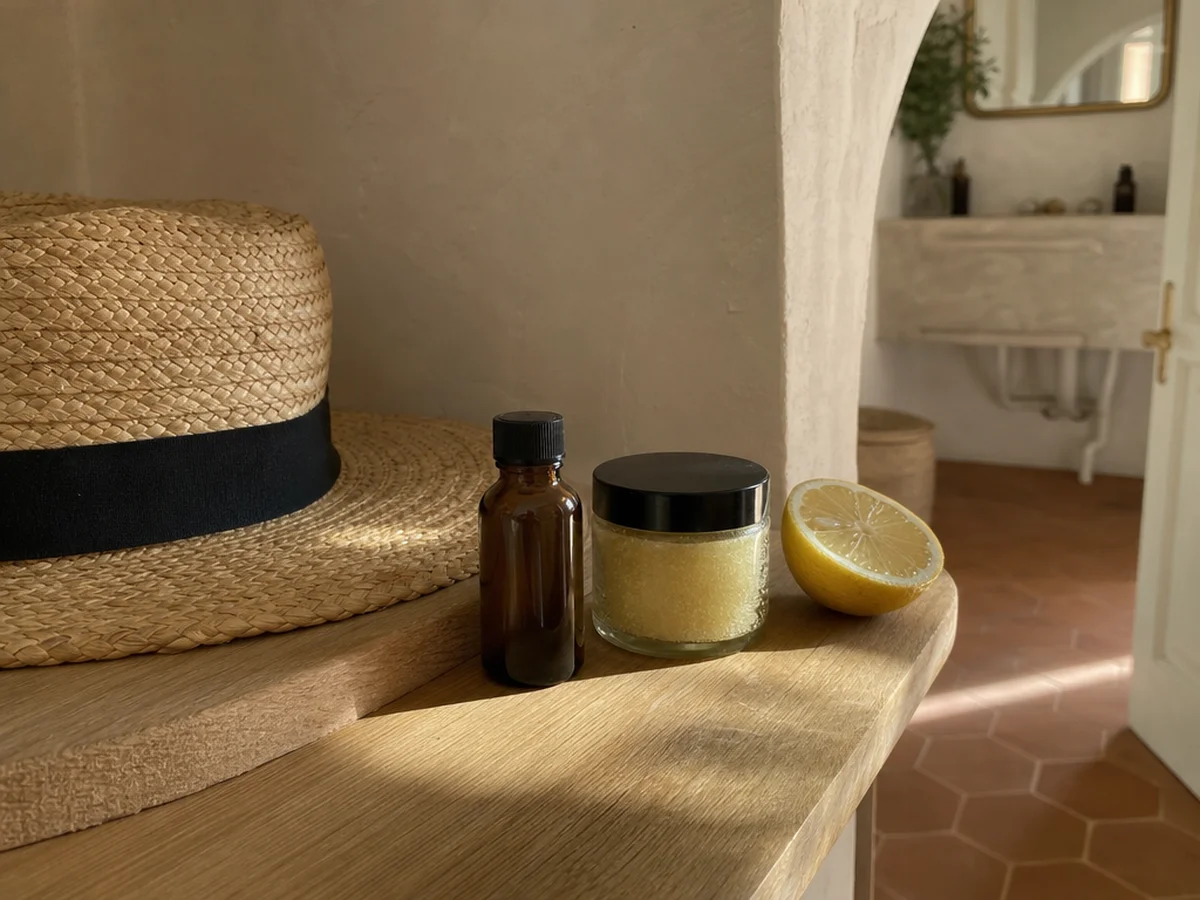
One workable ratio is three parts sugar to one part carrier oil by weight, so a 200 g jar is 150 g of sugar and 50 g of oil. Sugar and a carrier oil come from the grocery store, pharmacy or a craft supplier; our carrier oils post compares the options. The lemon oil is counted against the full 200 g. For the batch on our Certificate of Analysis, relative density is 0.849, so a drop works out to roughly 0.04 g at about 20 drops per ml (droppers vary, so weighing is more reliable).
| Lemon oil in a 200 g scrub | Grams of oil | Drops, about |
|---|---|---|
| 0.5% | 1.0 g | 24 |
| 1% | 2.0 g | 47 |
| 2% (the ceiling) | 4.0 g | 94 |
That is arithmetic, not a tested recipe, and it surprises people: a scrub scented with "ten drops" is only about 0.2%, a very light touch, while a teaspoon of oil lands at the ceiling. Stir the lemon oil into the carrier first so it is spread through the fat, then fold in the sugar. A scrub with no water in it has nothing for microbes to live on, so keep it that way: use a dry spoon, put a lid on the jar and make a size you will finish in a few weeks.
What the jar looks and smells like
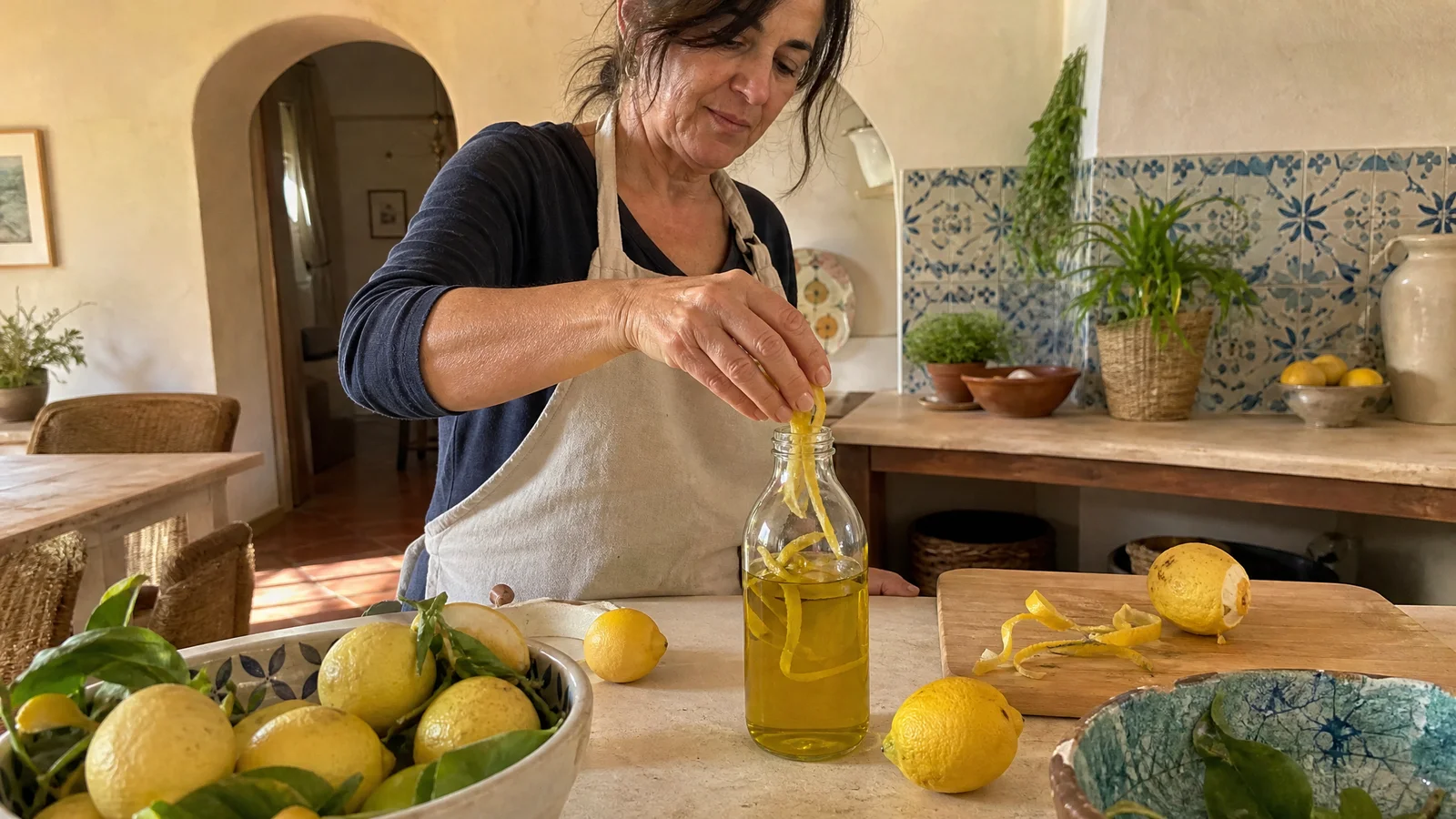
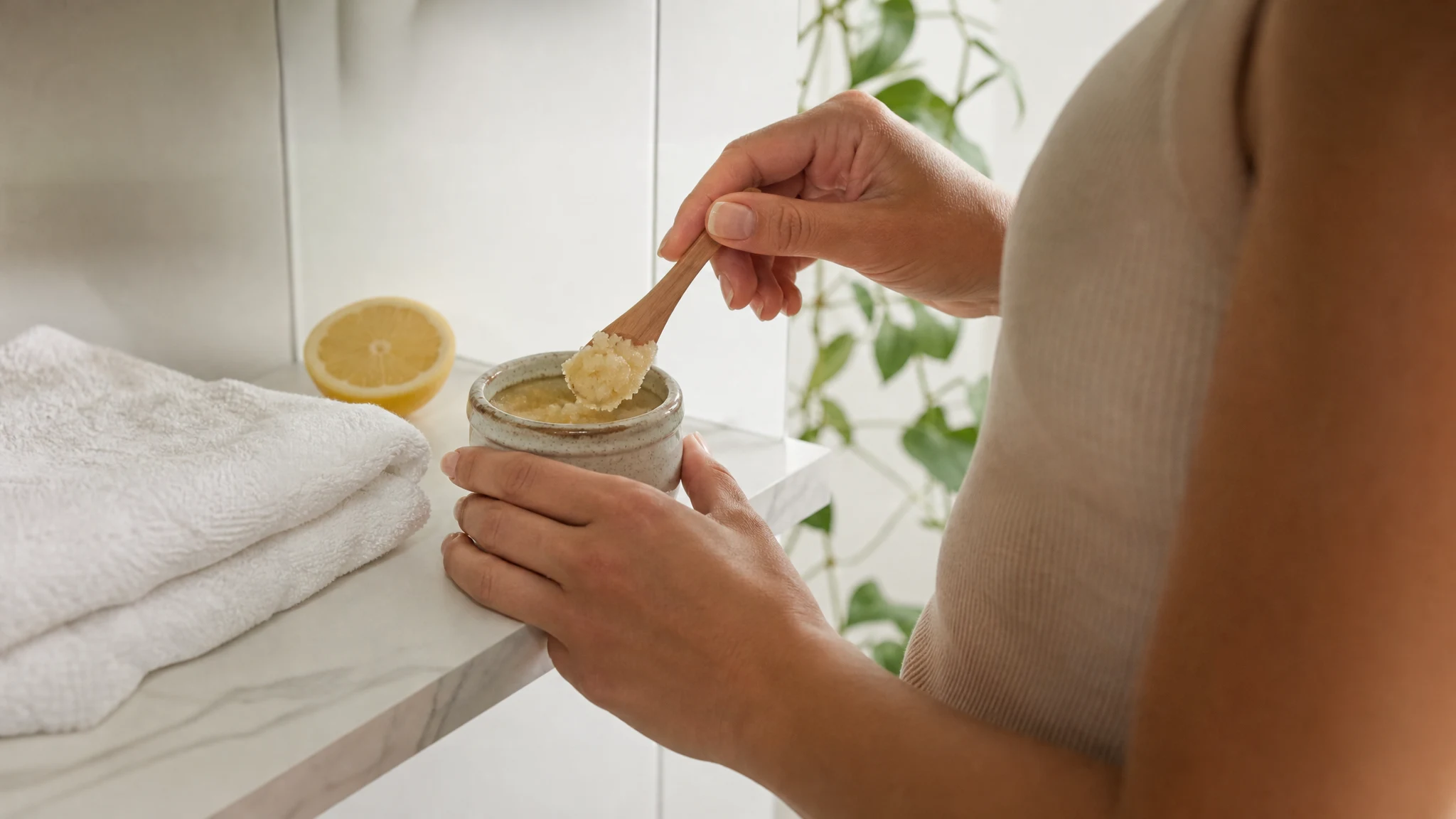
When you stir the lemon oil into the carrier before the sugar goes in, you will see a faint yellow shimmer in the oil and smell that scored-peel brightness right away. Fold the sugar in slowly, and you get a scrub that looks like damp, pale sand. If it looks too wet, a spoonful more sugar fixes it. If it looks dry and crumbly, add a little more carrier oil, a teaspoon at a time.
The scent is strongest when you first open the jar and the first time you scoop. After a few days the top note softens, which is normal for lemon, and the jar smells rounder and sweeter.
When to use it
Use the scrub in the evening. The Tisserand Institute advises keeping skin out of UV for at least 12 hours after a phototoxic amount of an oil, and an evening shower gives you a night of margin. If you are going out in a swimsuit the next morning, wash well and rinse again. Keep scrubs away from the face and any skin that is broken, and see our skin guide for the full picture on patch testing and sun.
Shower melts: only the dose
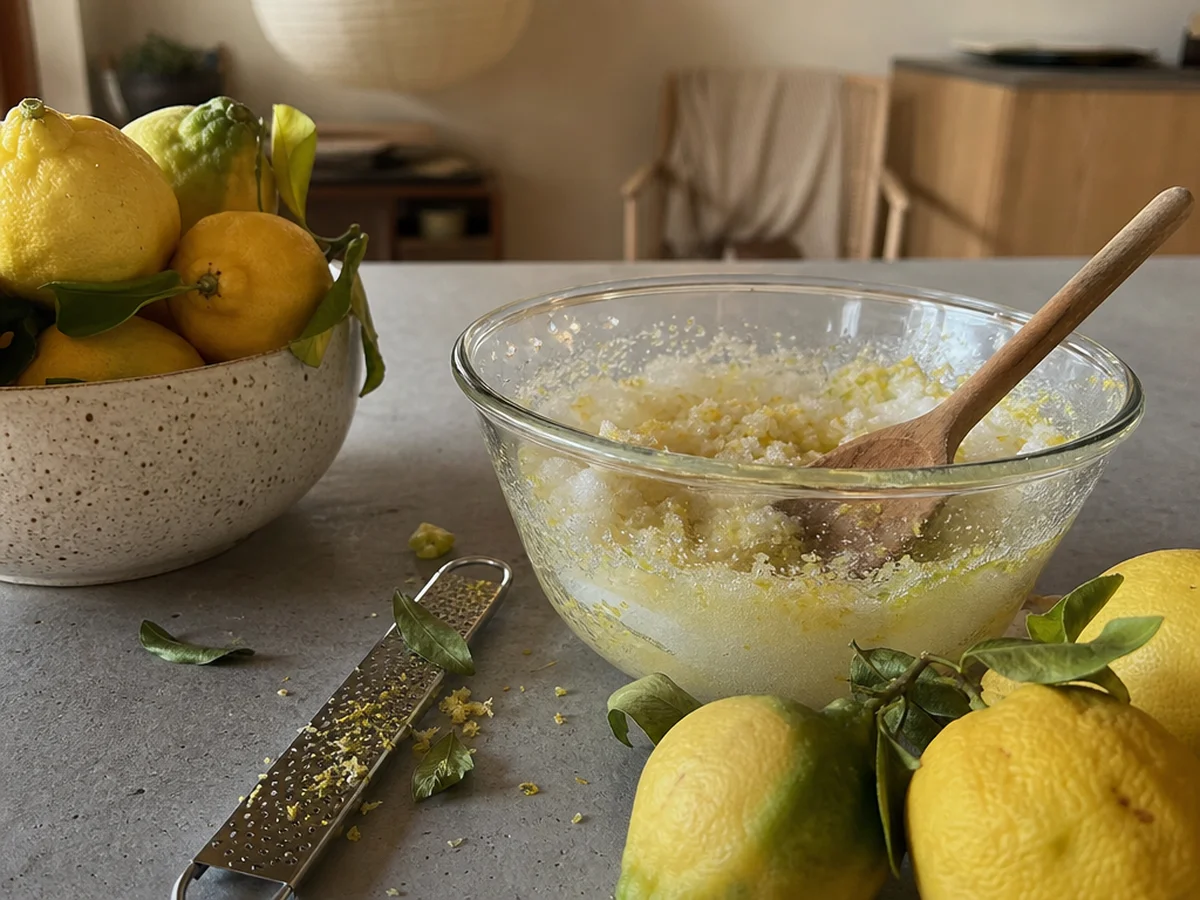
A shower melt is a pressed tablet that sits on the shower floor and perfumes the steam as water reaches it. The base and binder come from a craft supplier, and the recipes for those are a craft of their own, so here is only how much lemon oil goes in. Take a batch of ten 30 g pieces, 300 g in all.
| Lemon oil in a 300 g batch | Drops, about | Per 30 g piece |
|---|---|---|
| 0.5% | 35 | 3 to 4 |
| 1% | 71 | 7 |
Because a melt perfumes air rather than skin, the skin ceiling is a rough guide, not a rule. We would still stay at 1% or below. Lemon is a top note: it opens bright and fades quickly, and a little more oil buys you a stronger first minute, not a longer-lasting one. Pairing it with something warmer from a craft shop gives the scent more staying power. Keep the melt in a tray so oil does not leave the shower floor slick, and run the bathroom fan.
Jars, labels and gifting
Glass jars with tight lids work well. Write the date and the lemon percentage on the label, because six weeks from now you will not remember whether you used 24 drops or 47. If you are making a jar to give away, add a short note about keeping the scoop dry, the lid on and the scrub off the face and out of the sun.
Keeping the oil fresh
Whatever you scent, the oil should be fresh and capped. Limonene, the main component of lemon oil, changes when it meets air, and the oxidized form is a known skin sensitizer, as IFRA's limonene standard notes. Cool and dark storage is the habit that protects it, and our storage post goes through it. If you would rather scent a spray than a scrub, the room spray post does the same sum for water-based products.
A good scrub is mostly patience and a kitchen scale. Weigh once, write the number on the lid, and every jar after comes out the same.
Organic Lemon Essential Oil
Organic Lemon Essential Oil from our own shop, in sizes from 0.5 oz to bulk.
From $15.99
Shop Now →Sources & Further Reading
- Tisserand Institute. Dilution for essential oils. tisserandinstitute.org/dilution-essential-oils
- Tisserand Institute. Phototoxicity: essential oils, sun and safety. tisserandinstitute.org/phototoxicity-essential-oils-sun-and-safety
- IFRA. IFRA Standards, 51st Amendment (Lemon oil cold pressed; Limonene). ifra-standards-51st-amendment.pdf