Lemon Oil and Acne-Prone Skin: What the Research Says
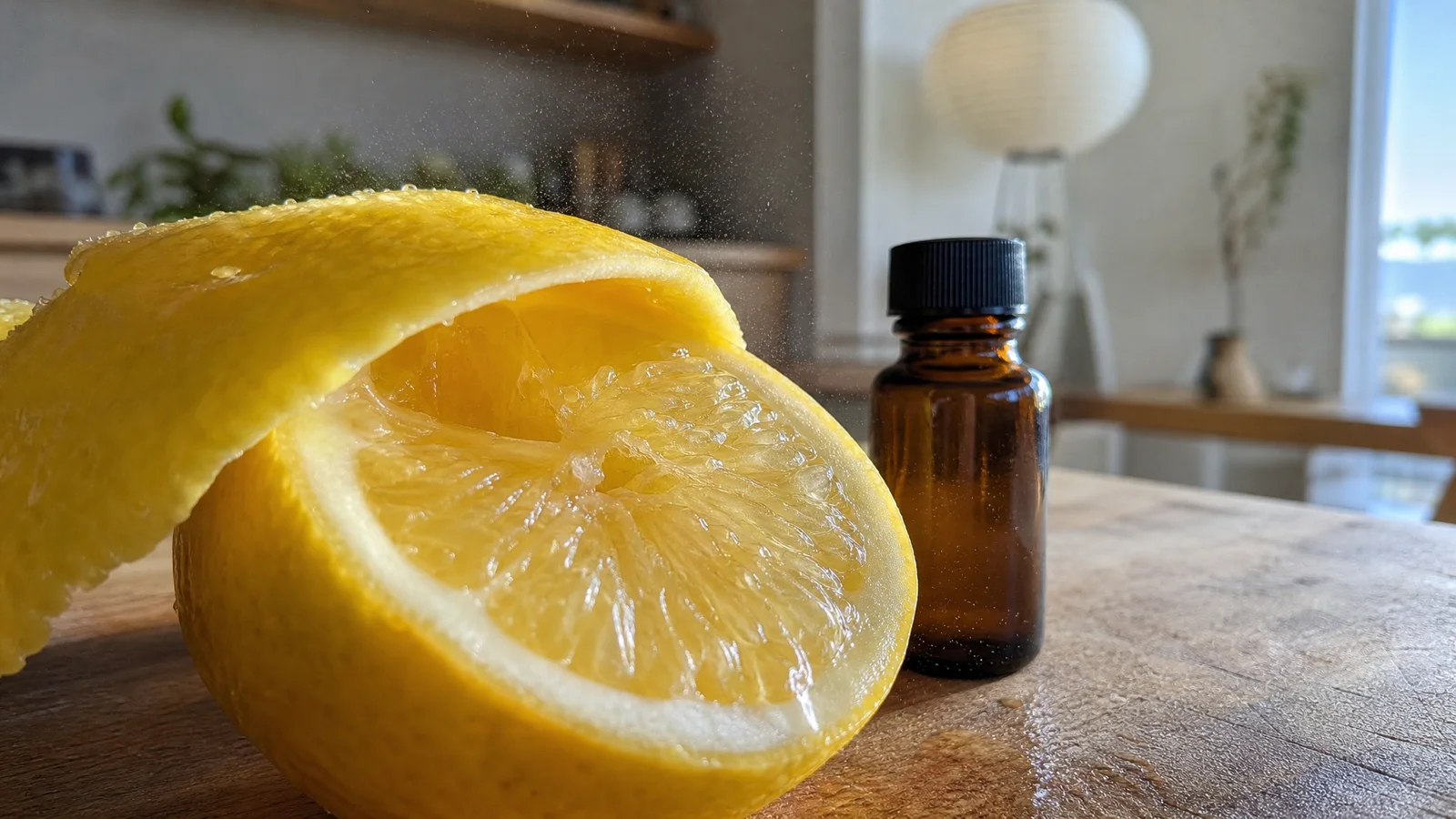
Search for lemon oil and acne and you will find plenty of confident advice and very little evidence. The honest picture is short: the best-known lab study put lemon oil next to acne bacteria in a dish, and it did not single lemon out as a standout. We sell lemon oil as an aroma and craft ingredient, so we make no acne claim for it. What we can do is explain what the research is and why we would keep this oil off blemished skin.
Organic Lemon Essential Oil
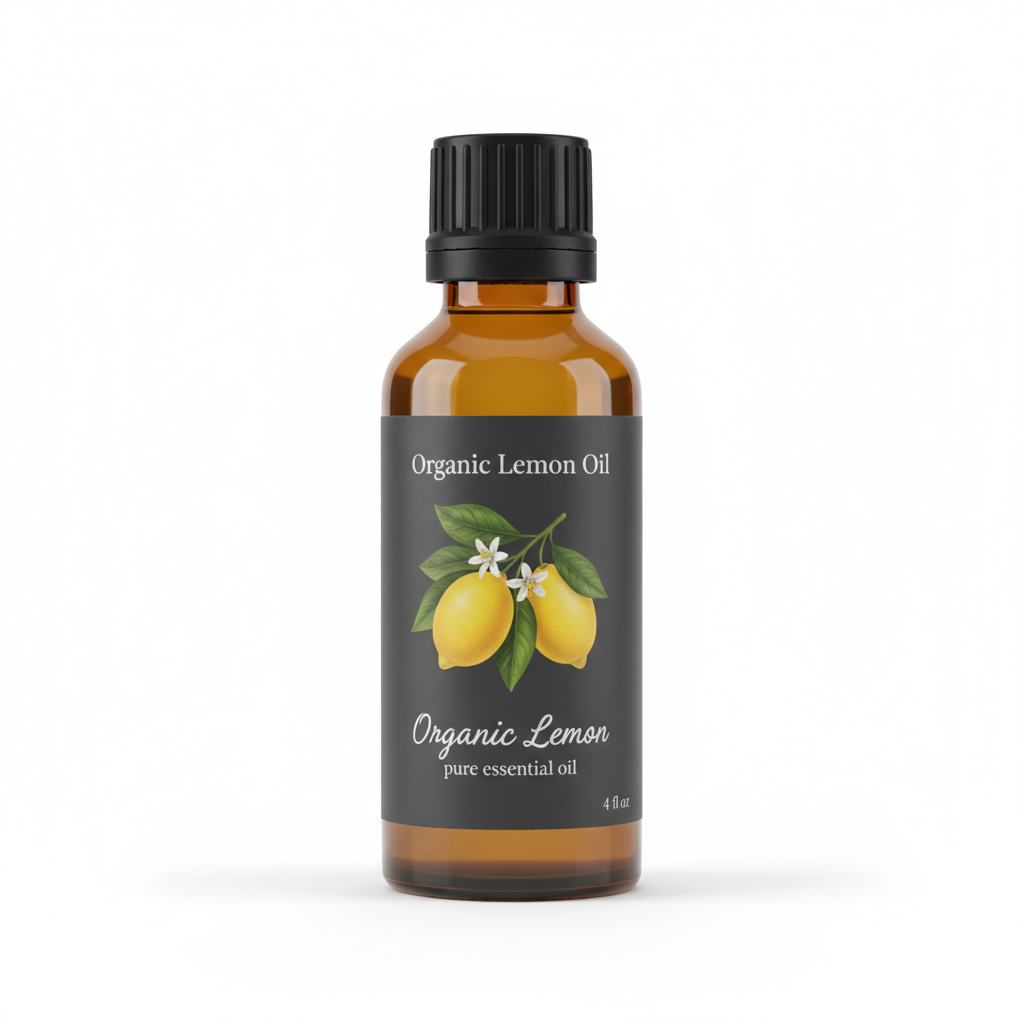
Our own Organic Lemon Essential Oil, in sizes from 0.5 oz to bulk.
From $15.99
Shop Now →The study everyone cites
In 2010, Zu and colleagues tested ten essential oils, lemon among them, against a strain of the bacterium associated with acne, and against three human cancer cell lines, all in laboratory dishes (Zu et al., Activities of ten essential oils towards Propionibacterium acnes and PC-3, A-549 and MCF-7 cancer cells). The oils that stood out were thyme, cinnamon, rose and lavender, not lemon. The authors tested bacteria and cells in culture. They did not test a pimple, a person, or a skin product, and a result in a dish is not a result on a face.
Reviews that gather this research are cautious in the same way. One narrative review of essential oils for acne covers lab work on many oils (Essential Oils in the Treatment of Various Types of Acne-A Review). A second concludes that there is "not yet sufficient medical data to fully characterize this interaction" (Emerging Insights into the Applicability of Essential Oils in the Management of Acne Vulgaris). We did not find a trial of lemon oil on people with acne in any of them, so we have nothing to promise you.
What dermatologists point to
The American Academy of Dermatology's page for adults names the over-the-counter ingredients dermatologists recommend for mild to moderate acne: adapalene, azelaic acid, benzoyl peroxide (starting at 2.5%) and salicylic acid. It suggests sticking with one product for 6 to 8 weeks, and expecting fewer breakouts in 4 to 8 weeks and clearing about 16 weeks in (AAD, Adult acne treatment dermatologists recommend). Lemon oil is not on that list, and if breakouts are painful, deep or lasting, a board-certified dermatologist is the person to ask.
Why lemon is a poor match for blemished skin
Lemon is a cosmetic aroma ingredient with two well-documented skin behaviours worth respecting. Cold-pressed lemon oil is phototoxic, which is why IFRA caps it at 2.0% in leave-on products (IFRA, The complete IFRA Standards, 51st Amendment). And the Tisserand Institute advises keeping skin out of UV for at least 12 hours after a phototoxic amount (Tisserand Institute, Phototoxicity: essential oils, sun and safety).
Put those beside the fact that skin with active breakouts is often already tender, and our reasoning is simple: adding a concentrated, sun-sensitizing aroma oil to inflamed skin is not something we would do. The same Tisserand page gives 0.2% to 1% as the range for sensitive or impaired skin, and 2.0% is already lemon's ceiling, so a general figure for spot treatments is not permission to use lemon (Tisserand Institute, Dilution for essential oils). Our own guidance for skin is 0.5% to 2% in a carrier with a patch test first, no sun on freshly applied skin, and never taken internally. For acne-prone or inflamed skin, we recommend leaving lemon oil out.
If you like the idea of lemon around you, there are plenty of lovely ways to enjoy it that never touch your face: a few drops on a cloth for a cleaning day, a short diffuser session in a ventilated room, or a linen spray for the closet. Those are the jobs where its sparkling smell is the point.
How to read claims online
When you see a post that says lemon oil helps with breakouts, a few simple questions make it easier to judge. Ask what was actually tested: a dish of bacteria, a group of animals, or real people with acne. Ask how many people took part and for how long. Ask who wrote it and whether they are selling something. If the answers are vague, the claim is probably running ahead of the evidence, and it is fine to close the tab and move on.
Handling the bottle with care
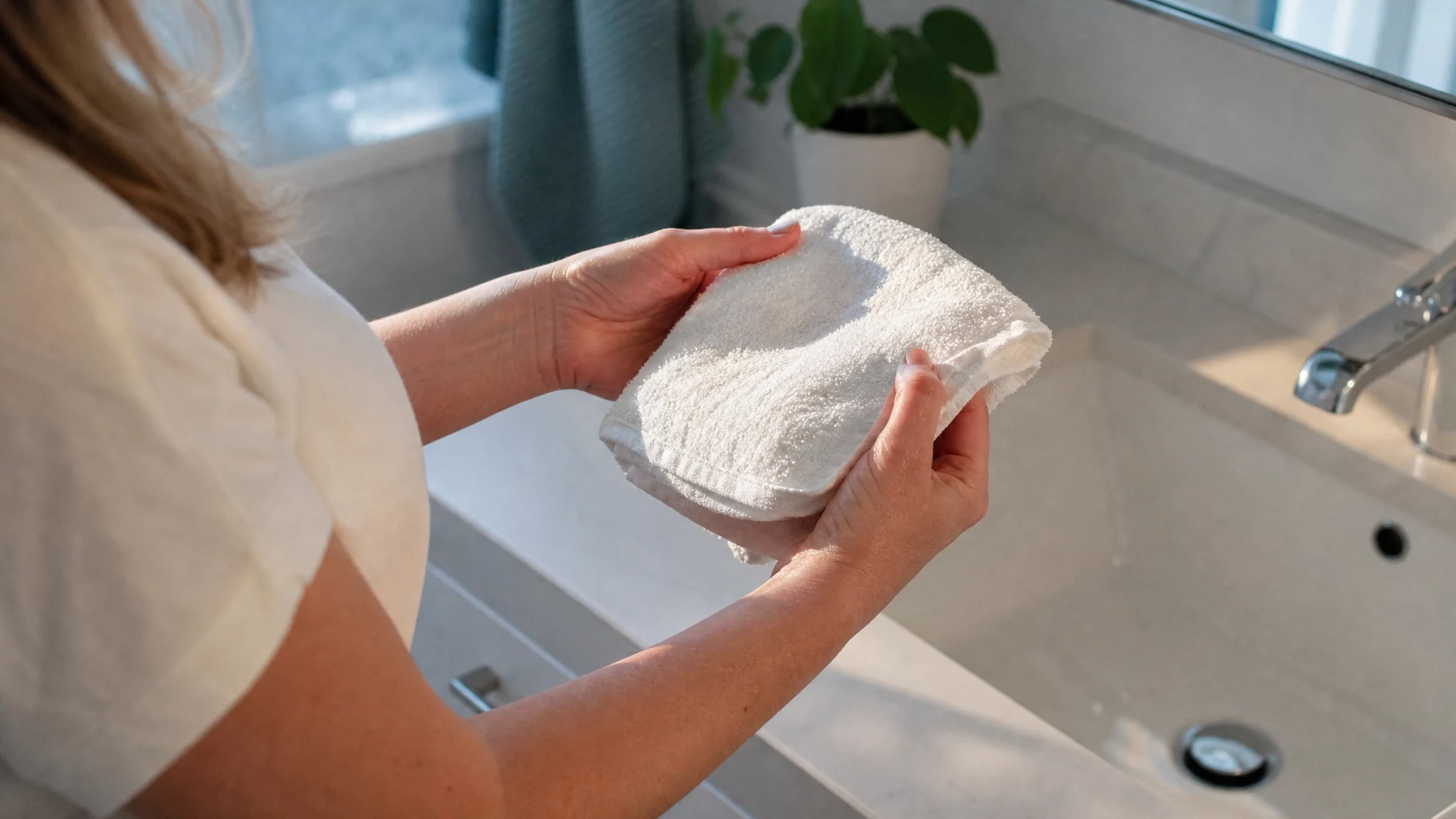
Even if you never plan to put it on your face, a bottle of lemon oil is something your hands touch. Wash your hands after you handle it, before you touch your face, and keep the cap on between uses. Wipe any drips from the outside of the bottle so the next person does not pick them up by accident.
Going to your appointment prepared
If you do book a visit with a dermatologist, it helps to bring a list of everything you use on your skin, from cleansers to creams to anything with fragrance in it. That list lets the professional see the whole picture, and it is more useful than a guess about any single ingredient.
Where lemon does shine
Lemon is a delight in the air and in well-diluted aroma uses, where its sparkling scent is the whole point. Our skin guide covers the dilution and sun basics, and the dark spots post explains how a phototoxic reaction can leave a mark. Lemon oil benefits, honestly sorts the realistic from the hype.
Enjoy lemon for the scent it is famous for, and bring a dermatologist in for the skin concern.
Organic Lemon Essential Oil
Organic Lemon Essential Oil from our own shop, in sizes from 0.5 oz to bulk.
From $15.99
Shop Now →Sources & Further Reading
- Zu et al, 2010. Activities of ten essential oils towards Propionibacterium acnes and PC-3, A-549 and MCF-7 cancer cells. Molecules. pmc.ncbi.nlm.nih.gov/articles/PMC6263286
- Nurzyńska-Wierdak et al, 2022. Essential Oils in the Treatment of Various Types of Acne-A Review. Plants (Basel). pmc.ncbi.nlm.nih.gov/articles/PMC9824697
- Bungau et al, 2023. Emerging Insights into the Applicability of Essential Oils in the Management of Acne Vulgaris. Molecules. pmc.ncbi.nlm.nih.gov/articles/PMC10489792
- American Academy of Dermatology. Adult acne treatment dermatologists recommend. aad.org, adult acne treatment
- IFRA. The complete IFRA Standards, up to and including the 51st Amendment (January 2024). Standards PDF
- Tisserand Institute. Phototoxicity: essential oils, sun and safety. tisserandinstitute.org/phototoxicity-essential-oils-sun-and-safety
- Tisserand Institute. Dilution for essential oils. tisserandinstitute.org/dilution-essential-oils