Lemon Oil GC-MS Report: What the Table Tells You
A GC-MS report looks like the final word on an oil: a tidy column of compounds, each with a percentage. For lemon oil it is a very useful document and also an easy one to over-read. The trick is knowing what the table shows, what it leaves off the page, and which numbers deserve your attention.
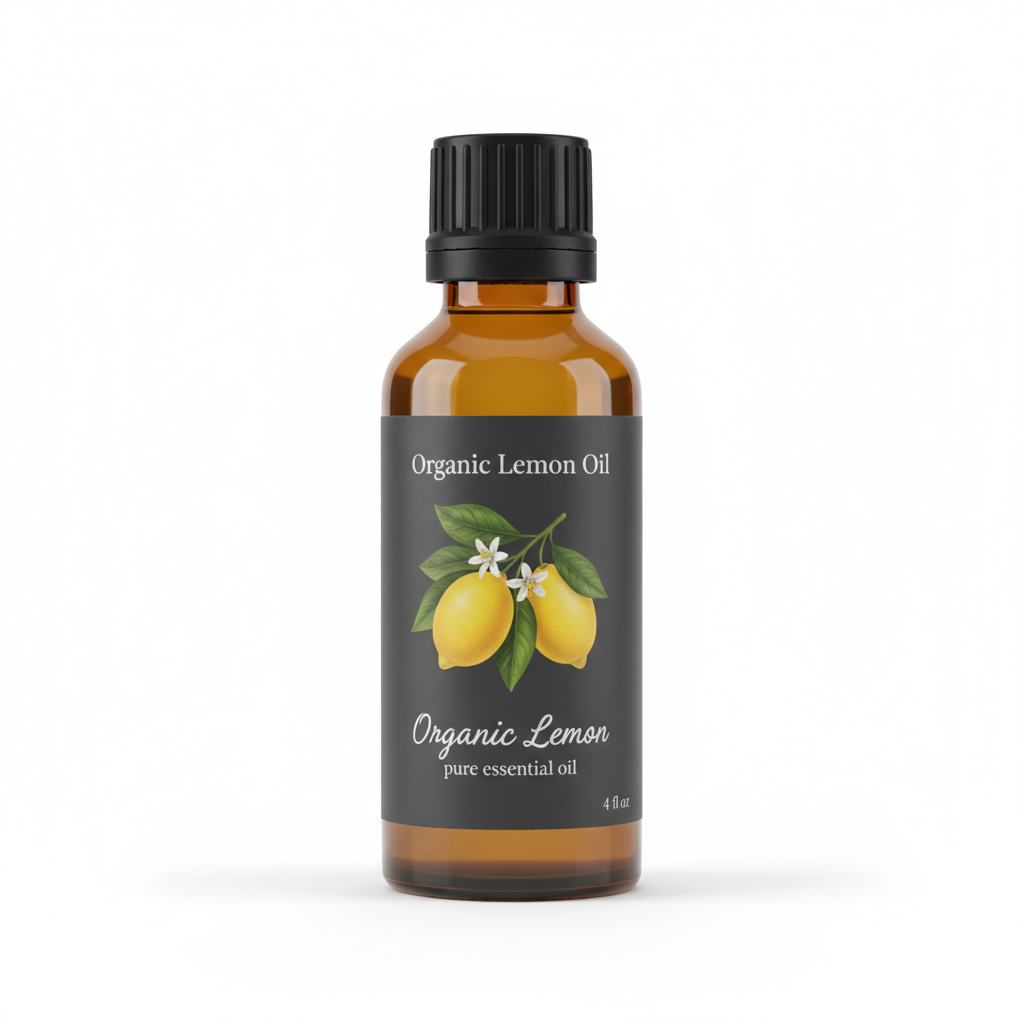
Organic Lemon Essential Oil
Our own Organic Lemon Essential Oil, in sizes from 0.5 oz to bulk.
From $15.99
Shop Now →What a GC-MS actually is
In gas chromatography with mass spectrometry, the oil is vaporized, its components are separated as they travel through a long column, and a mass spectrometer identifies each one as it comes out. It is a single analysis, and it is not the same as a certificate of analysis (COA), which is whatever a supplier chooses to report for a batch. The COA we publish for one batch (LEMFBACLARO001A) lists the botanical name Citrus limon, peel, cold pressed, and three physical readings against stated ranges: relative density 0.849 (0.840 to 0.855), refractive index 1.474 (1.473 to 1.477) and optical rotation +67.80 degrees (+57.0 to +78.0). Those are real and useful checks, but they cannot tell you how much limonene or citral is in the bottle. That is what GC-MS is for.
Read the header first
Before you look at a single peak, find the lot number (it should match the bottle in your hand), the date, the laboratory, and the method. A table with no lot number describes some lemon oil, just not necessarily yours.
What a lemon table should look like
A good yardstick is the European Food Safety Authority's opinion on expressed lemon oil, which analysed ten batches by GC-MS and reported results as a share of peak area against a specification adapted from ISO 855:2003, the international standard for oil of lemon obtained by expression (EFSA FEEDAP Panel, 2021; ISO 855:2003).
| Compound | Specification (% of area) | Ten-batch mean | Range across batches |
|---|---|---|---|
| d-Limonene | 60 to 73 | 64.8 | 61.2 to 66.7 |
| beta-Pinene | 9 to 18 | 13.3 | 11.0 to 16.8 |
| gamma-Terpinene | 6 to 12 | 9.04 | 7.66 to 11.5 |
| alpha-Pinene | 1.3 to 3.0 | 2.74 | 2.23 to 3.63 |
| Geranial and neral (citral) | 0.1 to 2.0 and 0.1 to 1.8 | 1.30 and 0.87 | 0.65 to 2.08 and 0.39 to 1.43 |
Three takeaways make the table more useful than the numbers alone. First, limonene is the headline, but it is not fixed: ten batches that all met the specification ranged over about five and a half points. A gap of a couple of points between two reports is ordinary. Second, citral, the compound people associate with lemon's sharp, zesty edge, is a small line at around two percent combined. Third, judge the whole pattern. An oil with limonene at 66% and beta-pinene far below 9% fits one line and misses another.
Percentages in the table are shares of detector response, not exact weights, so read a limonene figure to the nearest point rather than the nearest tenth.
Can a table show something was added?
Sometimes, and only with the right tools. Researchers have combined chiral analysis, which separates mirror-image forms of molecules, with isotope-ratio mass spectrometry to assess whether Sicilian lemon oils are genuine; in the genuine oils the two forms of alpha- and beta-pinene carried different carbon-13 values (Cucinotta et al., Chiral isotopic fractionation in lemon essential oil: A tool for authenticity assessment?). A routine GC-MS table has neither dimension, so a clean-looking profile is reassuring but not proof. If authenticity is your question, ask whether chiral or isotope analysis was run.
What the table cannot show
The phototoxic fraction of cold-pressed lemon is made of furocoumarins, which are heavy molecules that do not appear in a terpene table. EFSA measured them separately, and its ten-batch averages included 497.3 mg/kg bergamottin, 214.7 oxypeucedanin and 23.6 bergapten. That is why IFRA caps cold-pressed lemon at 2.0% in leave-on products, and applies the cap when the furocoumarin level is unknown. Its standard on limonene also asks for a peroxide value under 20 millimoles per litre for limonene-rich natural materials, because oxidation products are potent sensitizers (IFRA, The complete IFRA Standards, 51st Amendment). Peroxide value is its own titration, and a pesticide panel is its own test too.
A simple way to read one at the kitchen table
Reports can look intimidating, so here is the routine we would follow with a cup of tea and a pencil.
- Find the lot number and compare it with the one on your bottle.
- Look at the date and the lab name. If either is missing, make a note to ask.
- Find limonene and see whether it is the biggest line. For lemon it should be.
- Glance at the next few names and see whether the report has the same cast of characters as the table above.
- Write down any question, then send it before you order, not after.
You do not need to understand every peak. A report that is clearly labelled, clearly dated and matched to a lot already tells you a good deal about the people who handed it to you.
What to ask for
If your project needs more than density, refractive index and rotation, ask for it in writing before you order: a GC-MS or GC-FID report with the lot number on your bottle, the method, a furocoumarin figure, a peroxide value and any residue panel you need. Ask us through our contact page, and keep the answer in writing, because the lot on your bottle governs, not the batch on our COA. Our chemistry article explains what these compounds do, quality checks before you pay covers what a buyer can judge without a lab, and citrus oils compared puts lemon beside its cousins.
A dated, lot-matched report that says how it was run is worth more than a handsome table that does not.
Organic Lemon Essential Oil
Organic Lemon Essential Oil from our own shop, in sizes from 0.5 oz to bulk.
From $15.99
Shop Now →Sources & Further Reading
- EFSA FEEDAP Panel, 2021. Safety and efficacy of feed additives consisting of expressed lemon oil and its fractions from Citrus limon (L.) Osbeck and of lime oil from Citrus aurantiifolia (Christm.) Swingle for use in all animal species (FEFANA asbl). EFSA Journal. pmc.ncbi.nlm.nih.gov/articles/PMC8085978
- ISO. ISO 855:2003 - Oil of lemon [Citrus limon (L.) Burm. f.], obtained by expression. committee.iso.org/standard/32042.html
- Cucinotta et al, 2023. Chiral isotopic fractionation in lemon essential oil: A tool for authenticity assessment? J Chromatogr A. europepmc.org/MED/37757528
- IFRA. The complete IFRA Standards, up to and including the 51st Amendment (January 2024): Lemon oil cold pressed; Limonene. Standards PDF