Lemon Oil on Skin: Dilution Chart and Sun Safety
Lemon oil is one of the most inviting scents on a shelf, and it is natural to want to wear it. On skin, the oil asks for two habits: dilute it, and watch the sun. With those in place it is easy to enjoy, and the numbers are simple enough to do at the kitchen counter.
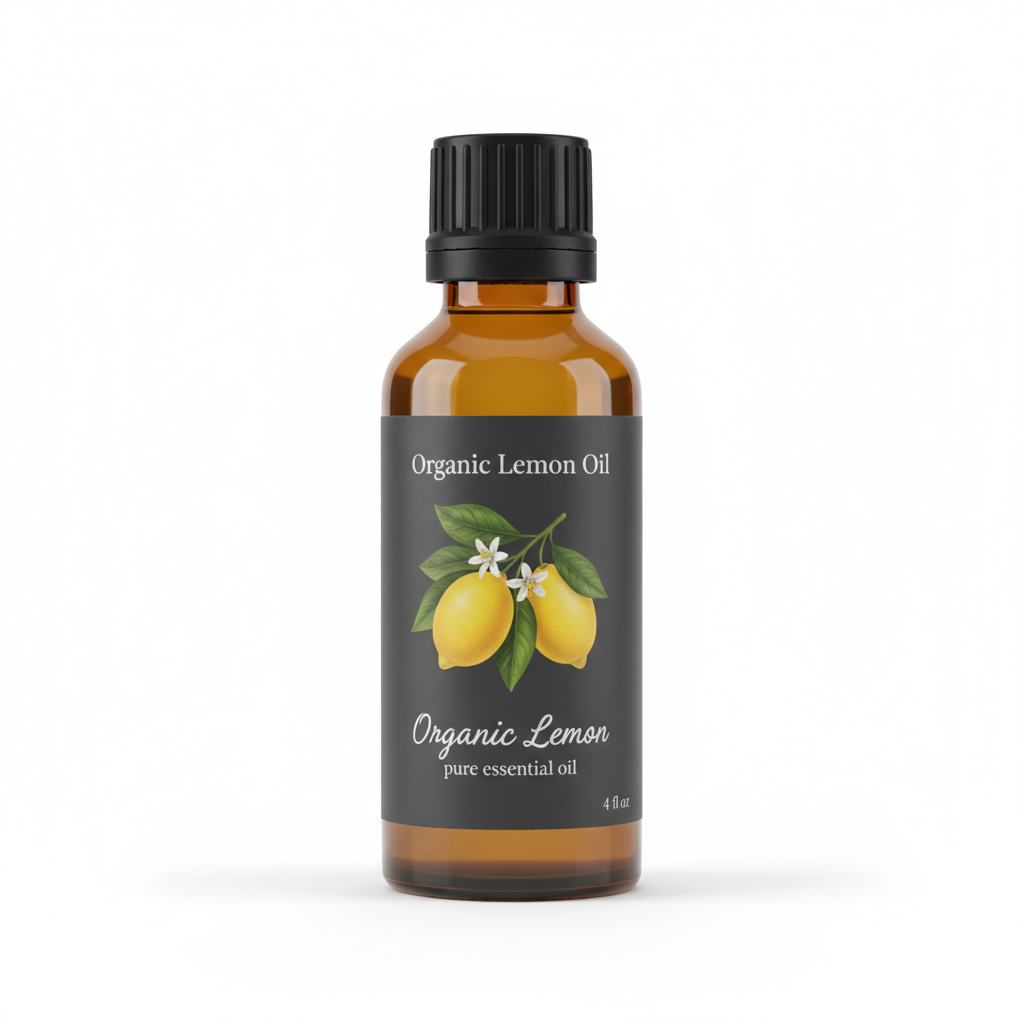
Organic Lemon Essential Oil
Our own Organic Lemon Essential Oil, in sizes from 0.5 oz to bulk.
From $15.99
Shop Now →Start with dilution
We sell our lemon oil neat, so the carrier is yours to choose. We recommend diluting to 0.5% to 2% in a carrier oil, with a patch test on a small area first. Here is what that looks like in drops per ounce of carrier. These are our own arithmetic, using about 20 drops per millilitre and the density on our Certificate of Analysis, and droppers vary.
| Dilution | Drops per 1 oz carrier |
|---|---|
| 0.5% | about 3 |
| 1% | about 6 |
| 2% | about 12 |
Three drops does not sound like much, and that is the point. Lemon oil is concentrated and a little goes a long way, in both scent and effect. For choosing a carrier, our carrier oil guide goes through the options.
Why we stay at the low end
The 2% figure comes from IFRA, the fragrance industry's standards body, which sets 2.0% as the most cold-pressed lemon oil should make up in a finished leave-on product. It is a ceiling, and the Tisserand Institute is clear that it is a maximum, not a recommended amount. Tisserand's general ranges are lower for delicate areas: 0.5% to 1.2% for the face and underarms, and 0.2% to 1% where skin is sensitive or already compromised. So our habit is to start at 0.5%, use 1% on the body if you like a stronger scent, and treat 2% as the top of the range rather than the goal.
The sun clock
The reason for that ceiling is that cold-pressed lemon is phototoxic. It carries furocoumarins, and when skin holding them meets UVA light it can react, with redness, sometimes blisters, and a brown mark afterwards. IFRA says outright that the lemon standard is set because of these phototoxic effects, and Tisserand suggests keeping skin out of UV for at least 12 hours after a phototoxic amount. We do not offer a furocoumarin-free lemon, since that is a differently made, differently scented material.
Our practical version is easy to remember. Use lemon oil on skin you will keep covered or indoors, in the evening rather than before a beach day, and not on the face, neck or forearms heading into bright sun. A patch test checks for irritation, though, reasoning from how the reaction works, it cannot show a sun reaction because the sun is missing.
Making your first small batch
Here is a gentle way to begin, using the 0.5% row of the table. Choose a small clean glass bottle and measure an ounce of your carrier oil into it. Add 3 drops of lemon oil, cap it and roll it between your palms to mix. Label it with the date and the percentage, and keep it in a cool, dark cupboard.

When you use it for the first time, smooth a little on the inside of your forearm and wait before using it more widely. You will notice that the scent is soft, a lemon whisper rather than a lemon shout, and that it fades quickly because it is a top note. That is normal, and a good reason to resist adding more drops. Make small batches more often rather than a large batch that sits around.
Choosing the moment
Timing makes a difference to how much you enjoy a lemon-scented oil. An evening routine suits it well: after a shower, when the day is done, with the lights low and nowhere to go in the sun. Apply it to the shoulders or the backs of the arms, which are easy to cover the next morning, and keep it away from the face and from anywhere that will be bare tomorrow. Wash your hands afterwards so you do not carry it to your eyes.
Freshness and the rest of the citrus shelf
Two more habits keep things smooth. First, keep the bottle capped, cool and out of light. Limonene, lemon's main component, reacts with air, and IFRA notes that its oxidation products are potent sensitizers, so an old, half-empty bottle is a different proposition from a fresh one. A large patch-testing study of oxidized limonene found positive reactions in about 5% of the dermatitis patients tested. Our storage guide explains the details.
Second, citrus oils add up. IFRA's rule for furocoumarin oils is to add each oil's share of its own limit and keep the total at or below 100. Lemon at 1% uses half of its 2.0%. Bergamot's limit is 0.40%, so 0.2% bergamot would use the other half. That is arithmetic on published limits, not a tested blend, but it is a good reason to keep skin blends simple. Our citrus comparison lines the limits up side by side.
Essential oils in general can cause contact allergy, and a review of the literature found that most reactions come from applying undiluted oils or high-concentration products. If skin turns red, itchy or sore, stop using the oil and wash the area; persistent or severe dermatitis is something to show a GP, as the NHS advises. For anything about skin conditions, a dermatologist is the right person to ask, and for the long view on sunlight and brown marks, see our piece on lemon, sun and skin marks.
Keep it diluted, keep it capped, and keep it out of the midday sun, and lemon oil is a bright companion for an evening massage oil or a body balm you make yourself.
Organic Lemon Essential Oil
Organic Lemon Essential Oil from our own shop, in sizes from 0.5 oz to bulk.
From $15.99
Shop Now →Sources & Further Reading
- IFRA Standards, up to and including the 51st Amendment (January 2024): Lemon oil cold pressed; Citrus oils and other furocoumarins containing essential oils; Limonene
- Tisserand Institute, Dilution for essential oils
- Tisserand Institute, Phototoxicity: essential oils, sun and safety
- Bråred Christensson et al., 2013. An international multicentre study on the allergenic activity of air-oxidized R-limonene. Contact Dermatitis
- de Groot and Schmidt, 2016. Essential Oils, Part IV: Contact Allergy. Dermatitis
- NHS, Contact dermatitis