Best Carrier Oils for Lemon Oil: How to Choose
When you dilute lemon oil to 1% in a carrier, the carrier is 99% of what ends up on your skin. That is worth a moment of thought, because the carrier you pick shapes how the blend feels, how long it stays fresh and whether it suits the person using it.
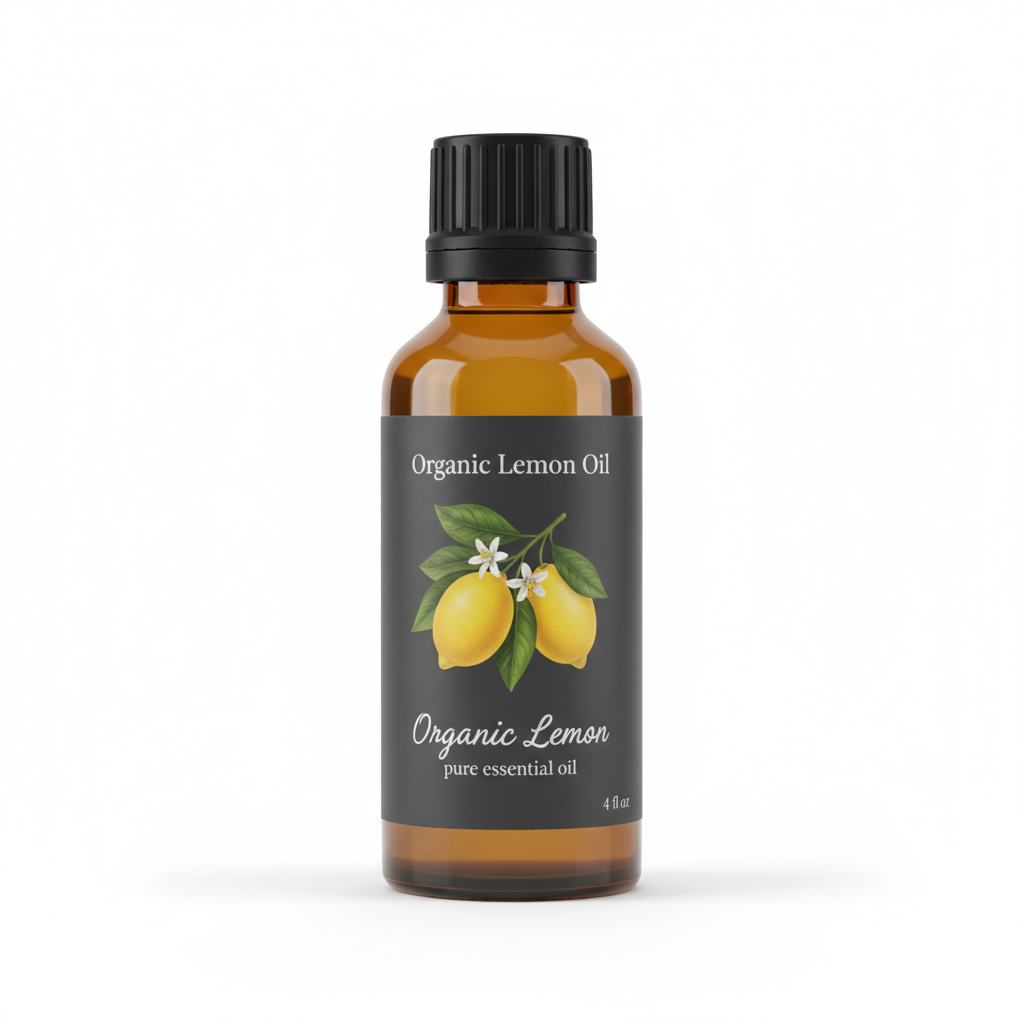
Organic Lemon Essential Oil
Our own Organic Lemon Essential Oil, in sizes from 0.5 oz to bulk.
From $15.99
Shop Now →Fix the lemon percentage first
Our lemon oil is sold neat, so the dilution is yours to set. We recommend 0.5% to 2% in a carrier oil with a patch test first and no sun on freshly treated skin. That keeps you at or under the IFRA ceiling of 2.0% for cold-pressed lemon in most leave-on products, and the Tisserand Institute, which calls 2% a maximum and not a recommended amount, suggests lower ranges for sensitive skin (0.2% to 1%) and face products (0.5% to 1.2%). Because of that we like to start low. A carrier does not move any of these limits.
| Target | Lemon oil in 1 oz (29.57 ml) of carrier | Approximate drops |
|---|---|---|
| 0.5% | about 0.15 ml | 3 |
| 1% | about 0.30 ml | 6 |
| 2% | about 0.59 ml | 12 |
These are our arithmetic at about 20 drops per ml, treating the percentage as a share of volume. Droppers vary, and lemon oil is lighter than most carriers (the batch on our Certificate of Analysis has a relative density of 0.849), so weigh the oil if you need the percentage to be exact.
Freshness beats fame
Lemon oil is mostly limonene, and IFRA’s limonene standard says its oxidation products, especially hydroperoxides, are potent sensitizers. Reasoning from that, the sensible thing to ask of a carrier is that it be fresh, kept well and from a supplier who will give you a lot number and a date. A carrier that smells stale or like old crayons has aged, and mixing fresh lemon oil into it does not help either ingredient. A small bottle bought for the project, rather than a half-used one from the back of a cupboard, makes a better blend.
What one skin study found about olive and sunflower
Natural does not automatically mean gentle on the skin barrier, and there is one controlled study worth knowing. Nineteen adult volunteers, with and without a history of atopic dermatitis, applied six drops of olive oil to one forearm twice daily. In the second part, olive oil went on one forearm and sunflower seed oil on the other for four weeks. Olive oil reduced stratum corneum integrity and caused mild redness. Sunflower seed oil preserved integrity, caused no redness and improved hydration. The authors discouraged olive oil for dry skin and infant massage.
That is a small study of forearms, and it did not include lemon oil. Even so, our own editorial view is that it makes sunflower seed oil an easy first choice for a leave-on lemon blend, and olive oil one you might skip for skin, however well it suits the kitchen. Our post on lemon infused olive oil versus lemon essential oil covers the kitchen side.
Feel and scent: what you will notice
Different carriers feel different in the hand. A light one spreads thinly and leaves little shine, while a heavier one feels richer and stays on the surface longer. Some carry a faint scent of their own, nutty or grassy, and that can blend in with the lemon or compete with it. Put a little of each on a paper towel, smell it, and rub a drop between two fingers before you decide. The one that feels good to you is usually the one you will actually use.
Mixing a small test batch
Before you make a large bottle, make a small one. Measure the carrier into a clean dark glass bottle, add the drops of lemon oil, cap it and tilt it gently. Label it with the date and the percentage. Let it sit overnight and smell it the next day. If the scent is as you hoped, scale up. If not, you have only used a little.
Label everything
Once the blend is mixed, a label is not optional. Write the carrier, the lemon percentage, the number of drops and the date, and add a note to keep it away from eyes, children and pets. A month from now you will not remember, and neither will anyone else in the house. Store the bottle somewhere cool and dark, with the cap on tight.
How we would choose
- Pick the use first. A face product sits near 0.5% to 1.2%, a body oil can reach the top of our range, and anyone with sensitive skin should stay at the low end.
- Choose a lightly scented or unscented carrier so the lemon aroma comes through.
- Buy small, in dark glass, from a supplier who can state a lot number and a date.
- Patch test the finished blend, not only the lemon oil.
We sell lemon oil and nothing else, so carrier oils are a job for a craft or soap-supply shop, a pharmacy or the grocery aisle. Before you scale up, our guide to lemon oil on skin is a good read, and picking a bottle size will help you buy only what the project needs.
A good carrier is quiet. It lets the lemon do the talking and keeps the blend pleasant to use from the first drop to the last.
Organic Lemon Essential Oil
Organic Lemon Essential Oil from our own shop, in sizes from 0.5 oz to bulk.
From $15.99
Shop Now →Sources & Further Reading
- Effect of olive and sunflower seed oil on the adult skin barrier: implications for neonatal skin care, Danby et al., 2013
- Dilution for essential oils, Tisserand Institute
- IFRA Standards, 51st Amendment, International Fragrance Association (standards for lemon oil cold pressed and for limonene)