Lemon Oil vs Lime Oil: Pressed or Distilled?
Lemon and lime sit side by side in the citrus aisle, and plenty of recipes treat them as a straight swap. The fruit is not what decides whether that works. The word that matters is on the label: expressed or distilled.
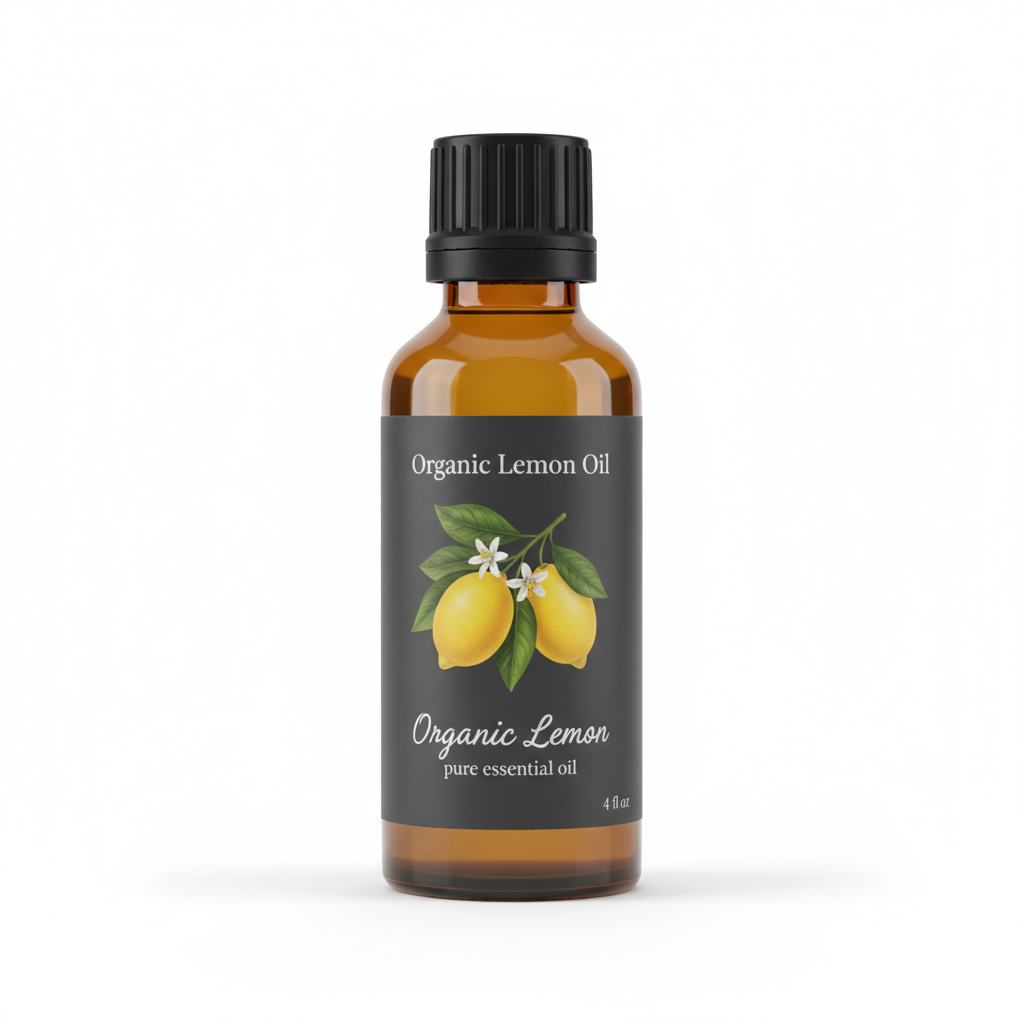
Organic Lemon Essential Oil
Our own Organic Lemon Essential Oil, in sizes from 0.5 oz to bulk.
From $15.99
Shop Now →Pressed or steamed
If you cook, you already know that lemon and lime do not behave the same in a dish, even though both are sour and bright. Oils are the same. They are cousins, but the way the bottle was made decides what it can do for you, and that is the detail worth checking first.
Lemon oil is classically pressed. ISO 855:2003 is titled "Oil of lemon [Citrus limon (L.) Burm. f.], obtained by expression", and ours is cold-pressed lemon peel oil. Lime has two lives. ISO 3519:2005 describes "Oil of lime distilled, Mexican type", and the European Food Safety Authority notes that although lime oil can be expressed, the producer in its review preferred steam distillation, crushing whole limes, recovering the juice that carries the oil and distilling it (EFSA). So a bottle that says only "lime" could be either, and the two behave differently on skin.
Why the process changes the limit
Pressed citrus oils carry furocoumarins from the peel, which can make skin more sensitive to sunlight. Steam distillation leaves most of them behind. Tisserand Institute reports that a distilled lemon oil had about 22 times less bergapten and 930 times less citropten than an expressed one, and it describes citrus oils that are distilled as not phototoxic, though strictly speaking they contain very much less rather than none (Tisserand Institute). EFSA's review of distilled lime oil reached the same practical conclusion, citing "Lime oil is not phototoxic."
Expressed lime is a different story. The IFRA standards list "Lime oil expressed" as a restricted phototoxic material and cap it at 0.70% in most leave-on product categories, against 2.0% for cold-pressed lemon (IFRA Standards, 51st Amendment). The two statements do not conflict. They describe two materials that happen to share a fruit name.
What this means for a recipe
A little arithmetic helps. An ounce of carrier oil has room for about 591 drops of oil at the density of the batch on our Certificate of Analysis, so 0.7% is about 4 drops and 2% is about 12. Copy a lemon recipe's 12 drops with expressed lime and you would be roughly three times over IFRA's figure for that oil. Those are ceilings for finished leave-on products, not targets, and for skin we suggest starting lower than the ceiling. Our guidance is 0.5% to 2% in a carrier with a patch test, and the Tisserand Institute's generic range for the face is 0.5% to 1.2% (dilution guidance).
IFRA also adds furocoumarin-bearing oils together. Each oil's share is measured against its own limit, and the shares must total no more than 100. Lemon at 1.0% is half of its limit, expressed lime at 0.35% is half of its limit, and together they are already at the line. So blending the two means doing the sum, and keeping the cold-pressed lemon in the recipe at a moderate level leaves room for everything else.
How they smell side by side
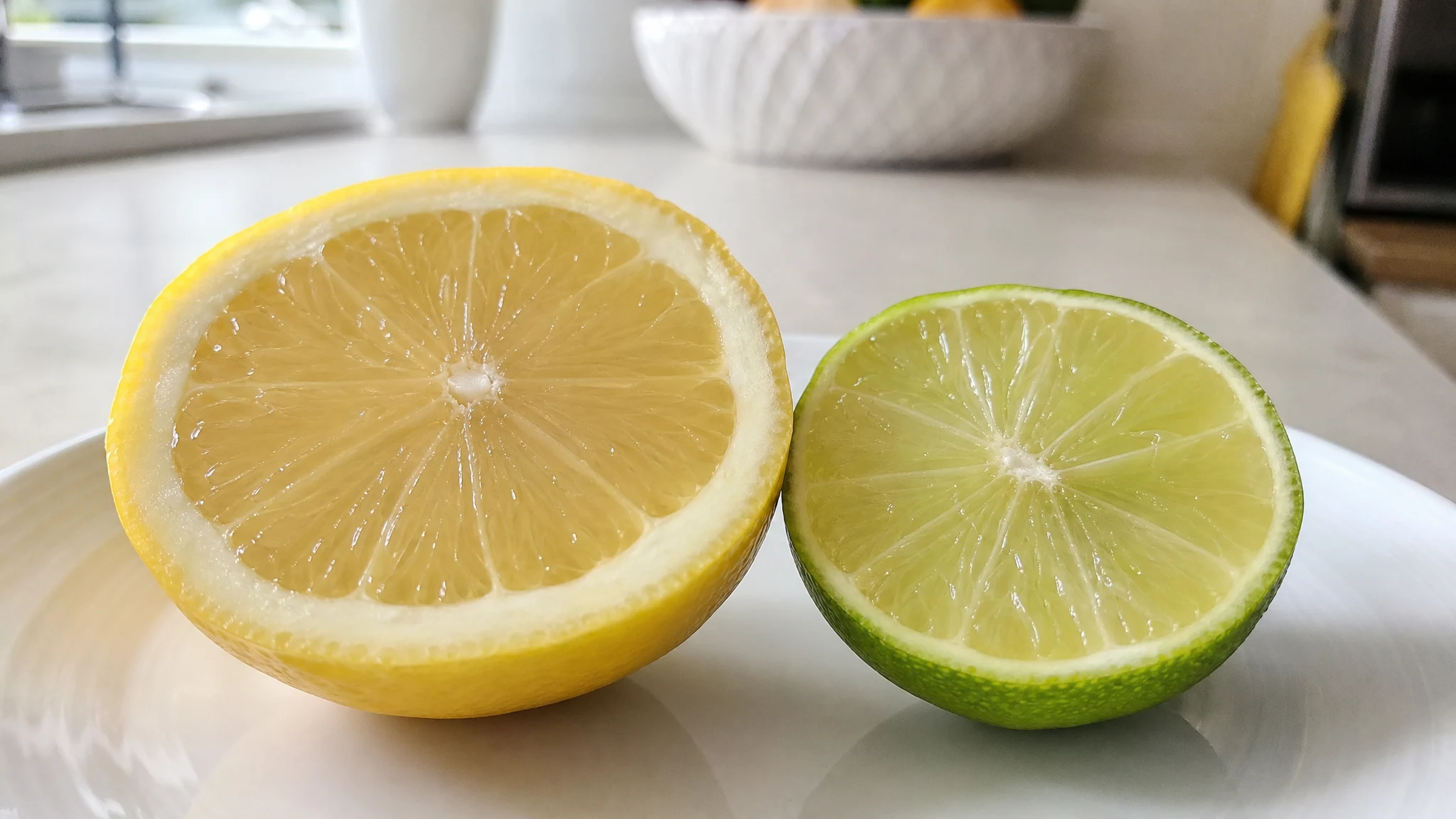
If you get the chance to smell both, take it slowly. Lemon opens bright, sweet and sparkling. Lime often reads sharper and a little more bitter, with a greener edge. Keep in mind that a distilled lime and a pressed lime can smell different from each other too. Put each on a paper strip, wait a minute, and notice how the scent changes as it settles.
Two limes are not one lime
Another reason "lime" on a label is not enough: the name covers different fruit, including Key lime (Citrus aurantiifolia) and Persian lime (C. latifolia), and a distilled oil and a pressed oil are different materials. Swapping one for another changes more than the fruit name. Cold-pressed lemon leans on limonene and beta-pinene, averaging 64.8% limonene across EFSA's ten batches. We sell no lime, so we will leave aroma rankings to your own nose.
A tip for recipes
Whenever you adapt a recipe that calls for one citrus, write down the swap on the card. A note like "lemon instead of lime, pressed oil, half the amount" will save you from guessing next time. Start with fewer drops than the original and add if you want more, since citrus scents can climb quickly.
What to check on any lime oil
- Process: distilled or expressed. If the label does not say, ask.
- Species: aurantiifolia or latifolia, since they are different fruit.
- Furocoumarin data on the lot, in writing, if the oil will go on skin.
- Freshness: limonene-rich oils age in air, and IFRA's limonene standard asks for a low peroxide value for that reason.
Lime oil, carrier oils and solubilizers are available from craft and soap-making suppliers. For more on how the citrus family compares, our citrus oils comparison and pairing guide are good next stops, and lemon, lemongrass and lemon balm sorts out the other lemony look-alikes. For a lemon that stays bright in a blend, pair it with peppermint, basil, lavender, rosemary, bergamot or sweet orange as we suggest, but mind the sum rule if bergamot is in the mix.
Last, a word on enjoying them. Lemon and lime are both lovely in a bright room scent, and nothing says you have to choose. Just treat each as its own oil, with its own label, its own drops and its own note on the recipe card.
Organic Lemon Essential Oil
Organic Lemon Essential Oil from our own shop, in sizes from 0.5 oz to bulk.
From $15.99
Shop Now →Sources & Further Reading
- ISO 855:2003 - Oil of lemon [Citrus limon (L.) Burm. f.], obtained by expression. ISO
- ISO 3519:2005 - Oil of lime distilled, Mexican type (Citrus aurantifolia (Christm.) Swingle). ISO
- EFSA Panel on Additives and Products or Substances used in Animal Feed, 2021. Safety and efficacy of feed additives consisting of expressed lemon oil and its fractions from Citrus limon (L.) Osbeck and of lime oil from Citrus aurantiifolia (Christm.) Swingle for use in all animal species (FEFANA asbl). EFSA Journal, via PubMed Central
- IFRA Standards, 51st Amendment (the complete IFRA Standards, January 2024). ifrafragrance.org
- Tisserand Institute. Phototoxicity: essential oils, sun and safety. tisserandinstitute.org
- Tisserand Institute. Dilution for essential oils. tisserandinstitute.org