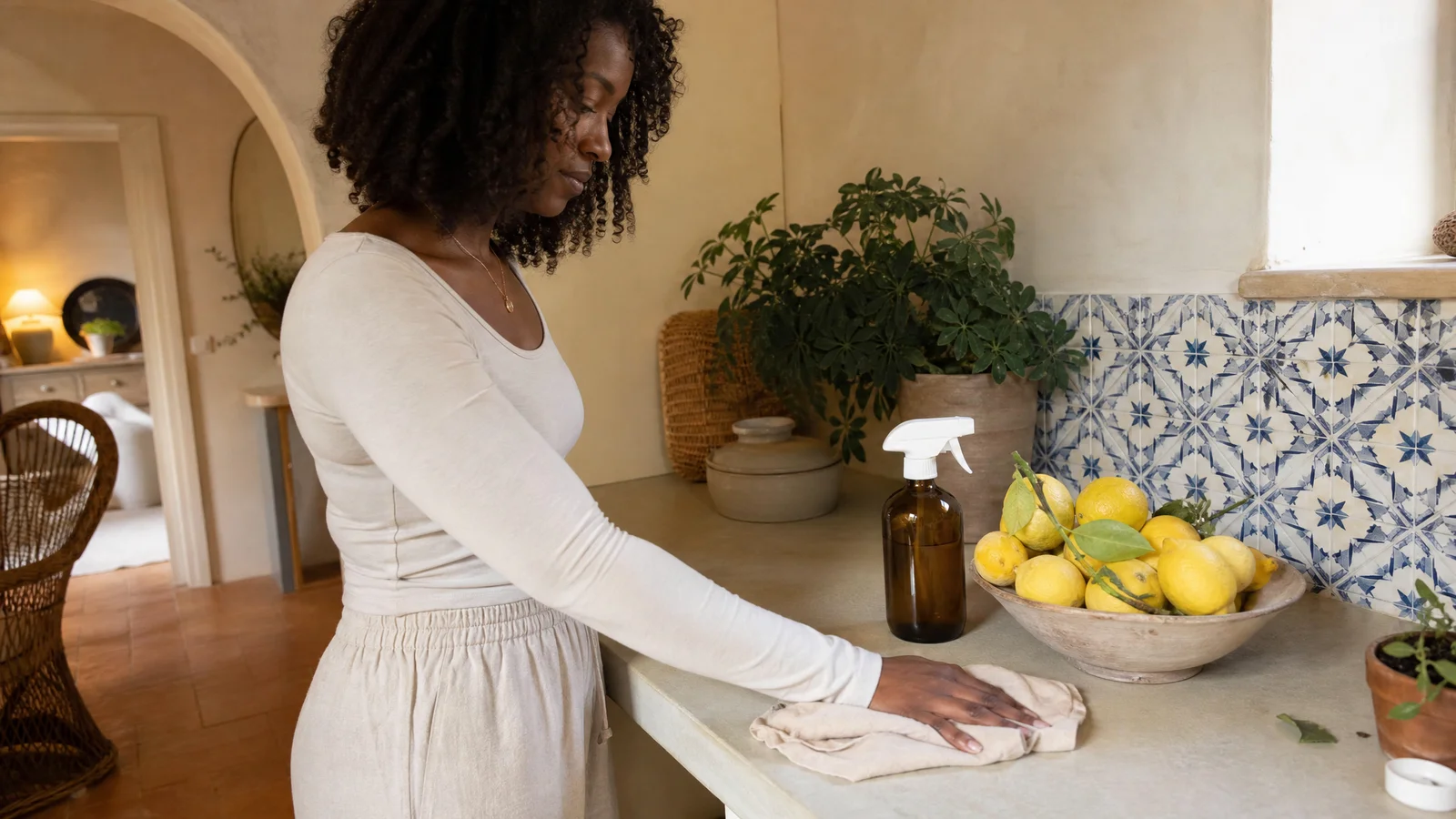
Lemon Oil for Cleaning: What It Does and Doesn't Do
Everyone has a sticky label that will not come off, and a bottle of lemon oil is the classic fix. It really does work on that job, and the reason is simple chemistry. Lemon oil is mostly limonene, and limonene is happy to dissolve other oils and tacky residues. The same chemistry tells us where lemon oil does less, so here is a quick sort of the jobs it suits.
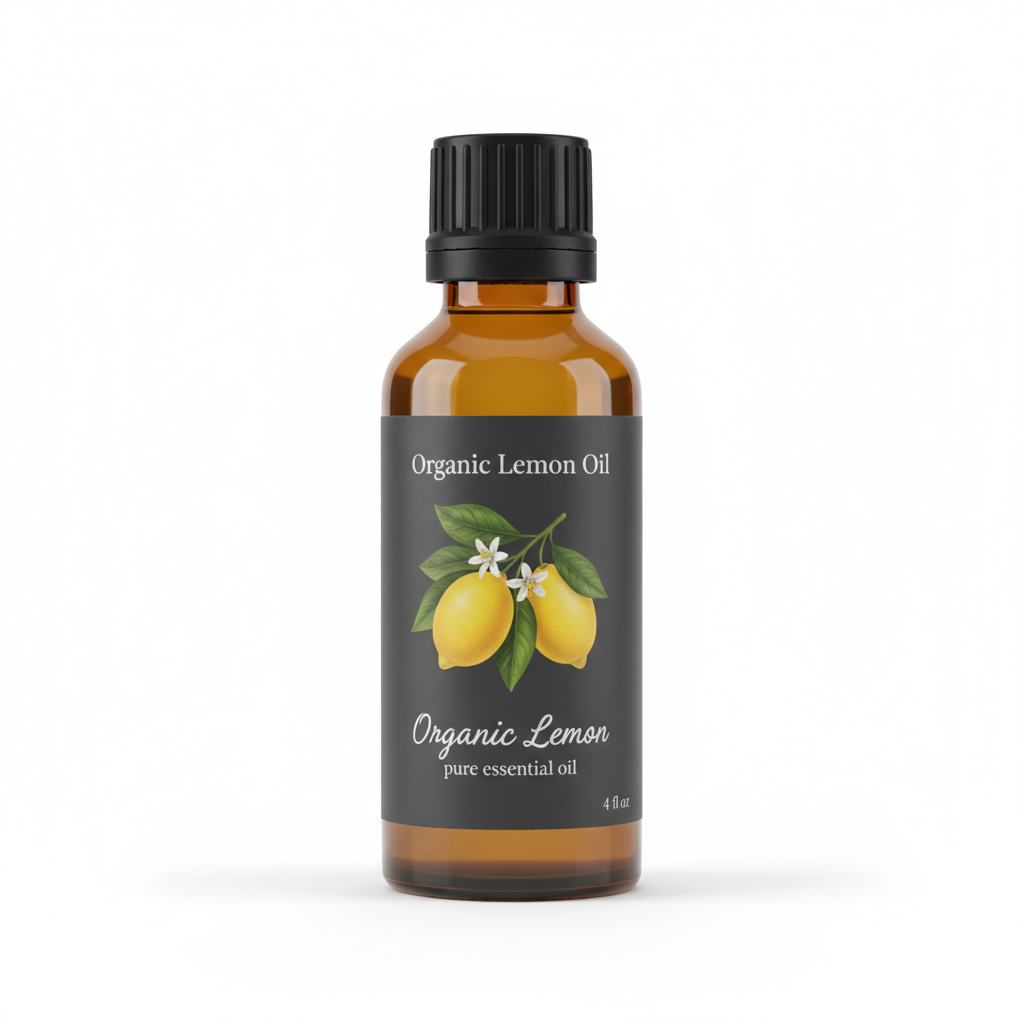
Organic Lemon Essential Oil
Our own Organic Lemon Essential Oil, in sizes from 0.5 oz to bulk.
From $15.99
Shop Now →An oil that dissolves oil
PubChem lists D-limonene as barely soluble in water, about 13.8 mg per litre at 25 C, and miscible with fixed oils. In plain terms, lemon oil blends into fats and oily films and floats on water. So it is a natural for adhesive residue from labels and tape, and it is a poor candidate for a water-based countertop spray unless a dispersing agent is added. For glass and mirrors it also leaves its own oily film behind, and soap and water or a glass cleaner serve better there.
Here is the arithmetic we would use, offered as a suggestion rather than a tested method. At about 20 drops per millilitre, 3 to 5 drops on a cloth is plenty for one label. Test a hidden spot first, since a solvent can affect some plastics, rubber and finishes, then wipe the area afterward with a little dish soap and water so no oil stays behind.
A sticky label, step by step
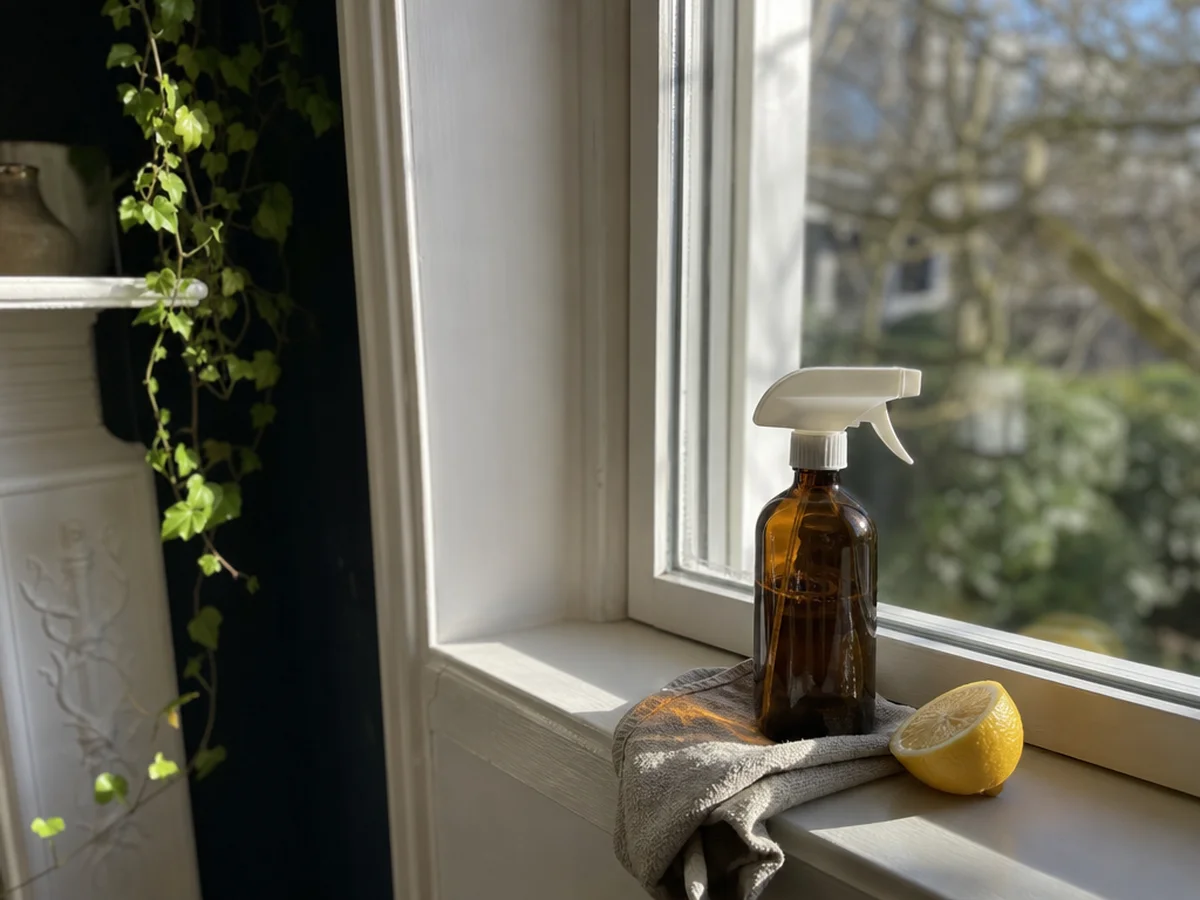
Here is how we would set up the job, written as plain how-to rather than a tested method. Peel off whatever comes away easily first. Put a few drops on a clean cloth, not on the surface itself, and press the cloth against what is left of the sticky patch. Give the oil a minute to soak in, then rub in small circles. You will notice the residue start to roll up into little crumbs that lift away on the cloth. Finish with a damp, soapy cloth so the surface is not left slick.
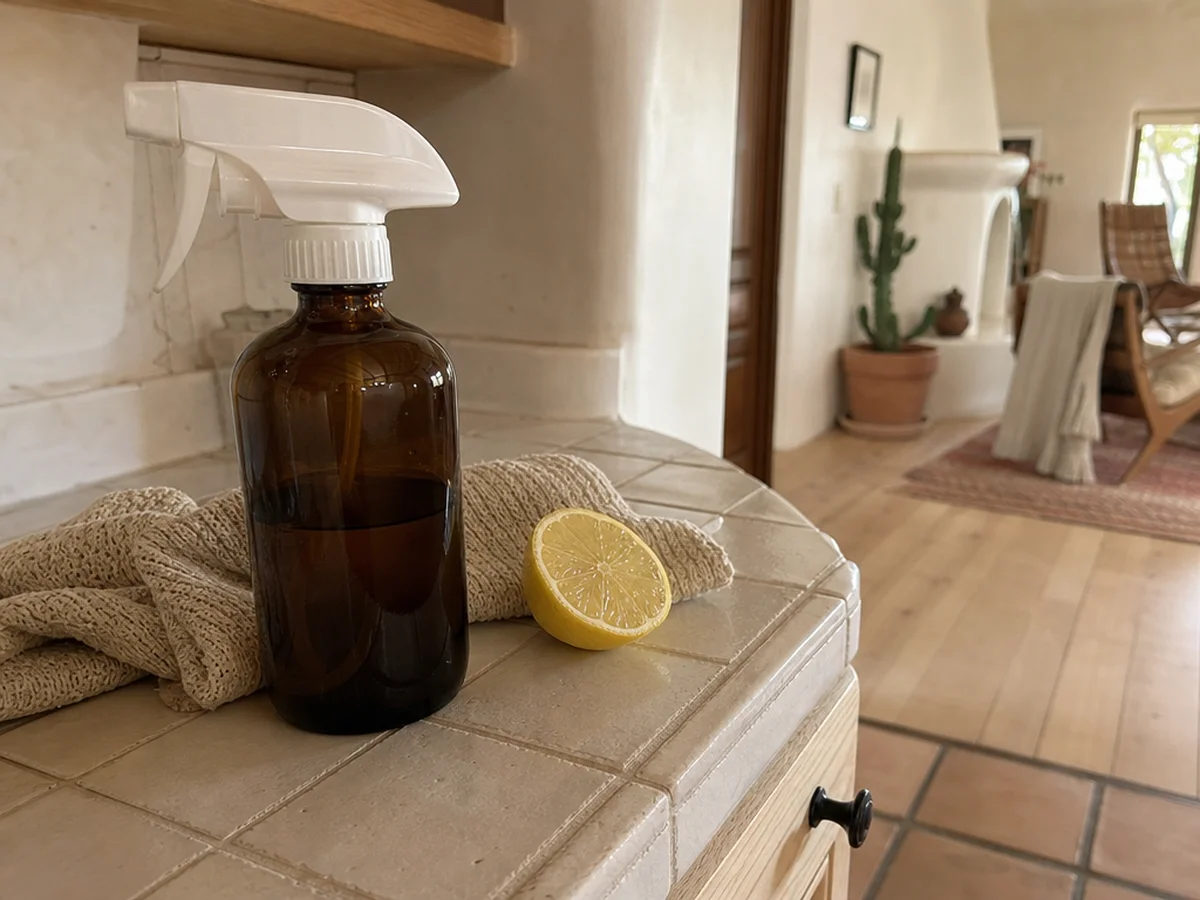
Work on a small, hidden corner first if the surface is anything other than glass or glazed ceramic. Patience beats force here, and a second round with fresh drops is gentler than scrubbing hard.
Clean is not the same as disinfected
The CDC separates two jobs. Cleaning removes most germs, dirt and impurities from surfaces, while disinfecting kills most germs and calls for an EPA-registered disinfecting product (When and How to Clean and Disinfect Your Home | Water, Sanitation, and Environmentally Related Hygiene (WASH) | CDC). Lemon oil is a scent and a solvent, and we make no disinfecting claim for it. Where a surface needs disinfecting, use a registered product as its label directs. Our vinegar cleaner post goes through why lab results for citrus oils do not translate to a kitchen counter.
Choosing the cloth
An old cotton t-shirt, a soft dishcloth or a stack of paper towels all work well. Tightly woven microfiber can hold on to oil, so you may prefer something you do not mind laundering a couple of times. Keep one cloth for oily jobs and label it, so it does not wander into the dishes later. When the job is done, wash the cloth with dish soap and hot water and let it dry in the open air instead of balling it up in a bag or drawer.
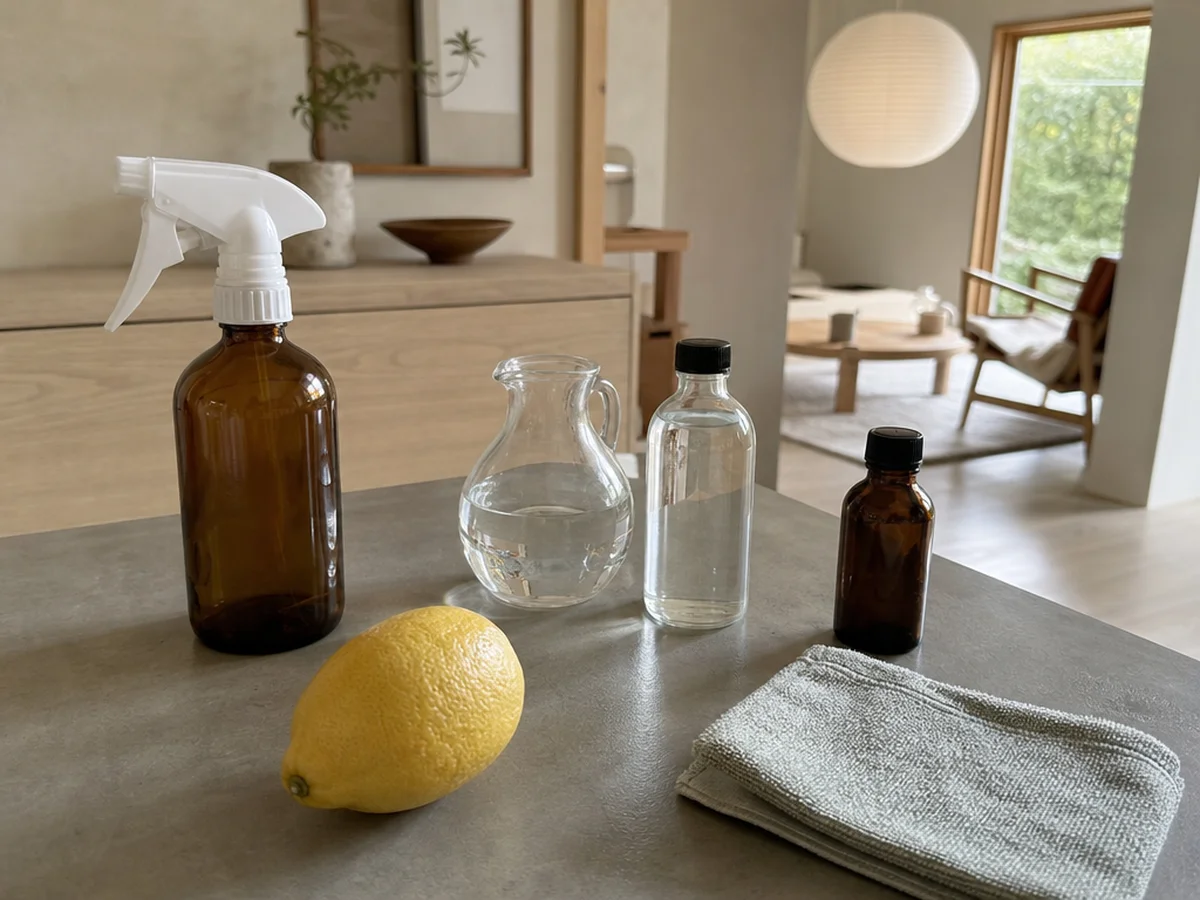
Fresh air makes a fresh scent
Scent is part of the appeal, and a little fresh air improves it. In a 50 cubic metre test room, researchers found that using cleaning products at full strength produced high airborne d-limonene, that diluting the products reduced emissions, and that terpenes can react with ozone to form formaldehyde and ultrafine particles (Cleaning products and air fresheners: emissions and resulting concentrations of glycol ethers and terpenoids.). The practical lesson from commercial products is to work in small doses with a window open. A 2024 modelling study also predicted that limonene mixed with chlorine from bleach would form more irritating products, so keep lemon oil away from bleach cleaners and rinse between steps (A Near-Explicit Reaction Mechanism of Chlorine-Initiated Limonene: Implications for Health Risks Associated with the Concurrent Use of Cleaning Agents and Disinfectants.).
Hands, heat and a fresh bottle
Cleaning with bare hands puts the oil on skin, so the usual guidance applies. The Tisserand Institute calls 2% the safe maximum for lemon oil, not a recommended amount, and suggests keeping skin out of UV light for at least 12 hours after a phototoxic exposure (Dilution for essential oils - Tisserand Institute). Gloves make a long job comfortable, and rinsing oil from your skin before heading outdoors takes a minute.
Freshness matters here as well. In a Swedish series of 5,773 patients with dermatitis, 5.1% showed contact allergy to oxidized limonene (Contact allergy to oxidized linalool and oxidized limonene: Patch testing in consecutive patients with dermatitis.). Those patients were already being investigated, and the test material was deliberately aged, but the sensible takeaway is to reach for a fresh bottle when your hands are involved. Limonene also has a closed-cup flash point of about 48 C, so keep the bottle and any oily cloth away from stoves and heaters. Our storage post covers keeping the bottle in good shape, and pets are best kept clear of the oil, as our pet post explains.
A final thought from people who simply love the smell: a lemon-scented cloth makes cleaning day feel brighter, and a few drops go a long way. You do not need to saturate anything to get that sunny, just-cleaned scent.
For everyday cleaning, soap, water and a good cloth lead the way. Lemon oil joins in for the sticky jobs and for the sunny scent you want to leave behind.
Organic Lemon Essential Oil
Organic Lemon Essential Oil from our own shop, in sizes from 0.5 oz to bulk.
From $15.99
Shop Now →Sources & Further Reading
- When and How to Clean and Disinfect Your Home | Water, Sanitation, and Environmentally Related Hygiene (WASH) | CDC
- Cleaning products and air fresheners: emissions and resulting concentrations of glycol ethers and terpenoids.
- A Near-Explicit Reaction Mechanism of Chlorine-Initiated Limonene: Implications for Health Risks Associated with the Concurrent Use of Cleaning Agents and Disinfectants.
- Contact allergy to oxidized linalool and oxidized limonene: Patch testing in consecutive patients with dermatitis.
- Dilution for essential oils - Tisserand Institute