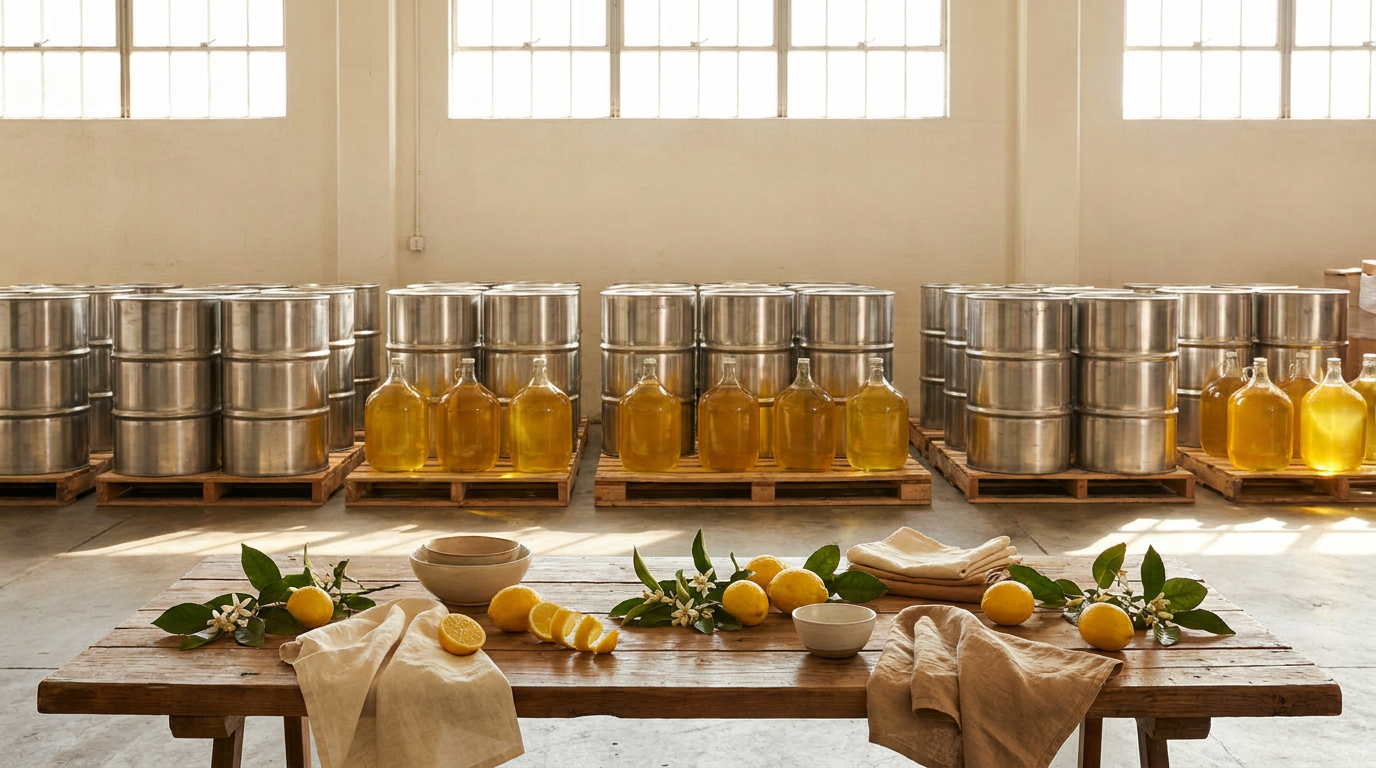
Buying lemon oil by the pound or the drum is a different exercise than buying a single bottle for a diffuser. This guide covers what organic cold-pressed lemon oil actually is, how to tell a genuine batch from a diluted or mislabeled one, and how sizing and documentation work once you are ordering by the pallet.
Check current pound and drum pricing on our bulk page, or reach out with questions before you commit.
Organic lemon oil is cold-pressed from the fresh peel of Citrus limon, not distilled, and not extracted with solvent. The peel is mechanically pressed to release the oil sacs sitting just under the surface, which is why the finished oil carries the sharp, sparkling top note of a freshly scored peel rather than the flatter smell of a distilled citrus. Because the whole point of the process is pressing the outside of the fruit, organic growing practice matters more here than it does for oils pressed from wood, resin, or flower.
That same pressing method is also why sourcing discipline matters so much for this particular oil. A peel that was sprayed carries that spray straight into the pressed oil, which is the core argument our organic certification guide makes for buyers evaluating any lemon oil supplier, not just ours. Limonene makes up most of the oil's chemistry, which gives lemon oil its citrus-solvent strength in cleaning formulas and also makes it a fast oxidizer once a drum or carboy is opened and exposed to air and warmth.
Buyers coming from a retail bottle often assume wholesale lemon oil is just a bigger version of the same thing, and mostly it is, but the market around it is not as clean as the botanical name suggests.
| Sold as | What it actually is | How to recognize it |
|---|---|---|
| Cold-pressed organic lemon oil | Oil expressed mechanically from the peel of certified organic Citrus limon, no heat or solvent involved. | A published Certificate of Analysis, a defined botanical name, and a peel-only extraction note on the label. |
| Folded or concentrated lemon oil | Cold-pressed oil that has had part of its lighter terpene fraction removed to concentrate the citrus character, common practice in the flavor and fragrance trade. | A stronger, less true-to-fruit aroma, and a supplier who is upfront about the fold rather than silent about it. |
| Lemongrass or lemon balm oil relabeled as lemon | An entirely different plant and chemistry sold under a similar-sounding name to shoppers who are not checking the botanical line. | Missing or vague botanical name and a grassy rather than zesty top note; see our comparison of lemon oil against lemongrass and lemon balm oils. |
| Synthetic citrus fragrance oil | A lab-built scent compound with no cold-pressed peel origin at all, priced well below real citrus oil. | No Certificate of Analysis offered, a flat and one-dimensional lemon smell, and no botanical name listed anywhere on the packaging. |
The trap in this category is buying on scent alone. A bright, sharp lemon smell tells you almost nothing about whether the peel was grown organically, whether the oil was folded or cut, or whether it is lemon oil at all rather than a lemongrass or synthetic stand-in. Documentation is the only reliable check, not the nose.
Wholesale buyers of this oil fall into a fairly narrow, predictable band. Cleaning product brands and DIY cleaner makers are the largest group, drawn by the same citrus-solvent strength and instantly recognizable scent covered in our guide to buying lemon oil in bulk for cleaners and makers. Soap and candle makers, laundry care formulators, and wood polish producers round out the rest of the regular order volume.
A smaller but steady share comes from private label resellers and blend houses who buy in pound or drum quantities, repackage into smaller retail bottles, or fold the oil into fragrance blends for other brands. Nearly all of these buyers care about the same three things in a different order: a stable, repeatable aroma from batch to batch, a price that holds up at volume, and paperwork that lets them make their own claims to their own customers without guessing.
Before placing a first wholesale order, run any supplier through the same short checklist.
Every batch of this oil is backed by a published Certificate of Analysis, and it is worth reading before your first order rather than filing it away afterward. If a competing supplier cannot produce something similar on request, that alone is a reason to keep looking.
Sizing for wholesale lemon oil generally runs from small retail bottles up through drum-scale quantities, and where a given buyer should start depends on production volume rather than price alone, a distinction our guide to bottle sizing walks through in more detail for smaller orders.
Most first-time wholesale buyers start a size or two below where they think they will land, confirm the batch performs the way they expect in their own formula, then step up. Pound and drum tiers exist for buyers who have already done that confirmation and are ordering for ongoing production, not for a first test.
Order a small size, typically 4 oz or 8 oz, and run it through your own formulation before committing to volume.
Check the aroma, the Certificate of Analysis, and how the oil performs in your specific application against what the sample promised.
Place a pound-tier order, 5 lbs or 25 lbs, sized to your production run rather than to a discount threshold.
Move to drum-scale ordering, 100 lbs or 400 lbs, once your formula and volume are stable, and confirm lead time on repeat orders in advance.
The sections below cover the specific buyer categories this oil actually serves at wholesale scale.
Citrus-solvent strength and an instantly recognizable scent make this the largest wholesale category for lemon oil.
Read the sourcing guide →Detergent and fabric rinse makers use lemon oil to replace synthetic fragrance without losing the fresh-laundry association shoppers expect.
Read the sourcing guide →Cold process soap makers use lemon oil for a bright top note, working around the fast fade citrus scents are known for in cured bars.
Read the sourcing guide →Sugar scrub and shower melt makers use lemon oil for a bright, wake-up scent, with dilution guided by standard citrus skin-contact practice.
Read the sourcing guide →Diffuser blend makers and candle producers use lemon oil as a top note that lifts heavier base scents rather than as a standalone fragrance.
Read the sourcing guide →Furniture polish and wood care brands use lemon oil for scent and surface feel, distinct from lemon-scented mineral oil products sold under a similar name.
Read the sourcing guide →Fragrance blend houses and private label resellers buy this oil by the drum to repackage or fold into multi-oil blends for other brands.
Read the sourcing guide →Visit our bulk pricing page or contact us directly to discuss volume and lead time.
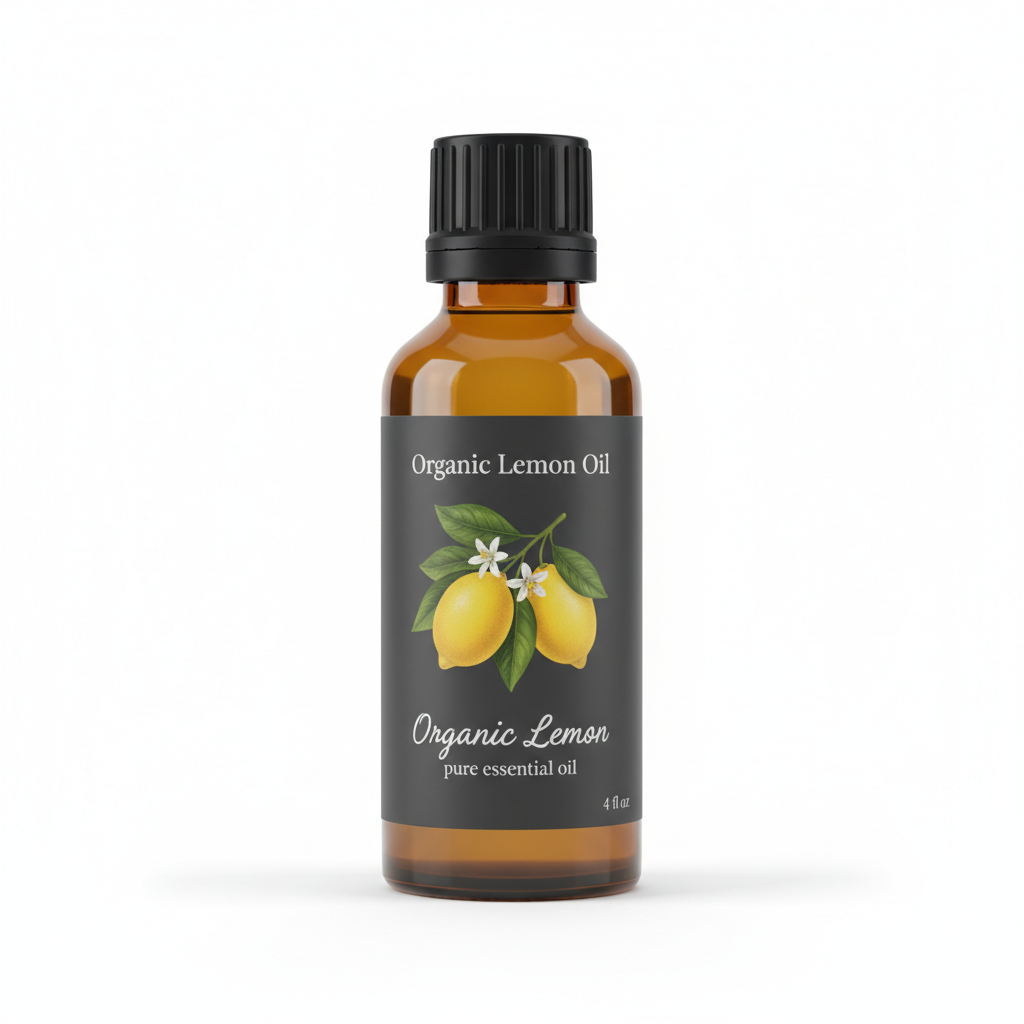
Our own Organic Lemon Essential Oil, in sizes from 0.5 oz to bulk.
From $15.99
Shop Now →