
What Organic Certification Really Means for Lemon Oil, and Why Peels Matter
Picking up a bottle of organic lemon essential oil feels straightforward until you start reading labels. Suddenly there are multiple certifying bodies, country-of-origin claims, and price gaps that seem hard to justify. Understanding what the certifications actually require, and why the peel is the whole story, makes comparison shopping much easier.
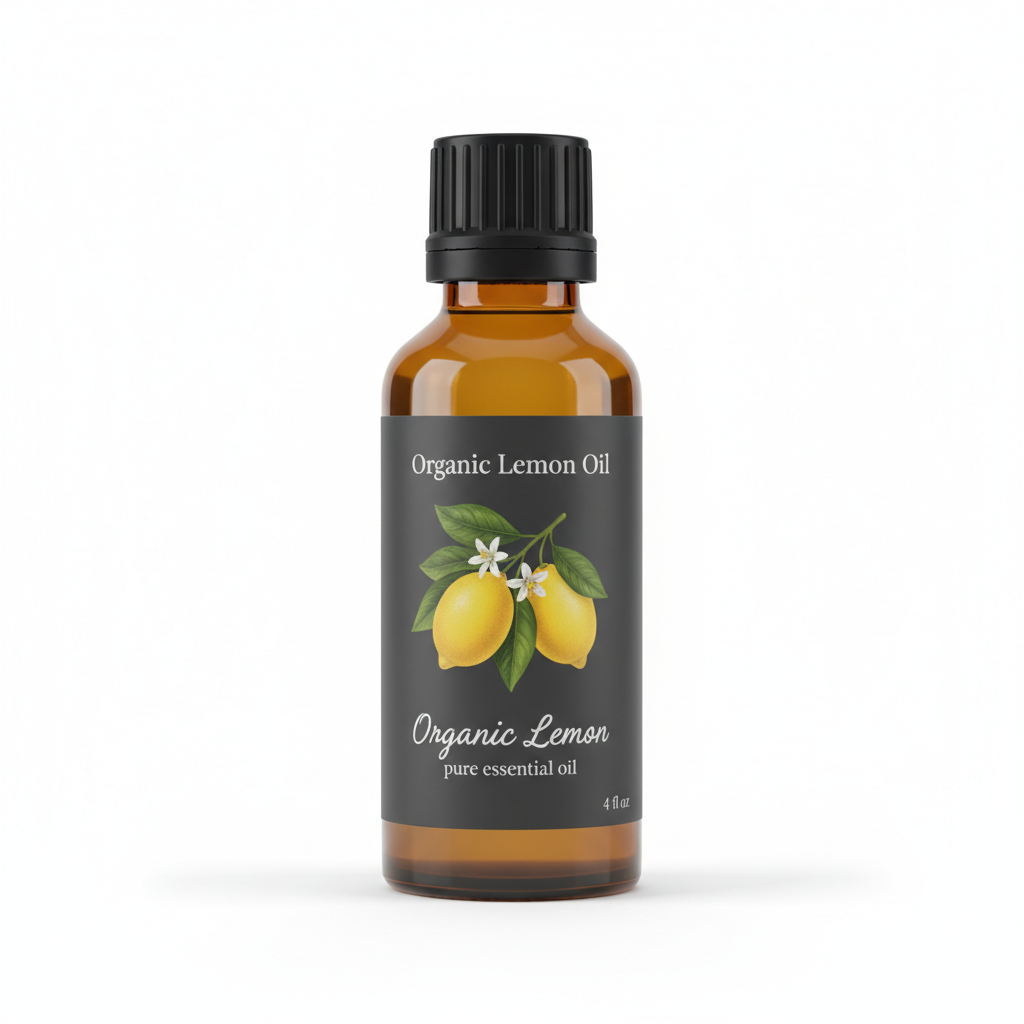
Organic Lemon Essential Oil
Our own Organic Lemon Essential Oil, in sizes from 0.5 oz to bulk.
From $15.99
Shop Now →This guide covers the quality indicators worth your attention, the features most worth comparing across products, honest picks at different price points, and the red flags that signal a product is not worth your money. If you want to go deeper on any single topic, the ultimate quality guide for buying organic lemon oil is a useful companion read.
Why the Peel Is the Whole Story
Lemon essential oil does not come from the juice. It comes from the flavedo, the outermost colored layer of the peel, through a process called cold pressing (also labeled as expression). Tiny oil sacs in that peel release a fragrant, bright-yellow oil that carries the characteristic citrus scent most people associate with lemon.
This fact has enormous implications for organic certification. The peel is the part of the fruit that sits exposed to pesticide sprays, wax coatings, and post-harvest fungicide applications for the entire growing and storage period. Citrus peels are porous. They absorb surface residues more readily than the flesh does, which is why the sourcing and farming practices behind a peel-derived oil matter so much more than they would for, say, a seed oil pressed from inside the fruit.
When a brand skips organic certification and sources conventionally grown lemon peel, any synthetic residues present on that peel can make their way into the finished oil. Cold pressing is not a purification step. It is a mechanical extraction. What is in the peel goes into the bottle.
What Organic Certification Actually Requires
The phrase "organic" on an essential oil label is not marketing language when it is backed by a legitimate certifying body. In the United States, USDA National Organic Program (NOP) certification is the most recognized standard. It requires that the raw agricultural product, in this case the lemon, be grown without synthetic pesticides, synthetic fertilizers, sewage sludge, irradiation, or genetic engineering for at least three years before certification is granted.
For certified organic citrus oil sold internationally, you may also encounter:
- EU Organic (Euro-leaf logo): The European Union's equivalent standard, widely respected and common on Italian and Spanish-sourced oils.
- ECOCERT / COSMOS: A French certifying body whose standards are frequently applied to oils used in cosmetic formulations. COSMOS-certified oils meet both agricultural and processing guidelines.
- Oregon Tilth / CCOF / QAI: USDA-accredited certifying agents in the United States. Any of these logos alongside the USDA Organic seal means the same baseline standard applies.
What certification does not guarantee on its own: a specific chemical profile, a particular aroma quality, or that the oil has not degraded during storage. Certification addresses farming and handling practices. Freshness and quality are separate considerations.
Key Quality Indicators Beyond the Label
GC/MS Testing
Gas chromatography/mass spectrometry testing analyzes the chemical composition of an oil. Reputable brands make these results available, either directly on their website or by request using the batch number printed on the bottle. For organic lemon essential oil, you want to see limonene as the dominant component, typically composing 60 to 80 percent of the oil. Beta-pinene, gamma-terpinene, and citral are expected secondary components. An unusual composition, or one that looks suspiciously identical across every single batch, is worth questioning.
Country of Origin and Grove Transparency
Italian cold-pressed lemon oil, particularly from Sicily, carries a long-standing reputation for quality. Argentine and South African origins are also common and can be excellent. What matters most is not the geography alone but whether the brand can tell you something specific about where the lemons were grown. Vague sourcing language like "sourced from premier growing regions" without any specifics is a soft red flag. The origin guide covering Italian lemon oil and other growing regions breaks this down in detail if you want to compare sourcing claims carefully.
Packaging
Lemon oil is highly volatile and degrades quickly when exposed to light or heat. Dark amber or cobalt glass bottles are standard for good reason. Clear glass is a quality concern. Plastic bottles are a dealbreaker for any cold-pressed citrus oil you intend to use in cosmetic or aromatic applications, because limonene, the primary component, can interact with certain plastics over time.
Aroma Character
Fresh, cold-pressed lemon oil smells bright, slightly waxy, and genuinely fruity rather than candy-like or flat. If an oil smells more like lemon-scented cleaning product than a real lemon peel, that is a sensory clue worth noting. Some adulteration involves blending with synthetic limonene, which skews the scent toward a harsher, more one-dimensional profile.
Features to Compare When Shopping
| Feature | What to Look For | Red Flag |
|---|---|---|
| Certification | USDA Organic, EU Organic, COSMOS, or named USDA-accredited agent | "Natural" or "pure" with no certifying body named |
| Extraction method | Cold pressed / expressed from peel | Steam distilled lemon listed without clarification (different profile) |
| GC/MS availability | Batch-specific results publicly available or on request | Generic or undated test results, or none at all |
| Bottle type | Dark amber or cobalt glass with a reducer cap or orifice insert | Clear glass, plastic, or no UV protection |
| Origin transparency | Named country, region, or farm/cooperative | "Globally sourced" or no origin listed |
| Shelf life guidance | Bottling date or best-by date printed on label | No date information anywhere on packaging |
| Price per ml | Consistent with organic citrus market pricing | Significantly below market rate (see adulteration risk) |
Organic Essential Oil Standards: A Note on Steam Distilled vs. Cold Pressed
Both cold-pressed and steam-distilled lemon oils can carry organic certification. They are not the same product, and knowing the difference saves confusion when comparing bottles side by side.
Cold-pressed lemon oil retains more of the peel's natural fragrance compounds, including the waxy, fresh-fruit top notes that make it so appealing in perfumery and personal care formulations. It also contains furanocoumarins (compounds found naturally in citrus peel) that make it phototoxic. More on that below.
Steam-distilled lemon oil goes through a heat process that drives off the heavier compounds. The resulting oil is often labeled furanocoumarin-free (FCF) and is not phototoxic. It has a cleaner, slightly thinner scent profile. Some formulators prefer it for leave-on skin products. Neither version is inherently superior. They serve different purposes.
When you see a price difference between two certified organic lemon oils from similar origins, the extraction method is often part of the explanation.
Top Picks at Different Price Points
Rather than naming specific brands (which change their sourcing and quality over time), this section describes what each price tier typically delivers so you can assess any brand you encounter.
Entry Tier: Around $8 to $14 for 10 ml
Brands in this range can offer legitimate USDA Organic certification, though GC/MS transparency is inconsistent. Look for a named origin country. Many entry-tier brands source well but cut costs on packaging (thinner glass, minimal labeling). Worth buying for diffusion and home fragrance applications where cosmetic-grade precision matters less. Not ideal as your first choice for skin-care formulations.
Mid Tier: Around $15 to $28 for 10 ml
This is where you start seeing batch-specific GC/MS reports, EU Organic or COSMOS certification alongside USDA Organic, and more origin detail. Packaging quality improves noticeably. Several well-regarded independent brands operate in this range. It is a comfortable choice for both aromatic and cosmetic applications. For more context on why certified organic citrus oil pricing lands where it does, the lemon oil price guide explains the cost factors clearly.
Premium Tier: $30 and above for 10 ml
Premium pricing reflects single-origin sourcing (often Sicilian or Calabrian), direct relationships with farms or cooperatives, and the most rigorous third-party testing documentation. Some premium brands also offer larger format bottles (30 ml or 100 ml) that bring the per-ml cost back down. If you use lemon oil regularly in cosmetic formulations or professional blending, the documentation and consistency at this tier are genuinely useful.
Red Flags to Avoid
"100% Pure and Natural" Without Certification
These phrases have no regulatory definition in the United States when applied to essential oils sold outside the food supply. A brand can print them freely. They tell you nothing about pesticide exposure on the source material. Only a named certifying body with an auditable standard means anything.
Prices That Seem Too Good to Be True
Organic lemon oil costs more than conventional lemon oil because the supply chain involves certified farmland, certification fees, segregated processing, and documentation. A 10 ml bottle priced at $4 with an organic claim is almost certainly not what the label says it is. Adulteration with synthetic limonene or conventional oil is a known issue in the essential oil market.
No Bottling or Best-By Date
Cold-pressed citrus oils oxidize faster than most other essential oils. A bottle with no date information could be fresh or could be years old. Oxidized lemon oil loses its brightness and can be more likely to cause skin sensitivity. Date transparency is a basic quality signal.
Phototoxicity Not Addressed
Any brand selling cold-pressed lemon oil without mentioning phototoxicity in their usage guidance is skipping an important safety conversation. Cold-pressed lemon oil should not be applied to skin that will be exposed to sunlight or UV light. This is not obscure information. A brand that omits it is either uninformed or indifferent to customer safety.
Vague or Missing Origin Information
"Premium citrus regions" is not an origin. Lemon oil from different growing areas has genuinely different aromatic profiles, and a brand confident in their sourcing names it specifically.
Where to Buy Organic Lemon Essential Oil
Specialty retailers focused on aromatics and botanical ingredients are generally more reliable than general marketplaces. When buying through a large online marketplace, the brand's own storefront (where they control inventory and storage conditions) is preferable to third-party resellers, whose storage conditions are unknown.
Direct-to-consumer brand websites often provide the most documentation, including batch-specific GC/MS reports and sourcing narratives. Some smaller brands also offer samples, which is particularly useful before committing to a larger bottle of an oil you plan to use in formulations.
Natural grocery and co-op retail carries a curated selection that has usually passed some level of buyer scrutiny. Staff at dedicated aromatics shops can often speak to specific batches and help you assess whether what is on the shelf is fresh stock.
A Quick Summary for Confident Buying
Certification matters because peel-derived oils carry what the growing environment put into the peel. Look for a named certifying body, batch-specific testing, dark glass packaging, a clear origin, and a bottling date. Price should reflect the real cost of organic supply chains. When a bottle is significantly cheaper than the market, something in that supply chain was cut short.
Cold-pressed lemon oil is one of the most rewarding additions to a home fragrance or personal care routine, when you know what you are buying. The certification language exists to give you a starting point, not a finish line. Combine it with the quality indicators above and you will find it much easier to distinguish bottles worth the investment from ones that are simply well-packaged.
For a full walkthrough of every quality factor in one place, the complete buying guide for organic lemon oil covers it all in depth.