
Italian Lemon Oil and Other Origins: Does the Grove Change the Bottle?
Walk into any well-stocked natural products shop and you will find lemon oil from a handful of different countries. The bottles may look nearly identical. The labels may even say the same thing: cold-pressed, organic, 100% pure. But open those bottles side by side and you will notice something. They do not smell the same.
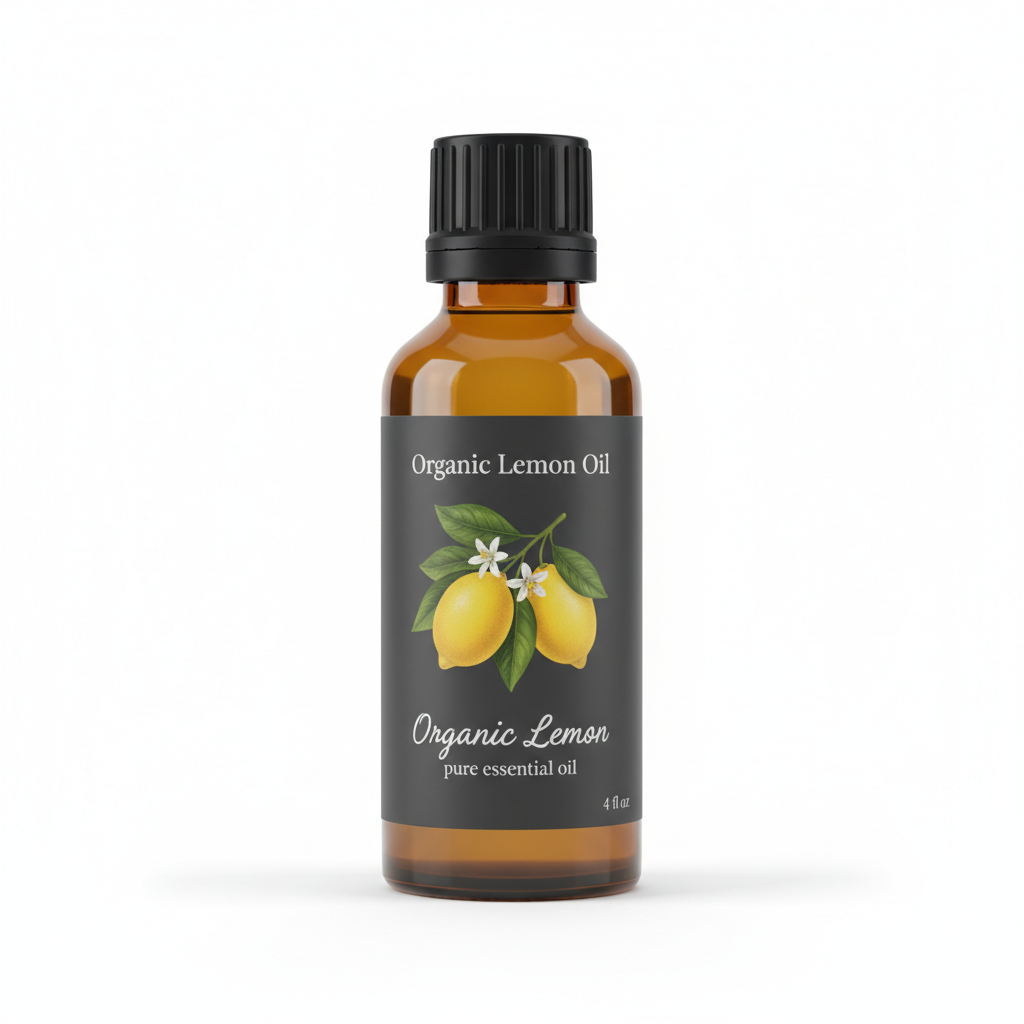
Organic Lemon Essential Oil
Our own Organic Lemon Essential Oil, in sizes from 0.5 oz to bulk.
From $15.99
Shop Now →That difference is not accidental. Lemon oil origin matters in ways that go beyond marketing copy. Soil chemistry, coastal humidity, harvest timing, and centuries of cultivation practice all leave a fingerprint in the oil. This guide works through the most common origins, gives you a structured comparison, and helps you decide which one belongs on your shelf.
Why Origin Shapes the Oil
Lemon oil is cold-pressed from the peel, not the juice. That means it captures the volatile compounds concentrated in the rind: primarily limonene, along with beta-pinene, gamma-terpinene, citral, and a supporting cast of aromatic molecules. The ratio of those compounds shifts depending on where and how the fruit was grown.
Climate is the most obvious variable. Lemons grown in the hot, dry summers and mild winters of the Mediterranean develop peels with high essential oil content and a particular aromatic profile. Lemons grown in subtropical South America or California experience different day-length patterns, rainfall, and temperatures. The fruit thrives in all those places, but the peel chemistry is not identical.
Variety matters too. Citrus limon has many cultivated forms. The Femminello varieties dominant in Sicily are different from the Eureka and Lisbon types common in California and Argentina. Each variety brings its own aromatic character to the pressing.
For a deeper look at what to check before you buy, the guide on how to buy organic lemon oil covers certificates, third-party testing, and the questions worth asking any supplier.
The Main Origins: A Closer Look
Sicily, Italy
Sicilian lemon oil is widely considered the benchmark for cold-pressed lemon. The island has cultivated lemons since Arab traders introduced them in the ninth century. That is a long time for a fruit and a place to find each other.
The Femminello Siracusano and Femminello Zagara Bianca varieties dominate commercial Sicilian production. They are grown on volcanic soil with excellent drainage, bright Mediterranean sun, and the moderating influence of the sea. The resulting oil tends to be bright and intensely fresh, with a clean citrus top note that perfumers describe as almost crystalline. There is usually a subtle floral undertone, believed to come from the blossoms that grow alongside the fruit year-round in Sicily's nearly continuous harvest cycle.
Italian lemon oil extract from Sicily is a standard reference in natural perfumery and cosmetic formulation. When a fragrance brief calls for a bright citrus opening, many formulators reach for Sicilian first.
Pros: Distinctive aromatic brightness, well-documented cultivar history, widely available in certified organic grades, preferred by many perfumers and cosmetic formulators.
Cons: Premium pricing reflects premium sourcing; supply can fluctuate with seasonal yields; some suppliers use the "Sicilian" label loosely, so verification matters.
Calabria, Italy (Mainland)
Calabria, the toe of Italy's boot, produces lemon oil that sometimes gets grouped under the broad banner of Italian lemon oil extract. The oils from this region share family traits with Sicilian: bright, clean, citrus-forward. But the terroir differs slightly. Calabrian oils can read as a touch greener and more herbaceous compared to the rounder warmth of Sicilian.
For most aromatic and cosmetic applications the difference is subtle. Calabrian oil is a reliable, high-quality choice and is often more consistently available than pure Sicilian stock.
Pros: High quality, consistent availability, similar aromatic profile to Sicilian, often slightly lower price point.
Cons: The subtle terroir distinction is occasionally flattened in blended batches; requires the same supplier diligence as any Italian origin.
Argentina
Argentina is one of the world's largest lemon-producing countries, and Argentine lemon oil is a major player in the global fragrance and flavor industry. The Tucuman province in the northwest is the center of production, and the scale is significant: Argentina supplies a substantial portion of the world's commercial lemon oil.
Argentine oil tends to be robust and slightly sweeter than Italian origins, with a fuller, rounder character. Some describe it as having a softer citrus note with less of the sharp brightness associated with Sicilian. It is widely used in commercial perfumery and cosmetic manufacturing where consistency and volume are priorities.
Pros: Reliable large-scale supply, consistent quality, good availability in organic certified grades, slightly lower cost than Italian origins.
Cons: Aromatic profile is less sharp and distinctive than Sicilian; the scale of production means careful supplier selection is still necessary to ensure genuinely organic and traceable stock.
California, USA
California produces lemon oil primarily as a co-product of the commercial juice industry, which means availability and pricing can follow juice market dynamics. The state grows primarily Eureka and Lisbon varieties. California oils tend to be clean and straightforward: a reliable, pleasant lemon scent without the complexity of Mediterranean origins.
Pros: Domestic sourcing appeals to buyers focused on supply chain transparency; familiar citrus profile; organic certification available.
Cons: Generally considered less complex aromatically than Italian origins; production volume and availability tied to juice industry economics.
Spain
Spain, particularly the regions of Murcia and Valencia, produces lemon oil with a profile that sits somewhere between Sicilian and Argentine: bright but slightly earthier, with good limonene content. Spanish oil is respected in the European fragrance industry and is a common choice when Italian origins are in short supply.
Pros: Quality Mediterranean origin, good aromatic profile, often available at a slightly lower price than Sicilian.
Cons: Less distinct aromatic signature than Sicilian; not as widely researched or referenced in specialty cosmetic literature.
Side-by-Side Comparison
| Origin | Aromatic Profile | Typical Price Point | Organic Availability | Best Known For |
|---|---|---|---|---|
| Sicily, Italy | Bright, crystalline, subtle floral | Premium | Good | Perfumery, high-end cosmetics |
| Calabria, Italy | Bright, slightly greener | Premium to mid | Good | Cosmetics, reliable Italian quality |
| Argentina | Rounded, slightly sweet | Mid | Very good | Commercial formulation, diffusing |
| California, USA | Clean, straightforward | Mid | Good | Domestic supply chain focus |
| Spain | Bright, slightly earthy | Mid | Good | European cosmetic formulation |
Best For: Matching Origin to Use Case
Natural Perfumery and Fine Fragrance Blending
Reach for Sicilian first. The aromatic brightness and subtle complexity give blends a lift that is harder to replicate with rounder origins. Calabrian is a solid second choice if Sicilian stock is unavailable.
Facial Serums and Skin Care Formulations
Italian lemon oil extract from either Sicily or Calabria is the preferred choice among many cosmetic formulators, primarily for its scent quality. Remember that cold-pressed lemon oil is photo-sensitizing: always dilute properly and include appropriate guidance for daytime use in any formulated product.
Home Diffusing and Aromatic Rituals
Argentine or Spanish oils offer excellent value for everyday diffusing. The aromatic profile is pleasant and consistent, and the lower price point makes regular use more accessible. If you diffuse frequently, consider bottle size carefully: the guide to lemon oil bottle sizes can help you avoid running out at the wrong moment.
DIY Body and Hair Products
Any well-sourced organic origin works well here. California-grown oil appeals to formulators prioritizing domestic supply chains. For scent-forward products like a bright citrus sugar scrub or a lemon-scented conditioning rinse, Sicilian will make the formula sing.
Dilution reminder: Cold-pressed lemon oil should always be diluted before skin contact. A general guideline for leave-on products is 1% or less. Patch testing on a small area before full use is always recommended. Consult a qualified aromatherapist or cosmetic chemist for formulation-specific guidance.
Budget-Conscious Everyday Use
Argentine lemon oil in larger formats offers the best combination of quality and value. The scent profile is pleasant and the organic supply chain is well-established. If you are ordering for the first time and are unsure of volume needs, the smart shopping guide for organic lemon oil covers how to evaluate sellers and pricing structures.
The Honest Caveats
Origin labeling requires scrutiny. A bottle that says "Sicilian lemon oil" should come with documentation: country of origin on the certificate of analysis, botanical name (Citrus limon), extraction method (cold-pressed), and ideally a GC/MS report confirming the aromatic profile. Without those documents, the label is just a label.
Blended origins are also common in commercial trade. A supplier may source from multiple regions across a season to maintain consistent supply. That is not inherently a problem, but it means the "Sicilian" oil you buy from one supplier may differ meaningfully from what another sells under the same name.
Price is a useful signal but not a guarantee. Premium pricing does not automatically mean Sicilian origin. Ask for documentation. Good suppliers are glad to provide it.
The Verdict
Yes, the grove changes the bottle. Lemon oil origin shapes scent character in ways that are real and perceptible, even to a relatively untrained nose. Sicilian lemon oil sets the aromatic standard for a reason: centuries of cultivation, specific cultivars, and a distinct terroir produce an oil with brightness and complexity that other origins approach but rarely match precisely.
That said, "best" depends entirely on what you are making. For a high-end natural perfume or a face oil where scent is part of the experience, Sicilian is worth the premium. For a diffuser blend you run every morning, a quality Argentine organic oil does the job beautifully without the elevated cost.
The most important step in any case is sourcing with care. An authentic, well-documented Argentine oil beats a mislabeled or poorly extracted "Sicilian" every time. Verify your supplier, read the certificate of analysis, and let the oil speak for itself when it arrives.