
How to Buy Organic Lemon Oil: The Ultimate Quality and Certification Guide
Key Takeaways
- The best lemon oil is cold-pressed from organic lemon peel, not steam-distilled or blended with synthetic fragrance compounds.
- USDA Organic and equivalent EU certifications are the most reliable quality signals, but certification alone does not guarantee purity.
- Botanical name, country of origin, extraction method, and batch-specific GC/MS testing data should all appear on or alongside the product listing.
- Price is a genuine indicator: certified organic, cold-pressed lemon oil costs more than conventional alternatives, and unusually low prices almost always signal adulteration or blending.
- Italian and Argentinian origins are the two most respected growing regions, each producing oils with distinct aromatic characters.
- Always store lemon oil away from heat and light; it is among the more volatile and oxidation-prone citrus oils.
Why Quality Matters When You Buy Lemon Essential Oil
If you have ever opened a bottle of lemon oil and found it smelled flat, synthetic, or vaguely chemical, you already understand the quality gap in this category. The lemon oil market is wide, crowded, and plagued by inconsistency. For every genuinely pure lemon oil on the shelf, there are several products blended with synthetic limonene, diluted with carrier oils, or distilled rather than pressed, which changes the aromatic profile significantly.
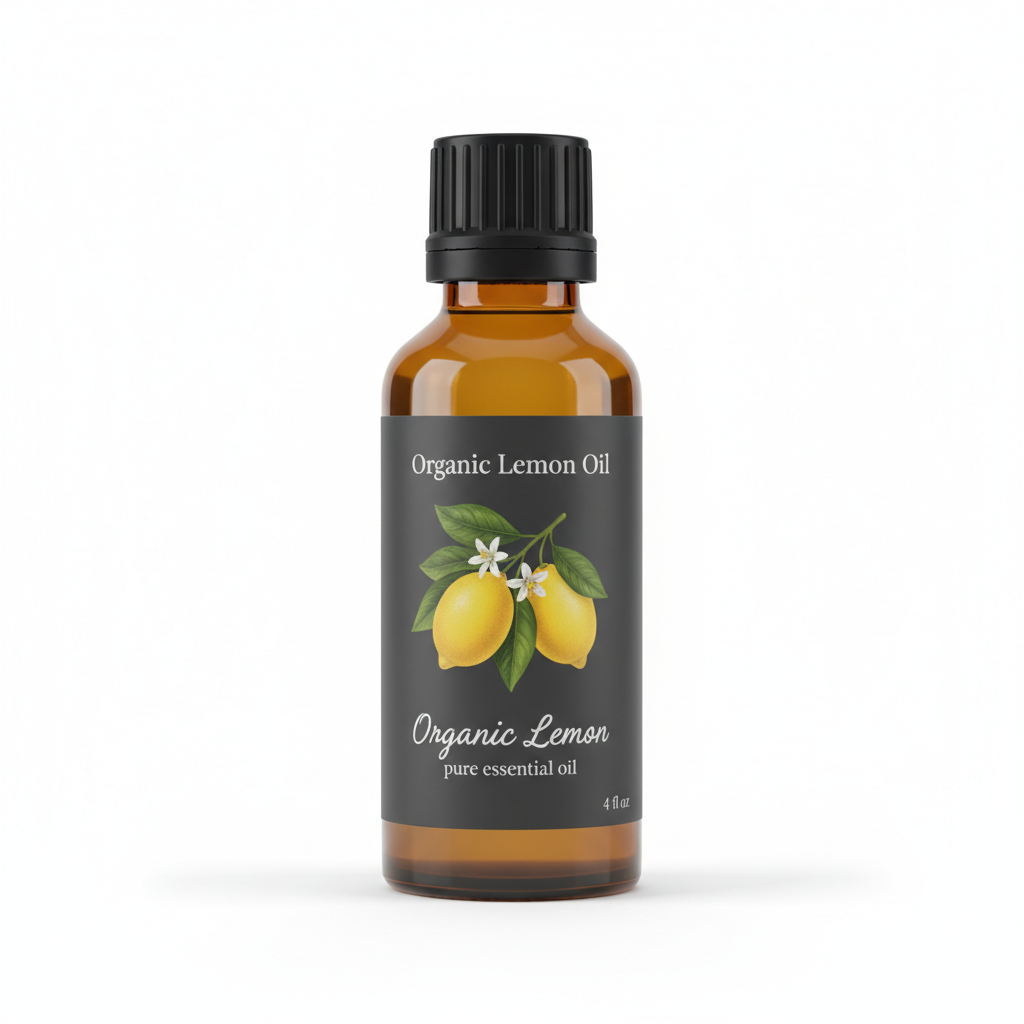
Organic Lemon Essential Oil
Our own Organic Lemon Essential Oil, in sizes from 0.5 oz to bulk.
From $15.99
Shop Now →This is not a niche concern for aromatherapy purists. If you are buying lemon oil for skincare formulation, candle making, natural cleaning products, or diffuser blends, the starting material determines the finish. Adulterated or low-quality oil performs poorly, fades quickly, and carries none of the bright, green-edged freshness that makes cold-pressed lemon oil worth using in the first place.
The goal of this guide is straightforward: to give you the knowledge to evaluate any product before you purchase it, understand what certifications actually mean, and confidently identify the best lemon oil for your specific use case.
"Cold-pressed organic lemon oil is one of the most imitated natural ingredients on the market. The gap between a genuine article and a synthetic substitute is enormous once you know what to look for."
Understanding Organic Certification for Lemon Oil
Organic certification is probably the most misunderstood aspect of buying essential oils. The word "organic" appears on labels far more often than it is actually verified, so knowing which certifications carry weight is essential.
USDA Organic
In the United States, the most authoritative standard is USDA Organic certification, administered through the National Organic Program (NOP). For an essential oil to carry the USDA Organic seal, the source material (in this case, lemon peel) must be grown without synthetic pesticides, synthetic fertilizers, or genetically modified organisms. The processing facility must also meet NOP handling standards.
Crucially, certification is verified by an accredited third-party certifying agent, not the brand itself. When you see the USDA seal, a real paper trail exists behind it. If a brand simply uses the word "organic" without a certifying body listed, that claim is unverified and, depending on how it is presented, potentially non-compliant with FTC guidelines.
EU Organic Certification
European organic standards are broadly comparable to USDA NOP. Look for the EU organic logo (the green leaf made of stars) along with the certifying body code (such as IT-BIO-006 for an Italian certifier). Italian lemon oil sold in the EU or exported to the US under certified organic status will typically carry both its domestic certifying body code and, for US importers, a USDA equivalency arrangement or separate NOP certification.
Other Certifications Worth Knowing
- Ecocert: A French certifying body recognized internationally, commonly seen on imported oils from Europe and North Africa.
- COSMOS Organic: A European standard that goes beyond organic farming to include processing standards, packaging, and biodegradability of ingredients. Increasingly common on cosmetic-grade essential oils.
- NSF/ANSI 305: A US standard for personal care products containing organic ingredients, used when a product does not meet the USDA's 95% organic threshold for the full seal but still contains certified organic components.
For a deeper look at what these frameworks actually require, see our detailed breakdown: What Organic Certification Really Means for Lemon Oil.
Certifications That Are Not Certifications
Be cautious with terms that sound official but are not third-party verified. "Wildcrafted" is an example: it signals that plants were harvested from wild populations rather than cultivated farms, which can be a legitimate quality distinction, but wildcrafted is not a certification. It is a sourcing claim made by the brand, and it should be accompanied by evidence rather than trusted on its own. Similarly, "natural" and "pure" carry no regulatory definition in the essential oil context.
Cold-Pressing: The Extraction Method Behind Pure Lemon Oil
The extraction method used to produce lemon oil matters enormously, and it is one of the first things to look for on a product page.
Cold-Pressed vs. Steam-Distilled
Lemon oil exists in two distinct extraction forms: cold-pressed (also called expression) and steam-distilled. They are not interchangeable, and they smell quite different.
Cold-pressed lemon oil is produced by mechanically rupturing the oil glands in fresh lemon peel. No heat is applied. The resulting oil retains a full aromatic profile: bright, zesty, slightly green, with the complexity you would expect from holding a lemon rind close to your nose. This is the standard for cosmetic and aromatic applications.
Steam-distilled lemon oil is produced by passing steam through lemon peel or sometimes dried peel material. The heat process drives off the volatile aromatic compounds, which are then condensed and collected. The result is cleaner and more consistent but noticeably thinner in character. Some of the heavier, more interesting aromatic fractions do not survive the distillation process. Steam-distilled lemon oil is also typically lower in furanocoumarins (the naturally occurring compounds responsible for photosensitivity), which makes it preferable in certain cosmetic formulations intended for leave-on skin products.
For diffuser blends, room sprays, and aromatic applications where you want the full bright citrus character, cold-pressed is almost always the preferred choice. For leave-on cosmetic applications, the photosensitivity consideration may point toward steam-distilled or furanocoumarin-free (FCF) variants. We will cover safe usage in more detail in a later section.
What "Organic Sunshine Pressed" Means
You may see lemon oils marketed with phrases like "organic sunshine pressed" or "sun-pressed." These terms emphasize the solar-ripened origin of the fruit and the mechanical pressing process, distinguishing the oil from steam-processed alternatives. They are not standardized certification terms, but they signal a commitment to cold-expression methods and typically to fruit sourced from warmer, sun-intensive growing regions. When combined with verified organic certification, this positioning is meaningful. Without certification, it is primarily marketing language.
Reading the Label: What Every Bottle Should Tell You
A well-labeled organic lemon essential oil gives you the information you need to make a confident purchase. Here is what to look for, and what the absence of certain details signals.
Required and Expected Information
| Label Element | What to Look For | Red Flag |
|---|---|---|
| Botanical name | Citrus limon (L.) Burm.f. | Only "lemon oil" with no Latin name |
| Plant part | Peel / fruit rind | Unspecified or "whole fruit" |
| Extraction method | Cold-pressed / expression | No method listed |
| Country of origin | Italy, Argentina, USA, South Africa | "Various" or no origin listed |
| Organic certification | Named certifying body (e.g., CCOF, Ecocert) | "Organic" with no certifier named |
| Lot or batch number | Specific lot code traceable to GC/MS data | No lot number; no testing data available |
| Dilution status | 100% pure / undiluted, or carrier oil named | Ambiguous; ingredient list not disclosed |
| Photosensitivity notice | Warning for skin application before sun exposure | No safety guidance provided |
GC/MS Testing: The Gold Standard for Purity
Gas chromatography/mass spectrometry (GC/MS) testing separates an oil into its constituent chemical compounds and identifies each one with precision. A GC/MS report for pure lemon oil will show limonene as the dominant compound (typically 60 to 75 percent), with supporting fractions including beta-pinene, gamma-terpinene, and citral. The presence of compounds that do not belong in lemon oil, or unusual ratios, indicate adulteration.
Reputable brands publish GC/MS reports by batch on their website or make them available on request. If a supplier cannot provide this data, that is a significant concern. You are essentially being asked to trust a label rather than verified chemistry.
Bottle and Packaging Signals
Genuine essential oil should always be bottled in dark glass: amber, cobalt blue, or violet. Lemon oil is particularly sensitive to UV light and will degrade noticeably faster in clear glass or plastic. A brand that bottles its product in clear glass or non-glass containers is cutting corners in a way that affects the oil you receive, not just aesthetics.
The dropper or orifice reducer should be fitted securely and dispense small, controlled amounts. Bulk packaging without dispensing control is appropriate for professional or manufacturing use, not for general retail.
Origins and Sourcing: Where Your Lemon Oil Comes From
Lemon oil is produced in several countries, and the region of origin genuinely shapes the aromatic character of the finished oil. This is not simply a matter of prestige: different climates, soil compositions, and lemon varieties produce meaningfully different oils.
Italy: The Benchmark Origin
Sicilian and Calabrian lemon oil has a long history as the reference standard in perfumery and cosmetics. The volcanic soils, intense Mediterranean sun, and cool coastal air of southern Italy produce lemons with exceptionally complex rind oils. Italian cold-pressed lemon oil tends to be bright and full, with a floral-citrus top note and a slightly green, leafy mid-character. The Femminello variety grown in Sicily is particularly prized.
Italian certified organic lemon oil is widely available and generally commands a premium. For fragrance-focused applications, diffusing, and cosmetic formulations where aromatic quality is a priority, Italian origin is the conventional benchmark.
For a detailed comparison of how growing region affects the final product, see: Italian Lemon Oil and Other Origins: Does the Grove Change the Oil?
Argentina: The High-Volume Alternative
Argentina, specifically the Tucuman province, has become one of the world's largest producers of lemon oil by volume. Argentine lemon oil is clean, consistent, and reliably bright, with a somewhat more linear aromatic profile than Sicilian oil. Certified organic Argentinian lemon oil is widely available and is often more affordable than Italian equivalents. For large-volume cosmetic or cleaning product formulations, it is an excellent option.
United States and Other Origins
California produces lemon oil primarily from Eureka and Lisbon varieties. The oil is clean and commercially consistent, though it tends to be produced in smaller volumes and is less commonly found as a standalone essential oil. South African lemon oil is also available, typically from Eureka lemons grown in the Western Cape; it shares some aromatic characteristics with Argentine oil.
The Blend Origin Problem
Many commercial lemon oils are blended from multiple origins to achieve cost or consistency targets. Blending is not inherently problematic, but it becomes a concern when the label says "Italy" and the oil contains predominantly lower-cost origins. GC/MS testing can sometimes flag unexpected compound ratios that suggest blending, but the most reliable protection is purchasing from brands that publish harvest and origin documentation by batch.
Spotting Adulteration and Dilution Before You Pay
Lemon oil is one of the most commonly adulterated essential oils on the market. The primary adulterant is synthetic limonene, which is inexpensive to produce, smells superficially similar to lemon oil, and is effectively undetectable to untrained noses. Other common practices include extending pure oil with cheaper citrus oils (orange, grapefruit, or bergamot) and diluting finished oil with carrier oils without disclosure.
For a practical, step-by-step guide to evaluating any bottle you already own or are considering, see: How to Spot Pure Lemon Oil: Quality Checks Before You Pay.
The Paper Test
One of the simplest at-home checks for carrier oil dilution: place one drop of lemon oil on a clean sheet of white paper and allow it to evaporate fully at room temperature. Pure cold-pressed lemon oil will evaporate and leave no oily residue, or at most a faint ring. If a clearly oily circle remains after 30 minutes, the oil has likely been diluted with a fixed carrier oil. This test does not detect synthetic fragrance adulteration, but it screens for the most basic form of dilution.
Sensory Red Flags
- Uniformly sweet with no green or citrus-pith character: Synthetic limonene smells clean and one-dimensional. Genuine cold-pressed lemon oil has depth, slight bitterness, and a pithy edge.
- No aromatic evolution on the skin or in the diffuser: Pure lemon oil opens bright and shifts slightly as it dries down. Synthetic substitutes tend to smell the same from first contact to finish.
- Unusually clear or water-white appearance: Cold-pressed lemon oil ranges from pale yellow to yellow-green. Heavily refined or synthetic alternatives are often perfectly clear.
- No variation between batches: Real agricultural products vary slightly from harvest to harvest. If a brand's lemon oil smells absolutely identical year after year, the consistency may come from blending with synthetic compounds rather than from pure sourcing.
Lemon Oil vs. Similar-Smelling Oils
Two common points of confusion: lemon oil versus lemon eucalyptus oil, and lemon oil versus lemongrass or lemon balm oil. These are not the same products, do not share the same composition, and are not interchangeable in recipes or formulations.
Lemon eucalyptus oil is derived from Eucalyptus citriodora, a eucalyptus species with a citrusy scent, not from the lemon tree at all. For a full comparison: Lemon Oil vs. Lemon Eucalyptus Oil: Two Very Different Products.
Lemongrass and lemon balm oils are derived from grasses and herbs respectively, have completely different chemical profiles, and are often mistakenly substituted in natural formulas. See: Lemon Oil vs. Lemongrass and Lemon Balm Oils: Sorting It Out.
Price, Value, and What to Expect at Each Budget Level
Price is one of the most reliable quality signals in the essential oil category, and lemon oil is no exception. Understanding why certified organic, cold-pressed lemon oil costs more than the alternatives helps you evaluate whether a price point is realistic or suspicious.
Why Organic Lemon Oil Costs More
Certified organic citrus farming involves higher production costs at every level. Organic orchards typically yield less fruit per acre than conventionally managed equivalents. Pest and disease management without synthetic inputs requires more intensive labor. Certification itself involves ongoing inspection costs passed through the supply chain. Cold-pressing as a method also yields less oil per kilogram of peel than steam distillation, particularly with certain varieties and in certain seasons.
For a full breakdown of the economics: Lemon Oil Price Guide: Why Organic Costs More.
Realistic Price Ranges
| Price Range | What It Typically Indicates | Notes |
|---|---|---|
| Under $5 | Likely conventional, possibly adulterated or fragrance-grade | Not appropriate for cosmetic or aromatic use at this price point for a 10ml bottle |
| $5 to $10 | Conventional cold-pressed; may be pure but not certified organic | Acceptable for cleaning applications; verify purity with GC/MS before cosmetic use |
| $10 to $18 | Entry-level certified organic; typically Argentine or blended origin | Good value range; verify certifying body is named on label |
| $18 to $30 | Mid-range certified organic; often single-origin Italian or US | Strong aromatic quality; appropriate for cosmetic formulation and premium diffuser use |
| Over $30 | Premium single-origin, small-batch, or specialty certified | Look for harvest documentation, named farm or cooperative, full batch testing |
These ranges reflect approximate market pricing and will shift with harvest conditions, currency movements, and supplier relationships. Prices at the premium end are not inherently better than mid-range options if the mid-range product carries full certification and transparent testing data. Price is a floor indicator, not a ceiling guarantee.
Bulk Purchasing Considerations
If you are a cosmetic formulator, soap maker, or small-batch product manufacturer, buying lemon oil in bulk (100ml, 500ml, or 1kg quantities) significantly reduces per-unit cost. When buying at this scale, request a certificate of analysis (COA) and GC/MS report for the specific lot before placing the order. Reputable wholesale suppliers provide this documentation routinely. Suppliers who resist or delay providing documentation are not appropriate partners for professional formulation work.
Store bulk purchases in a cool, dark environment, ideally refrigerated if you will not use the oil within two to three months. Lemon oil oxidizes more readily than heavier, woodier essential oils, and oxidized oil performs poorly in both aromatic and cosmetic applications.
Where to Buy Organic Lemon Essential Oil
The channel you buy through matters as much as the brand you choose. Each purchasing environment comes with distinct trade-offs around authenticity, price, and accountability.
Direct from the Brand
Purchasing directly from a brand's own website or retail outlet is the most reliable route for several reasons. Pricing is consistent, batch documentation is accessible, and the chain of custody from bottle to customer is straightforward. Direct brands also typically offer better customer service and clearer return policies if a product arrives damaged or does not meet expectations.
When evaluating a brand's direct site, look for:
- A named certifying body on each product page, not just a site-wide organic claim
- Published GC/MS reports, accessible by batch number
- Clear sourcing information including country of origin and, ideally, farming cooperative or regional source
- Responsive customer contact options and a physical business address
- A product backstory that references the supply chain rather than generic marketing language
Specialty Retailers and Natural Product Stores
Brick-and-mortar natural food stores and specialty aromatherapy retailers carry curated selections that have typically passed some level of brand vetting. You also gain the ability to smell the oil before purchasing, which is genuinely useful for lemon oil given how much aromatic quality varies. Ask the staff if GC/MS reports are available; well-stocked specialty retailers often have them on file or can request them from their distributor.
Online Marketplaces: Proceed with Caution
Large online marketplaces carry lemon oil from hundreds of sellers with wildly inconsistent quality and accountability. Counterfeit listings, relabeled products, and unverifiable organic claims are genuine problems on these platforms. If you do purchase through a marketplace, buy only from sellers who are also the brand manufacturer (not third-party resellers), who list the certifying body by name, and who have a track record of responsive seller support.
Customer reviews on marketplace platforms can be helpful but are not a substitute for documentation. A product with thousands of positive reviews can still be adulterated; most buyers lack the reference point to identify synthetic substitution by smell alone.
Wholesale and Ingredient Suppliers
For professional or volume purchasing, specialist ingredient suppliers (those serving the cosmetics, personal care, and craft industries) are often the best source of certified organic lemon oil. These suppliers operate in regulated supply chains, maintain ongoing certification documentation, and typically offer superior traceability compared to consumer-facing retail. Examples of well-regarded supplier categories include cosmetic ingredient distributors, certified organic broker networks, and direct-trade aromatic suppliers with published sourcing partnerships.
Farmers Markets and Small-Batch Producers
In lemon-growing regions (particularly California and Florida in the US), small-scale producers occasionally sell cold-pressed lemon oil directly at farmers markets or through local cooperative networks. These oils can be exceptional in quality and freshness. Ask specifically about pressing date, storage conditions since pressing, and whether certification is in place or the farm operates under organic practices without formal certification (the latter is common among small growers for whom certification costs are prohibitive). Freshness matters enormously for lemon oil: a bottle pressed three months ago and stored correctly will outperform a "certified organic" bottle that has been sitting in a warm warehouse for a year.
A Note on Safety and Storage for Any Purchase
Regardless of where you buy, observe these practices once your organic lemon essential oil arrives:
- Check the fill level and seal: Tamper evidence seals should be intact. A partially filled bottle from a new purchase warrants a return.
- Store away from heat, light, and air: A cool, dark cupboard or refrigerator extends usable life significantly. Lemon oil kept in a car or on a sunlit windowsill will degrade within weeks.
- Note the pressing or batch date: Lemon oil is typically at its aromatic peak within 12 to 18 months of cold-pressing. Oils older than two years may have shifted in character and should be evaluated carefully before use in cosmetic formulations.
- Dilute properly before any skin contact: Cold-pressed lemon oil applied undiluted to skin carries photosensitivity risk. Standard cosmetic dilution guidelines suggest 1 percent or less for leave-on products. Always conduct a patch test before broader application, and always consult a qualified healthcare provider or certified aromatherapist with questions specific to your situation.
Putting It All Together: Your Pre-Purchase Checklist
Before you commit to any purchase of organic lemon essential oil, run through these questions. A confident yes to the majority means you are looking at a product worth buying.
- Does the label show the botanical name Citrus limon?
- Is the extraction method listed as cold-pressed or expression?
- Is the country of origin specified?
- Is a named third-party certifying body (not just the word "organic") listed?
- Is a lot or batch number present, and can you access GC/MS data for that batch?
- Is the oil bottled in dark glass?
- Does the price fall within a realistic range for certified organic, cold-pressed citrus oil?
- Does the brand provide transparent contact information and a clear returns or quality guarantee?
- Is a photosensitivity or safe-use notice included on the packaging or product page?
No single factor on this list is definitive on its own. Certification without GC/MS testing leaves purity unverified. Testing without certification does not guarantee organic farming practices. Price within a reasonable range does not rule out skilled adulteration. It is the combination that builds a reliable picture.
The essential oil market rewards informed buyers. Once you know what genuine cold-pressed organic lemon oil looks, smells, and documents like, it becomes easier to find it consistently and harder to be misled by imitations. That knowledge, more than any single product recommendation, is what makes the difference in your buying decisions long term.