
Lemon Oil vs Lemon Eucalyptus Oil: Two Very Different Bottles Compared
The names sound like close cousins. They both have "lemon" on the label, and both tend to appear in similar sections of natural product stores. But organic cold-pressed lemon oil and lemon eucalyptus oil come from completely different plants, carry distinct aromatic profiles, and serve different purposes in a home fragrance or personal care routine.
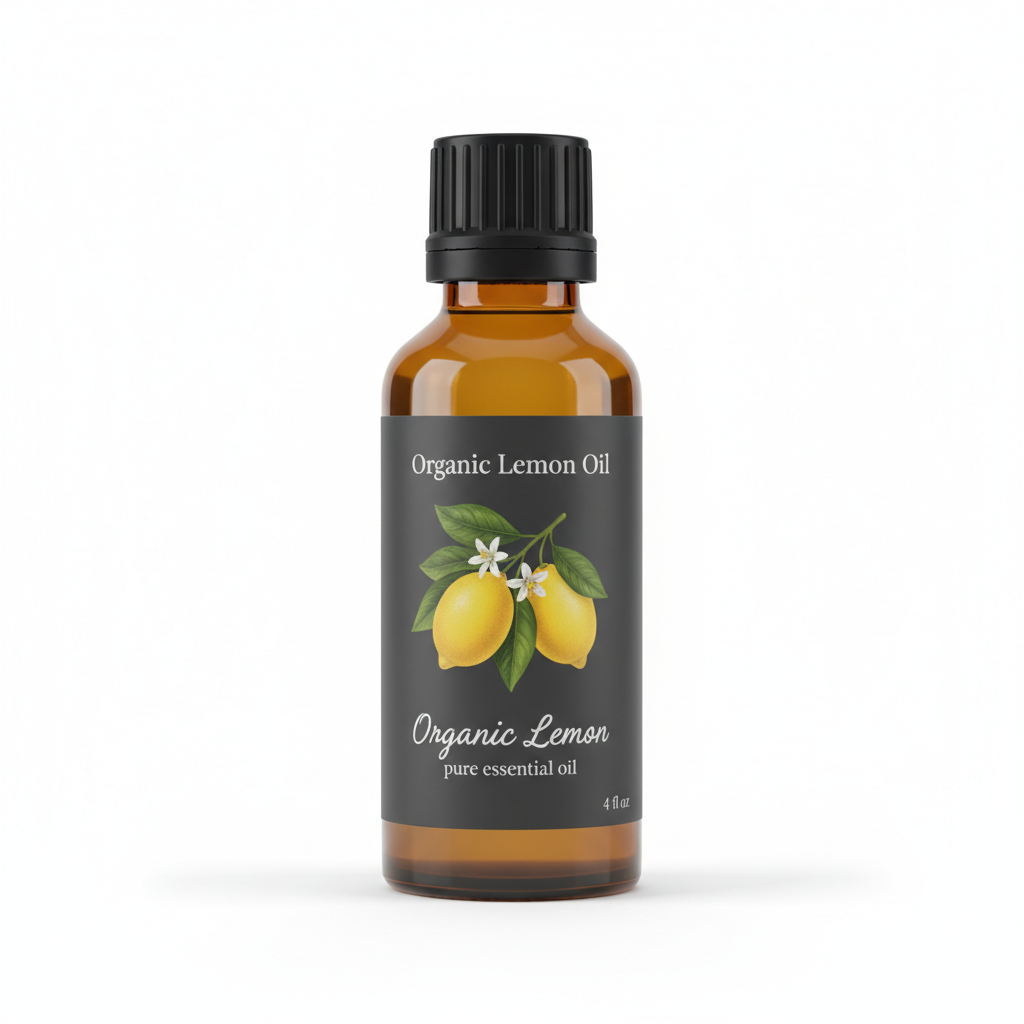
Organic Lemon Essential Oil
Our own Organic Lemon Essential Oil, in sizes from 0.5 oz to bulk.
From $15.99
Shop Now →This comparison is for anyone standing in front of two bottles, unsure which one belongs in their cart. The answer depends entirely on what you plan to do with it. Let's work through both oils honestly, side by side.
Where Each Oil Actually Comes From
This is the most important distinction, and it gets glossed over surprisingly often.
Organic Lemon Oil (Cold-Pressed)
Botanical name: Citrus limon
Organic cold-pressed lemon oil comes from the outer peel of ripe lemons. No heat is involved. The rind is mechanically pressed to release the essential oil locked inside the cells of the peel. The result is a bright, clean, intensely citrus aroma that most people recognize immediately as "fresh lemon."
Because it is cold-pressed rather than steam-distilled, it retains the full aromatic complexity of the peel, including its natural waxes and a broader range of fragrant constituents. Quality varies significantly based on origin, harvest timing, and certification. If you want to go deeper on what separates a well-sourced bottle from a mediocre one, the guide to buying organic lemon oil covers that ground thoroughly.
Lemon Eucalyptus Oil
Botanical name: Eucalyptus citriodora
Lemon eucalyptus oil comes from the leaves and twigs of the lemon-scented eucalyptus tree, a tall native of Australia and parts of Asia. It contains naturally high levels of citronellal, the compound responsible for its lemony character. Steam distillation is the standard extraction method.
There is also a separate product called "oil of lemon eucalyptus" (OLE), which is a refined, processed extract of Eucalyptus citriodora. OLE is chemically distinct from the essential oil. The essential oil and OLE are not interchangeable, and the two are sometimes confused in consumer-facing content. For the purposes of this comparison, we are discussing the essential oil form.
Scent Profile: A Side-by-Side Impression
Both oils smell lemony. Beyond that, the similarity fades quickly.
- Lemon oil (cold-pressed): Bright, juicy, sparkling. Smells like freshly zested lemon peel with a slightly waxy quality. Light and uplifting in a straightforward citrus way. The aroma is familiar and immediately recognizable.
- Lemon eucalyptus oil: Herbal and complex, with a lemony top note that quickly gives way to a greener, slightly camphoraceous character. There is an earthiness underneath. It smells medicinal to some people and pleasantly complex to others.
If you want something that reads as purely, cleanly citrus in a room spray or body product, cold-pressed lemon oil is the clearer choice. If you want something with more botanical depth and a slightly unusual edge, lemon eucalyptus oil provides that.
Key Attributes: Comparison Table
| Attribute | Organic Lemon Oil (Cold-Pressed) | Lemon Eucalyptus Oil |
|---|---|---|
| Botanical source | Citrus limon (lemon peel) | Eucalyptus citriodora (leaves and twigs) |
| Extraction method | Cold pressing (mechanical) | Steam distillation |
| Scent character | Bright, fresh, clean citrus | Lemony, herbal, slightly camphoraceous |
| Primary aromatic use | Diffusing, candles, room sprays, uplift blends | Diffusing, outdoor blends, complex aromatic compositions |
| Skin use (diluted) | Yes, with caution (phototoxic risk) | Yes, with proper dilution |
| Phototoxicity concern | Yes. Avoid UV exposure after topical use | Not typically a phototoxic concern |
| Organic certification available | Yes, widely available | Less common; organic versions exist but are harder to find |
| Shelf life (approximate) | 1 to 2 years (oxidizes faster than most oils) | 2 to 3 years |
| Blending compatibility | Citrus, florals, mint, herbs, spice | Eucalyptus, camphor, citrus, green herbs |
| Price range | Moderate (higher for certified organic) | Moderate to higher |
Pros and Cons
Organic Cold-Pressed Lemon Oil
Pros
- The cleanest, most recognizable citrus scent available in essential oil form
- Widely available in certified organic quality, making it easier to verify what you are buying (see what organic certification actually means for lemon oil)
- Extremely versatile in blending and home fragrance applications
- Works beautifully in cleaning product formulations for a fresh, uplifting scent
- Pairs well with almost every other essential oil category
Cons
- Phototoxic when applied to skin exposed to sunlight or UV light. This is a real concern for topical use in leave-on products
- Shorter shelf life compared to most essential oils. Cold-pressed citrus oils oxidize relatively quickly
- The bright, simple scent can feel one-dimensional in complex aromatic blends that call for more depth
- Quality and adulteration rates are high in the market. Sourcing carefully matters a lot
Lemon Eucalyptus Oil
Pros
- Longer shelf life than cold-pressed citrus oils
- Interesting aromatic complexity that works well in outdoor-themed or botanically complex blends
- No phototoxicity concern associated with this oil in standard topical use
- Less commonly adulterated than lemon oil, partly because the raw material is more available
Cons
- The scent is not a substitute for true citrus. People expecting a lemon oil experience may be surprised or disappointed
- Organic versions are harder to source and verify than organic lemon oil
- The camphoraceous quality is polarizing. Some find it harsh or clinical in diffuser blends
- Confusion between the essential oil and processed OLE (oil of lemon eucalyptus) can lead to purchasing the wrong product for a given purpose
- Not as broadly appealing in personal care product formulations aimed at a general audience
Best for: Use Case Recommendations
For Diffusing and Home Fragrance
Choose lemon oil if you want a clean, uplifting, citrus atmosphere in your living space. It performs beautifully on its own or blended with other oils like lavender, peppermint, or bergamot. Morning routines and fresh-air diffuser blends are where it shines most reliably.
Choose lemon eucalyptus oil if you prefer something more complex, with a green and herbal quality. It works particularly well in outdoor-inspired blends or as part of a deeper aromatic composition. It is not the right choice if clean citrus is what you are after.
For Skin and Body Care (Diluted Use)
Choose lemon oil with significant caution. Cold-pressed lemon oil contains natural compounds called furanocoumarins, which cause photosensitivity. It should not be used in any leave-on product applied to skin that will be exposed to sunlight or UV light within 12 to 18 hours. For rinse-off products like shower gels or soaps, diluted use is generally considered lower risk, but patch testing is always a good practice.
Choose lemon eucalyptus oil for topical applications where phototoxicity is a concern, provided it is properly diluted. A general guideline for body products is 1 to 2 percent dilution in a carrier oil. Always do a patch test on a small area of skin before using any new essential oil on a larger area. Some individuals may have sensitivities to this oil as well, so caution applies universally.
Neither oil should be applied undiluted to skin, and neither is appropriate for use around young children without guidance from a qualified professional.
For Cleaning and Home Product Formulations
Choose lemon oil. Its bright scent is exactly what people associate with a clean home. It performs very well in DIY surface sprays, linen mists, and laundry fresheners. The phototoxicity concern is largely irrelevant in rinse-away or hard-surface applications.
Lemon eucalyptus oil can contribute to cleaning product blends, but it lacks the instantly recognizable citrus freshness that most people are seeking in a household product.
For Candle and Wax Melt Making
Choose lemon oil with awareness of flash point. Cold-pressed lemon oil has a relatively low flash point (around 46 to 50°C depending on the batch and supplier), which requires care in candle applications. Check with your supplier for the specific flash point of the batch you are using. Lemon eucalyptus oil tends to have a higher flash point and may behave more consistently in wax formulations.
For Soap Making
Both oils can work in cold-process and melt-and-pour soaps. Lemon oil is more commonly used because the scent profile aligns with consumer expectations. Be aware that citrus essential oils can fade in cold-process soap faster than other oil categories, so fragrance retention should be considered in your formulation.
A Note on Sourcing and Certification
For lemon oil, organic certification carries real weight. Citrus peels concentrate whatever was applied to the fruit during growing, which makes the case for certified organic sourcing a practical one, not just a marketing preference. The lemon oil supply chain also has a documented history of adulteration with synthetic limonene, so knowing your source matters more here than with many other essential oils.
Lemon eucalyptus oil has less organic certification infrastructure around it at this point, though options do exist. Look for suppliers who provide GC/MS (gas chromatography/mass spectrometry) reports for any batch you are considering, as this is the most reliable way to verify authenticity and constituent levels regardless of certification status.
If you are comparing lemon oil to other citrus-adjacent oils like lemongrass or lemon balm, the differences are equally significant. A separate deep-dive on lemon oil versus lemongrass and lemon balm oils covers that territory in detail.
The Verdict
These are not competing products. They serve different purposes and attract different users.
Cold-pressed organic lemon oil is the right choice for anyone who wants authentic citrus character in a diffuser blend, a home cleaning product, or a personal care formulation. It is bright, familiar, and enormously versatile. Its limitations are real (shelf life, phototoxicity, sourcing vigilance) but entirely manageable with a little attention.
Lemon eucalyptus oil is the right choice for someone who specifically wants its distinctive herbal-citrus profile, or who needs an oil with a longer shelf life and no phototoxicity concern for topical applications. It is not a substitute for true lemon oil, and anyone expecting a lemon oil experience from it will likely be disappointed.
If you only have room for one in your collection and your primary interests are home fragrance and personal care, organic cold-pressed lemon oil is the more versatile starting point. If you already have lemon oil and want to expand your aromatic range with something unusual and botanically complex, lemon eucalyptus oil makes a genuinely interesting addition.
Buy both from suppliers who can show you documentation. Read the labels carefully. And know that the word "lemon" on a bottle tells you very little on its own.