
Lemon Oil vs Lemongrass and Lemon Balm Oils: Sorting Out the Lemony Look-Alikes
Walk into any natural fragrance shop or browse an aromatherapy supplier online, and you will likely encounter three bottles wearing very similar labels: lemon oil, lemongrass oil, and lemon balm oil. They share a citrus-adjacent brightness. They are often shelved side by side. And they are regularly confused for one another by shoppers who assume the word "lemon" does most of the explaining.
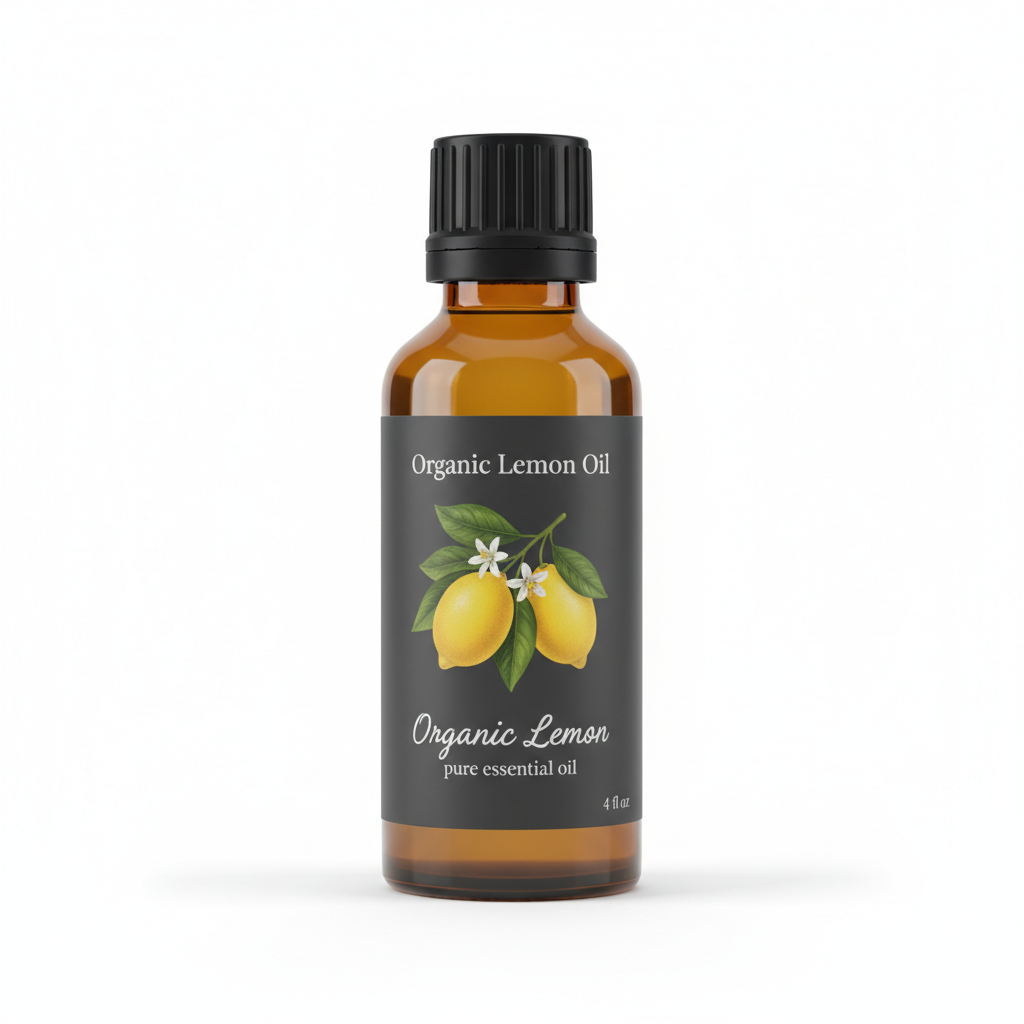
Organic Lemon Essential Oil
Our own Organic Lemon Essential Oil, in sizes from 0.5 oz to bulk.
From $15.99
Shop Now →It does not. These three oils come from entirely different plant families, are produced through different extraction methods, and perform quite differently in cosmetic and aromatic applications. Getting them mixed up can mean wasting money on the wrong product, or worse, reaching for an oil that simply will not do what you need it to do.
This lemon oil comparison breaks down each one honestly, from sourcing and scent to value and practical use, so you can shop with confidence rather than guess.
Meet the Three Oils
Organic Lemon Oil (Cold-Pressed)
True lemon oil is cold-pressed from the outer rind of Citrus limon fruit, typically grown in Sicily, Argentina, or California. No heat is applied during extraction. The oil is essentially concentrated rind material, carrying the bright, clean, solar scent most people picture when they say "lemon." Because it comes from the peel rather than the juice, it contains virtually no citric acid. What it does contain is a high proportion of limonene, the primary aromatic compound that gives citrus its characteristic lift.
Organic certification matters here more than in many other oils. Conventional lemon rinds can carry significant pesticide residue, and those residues concentrate during cold pressing. If you want to understand how certification standards actually protect the final product, the guide on what organic certification really means for lemon oil is worth reading before you buy.
Lemongrass Oil (Steam-Distilled)
Lemongrass oil comes from Cymbopogon citratus or Cymbopogon flexuosus, a tall grass native to tropical Asia. The oil is steam-distilled from the fresh or partially dried leaves and stalks. Its dominant compound is citral, a molecule that smells sharply lemony but with a grassy, herbal backbone that becomes obvious once you spend time with it. Lemongrass is a robust crop that produces oil in generous quantities, which keeps prices lower than either of the other two oils discussed here.
The scent is louder and more persistent than cold-pressed lemon oil. In perfumery, it is often described as having "tenacity": it holds in a blend and can easily overpower more delicate notes if used without care.
Lemon Balm Oil (Steam-Distilled)
Lemon balm oil, distilled from Melissa officinalis, sits in a category of its own. Melissa, as it is known in the trade, is notoriously difficult and expensive to produce. The plant yields very little essential oil relative to the volume of plant material required. As a result, genuine lemon balm oil is among the most expensive oils on the market. Many products labeled "lemon balm oil" are actually lemongrass oil, citronella, or a blend designed to mimic Melissa at a lower price point.
Authentic lemon balm oil has a softer, more complex scent than either lemon or lemongrass. There is a floral warmth underneath the citrus note, and the overall impression is gentler, more rounded. For that reason, it tends to be used in small quantities in fine fragrance and premium skincare formulations rather than as a workhorse aromatic ingredient.
Side-by-Side Comparison Table
| Attribute | Lemon Oil (Organic, Cold-Pressed) | Lemongrass Oil | Lemon Balm Oil |
|---|---|---|---|
| Botanical source | Citrus limon (rind) | Cymbopogon citratus / flexuosus (leaves, stalks) | Melissa officinalis (aerial parts) |
| Extraction method | Cold pressing | Steam distillation | Steam distillation |
| Primary aroma compounds | Limonene (up to 70%) | Citral (up to 80%) | Citral, citronellal, linalool |
| Scent character | Bright, clean, fresh citrus | Sharp, grassy, intensely lemony | Soft, floral-citrus, complex |
| Scent longevity | Short (top note) | Long (middle-top note) | Medium (top-middle note) |
| Typical price range | Moderate (higher for certified organic) | Low to moderate | Very high (adulteration risk) |
| Photosensitivity risk | Yes (furanocoumarins in cold-pressed) | Low | Low |
| Adulteration risk | Moderate | Low (abundant supply) | Very high |
| Skin dilution needed | Yes (1% or less for leave-on products) | Yes (0.7% or less; can be sensitizing) | Yes (0.5% or less; consult GC-MS data) |
| Best cosmetic use | Brightening serums, hair rinses, cleansers | Deodorant blends, foot care, candles | Premium facial serums, fine fragrance |
| Best aromatic use | Uplifting diffuser blends, room sprays | Long-lasting diffuser blends, linen sprays | Calming bedtime diffuser blends |
Pros and Cons of Each Oil
Lemon Oil (Organic, Cold-Pressed)
- Pro: The most recognizable, universally appealing citrus scent. Works in virtually any aromatic blend.
- Pro: Cold pressing preserves a nuanced, whole-fruit character that distilled citrus cannot replicate.
- Pro: Widely available in certified organic grades from reputable suppliers. Pro: Pairs beautifully with florals, woods, and other citrus oils for layered blending.
- Con: Photosensitive. Cold-pressed lemon oil should never be applied to skin before sun exposure. Choose a steam-distilled version or limit to rinse-off products and diffusion if this is a concern.
- Con: Short shelf life compared to many oils. Limonene oxidizes relatively quickly, so storage matters.
- Con: Scent fades fast in blends. You will need a fixative or a supporting middle note to carry it.
Lemongrass Oil
- Pro: Excellent value. You get a strong, long-lasting citrus note at a fraction of what lemon balm costs.
- Pro: Scent tenacity makes it ideal for products designed to linger: candles, linen sprays, deodorant blends.
- Pro: Widely studied. There is a reasonable body of published research observing its aromatic properties in various contexts.
- Con: The grassy undertone can read as harsh or "chemical" in certain blends. It takes a skilled hand to soften it.
- Con: Citral content is high, which means sensitization risk is real. Always dilute carefully and consider cumulative exposure across products.
- Con: It is not a substitute for lemon oil in delicate cosmetic formulations. The scent profile is simply too different.
Lemon Balm Oil
- Pro: The most complex and nuanced scent of the three. Genuine Melissa has a depth that blenders find inspiring.
- Pro: The floral quality makes it suitable for sophisticated, layered fragrance work where lemon oil might feel too sharp.
- Pro: People who diffuse it for evening wind-down routines often report a distinctly different atmospheric quality compared to other citrus oils.
- Con: Price is a significant barrier. Authentic lemon balm oil commands a premium that puts it out of reach for everyday use.
- Con: Adulteration is rampant. Purchasing from a supplier who provides gas chromatography-mass spectrometry (GC-MS) reports is non-negotiable if you want the real thing.
- Con: The softer scent can get lost in complex blends. It often performs best as a feature note rather than a background one.
Best For: Use-Case Recommendations
For an uplifting morning diffuser blend
Reach for cold-pressed lemon oil. Its clean brightness is hard to match for starting the day with a light, energizing atmosphere. A few drops with peppermint and bergamot is a classic combination for a reason.
For a long-lasting room or linen spray
Lemongrass oil wins here. Its citral content gives it staying power on fabric and in the air. It is the practical choice when you want a citrus note that does not disappear within minutes.
For a premium facial serum or luxury skincare formulation
If budget allows and you can source verified authentic oil, lemon balm oil offers an aromatic complexity that elevates a product. For most formulators working at smaller scales, organic cold-pressed lemon oil is the more accessible and reliable choice.
For a calming bedtime diffuser routine
Lemon balm oil, when genuine, is the traditional choice for quiet evening atmospheres. Its warmth softens the citrus edge in a way that lemongrass simply cannot replicate. If lemon balm is outside your budget, a blend of lemon oil and a small percentage of lavender achieves a similar softness.
For candle or soap making
Lemongrass oil is the practical workhorse. It survives heat better than cold-pressed lemon oil (which can have issues with fragrance survival in hot-process applications) and costs far less than lemon balm. Organic cold-pressed lemon oil is a good choice for cold-process soap where heat is less of a factor.
For someone new to citrus oils who wants a versatile starting point
Organic cold-pressed lemon oil is the logical first purchase. It is the most universally applicable, the most familiar in scent, and the easiest to source in a quality-verified organic grade. Our guide on how to buy organic lemon oil covers exactly what to look for when you start shopping.
A Note on Price and Value
One question that comes up often in these comparisons is whether lemongrass oil can simply substitute for lemon oil when budgets are tight. The short answer is: not really. The scent profiles are different enough that substituting one for the other in a finished product will change the character of that product noticeably. Lemongrass is a better value for what it is, not a cheaper version of something else.
Similarly, the high price of lemon balm oil is not automatically a sign of quality. It is a sign of genuine scarcity combined with widespread adulteration in the market. Paying more does not guarantee you are getting authentic Melissa; it only means you are paying more. Always request documentation.
If you are curious about why organic certification affects price across the citrus oil category more broadly, the lemon oil price guide gives a clear breakdown of what you are actually paying for at each tier.
The Verdict
Each of these three oils has a legitimate place in a well-stocked aromatic or cosmetic toolkit. None of them is universally superior.
Lemon oil, particularly organic and cold-pressed, is the most versatile and the most reliably sourced of the three. For anyone building a foundational collection or formulating products that need a clean, recognizable citrus note, it is the sensible anchor. The photosensitivity consideration is real and worth respecting, but it is manageable with straightforward precautions.
Lemongrass oil earns its place as a high-value, long-lasting citrus note for products where tenacity matters more than nuance. It is not a budget substitute for lemon oil. It is a different ingredient with its own strengths.
Lemon balm oil is genuinely special when authentic, and genuinely problematic to source reliably. Reserve it for applications where its specific aromatic character is the point, and do your supplier homework thoroughly before spending at that price level.
If you are choosing just one to start, the case for organic cold-pressed lemon oil is straightforward: consistent quality, wide applicability, and a scent that almost no one finds difficult to work with. From there, lemongrass and lemon balm are worthwhile additions as your experience and specific project needs develop.