
Lemon Oil Price Guide: Why Organic Costs More and When It Is Worth It
Lemon essential oil is one of the most purchased oils in any natural-product line, and for good reason. The scent is bright, familiar, and instantly uplifting. But open a browser and search for lemon oil price, and you will quickly discover a range that stretches from suspiciously cheap to genuinely premium. A 10-ml bottle might cost two dollars or twenty. A 4-ounce supply for a soap maker might run fifteen dollars or eighty. What is actually different between those bottles?
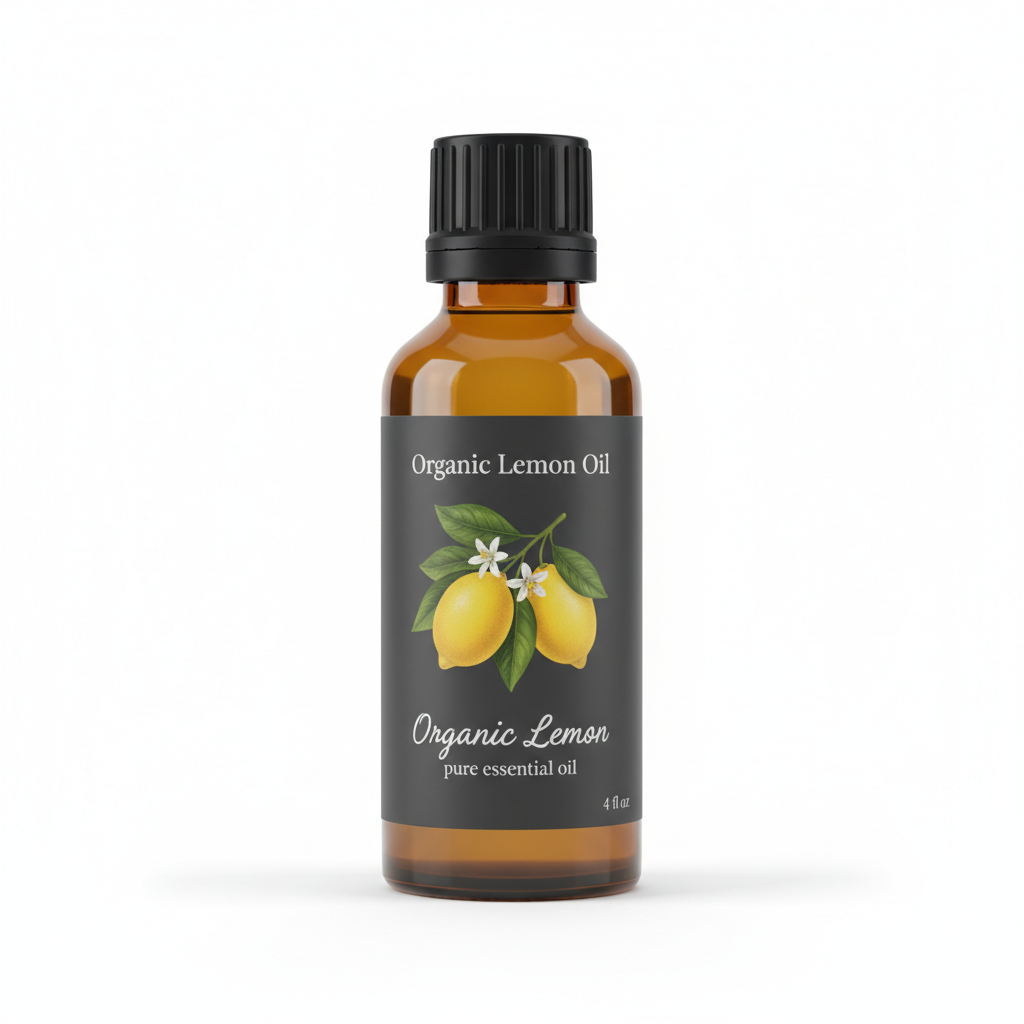
Organic Lemon Essential Oil
Our own Organic Lemon Essential Oil, in sizes from 0.5 oz to bulk.
From $15.99
Shop Now →This guide breaks down exactly what drives organic lemon oil cost, which quality signals matter, and how to match your spending to your actual needs. Whether you are filling a diffuser once a week or formulating a full skincare line, the calculation is different. Read on to find your answer.
Why Lemon Oil Prices Vary So Widely
Lemon essential oil is cold-pressed from the outer rind of fresh lemons, not steam-distilled from the juice or pulp. That distinction matters for cost. The pressing process is gentler and preserves the volatile compounds that give the oil its characteristic sharp, sweet character, but it requires a significant quantity of fruit. Roughly 1,000 lemons yield about one pound of oil. That number alone explains why quality lemon essential oil value is not reflected in bargain-bin pricing.
Several additional factors push organic lemon oil cost higher than its conventional counterpart:
- Organic certification overhead. Growers pay for annual audits, soil testing, and documentation. Those costs pass through the supply chain.
- Lower yield per acre. Organic orchards typically produce fewer fruits per tree than conventionally managed groves. Smaller harvests mean higher raw material costs per kilogram of oil.
- Shorter shelf windows. Cold-pressed citrus oils oxidize faster than distilled oils. Responsible suppliers keep smaller inventory batches, which reduces economies of scale.
- Third-party testing. Reputable organic brands pay for GC-MS (gas chromatography-mass spectrometry) analysis on each lot. Testing is not free, and it adds a few dollars per bottle at retail.
- Origin premiums. Oil from Italian or Sicilian groves, where lemon-growing heritage runs deep, typically commands a higher price than oil from less-established growing regions. For more on this topic, see our article on Italian lemon oil and other origins: does the grove change the oil?
Conventional lemon oil sidesteps many of these costs. It may be produced from heavily sprayed fruit, blended across broad regions for consistency, and rarely tested beyond basic purity checks. The lower lemon oil price reflects those shortcuts, not some magical efficiency.
What to Look For: Quality Indicators That Justify the Cost
Before comparing price tags, learn to read the label. These are the signals that separate genuinely good oil from a bottle of scented filler.
Certification and Transparency
Look for a recognized third-party certification, such as USDA Organic, Ecocert, or the Soil Association. A logo on the label is a starting point, not a guarantee. Go further: does the brand publish its certifying body and certificate number? Can you look up the certificate independently? Brands that welcome that scrutiny are generally the ones worth trusting.
Botanical Clarity
The label should state the full Latin name (Citrus limon) and the plant part used (rind or peel). If a label simply says "lemon fragrance oil" or does not specify the extraction method, the bottle almost certainly contains a synthetic scent compound, not a pressed essential oil. These are not interchangeable for aromatherapy or cosmetic formulation purposes.
Country of Origin
Lemon oil origin is a meaningful quality variable. Sicilian and broader Italian cold-pressed lemon oils have a long benchmark reputation among perfumers and formulators. Argentine and South African oils are increasingly respected alternatives. Generic labels that list no origin are a quiet warning sign.
Batch-Specific GC-MS Reports
This is the gold standard for verifying lemon essential oil value. A GC-MS report shows the actual chemical profile of a specific lot, including the percentage of key compounds like limonene, beta-pinene, and gamma-terpinene. It can also reveal adulteration (synthetic limonene added to boost volume) or degradation (oxidized compounds that indicate old or improperly stored oil). Ask the supplier for the report that matches your bottle's lot number. If they cannot provide it, shop elsewhere.
Packaging
Dark amber or cobalt glass is the baseline. UV light degrades citrus oils quickly. Any supplier packaging cold-pressed lemon oil in clear glass or plastic is either uninformed or unconcerned with quality. Neither is a good sign.
Key Features to Compare When Shopping
| Feature | Budget Option | Mid-Range Organic | Premium Organic |
|---|---|---|---|
| Certification | None or unverified | USDA Organic | USDA Organic + Ecocert or equivalent |
| GC-MS testing | Rarely available | Available on request | Published per lot on website |
| Origin listed | Rarely | Yes, by country | Yes, by region or grove |
| Packaging | Variable | Amber glass | Amber glass with tamper seal |
| Shelf life guidance | Generic | Best-before date | Lot date + oxidation notes |
| Typical retail price (10 ml) | $2 to $7 | $8 to $16 | $17 to $30+ |
Top Picks at Different Price Points
Rather than naming specific brands (availability and formulations change), here is how to identify a good pick at each tier.
Budget Tier ($2 to $7 for 10 ml)
At this lemon oil price, you are almost certainly buying a synthetic fragrance oil or a heavily blended conventional oil. This is fine for general household scenting in wax melts or sachets where the exact chemical profile does not matter. It is not appropriate for cosmetic formulation, where skin contact makes ingredient quality a real concern. Do not confuse economy with value at this price point.
Mid-Range Organic ($8 to $16 for 10 ml)
This is where genuine organic lemon oil cost begins. At this tier, you can find USDA-certified cold-pressed oils from respected suppliers with real GC-MS data on file. Brands that specialize in essential oils (rather than selling them as a sideline to supplements or cleaning products) tend to perform better here. Look for a business that has been in the essential oil trade for several years and maintains a dedicated quality page on its website.
This tier is appropriate for diffuser blends, linen sprays, candles, and beginner-level cosmetic work. For a detailed walkthrough of what to verify before purchasing, see our guide on how to buy organic lemon oil.
Premium Organic ($17 and up for 10 ml)
Premium pricing reflects traceable origins, published lot-specific testing, single-origin sourcing, and often additional certifications beyond USDA Organic. For professional formulators, perfumers, or anyone using lemon oil heavily in leave-on cosmetic products, this level of transparency is worth the higher organic lemon oil cost. You are buying documented quality, not just a brand story.
Bulk buyers should also think carefully about bottle size at this tier. A well-chosen larger format often brings the per-milliliter cost down substantially. For guidance on that decision, read our piece on best lemon oil bottle sizes: which one should you order first?
Red Flags to Avoid
Knowing what not to buy is as useful as knowing what to look for. These patterns appear repeatedly in lower-quality lemon oil listings.
- "100% Pure and Natural" with no certification. This phrase is unregulated. It means nothing without a verifiable third-party certification behind it.
- No Latin name on the label. Legitimate essential oil suppliers always list Citrus limon. Absence suggests a fragrance oil in disguise.
- Unusually identical pricing across very different brands. When a dozen brands all sell "organic" lemon oil at exactly $4.99, the product is almost certainly the same generic stock with different labels applied.
- Photographs of lemons on the inside of the bottle. This sounds trivial, but clear glass packaging that lets you see the oil color is actually a storage failure. It should be opaque amber.
- Health claims on the label or in listings. Any seller claiming their lemon oil will improve your physical condition, support organ function, or address a specific health concern is making claims that go beyond what any essential oil is legally permitted to promise. Approach those sellers with caution generally, not just about those specific claims.
- No company contact information. Reputable suppliers stand behind their products. Anonymous storefronts on large marketplaces with no traceable business address are a consistent pattern among low-quality or adulterated oils.
Where to Buy Organic Lemon Oil
Your sourcing channel matters as much as the brand you choose.
Specialty Essential Oil Retailers
Companies whose entire business is built around essential oils tend to have the deepest sourcing relationships and the most rigorous testing programs. They also have the most to lose from quality failures. This is generally the most reliable channel for lemon essential oil value at a fair organic lemon oil cost.
Natural Food and Supplement Stores
Physical stores with trained staff can be a good option, particularly if you can ask questions and examine bottles before purchasing. The selection is usually more limited than online specialists, and not every product on the shelf is equally well-sourced. Ask if the store can provide lot-specific testing data.
Large Online Marketplaces
This channel requires the most caution. Counterfeit and adulterated essential oils are disproportionately common on large marketplaces where third-party sellers can list with minimal verification. If you buy through a marketplace, purchase only from the brand's own verified storefront, not from a generic reseller. And still ask for GC-MS data.
Direct from the Brand
Buying directly from a brand's own website gives you the most direct access to lot information, testing data, and customer support. It also means you are buying current inventory rather than stock that may have sat in a third-party warehouse. For organic cold-pressed lemon oil in particular, freshness matters. Oxidized oil loses scent character and may cause skin sensitivity, so knowing the press date is genuinely useful information.
When Organic Lemon Oil Cost Is Worth It
Spending more is clearly justified in a few specific situations. If you are using lemon oil in leave-on cosmetics (serums, face oils, body butters), the certification and purity documentation are important. Pesticide residues in cold-pressed citrus oils are a real consideration, since the rind is the very part of the fruit that carries the heaviest residue load in conventional farming.
If you are formulating products to sell, your customers are relying on your ingredient sourcing choices. Organic certification gives you a defensible, documented quality standard to stand behind.
If you simply love the scent and use it daily in a diffuser or personal fragrance blend, mid-range certified organic is a reasonable target. You get genuine lemon essential oil value without paying the traceability premium that professional formulators need.
Budget-tier options have a legitimate place in purely decorative or functional household applications where skin contact is not a factor and exact chemical composition is not a concern. Know your use, then match your spending to it. That is the practical answer to every lemon oil price question.