Best Lemon Oil Bottle Sizes: Which One Should You Order First?
Picking a bottle size sounds like a small decision. In practice, it shapes how much you spend, how long your supply lasts, and whether you end up with oil that has gone past its prime before you reach the bottom. This guide walks through every common lemon essential oil bottle size, explains what each format is suited for, and gives you the quality indicators that matter most before you spend a dollar.
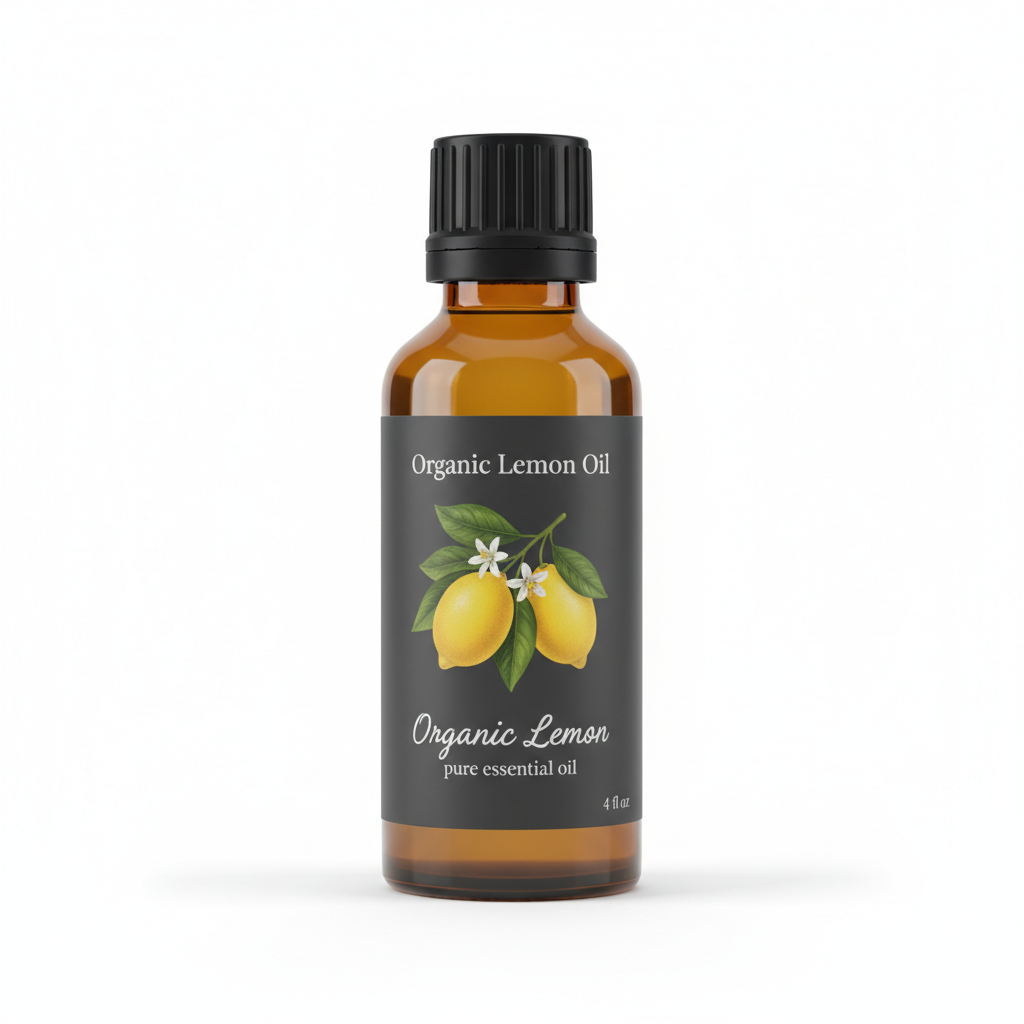
Organic Lemon Essential Oil
Our own Organic Lemon Essential Oil, in sizes from 0.5 oz to bulk.
From $15.99
Shop Now →Why Bottle Size Matters More Than You Might Expect
Lemon oil is cold-pressed from the outer rind of Citrus limon fruit. Because it is not steam-distilled, it retains a broader aromatic profile: bright, tart top notes with a faint green-peel undertone. That richness is also its Achilles heel. Cold-pressed citrus oils are more vulnerable to oxidation than most essential oils. Light, heat, and air all accelerate the process.
A bottle size that looks economical on paper can cost you more in practice if the oil oxidizes before you use it up. Conversely, a tiny trial bottle costs more per milliliter and runs out quickly if you diffuse daily or blend in larger batches. The right size depends on your actual usage rate, not on what seems like a good deal at checkout.
Before comparing lemon oil sizes specifically, it helps to understand what makes a quality bottle worth buying in the first place. For a thorough introduction to sourcing and certification, see our guide on how to buy organic lemon oil.
What to Look for Regardless of Size
Certifications and Sourcing
Organic certification from a recognized body (USDA, EU Organic, or an equivalent national standard) tells you the fruit was grown without synthetic pesticides. This matters for cold-pressed oils in particular, because the pressing process concentrates whatever was on the rind. Look for the certifying body name printed on the label, not just the word "organic" without verification.
Country of origin should also appear clearly. Italy (especially Sicily and Calabria) and Argentina are the most respected sources for lemon oil. California-grown fruit produces a slightly sweeter aromatic profile. Each origin has its own character; none is universally superior, but transparency is non-negotiable.
Packaging Quality
Amber or cobalt glass is the baseline standard. Clear glass is a red flag because UV light degrades the oil. Plastic is only acceptable for very large professional or commercial formats, and even then, the best suppliers use HDPE with UV inhibitors and ship in cardboard outer packaging.
The cap matters too. A built-in orifice reducer (the small plastic insert that controls drop size) is a sign the supplier thought about daily use. Tamper-evident rings confirm the bottle has not been opened.
Batch Testing and GC/MS Reports
Gas chromatography/mass spectrometry testing verifies the chemical composition of the oil and can identify adulteration. Reputable suppliers publish these reports by batch number, either on their website or available on request. An organic lemon oil without accessible batch testing is not necessarily poor quality, but you have less evidence to go on. Prioritize suppliers who are transparent about this.
Harvest and Press Date
Cold-pressed lemon oil has a practical shelf life of about one to two years from pressing when stored correctly. A bottle that shows only a "best before" date without a production date makes it hard to assess freshness. Look for suppliers who print the batch or press year somewhere on the label or packaging insert.
Lemon Oil Sizes: A Practical Breakdown
| Size | Approximate Drop Count | Best For | Typical Price Range |
|---|---|---|---|
| 5 mL | 75 to 100 drops | First-time buyers, travel, recipe testing | $6 to $14 |
| 10 mL | 150 to 200 drops | Regular personal use, small diffuser routines | $10 to $22 |
| 15 mL (0.5 oz) | 225 to 300 drops | Most popular everyday size, home diffusion, blending | $14 to $28 |
| 30 mL (1 oz) | 450 to 600 drops | Frequent blenders, candle and soap makers | $22 to $50 |
| 4 oz (120 mL) | 2,000+ drops | Small-batch makers, households with multiple uses | $45 to $90 |
| 16 oz (1 lb / 450 mL) | 8,000+ drops | Wholesale buyers, commercial formulators | $120 to $220 |
5 mL: The Right First Bottle
If you have never bought a particular brand before, start here. A 5 mL bottle gives you enough oil to evaluate the scent profile, test it in a diffuser blend, and try a diluted application in a carrier oil without committing significant money. The cost per milliliter is higher than larger sizes, but the risk is lower. Think of it as paying a small premium for information.
One caveat: some suppliers only offer 5 mL in their starter or sampler lines, which may be a different grade or a blend with a carrier. Read the label carefully and confirm you are buying 100% pure cold-pressed lemon oil, not a pre-diluted product.
15 mL: The Everyday Workhorse
The 15 mL bottle is the most popular lemon essential oil bottle size for good reason. It fits the standard essential oil bottle holder and diffuser-side table setup. At typical diffuser usage of 3 to 5 drops per session and two sessions per day, a 15 mL bottle lasts roughly three to five months. That is comfortably within the oil's freshness window.
This size is also ideal for those who blend lemon oil into room sprays, linen mists, or personal care formulations at home. It gives enough volume to experiment without the risk of having too much oil on hand.
30 mL to 4 oz: The Committed Blender Range
If you make your own candles, cold-process soaps, or body care products, the 30 mL and 4 oz formats start to make economic sense. The cost per milliliter drops meaningfully at this tier. Storage becomes more important: a cool, dark cabinet away from sunlight and temperature swings preserves the oil well.
A 4 oz bottle in a household that uses lemon oil in multiple ways (diffusing, cleaning sprays, personal care blending) can realistically be used within a year. That makes it a practical size without crossing into bulk territory.
16 oz and Above: Wholesale Territory
Large-format lemon oil purchases make sense for small businesses, professional formulators, and commercial cleaning product manufacturers. For home users, the economics are unfavorable unless you have a specific high-volume project. An unused 16 oz bottle sitting in a cabinet for two years will not deliver the aromatic quality you paid for.
If you are sourcing at this scale, the considerations shift considerably. Supplier relationships, certificate of analysis documentation, and minimum order quantities become the primary concerns. Our dedicated resource on bulk and wholesale lemon oil covers this tier in full detail.
Top Picks at Different Price Points
Budget-Friendly Pick (Under $15)
In this range, look for a 5 mL or 10 mL organic certified bottle from a supplier with accessible GC/MS reports. Plant Therapy and Edens Garden both offer USDA certified organic lemon oil in small sizes with batch-specific testing. The scent is bright and true to the fruit. Good starting points for first-time buyers.
Mid-Range Pick ($15 to $35)
A 15 mL or 30 mL bottle from a specialty supplier with single-origin sourcing hits this range well. Florihana, a French cooperative, offers certified organic lemon oil pressed from Italian fruit with full traceability. The aromatic depth is noticeably more complex than commodity-grade oils. This tier rewards buyers who have already confirmed lemon oil fits their routine.
Premium Pick ($40 and Above)
At the premium tier, you are generally paying for single-estate or named-farm sourcing, rigorous third-party testing beyond standard GC/MS, and packaging that keeps the oil in ideal condition. Mountain Rose Herbs carries certified organic lemon oil with detailed sourcing notes and is a well-regarded name in the botanical supply space. Their 4 oz size offers good value per milliliter at this quality level.
Red Flags to Avoid
- No Latin name on the label. The botanical name Citrus limon should appear. Absence of it suggests a supplier cutting corners on labeling transparency.
- "Fragrance oil" language buried in the fine print. Fragrance oils are synthetic or blended aromatic compounds. They are not cold-pressed essential oils and do not carry the same aromatic character.
- Unusually low prices on large bottles. Certified organic lemon oil has a real cost of production. A 4 oz bottle priced at $10 is almost certainly adulterated, diluted in a carrier, or mislabeled.
- Clear glass bottles. As noted above, UV exposure is a meaningful quality concern for cold-pressed citrus oils.
- No batch number or production date. Without this, you cannot verify freshness or access testing data even if the supplier publishes it.
- Vague sourcing claims. "Sourced from nature" or "globally sourced" tells you nothing useful. Specific country of origin should be stated.
Where to Buy
Purchasing directly from a supplier's own website gives you the most direct access to batch testing, sourcing information, and customer service. Marketplaces like Amazon can carry legitimate products, but they also carry counterfeit and mislabeled oils from third-party sellers. If you buy through a marketplace, purchase only from the brand's own verified storefront.
Specialty natural retailers (both physical and online) that curate their botanical inventory tend to carry a higher average quality than general wellness shops. Staff knowledge is often a useful secondary signal: a retailer whose staff can speak to sourcing origins is likely selecting products carefully.
For a broader look at sourcing channels and what to watch for at each, our article on where to buy organic lemon essential oil covers the landscape in detail.
A Practical Starting Recommendation
For most people buying lemon oil for the first time, a 10 mL or 15 mL certified organic bottle from a supplier with published GC/MS data is the right call. It gives you enough oil to genuinely integrate into your routine: diffusing in the morning, adding to a room spray, or blending into a body oil with a carrier. If you love it and use it consistently, move up to a 30 mL on your second order. By that point you will have a clear sense of your usage rate and can size your purchase accordingly.
The best lemon oil to buy is not the cheapest per milliliter or the most impressively labeled. It is the bottle you will finish while the oil is still at its aromatic best, from a supplier who can show you exactly where it came from and how it was tested.