
How to Spot Pure Lemon Oil: Quality Checks Before You Pay
Lemon oil is one of the most counterfeited, adulterated, and misrepresented essential oils on the market. That is not a scare tactic. It is simply the reality of a high-demand ingredient that costs relatively little to fake. A bottle of synthetic lemon fragrance oil can look almost identical to a genuine cold-pressed organic expression, right down to the amber glass and artisan label. Knowing what separates the real thing from a convincing imitation could save you money and frustration, especially if you are shopping for lemon oil quality that will perform well in cosmetics, diffuser blends, or home fragrance recipes.
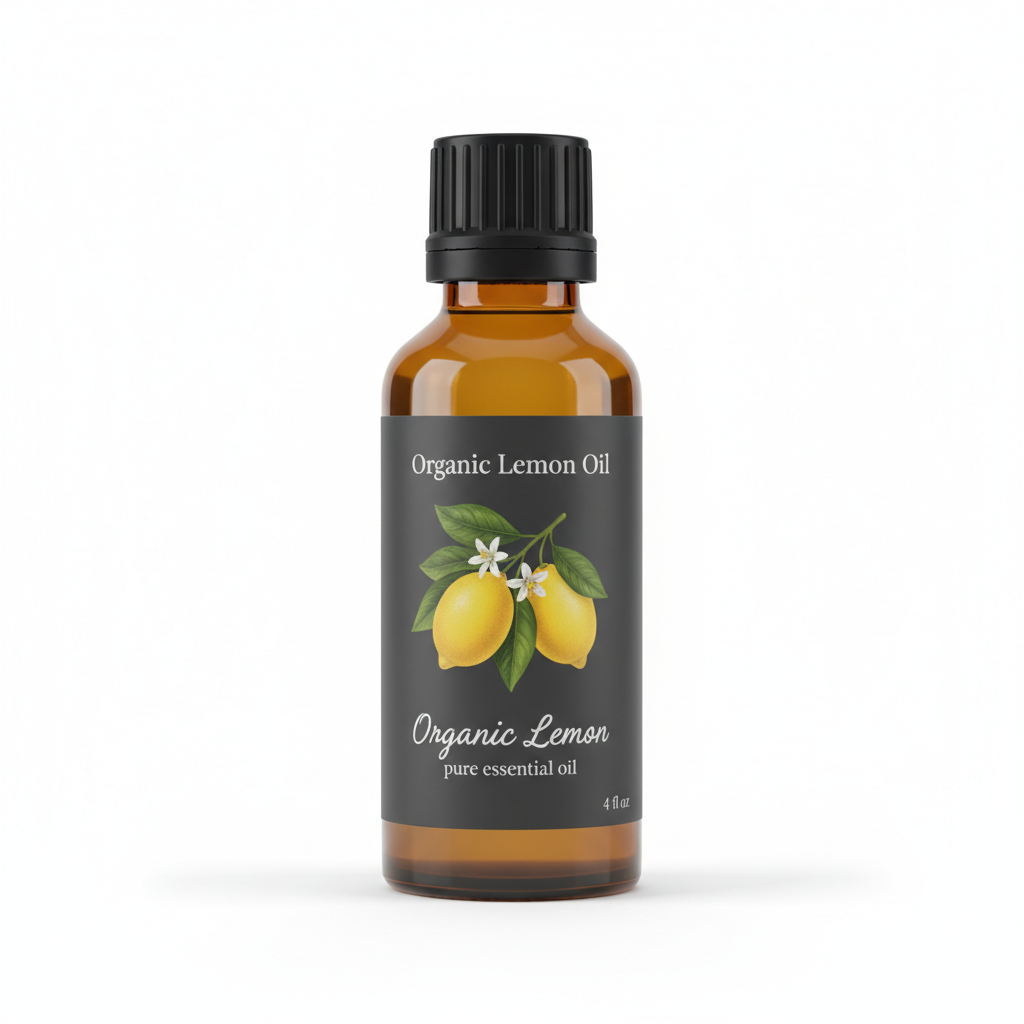
Organic Lemon Essential Oil
Our own Organic Lemon Essential Oil, in sizes from 0.5 oz to bulk.
From $15.99
Shop Now →This guide walks you through every checkpoint worth running before you hand over your money. We cover label reading, sourcing questions, sensory evaluation, price realities, and the specific red flags that separate credible sellers from cut-rate operations.
Why Lemon Oil Quality Varies So Widely
Pure lemon oil is cold-pressed from the outer rind of Citrus limon fruit. It takes roughly 1,000 lemons to produce a single kilogram of expressed oil. That yield figure matters, because it explains why genuinely pure lemon oil has a real cost floor. When you see a 4-ounce bottle listed for two dollars, something has been compromised.
Common adulterants include:
- Synthetic limonene blended with a carrier oil
- Citrus peel distillate (a lower-grade byproduct of juice production) passed off as cold-pressed oil
- Lemon fragrance oil, which contains no actual botanical material
- Over-diluted oil sold without disclosure of the carrier used
- Blends of lemon with cheaper citrus oils such as grapefruit or lime, unmarked
None of these are automatically harmful, but none of them are what you are paying for when you shop for pure lemon oil. Transparency is everything in this category.
If you want to go deeper on the full sourcing picture, our guide on how to buy organic lemon oil: the ultimate quality checklist covers the farm-to-bottle supply chain in detail.
Label Reading: The First Quality Check
A label tells you a great deal before you ever open the bottle. Read it carefully, because credible producers use precise language. Marketing-heavy language with vague terms is often a signal that specifics are being avoided on purpose.
What a Good Label Includes
| Label Element | What to Look For | Why It Matters |
|---|---|---|
| Botanical name | Citrus limon | Confirms the exact species; lemon eucalyptus is a completely different plant |
| Plant part | Peel (rind) | Lemon oil should be expressed from the peel, not steam-distilled from leaves |
| Extraction method | Cold-pressed or cold-expressed | Heat extraction changes the aroma profile significantly |
| Country of origin | Italy, Argentina, Spain, or USA | Italy (Sicily) and Argentina are the most respected origins for Citrus limon |
| Certification | USDA Organic seal or equivalent | Citrus rinds concentrate pesticide residues; organic certification carries real weight here |
| Lot number and batch | Printed on bottle or box | Enables traceability; reputable brands can link a lot number to testing records |
| Expiration or best-by date | Typically 1 to 2 years from pressing | Cold-pressed citrus oils oxidize; a dated bottle signals freshness awareness |
Labels That Should Give You Pause
- "Lemon oil blend" with no disclosure of what it is blended with
- "Fragrance grade" listed anywhere on a bottle marketed as essential oil
- No botanical name, just "Lemon Essential Oil"
- "100% pure" as the only quality claim, with no third-party verification mentioned
- Missing country of origin
Third-Party Testing: The Non-Negotiable Standard
Reputable companies test their oils and publish the results. GC/MS (gas chromatography/mass spectrometry) analysis is the industry benchmark for verifying that an oil's chemical profile matches what it claims to be. Asking for a GC/MS report is not unusual or demanding. It is the normal due diligence of a serious buyer.
Here is what to do:
- Visit the brand's website and search for "GC/MS", "COA" (certificate of analysis), or "batch testing."
- If results are not publicly posted, contact customer service and ask for the report for a specific lot number.
- A quality brand will send it. A brand that refuses or deflects is telling you something.
- Look at the limonene percentage. Genuine Citrus limon cold-pressed oil typically registers between 55% and 75% limonene by GC/MS. Lower figures or unexpected compounds can indicate adulteration.
Some brands also conduct heavy metals testing, pesticide residue screening, and microbial testing. These are particularly relevant for organic certification claims, where the testing chain helps verify that the organic label is meaningful rather than decorative.
How to Evaluate Lemon Oil Quality with Your Senses
Chemistry reports are ideal, but you can also learn a lot from careful sensory observation once you have a bottle in hand.
Aroma
Pure cold-pressed lemon oil smells bright, complex, and genuinely citrusy. There is a slight waxy undertone from the rind. The top note is sharp and effervescent; the dry-down has a soft, almost green quality. Synthetic lemon aroma tends to smell uniformly sharp with no depth. It often smells closer to lemon candy or lemon cleaning products than to a freshly cut lemon rind.
Steam-distilled lemon oil (a legitimate but different product) smells slightly softer and more rounded than cold-pressed. If you expect the brighter, more complex profile and the bottle smells flat, that is worth noting.
Viscosity and Appearance
Pure lemon oil is thin and watery in viscosity. It is pale yellow to greenish-yellow. An oil that is thick, cloudy without cause, or deeply golden may not be what the label suggests. Some light cloudiness at cold temperatures is normal and will clear with gentle warming. Persistent cloudiness at room temperature warrants more investigation.
The Dry-Down Test
Place one drop on a blotter or white paper. Cold-pressed lemon oil will leave very little residue as it evaporates. If the spot stays oily, greasy, or leaves a colored stain, a carrier oil may have been added without disclosure.
Price Realities: What Pure Lemon Oil Actually Costs
Price alone does not guarantee quality. But it does set a realistic floor. Here is a general orientation for the market as of the time of writing. Prices shift based on harvest yields, currency, and supply chain factors, so consider these as ballpark figures.
| Price Range (per 10ml) | What to Expect |
|---|---|
| Under $3 | Almost certainly synthetic fragrance oil or heavily adulterated. Not suitable for use as essential oil. |
| $3 to $7 | Possible but requires scrutiny. May be genuine from a high-volume brand with efficient sourcing. Check for testing documentation. |
| $8 to $15 | Reasonable range for a certified organic, cold-pressed, tested 10ml bottle from a reputable brand. |
| $16 to $30+ | Premium tier. Often reflects specific origin (e.g., Sicilian single-estate), more rigorous testing, or smaller-batch sourcing. |
Buying in larger bottle sizes (30ml or 100ml) from brands you trust after evaluating smaller purchases is usually the most cost-effective approach once you have confirmed quality.
Top Picks at Different Price Points
Rather than naming specific brands (which can change their sourcing or formulations at any time), the more durable approach is to describe what a strong pick at each price tier looks like. Use these profiles as your shopping template.
Budget-Conscious Pick (Under $10 for 10ml)
Look for a brand that publicly posts GC/MS reports on their website without requiring a request. The label should list Citrus limon, cold-pressed, with a country of origin. USDA Organic certification is a strong bonus at this tier. Many well-known natural health retailers carry house-brand lemon oils that meet these basics at accessible prices. Check customer reviews specifically for comments about aroma depth and longevity rather than overall star ratings, which can be gamed.
Mid-Range Pick ($10 to $20 for 10ml)
At this price, you should expect certified organic status, publicly available testing documentation, and responsive customer service that can discuss sourcing. Brands at this tier often provide origin specificity ("Sicilian" or "Argentine") rather than just a country name. They frequently offer loyalty programs or sample sizes, which is a good sign that they are confident in repeat customer satisfaction.
Premium Pick ($20 and above for 10ml)
Premium pricing should come with traceability all the way to the farm or cooperative. Some brands at this level publish full supply chain documentation, including grower relationships and harvest dates. The aroma profile tends to be noticeably more complex. For perfumers, cosmetic formulators, or anyone who uses lemon oil as a signature ingredient in a product line, the extra investment in a single-origin, fully traceable oil is often justified by the consistency and character of the material.
Red Flags to Avoid
Some warning signs are obvious once you know what to look for. Others are easy to miss when a listing looks polished.
Sourcing and Labeling Red Flags
- No botanical name on the label or listing
- "Therapeutic grade" or similar proprietary quality designations. These terms are not regulated or standardized by any independent body.
- "Fragrance oil" anywhere in the description, even if the listing title says "essential oil"
- Vague origin listed as "imported" or "international" with no country named
- No lot number or batch code
Business and Retailer Red Flags
- No customer service contact information on the company website
- Testing documentation that is either undated, applies to a different product, or cannot be linked to a specific batch
- Marketplace listings with suspiciously high review counts and limited review text
- Pricing that sits significantly below the market floor for genuine cold-pressed oil
- Brands that make strong wellness or cosmetic efficacy claims without qualification
A Note on Confusion with Similar Oils
Lemon oil is frequently confused with lemon eucalyptus oil and lemongrass oil. These are entirely different plants with different aroma profiles, chemical compositions, and usage considerations. If you search "lemon oil" and a listing uses one of these as a substitute without clear disclosure, move on. Our articles on lemon oil vs. lemon eucalyptus oil and lemon oil vs. lemongrass and lemon balm oils break down exactly why these substitutions matter.
Where to Buy Pure Lemon Oil
The channel matters almost as much as the brand. Each purchasing venue has trade-offs worth understanding.
Brand Direct (Company Website)
Buying directly from the producing or importing brand's own website is generally the most reliable route. You are buying from the source of record, which means the testing documentation applies to exactly what you receive. Direct relationships also make it easier to ask sourcing questions and get substantive answers.
Specialty Natural Retailers
Physical stores and online specialty retailers that focus on natural products (herbal supply companies, aromatherapy-focused shops, certified organic retailers) tend to curate their inventory with more care than general marketplaces. Staff at physical locations are often knowledgeable and can help you compare options.
Large Online Marketplaces
Marketplaces offer convenience and competitive pricing, but the risk of counterfeit or gray-market product is higher here than anywhere else. If you buy through a marketplace, purchase from the brand's official storefront rather than a third-party seller, and cross-reference the lot number with testing documentation on the brand's own site after receiving the bottle.
Health Food and Co-op Stores
Well-curated natural food stores often carry a small but vetted selection of essential oils. The trade-off is limited variety and sometimes higher retail markup. The advantage is that the buyer for the store has already done some vetting on your behalf.
Storage After Purchase: Protecting What You Paid For
Even a genuinely pure lemon oil will degrade if stored poorly. Cold-pressed citrus oils are among the most oxidation-prone essential oils. A few simple habits protect your investment.
- Store in a cool, dark location. A cabinet away from heat sources is ideal.
- Keep the cap sealed tightly between uses. Oxygen exposure accelerates oxidation.
- Refrigeration can extend shelf life, though the oil may cloud temporarily in the cold. This is normal and reverses at room temperature.
- Transfer to a smaller bottle as the original empties to reduce headspace (the air gap above the oil).
- Note the purchase date and follow the best-by guidance. Most cold-pressed lemon oils are best used within 12 to 18 months of pressing, and often sooner once opened.
A Quick Pre-Purchase Checklist
Before finalizing any purchase of pure lemon oil, run through this checklist:
- Does the label or listing include the botanical name Citrus limon?
- Is the extraction method listed as cold-pressed or cold-expressed?
- Is the plant part identified as peel or rind?
- Is a country of origin provided?
- Is the product certified organic by a recognized certifying body?
- Can you access a GC/MS report or certificate of analysis for the specific batch?
- Does the price fall within a realistic range for genuine cold-pressed oil?
- Is the seller identifiable and reachable with a real customer service contact?
- Is there a lot number or batch code on the bottle?
- Is there a best-by or production date?
Eight or more yes answers suggests you are looking at a credible product. Fewer than six should prompt more research before you buy.
Shopping for lemon oil quality does not need to be complicated, but it does require paying attention. The market rewards buyers who ask questions, read labels carefully, and understand that price is a signal rather than a guarantee. A little due diligence before checkout protects both your purchase and your confidence in what you bring into your home.