How to Store Lemon Oil So It Stays Fresh
Fresh lemon oil is thin, pale yellow and bursting with zest. Leave a bottle open on a sunny shelf for a season and it turns deeper in color and flatter in scent. That is not a flaw in the oil. It is what happens to a cold-pressed citrus oil that meets air, and the good news is that a few easy habits slow it right down.
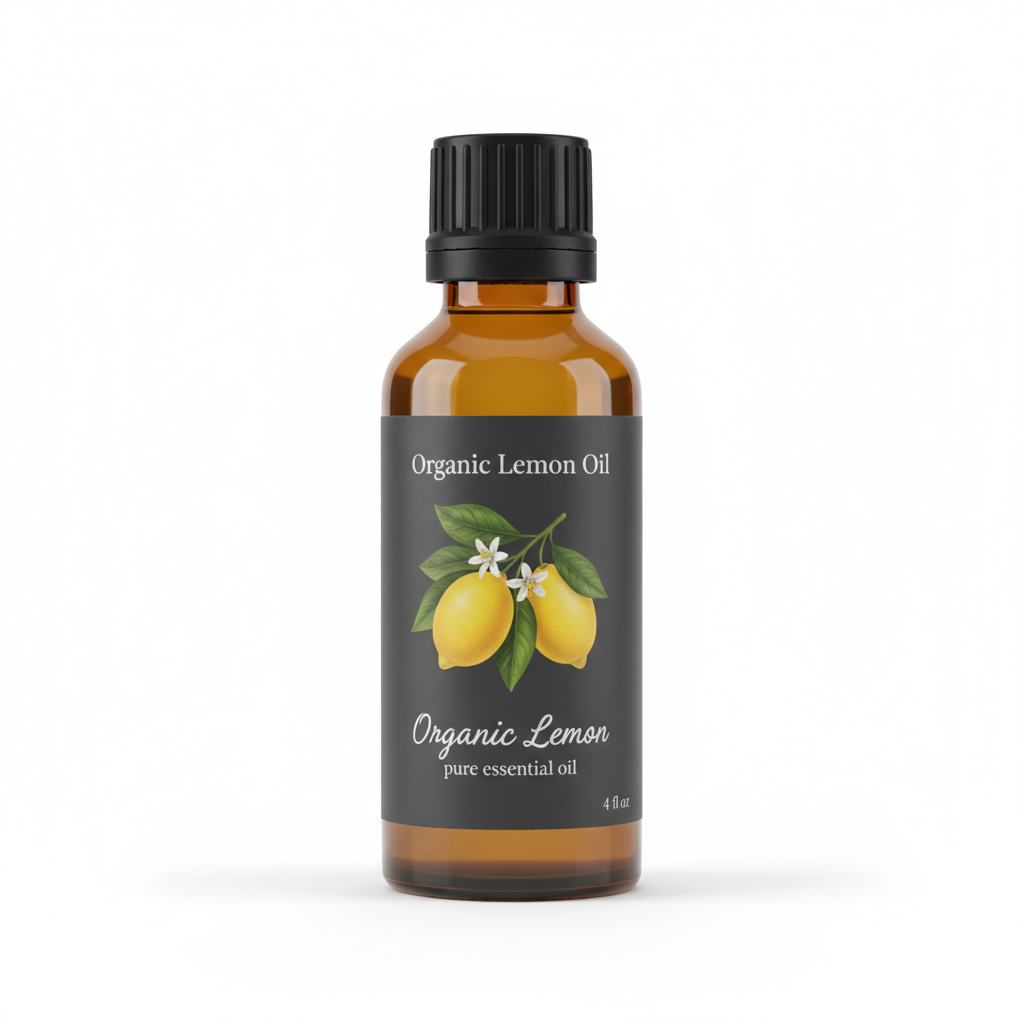
Organic Lemon Essential Oil
Our own Organic Lemon Essential Oil, in sizes from 0.5 oz to bulk.
From $15.99
Shop Now →Why citrus oils need a little more care
Lemon oil is mostly limonene, and limonene reacts with oxygen. Cold-pressed citrus oil oxidizes faster than steam-distilled oils, so color can deepen slightly with age and exposure to air or light. Our oil has nothing added, no antioxidant and no diluent, so we treat the cap as its protection. The reason this is worth the effort is skin. Air-exposed d-limonene sensitized guinea pigs in a 1992 study while unexposed limonene did not (Air oxidation of d-limonene (the citrus solvent) creates potent allergens.), and patch testing of people with dermatitis found positive reactions to oxidized limonene in about 5% of a large Swedish series (Contact allergy to oxidized linalool and oxidized limonene: Patch testing in consecutive patients with dermatitis.) and in 7 of 90 people tested with limonene hydroperoxides in a US series (Contact Allergy to Hydroperoxides of Linalool and D-Limonene in a US Population.). Those were patients already referred for suspected allergy, tested with deliberately aged material, so they say little about an ordinary fresh bottle. They do explain why freshness is worth protecting.
How long it keeps
We say about 1 to 2 years unopened, stored capped, cool and away from light, and the date on the bottle or lot governs. The European Food Safety Authority gave a shelf life of at least 12 months for expressed lemon oil kept tightly closed in a cool, dry place protected from light, and noted that no separate stability studies were run (Safety and efficacy of feed additives consisting of expressed lemon oil and its fractions from Citrus limon (L.) Osbeck and of lime oil from Citrus aurantiifolia (Christm.) Swingle for use in all animal species (FEFANA asbl)). We do not put a month count on an opened bottle, because nothing we have read supports one. Heat and light clearly matter, though. A long storage study on lavender, pine, rosemary and thyme oils at room temperature in the dark, room temperature in light, and 38 C in light found each oil changed in its own way, with rosemary losing a key compound within three weeks in the warm light (Impact of different storage conditions on the quality of selected essential oils). Lemon was not in that study, so we read it as a general reminder about terpene oils.
Habits that help
None of these habits takes more than a few seconds, and they become automatic quickly. Think of them the way you think about closing the lid on a jar of fresh herbs.
- Date the bottle when you open it. It is the one record of how long air has had access.
- Cap it right after each use, not at the end of the session.
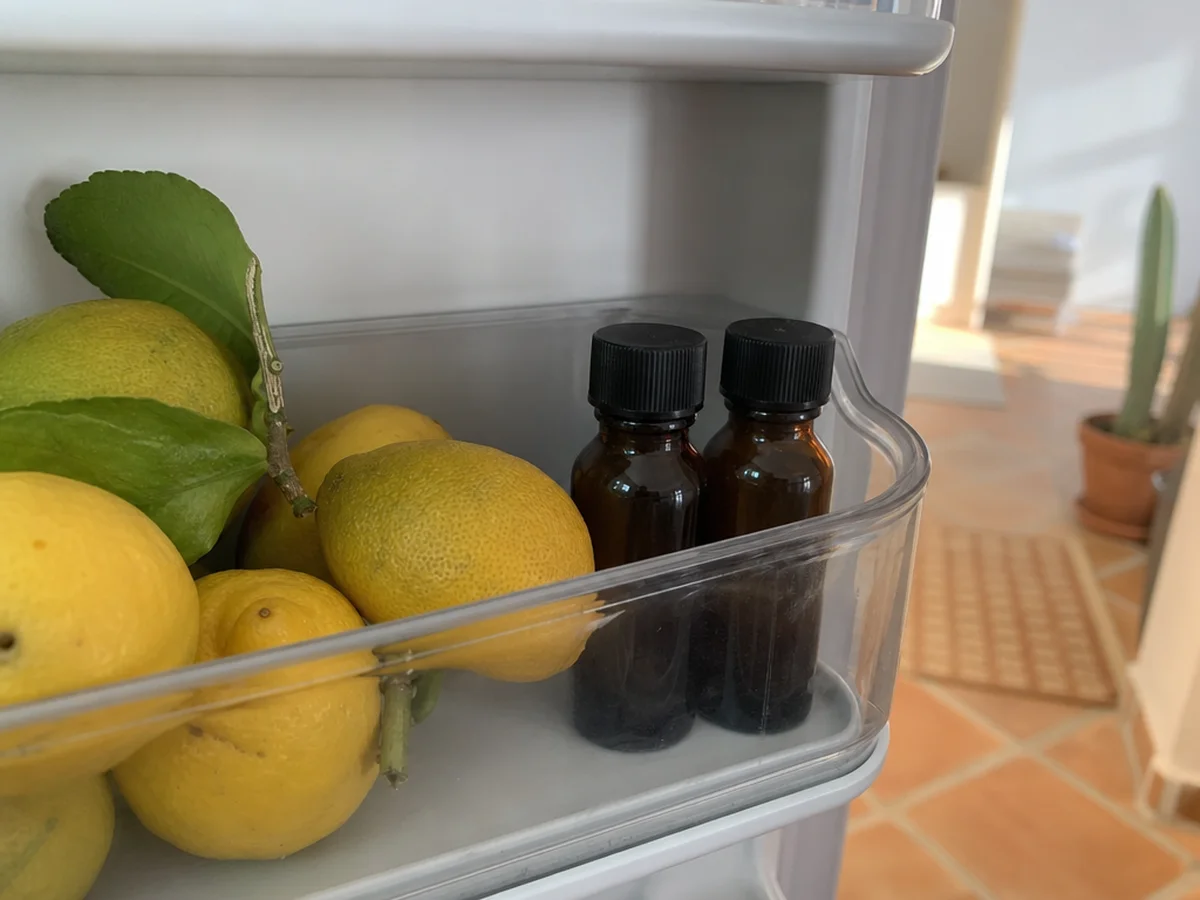
- Keep it cool and dark. A cupboard beats a windowsill, a stove shelf or a car.
- Decant if you buy larger sizes. Our bulk guidance is to pour working amounts into smaller airtight glass bottles instead of reopening a big container again and again. Every opening swaps the air inside.
- Match the bottle to your pace. With roughly 20 drops per millilitre, a 1 oz bottle holds about 590 drops and a 0.5 oz bottle about 300. Our bottle sizes post helps pick a first size.
Where in the house
Walk through your home and look for the spot that is coolest and darkest, away from the stove, the windowsill and the bathroom, where heat and steam come and go. A shelf in a bedroom cupboard or a kitchen drawer away from the oven works well. Keep the bottle upright, with the cap tight, and out of reach of children and pets.
If you use lemon oil often, keep a small working bottle in your craft space and the larger bottle tucked away. That way the main supply is opened less often.
What you will notice over time
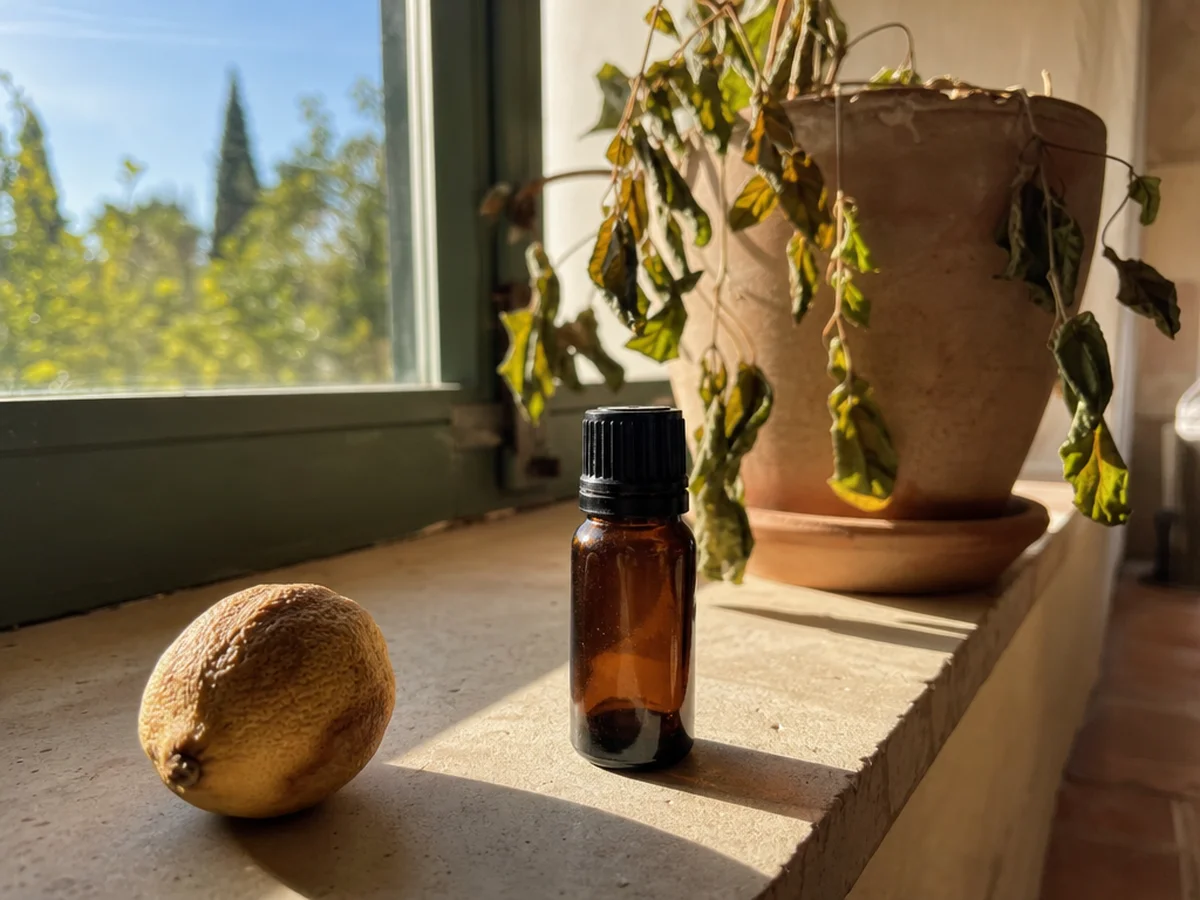
A fresh bottle smells bright and sparkling and looks pale and thin. Over months, you might notice the scent turning a little flatter or sharper, and the color deepening slightly. Those are your cues to move that bottle to scenting uses and open a new one for anything that touches skin.
When to retire a bottle from skin
There is no reliable home test. A deeper color and a flatter or sharper smell are sensible signals to retire a bottle from skin use, though the studies above do not tie them to a measured level. Laboratories use peroxide value for that, and the Certificate of Analysis on our site does not list one. If a bottle is old, has sat open or has been left warm, keep it for scenting uses away from skin and open a fresh one for anything that touches you. Our skin guide has dilution limits, and the carrier oils post covers what to blend it into. Check with your local waste authority for disposal.
Treat lemon oil like fresh citrus: it is at its best when it is young, and a little care keeps it bright.
Organic Lemon Essential Oil
Organic Lemon Essential Oil from our own shop, in sizes from 0.5 oz to bulk.
From $15.99
Shop Now →Sources & Further Reading
- Air oxidation of d-limonene (the citrus solvent) creates potent allergens.
- Contact allergy to oxidized linalool and oxidized limonene: Patch testing in consecutive patients with dermatitis.
- Contact Allergy to Hydroperoxides of Linalool and D-Limonene in a US Population.
- Safety and efficacy of feed additives consisting of expressed lemon oil and its fractions from Citrus limon (L.) Osbeck and of lime oil from Citrus aurantiifolia (Christm.) Swingle for use in all animal species (FEFANA asbl)
- Impact of different storage conditions on the quality of selected essential oils