Lemon Oil in Hair Products: How Much Scent Is Enough?
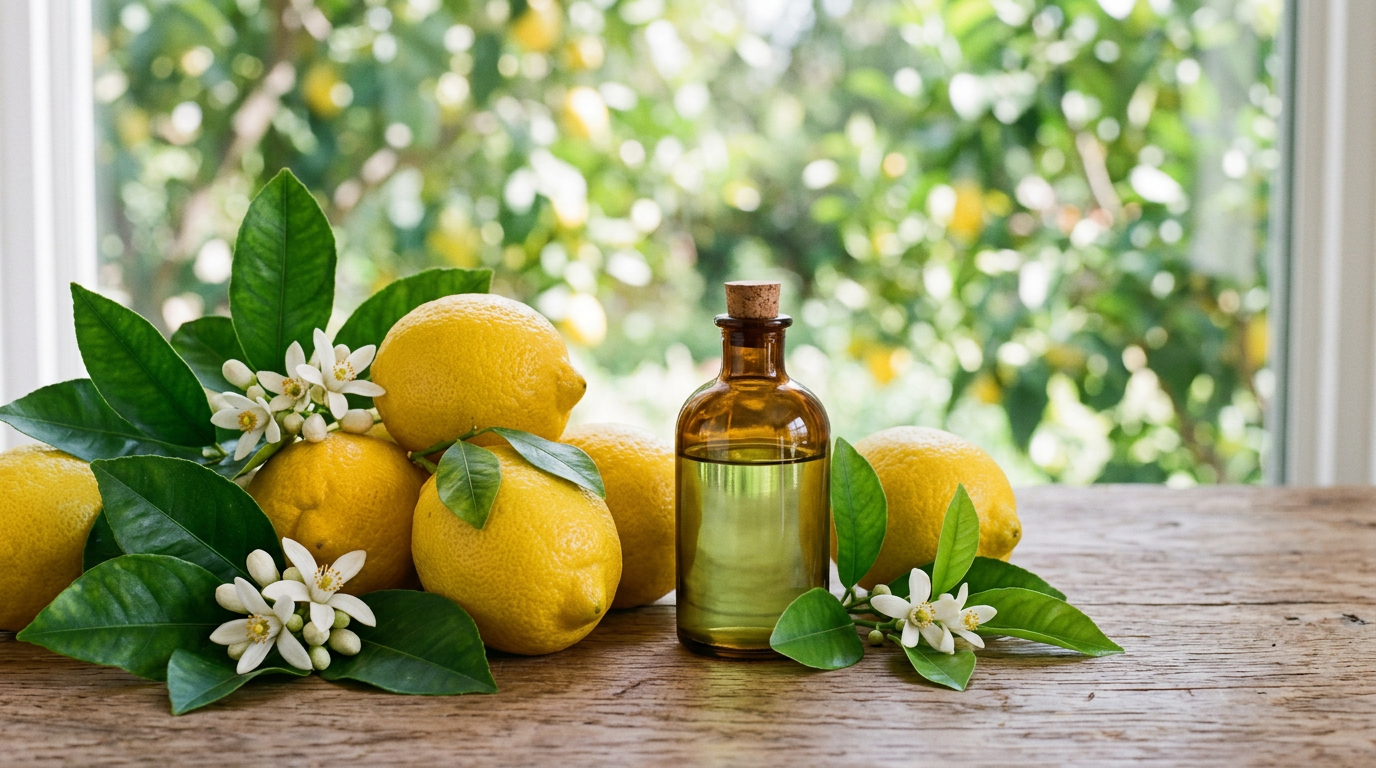
Lemon is one of the brightest scents you can give a hair product, which is probably why people ask about it. Our short answer is that lemon oil belongs in hair care as a fragrance, in small amounts, and that the amount depends far more on whether the product gets rinsed than on how much you like the smell.
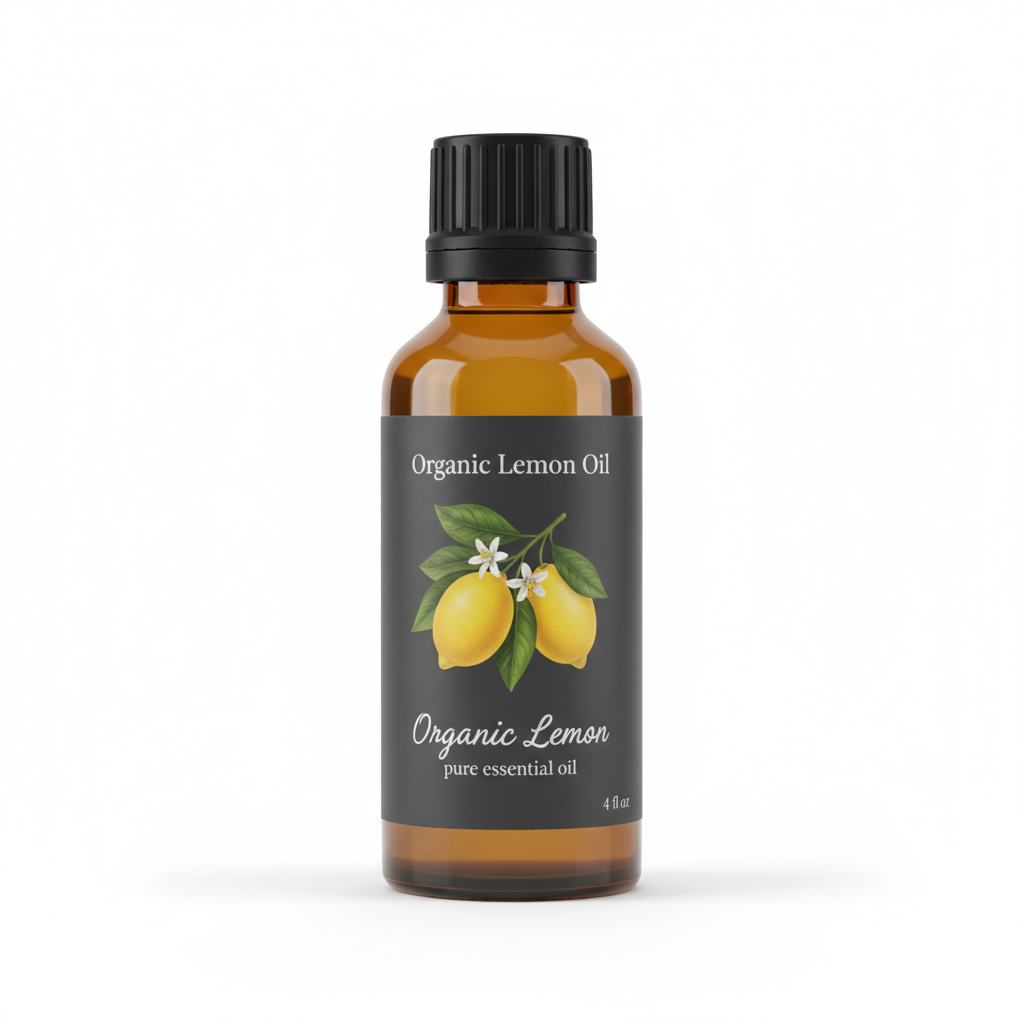
Organic Lemon Essential Oil
Our own Organic Lemon Essential Oil, in sizes from 0.5 oz to bulk.
From $15.99
Shop Now →Rinse-off and leave-on are two different worlds
Cold-pressed lemon oil is phototoxic, meaning it can make skin react to sunlight where it has been left on. That single fact is the reason fragrance rules treat it so differently from one product to the next. The International Fragrance Association (IFRA) sorts hair products into categories by how long the product stays on you. Shampoos of all types and rinse-off conditioners fall in Category 9, where the lemon oil standard lists no restriction. Leave-on conditioners, styling gels and mousses, hair sprays, dry shampoo and hair perfume fall in Category 7B, where the cap is 2.0% of the finished product (IFRA, Guidance for the use of IFRA Standards, June 2023; IFRA, The complete IFRA Standards, 51st Amendment, January 2024).
The easy reading is that a lemon-scented shampoo is the friendliest fit, because the product is on your head for a few minutes and then down the drain. That matches the Tisserand Institute's general guidance, which gives wash-off products a higher range than leave-on ones (Tisserand Institute, Dilution for essential oils).
A ceiling is not a recipe
Here is the part we like to say out loud: 2% is the most the standard allows, not the amount we would reach for. The Tisserand Institute describes the 2% lemon figure as "the safe maximum, not a recommended amount, which might be less." Its ranges for more delicate situations are lower, 0.5% to 1.2% for facial products and 0.2% to 1% for sensitive or impaired skin. Your scalp is skin, and if yours is easily irritated, the lower end is the sensible place to begin.
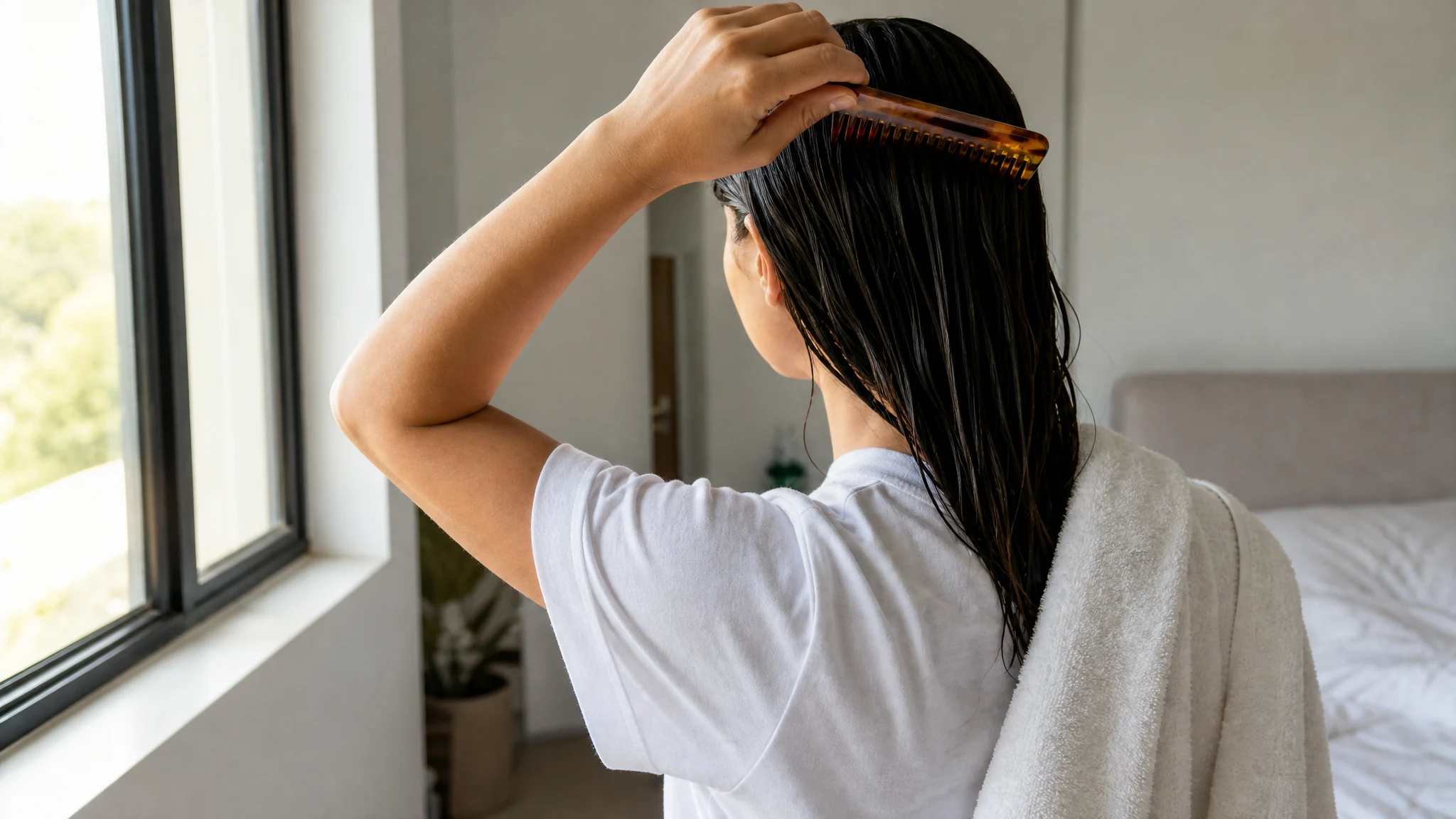
So when we think about a leave-on hair oil, we start at 0.5%. Our own guidance for lemon oil on skin is 0.5% to 2% in a carrier with a patch test first, and for hair products we would sit at the bottom of that range. At that level lemon is easy to smell without being loud, and it leaves plenty of room under the ceiling if you later add another citrus oil, since those limits add together (our blending guide shows the arithmetic).
The drops, worked out
Here is the arithmetic for a leave-on scalp or hair oil. Our certificate of analysis lists a relative density of 0.849 for the batch it covers, so one millilitre weighs about 0.849 g, and at roughly 20 drops per millilitre one drop is about 0.04 g. Droppers vary, so a small scale beats counting.
| Lemon oil share | In 30 g of carrier oil | In 100 g of finished product |
|---|---|---|
| 0.5% | about 3 to 4 drops | about 12 drops |
| 1% | about 7 drops | about 24 drops |
| 2% (the leave-on ceiling) | about 14 drops | about 47 drops |
These are calculations from the density and the standards, not a tested formula, so make a small batch and patch test it on the inside of your forearm before it goes near your head. Keep it out of your eyes, and if you spend a lot of time in strong sun, think twice about a leave-on product along the part line. Phototoxic reactions can follow sun exposure for at least 12 hours after a phototoxic amount is applied (Tisserand Institute, Phototoxicity: essential oils, sun and safety).
Getting the scent right
Lemon is a top note, so it opens bright and then fades faster than most scents. In a hair product that means you will notice it as you mix it and apply it, and much less an hour later. Do not be tempted to add more to make up for that. A small amount that smells lovely in the bottle is usually right.
Before you scent a whole batch, put a drop of the oil on a tissue and wave it near your nose. Then imagine it softened by a carrier. If you like lemon with company, peppermint, rosemary, lavender and sweet orange are all on our blending list, and the arithmetic in the table above is worth redoing with the total of all your oils in mind. Make small amounts, keep them in clean glass, and write the date and the percentage on the label so you remember what you made.
What to carry it in
Lemon oil is a fragrance ingredient, so the base does the real work for hair. We sell lemon oil only, so you will find carrier oils, unscented shampoo and conditioner bases at a craft or supply shop, a pharmacy or a grocery store. Our carrier oil guide compares the common choices, and the skin guide covers the patch test and sun rules in more depth.
Lemon oil is sold here as an aroma and craft ingredient, so we leave claims about what it does for hair or scalp to the shampoo aisle. If flaking or itching sticks around, a board-certified dermatologist is the right person to ask, and a scented oil is not a substitute for that visit.
A little lemon goes a long way in a hair product, and weighing the oil is the easiest way to keep it there.
Organic Lemon Essential Oil
Organic Lemon Essential Oil from our own shop, in sizes from 0.5 oz to bulk.
From $15.99
Shop Now →Sources & Further Reading
- IFRA. Guidance for the use of IFRA Standards (30 June 2023). Guidance PDF
- IFRA. The complete IFRA Standards, up to and including the 51st Amendment (January 2024), Lemon oil cold pressed. Standards PDF
- Tisserand Institute. Dilution for essential oils. tisserandinstitute.org/dilution-essential-oils
- Tisserand Institute. Phototoxicity: essential oils, sun and safety. tisserandinstitute.org/phototoxicity-essential-oils-sun-and-safety