Cold Process Soap With Lemon Oil: Rates and Scent Tips
Lemon soap has a way of smelling wonderful on the day you cut it and a little shy by the time it has cured. Soapmakers trade tips about it constantly, and the usual advice is to add more oil. We would rather you understand why lemon is tricky, because a bigger dose is often not the answer.
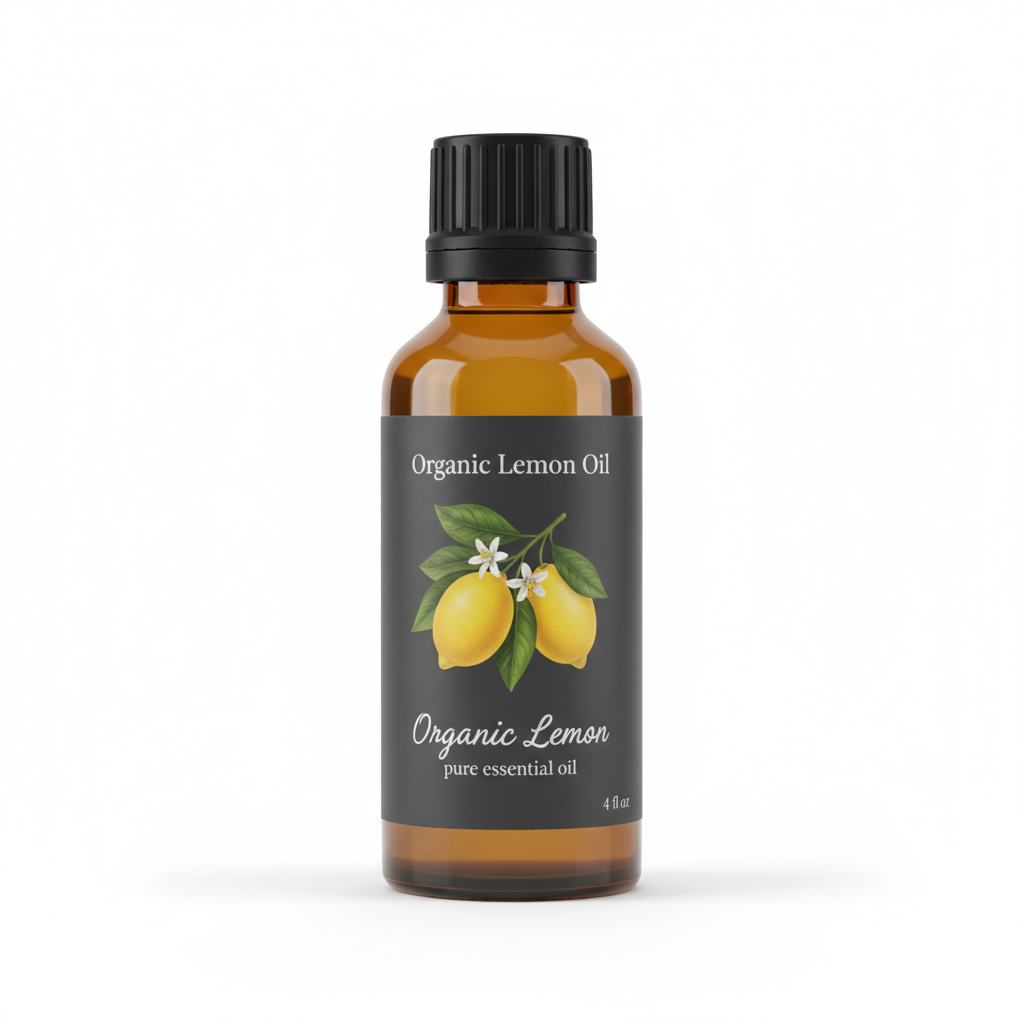
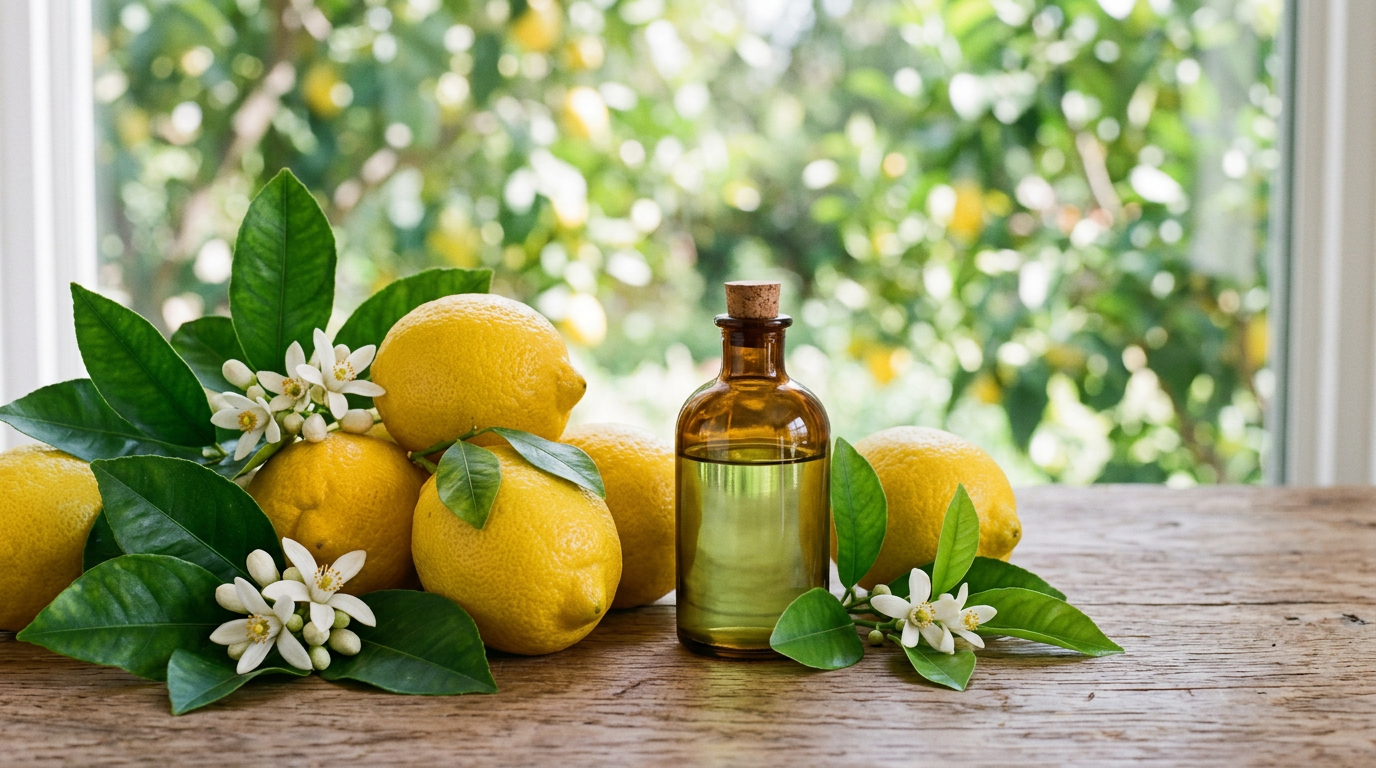
Organic Lemon Essential Oil
Our own Organic Lemon Essential Oil, in sizes from 0.5 oz to bulk.
From $15.99
Shop Now →Why lemon is a shy scent
Three things work against a lemon note in soap. None of them is a measurement of a lemon bar, so treat them as sound chemistry pointing toward a reasonable expectation.
It evaporates. Limonene, the main component of lemon oil, boils near 177 to 178 C and has a vapor pressure of 1.98 mmHg at 25 C, which means it escapes into the air slowly even at room temperature (PubChem, (+)-Limonene, CID 440917). A bar sitting on a rack for four to six weeks has time to lose some.
The lemony part is a small part. In a European Food Safety Authority analysis of ten batches of expressed lemon oil, d-limonene averaged 64.8% of the volatile profile, while geranial averaged 1.30% and neral 0.87% (EFSA FEEDAP Panel, 2021). Those two are the isomers of citral, which PubChem describes as having a "strong lemon odor" and as not stable to alkalies and strong acids (PubChem, Citral, CID 638011). Cold-process batter is made with lye, so it is alkaline at the start. Putting those facts together is our inference, not a finding: it would not be surprising if a lemon bar lost its distinctly lemony edge sooner than its general citrus freshness.
It oxidizes. Limonene reacts with air, and Karlberg and colleagues identified several oxidation products that were potent skin sensitizers in guinea pigs (Air oxidation of d-limonene (the citrus solvent) creates potent allergens). For a soapmaker, the practical lesson is to start with a fresh bottle that has been kept capped, cool and dark. We say about 1 to 2 years unopened when it is kept capped, cool and away from light, and the date on your own bottle is what counts. The storage post explains how to keep a working bottle fresh.
How much oil a bar can carry
Soap is a rinse-off product, and that is where cold-pressed lemon is least restricted. IFRA's standard sets 2.0% in the finished product for leave-on and many other categories because of phototoxicity, and lists no restriction for Category 9, rinse-off products with body and hand exposure, which its guidance says includes bar and liquid soap. The guidance also notes that aromatherapy applications fall outside the standards, so for a hand-made bar it is a reference point rather than a certificate (IFRA, The complete IFRA Standards, 51st Amendment; IFRA, Guidance for the use of IFRA Standards).
The Tisserand Institute's guideline range for bath and wash-off products, which it says includes soap and body wash, is 2% to 4% (Tisserand Institute, Dilution for essential oils). Those three sources measure different things, so we do not blend them into one number. For a bar, the Tisserand range is the nearest guide, and we would begin near the low end.
Percentages as grams and drops
The batch on our certificate of analysis has a relative density of 0.849, so one millilitre weighs about 0.849 g, and at about 20 drops per millilitre a drop is roughly 0.04 g. Weighing beats counting, and check whether your recipe's percentage is by weight of the oils or of the finished batch. The Tisserand range refers to the finished product.
| Oil share of finished soap | Per 100 g bar | Per 1 kg batch | Per 1 kg batch, in drops |
|---|---|---|---|
| 1% | 1.0 g | 10 g (11.8 ml) | about 236 |
| 2% | 2.0 g | 20 g (23.6 ml) | about 471 |
| 3% | 3.0 g | 30 g (35.3 ml) | about 707 |
| 4% | 4.0 g | 40 g (47.1 ml) | about 942 |
This is arithmetic from the density, not a tested recipe. A 4% batch uses four times the oil of a 1% batch, so if the extra mostly evaporates, you have paid for scent that never reaches your nose.
Run your own scent log
The surest way to know what your recipe does is to measure it with your own nose. Make two small batches that differ in one thing, such as 1% against 2% oil, or oil stirred in at trace against oil added earlier. Weigh the oil, and label the bars by code rather than dose. At unmolding and then weekly through the cure, smell each bar the same way: same room, same distance, a freshly cut surface, and a pause between samples. Write one line per bar on a scale you set in advance. A friend who does not know the codes gives you a blind check.
Small habits that help
Keep the lemon bottle capped until the moment you need it, and measure the oil just before it goes in so it has little time to drift away. Write the date you opened the bottle in your notes next to the batch. After the cure, smell a bar when you cut it, and then again a few weeks on, and keep what you notice in the same notebook.
If lemon must be loud
If the lemon note has to survive a long cure and a year on a shelf, a soap-supply shop or fragrance supplier that can show stability data for its products is a good second stop. We sell lemon oil only, so lye, bases, molds and fragrance oils come from them. If you stay with lemon, the pairing guide suggests partners, and the citrus comparison shows how other citrus limits differ. A lotion bar is leave-on, so the 2.0% ceiling applies there; the skin guide covers sun and patch testing, and the scrub post works the same arithmetic. Follow your lye supplier's safety sheet for handling lye.
Weigh the oil, start fresh, keep notes, and let the bar tell you what it wants.
Organic Lemon Essential Oil
Organic Lemon Essential Oil from our own shop, in sizes from 0.5 oz to bulk.
From $15.99
Shop Now →Sources & Further Reading
- PubChem. (+)-Limonene, CID 440917. pubchem.ncbi.nlm.nih.gov/compound/440917
- PubChem. Citral, CID 638011. pubchem.ncbi.nlm.nih.gov/compound/638011
- EFSA FEEDAP Panel, 2021. Safety and efficacy of feed additives consisting of expressed lemon oil and its fractions from Citrus limon (L.) Osbeck and of lime oil from Citrus aurantiifolia (Christm.) Swingle for use in all animal species (FEFANA asbl). EFSA Journal. pmc.ncbi.nlm.nih.gov/articles/PMC8085978
- Karlberg AT, Magnusson K, Nilsson U, 1992. Air oxidation of d-limonene (the citrus solvent) creates potent allergens. Contact Dermatitis. europepmc.org/MED/1395597
- IFRA. The complete IFRA Standards, up to and including the 51st Amendment (January 2024). Standards PDF
- IFRA. Guidance for the use of IFRA Standards (30 June 2023). Guidance PDF
- Tisserand Institute. Dilution for essential oils. tisserandinstitute.org/dilution-essential-oils