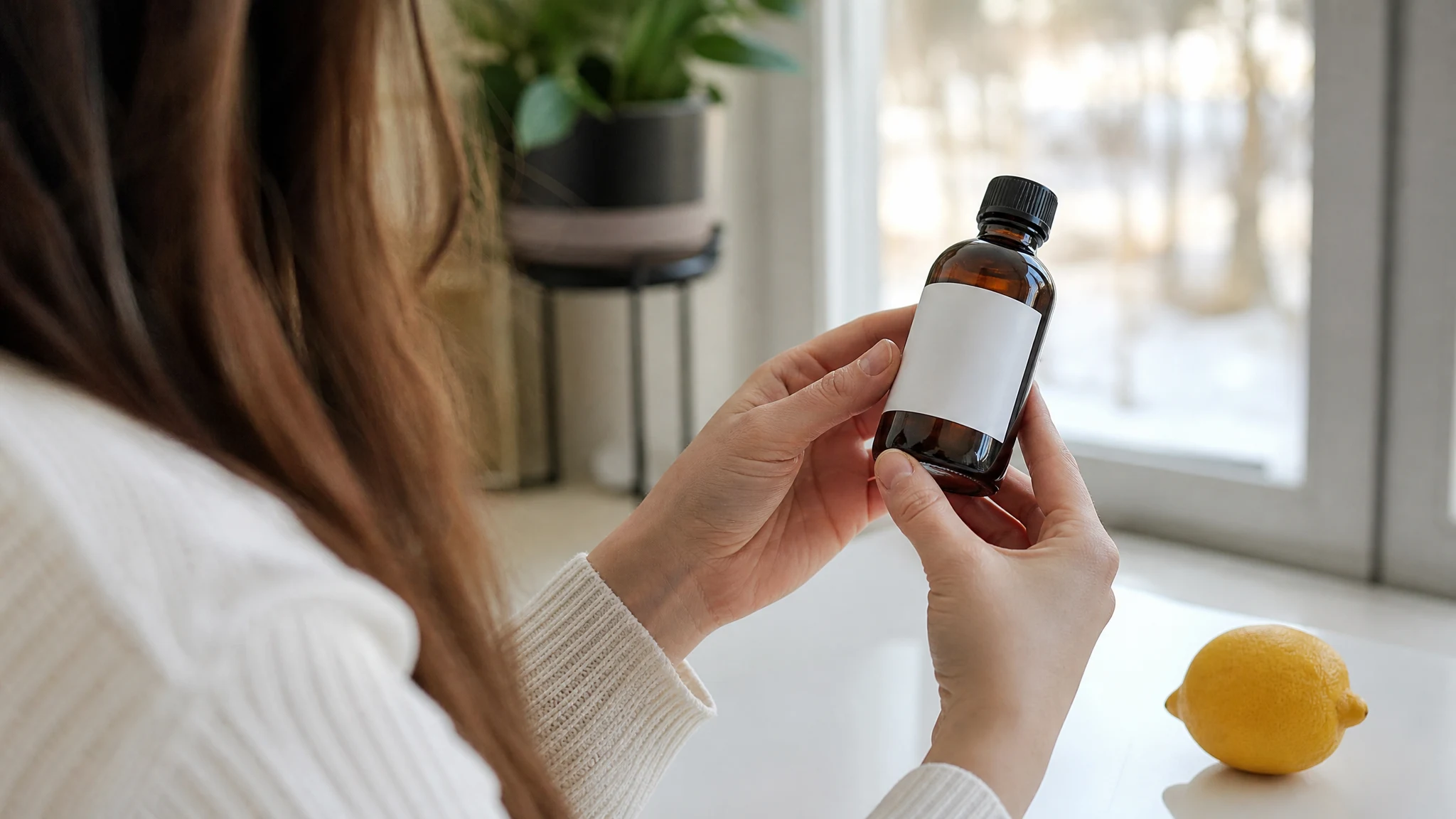
Lemon Scent and Morning Sickness: What the Trials Found
Ask around about morning sickness and someone will mention lemon: a slice, a sniff, a lemon sweet. The idea is common enough that researchers have put it to the test, and what they found is worth reading in plain terms, as long as we start with the part that matters most.
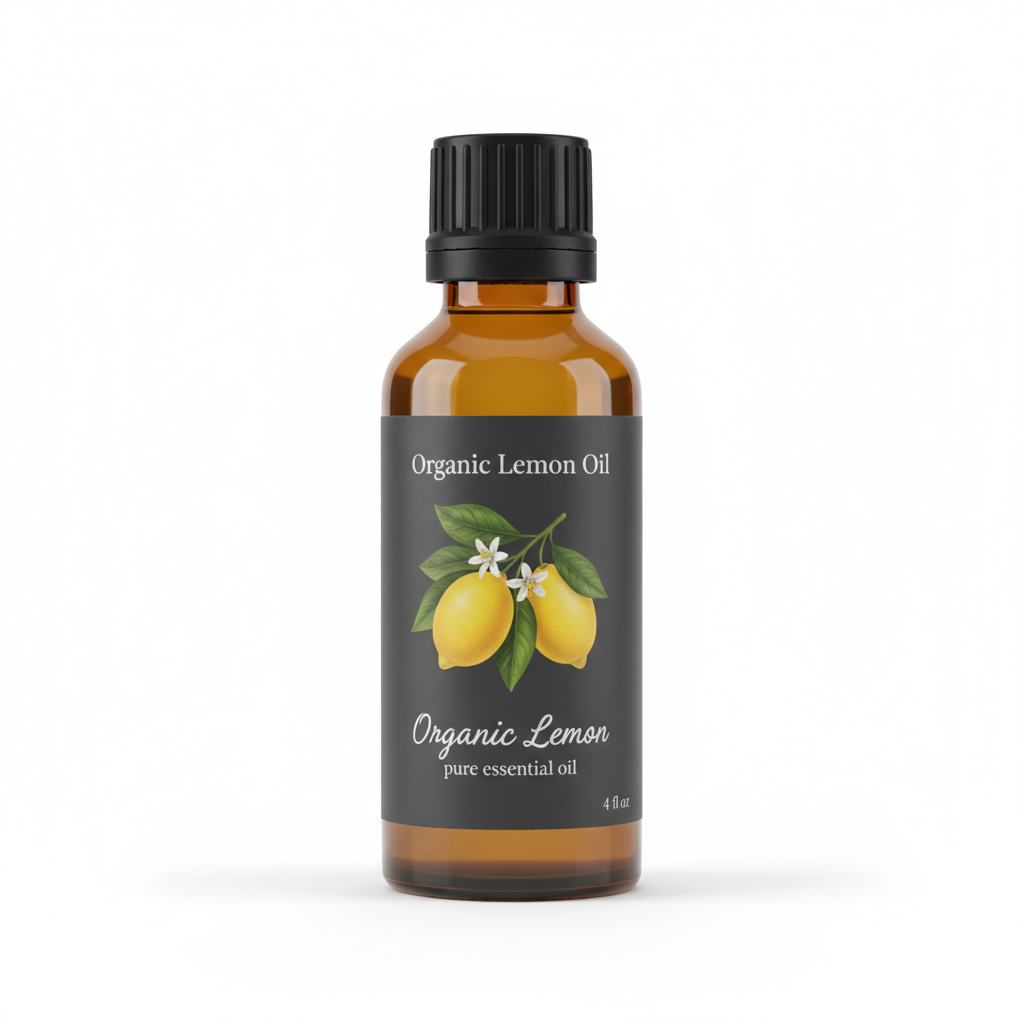
Organic Lemon Essential Oil
Our own Organic Lemon Essential Oil, in sizes from 0.5 oz to bulk.
From $15.99
Shop Now →First, when sickness needs a professional
The NHS tells pregnant women to contact their midwife, GP or 111 if they are vomiting and cannot keep food or fluids down for 24 hours, have very dark urine or have not passed urine for more than 8 hours, feel very weak or faint, have tummy pain or a high temperature, vomit blood, or are losing weight. Severe sickness, called hyperemesis gravidarum, needs specialist care. If that sounds like your situation, scent is not the next step. For ordinary morning sickness the NHS suggests lifestyle steps such as avoiding foods or smells that make you feel sick, and its page does not mention aromatherapy.
What the lemon trials did
In 2014, Iranian researchers randomly assigned 100 pregnant women with nausea and vomiting to inhale either lemon essential oil or a placebo whenever they felt nauseated. Symptoms were scored on a standard scale for the day before treatment and for four days of treatment. The lemon group scored lower than the placebo group on day two and day four, and the authors concluded lemon scent may help.
A second trial, published in 2020, tested 90 women with a combined lemon and peppermint inhalation against a placebo. The groups started alike, and by days two, three and four the aromatherapy group's scores had fallen significantly while the placebo group's had not. The authors concluded that the combination could reduce mild to moderate symptoms.
It helps to read these with a gentle eye. Both studies were small, both relied on the women's own scoring, and both followed participants for only four days. Because a person can smell the difference between lemon and a placebo, keeping everyone unaware of which they received is hard (our reasoning, not a statement from the papers). And the second trial used a blend, so its result cannot be credited to lemon alone.
The wider picture
A Cochrane review looked at 41 trials with 5,449 women covering everything from acupressure and ginger to lemon oil, mint oil, vitamin B6 and anti-sickness drugs. Its conclusion, with a search ending in January 2015, was that high-quality evidence was lacking to support any particular intervention. A newer systematic review of lemon aromatherapy in pregnancy, published in 2026, pooled five studies; the authors describe the overall quality as low to moderate while noting that most reported lower scores. In short, the lemon trials are interesting and encouraging in tone, and the field is still waiting for larger, better-controlled studies.
Why the question keeps coming up
Smell is a big part of how nausea works, which is why the NHS tip about avoiding smells that make you feel sick is so common. It is a short step from "some smells make it worse" to "perhaps some smells make it easier", and lemon, with its clean and familiar scent, is an obvious candidate. The trials are an honest attempt to test that idea, and it is reasonable to find them interesting while remembering how early the science is.
If smells are a lot right now
Many people find that strong smells become unwelcome during pregnancy, and a scent they usually love can suddenly feel like too much. If that is you, skip the bottle without a second thought. A fresh lemon, cut open in another room, is gentler than any concentrated oil, and open windows do more for a stuffy space than any fragrance. Keep any essential oil capped and put away, and ask the people you live with to do the same around you.
It also helps to jot down what you notice day to day, what you can eat, which smells bother you and when. That note is a useful thing to hand to your midwife.
Keeping the house comfortable
Whatever you decide about scent, a few ordinary habits make a home easier to live in when your nose is sensitive. Air the rooms often, keep bins and the fridge fresh, and ask whoever is cooking to open a window. Store any bottles of oil, ours or anyone's, capped and out of reach, so a stray whiff does not catch you off guard. Small, practical steps like these are quiet and easy to keep up.
Where we stand
We sell a cold-pressed lemon essential oil as an external cosmetic and scent material. We do not make medical claims for it, we sell nothing for nausea, and we do not have an inhalation routine to hand out. Our guidance on the bottle is to keep the oil from children and pets and not to take it internally. A small trial of inhaled lemon is not a recommendation to use ours, and the right person to ask about any essential oil during pregnancy is the midwife or obstetrician looking after you, with a pharmacist as a handy second opinion.
If you want the wider safety picture, our article on lemon oil in pregnancy and breastfeeding reports what the authorities say, and our FAQ covers common questions. Our honest look at lemon oil benefits offers a sober reading of the claims in circulation, and the skin guide covers dilution and sunlight for those who prefer lemon on skin.
Organic Lemon Essential Oil
Organic Lemon Essential Oil from our own shop, in sizes from 0.5 oz to bulk.
From $15.99
Shop Now →Sources & Further Reading
- NHS, Vomiting and morning sickness
- Yavari Kia et al., 2014. The effect of lemon inhalation aromatherapy on nausea and vomiting of pregnancy: a double-blinded, randomized, controlled clinical trial. Iran Red Crescent Med J
- Safajou et al., 2020. The Effect of Combined Inhalation Aromatherapy with Lemon and Peppermint on Nausea and Vomiting of Pregnancy: A Double-Blind, Randomized Clinical Trial. Iran J Nurs Midwifery Res
- Matthews et al., 2015. Interventions for nausea and vomiting in early pregnancy. Cochrane Database Syst Rev
- Rafiei et al., 2026. The Effect of Lemon Aromatherapy on Nausea and Vomiting During Pregnancy: A Systematic Review. J Midwifery Womens Health