Can Lemon Oil Cause Dark Spots? Sun and Skin Basics
Squeeze a lime into a drink on the beach, wipe your fingers on your back, and a day or two later a strangely shaped brown patch shows up exactly where your hand went. That is the story behind a real case report, and it is the best way to understand why we never describe lemon oil as something for evening out skin tone.
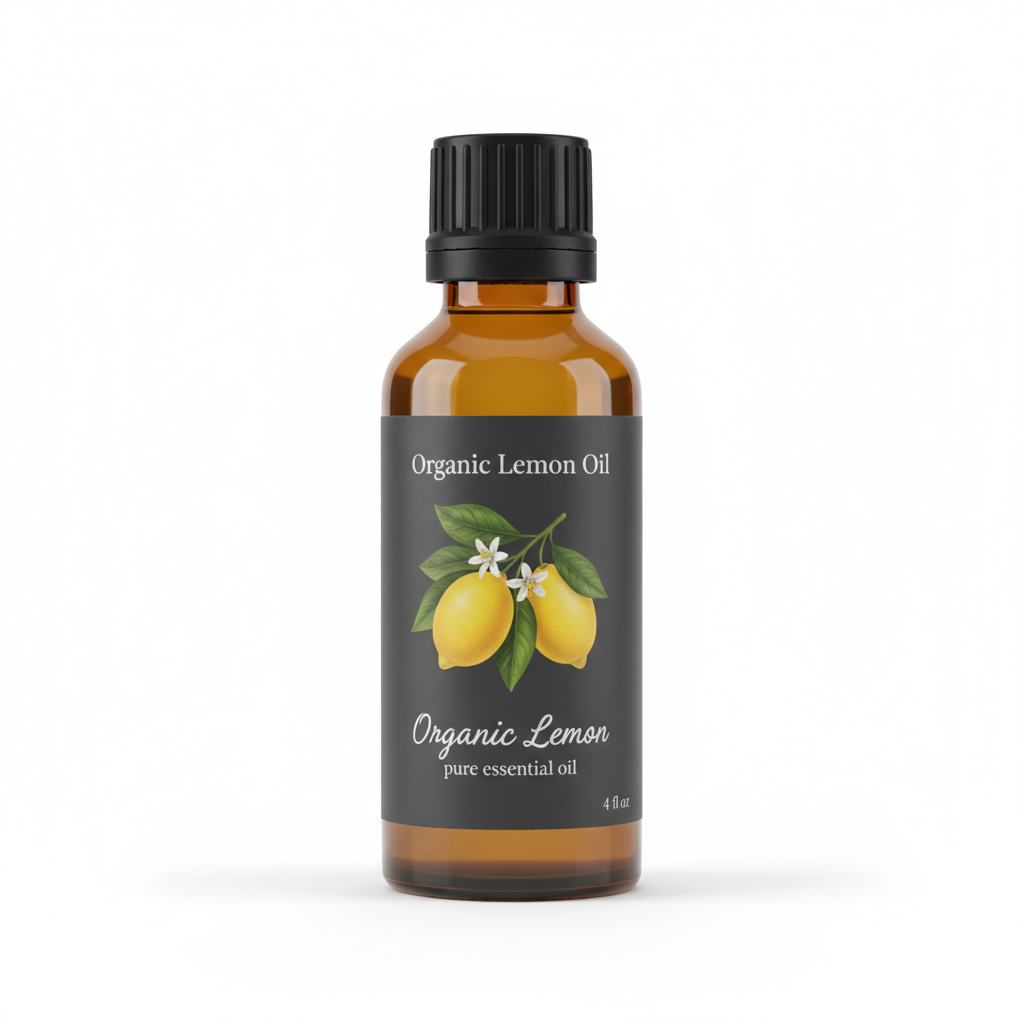
Organic Lemon Essential Oil
Our own Organic Lemon Essential Oil, in sizes from 0.5 oz to bulk.
From $15.99
Shop Now →What the sun does to a citrus smear
Citrus peel carries compounds called furocoumarins. When juice or oil carrying them sits on skin and sunlight (the UVA part) reaches it, the skin reacts directly. DermNet describes it as a toxic effect rather than an allergy, with redness and often blisters about 24 to 48 hours after the sun exposure, and a brown mark afterwards that may last for several years. A burn centre in Arizona reported a seven-year-old who squeezed lemon juice onto her skin in hot sun and spent four days in hospital, and called the progression from redness to blisters to dark pigment a well-described clinical triad. The beach case, a lime margarita on a hand later rubbed on a back, ended more gently, with one irregular patch and no symptoms. Doctors had to ask about the drink to understand it.
Those are fruit and juice stories, so they show the mechanism rather than a rate for any oil. They still explain why the people who write the rules treat citrus peel oils with respect.
Where cold-pressed lemon oil sits in that picture
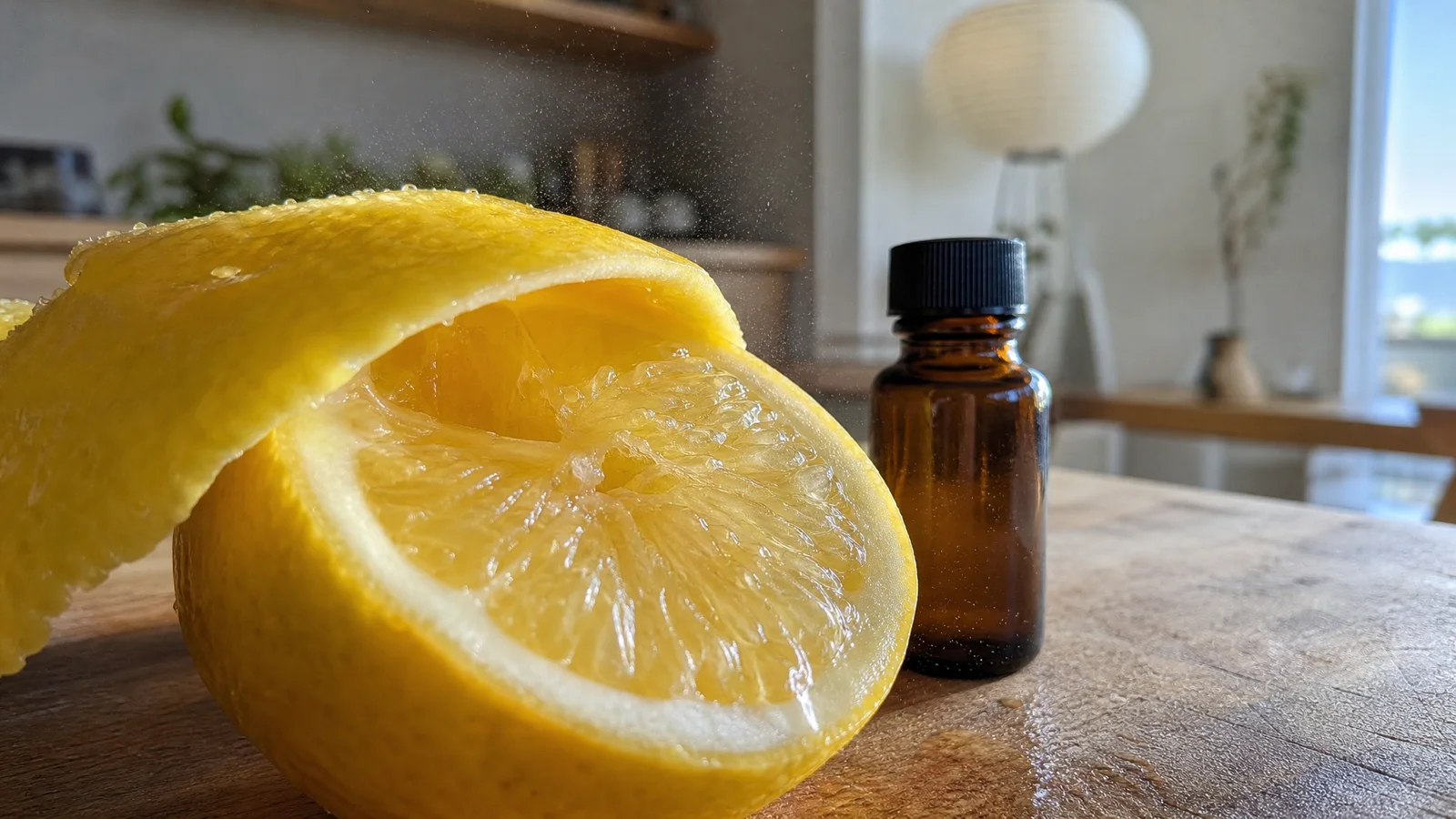
Our oil is cold-pressed from the peel of Citrus limon, and we are plain about what that means: cold-pressed lemon is phototoxic. IFRA, the fragrance industry's standards body, caps it at 2.0% of a finished product in the leave-on categories, and states that the standard exists because of the oil's phototoxic effects. Where nobody has measured the furocoumarin level, the cap applies as written. The Tisserand Institute adds a useful detail: furanocoumarins are present in oils in small amounts, usually under 1%, yet even 0.1% can be phototoxic, and skin that has received a phototoxic amount should stay out of UV for at least 12 hours.
We also do not offer a furocoumarin-free lemon. That material exists, but it is made differently and smells different, so it is a separate oil rather than a gentler version of ours.
If you ever want to show a friend what we mean, the rule of thumb is easy to remember: citrus and strong sun do not mix on skin. Keep the oil in the air and on the cloth, and the sunny part stays fun.
It is also a good idea to keep a bottle out of the sun on a windowsill. Heat and light are not kind to citrus oils, and a cool cupboard keeps the scent fresher too.
How we suggest using it
The easy way to enjoy lemon oil is the way most people do: in a diffuser, on a cleaning cloth, in a room. If you do put it on skin, we recommend diluting to 0.5% to 2% in a carrier oil, which works out to roughly 3 to 12 drops per ounce of carrier (our arithmetic from the density on our Certificate of Analysis, and droppers vary). We would start at the low end. Tisserand's general range for the face is 0.5% to 1.2%, and the 2% IFRA figure is a ceiling, not a target.
Then add the sunlight rule: skip skin that will be outdoors in the next 12 hours or so, or keep it covered. A patch test is worth doing for irritation, and, reasoning from how the reaction works, it will not reveal a sun reaction because the light is missing from the test. If a blistered, swollen patch appears after sun, the NHS advises an urgent GP appointment or NHS 111.
Planning your day around it
The simplest habit is timing. If you are going to handle citrus peel, or put a diluted lemon blend on your hands, do it when you will be indoors for the rest of the day, such as in the evening. Wash your hands well afterwards, and take a moment to check your sleeves and cuffs, since oil can travel. If you spend an afternoon cooking with citrus and then head out to the garden, wash up first.
It is also worth remembering the places that are easy to forget: the back of the neck, the top of the hands, the forearms. They get plenty of sun and rarely get a second thought.
If an even skin tone is the goal
The American Academy of Dermatology explains that darker spots appear when something triggers extra melanin: a healed pimple or injury, certain medications, hormonal changes, or a skin or hair product that irritates. Its advice leans on daily sun protection with iron oxide tinted products, gentle fragrance-free products, and a dermatologist if what you are doing is not working. Lemon oil is a fragrance ingredient, so it sits on the other side of that list. We sell it for its bright scent and make no claim about skin tone.
The practical takeaway is a cheerful one. Keep lemon in the diffuser and the kitchen, keep it off sun-bound skin, and for any mark you are curious about, a dermatologist can tell you what it is. More on dilution and drops is in our skin guide, carrier choices are in best carrier oils for lemon oil, and our look at lemon oil and acne covers the other common skin question.
Organic Lemon Essential Oil
Organic Lemon Essential Oil from our own shop, in sizes from 0.5 oz to bulk.
From $15.99
Shop Now →Sources & Further Reading
- DermNet, Phytophotodermatitis
- Matthews et al., 2017. Lemons in the Arizona Sunshine: The Effects of Furocoumarins Leading to Phytophotodermatitis and Burn-like Injuries. Wounds
- Cochran et al., 2024. Phytophotodermatitis From Lime Margaritas on a Mexico Vacation. Cureus
- IFRA Standards, up to and including the 51st Amendment (January 2024): Lemon oil cold pressed
- Tisserand Institute, Phototoxicity: essential oils, sun and safety
- Tisserand Institute, Dilution for essential oils
- American Academy of Dermatology, How to fade dark spots in darker skin tones
- NHS, Sunburn