Does Lemon Scent Lift Your Mood? The 2008 Study Explained
Slice a lemon and the smell arrives before the juice does: sharp, bright, somehow cheerful. It is easy to understand why people connect lemon with feeling sunny, and one well-designed study from 2008 is the one most often pulled out to back that up. It is worth a close, friendly look, because the real result is more interesting than the headline.
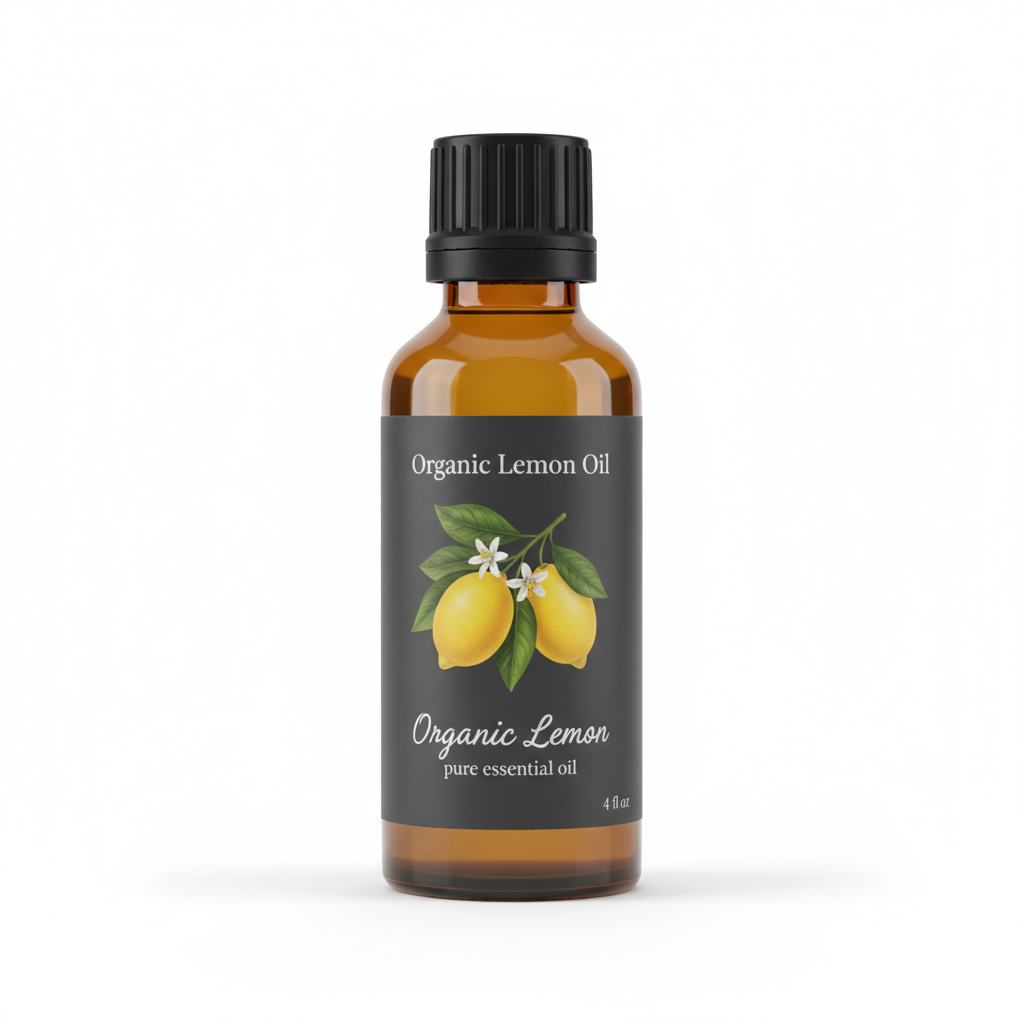
Organic Lemon Essential Oil
Our own Organic Lemon Essential Oil, in sizes from 0.5 oz to bulk.
From $15.99
Shop Now →The study, in plain English
Researchers invited 56 healthy adults to three separate visits. At each one they breathed in either lavender, lemon or plain water, and each person served as their own comparison. To see whether expectations mattered, half the group was told what smell to expect and what it should do, and half were told nothing. A cold-water challenge for the hand served as a mild stressor, and the team measured mood, along with stress hormones, heart rate, blood pressure and immune markers.
The mood result was clear. Lemon reliably lifted self-rated positive mood compared with water and lavender, whether or not people had been primed about what to expect. The body measures were quieter. Cortisol, heart rate, blood pressure and the other signals the team tracked did not reliably change with either smell, and norepinephrine stayed higher after the stressor in the lemon sessions. The US National Center for Complementary and Integrative Health summarizes it the same way: lemon had a positive effect on mood, while neither scent affected stress indicators.
Why a smell can move a mood
That mismatch, a better mood without a measurable shift in the body's stress markers, points toward an idea we find convincing. A systematic review of olfactory research by Rachel Herz looked at 18 well-designed studies and found credible evidence that odors can affect mood, physiology and behavior, while concluding that psychological explanations fit the data better than pharmacological ones. In other words, a smell can matter because of what it means to you: memories of clean kitchens, summer drinks, a fresh start.
That is our reading, not a claim from any single paper, and it fits lemon well. Our oil is cold-pressed from the peel, and the aroma is zesty and sparkling, a lot like scoring a ripe peel with your thumbnail. Few smells are so quickly recognized, and few are so easy to link with good moments.
Little lemon moments
You do not need a laboratory to notice how recognisable lemon is. Think of how a kitchen smells when someone zests a lemon for a cake, or how a clean cloth smells when it is wiped over a counter. The smell arrives all at once and brings the setting with it. Our bottle does the same on a smaller scale: open it and you get the burst of a freshly scored peel before anything else.
A good way to enjoy it is on a tissue near a window, or two drops in a diffuser while you tidy up. Keep it short and fresh, and let the scent stay a nice part of the room.
A word on energy
People often ask about energy as well as mood. The one small study we know of that touches it, from Japan, asked 14 female students to do addition work in rooms with and without lemon fragrance. Their work efficiency did not change, but the fragrance seemed to ease exhaustion and keep vigor up on the mood questionnaires. With 14 people, each participant is about 7% of the sample, so we treat it as a charming hint rather than a conclusion.
Sharing a scent with other people
Scent is personal. The smell that reminds one person of summer can remind another of a cleaning cupboard, and that is half the fun of it. If you are scenting a room that others use, ask first, start with a single drop and keep the doors open so the air keeps moving. A scent that is lovely at low volume is better than one that fills the house, and guests will notice a light touch more than a heavy one.
Keeping the findings in proportion
This was one study of healthy adults in a laboratory, with short exposures and no long-term follow-up. It tells us that lemon scent can make people feel more positive for a little while. It does not tell us that lemon oil treats low mood, boosts energy or changes anything in the body, and we do not claim that for ours. We sell lemon oil as a scent for diffusers and home fragrance, to be enjoyed for the smell.
If you simply want to enjoy it, a diffuser in a ventilated room is the easy route, and our pairing guide suggests partners like sweet orange, lavender and rosemary. Keep the oil away from children and pets, and do not take it internally. If low mood lingers for weeks, comes with poor sleep or loss of interest in things you love, that is a conversation for your doctor, not a scent.
The same research that gave us this study also raises sensible questions about attention and stress. We have looked at those too, in our pieces on lemon scent and focus and lemon scent and stress, and our guide to the smell of lemon oil explains where that famous aroma comes from. For a no-nonsense run through the claims that circulate online, see lemon oil benefits, honestly.
Organic Lemon Essential Oil
Organic Lemon Essential Oil from our own shop, in sizes from 0.5 oz to bulk.
From $15.99
Shop Now →Sources & Further Reading
- Kiecolt-Glaser et al., 2008. Olfactory influences on mood and autonomic, endocrine, and immune function. Psychoneuroendocrinology
- Kawamoto et al., 2005. The effect of lemon fragrance on simple mental performance and psychophysiological parameters during task performance. J UOEH
- NCCIH, Aromatherapy
- Herz, 2009. Aromatherapy facts and fictions: a scientific analysis of olfactory effects on mood, physiology and behavior. Int J Neurosci