Lemon Oil Chemistry: What Makes It Smell Like Lemon
Roughly two thirds of lemon oil is a single molecule called limonene, which makes it tempting to say that limonene is what lemon smells like. Chemists are not so sure. The sunny scent you get when you scratch a lemon peel with your thumbnail seems to come from the whole crowd, including some very small players, and that is also where bottles of lemon oil differ from one another.
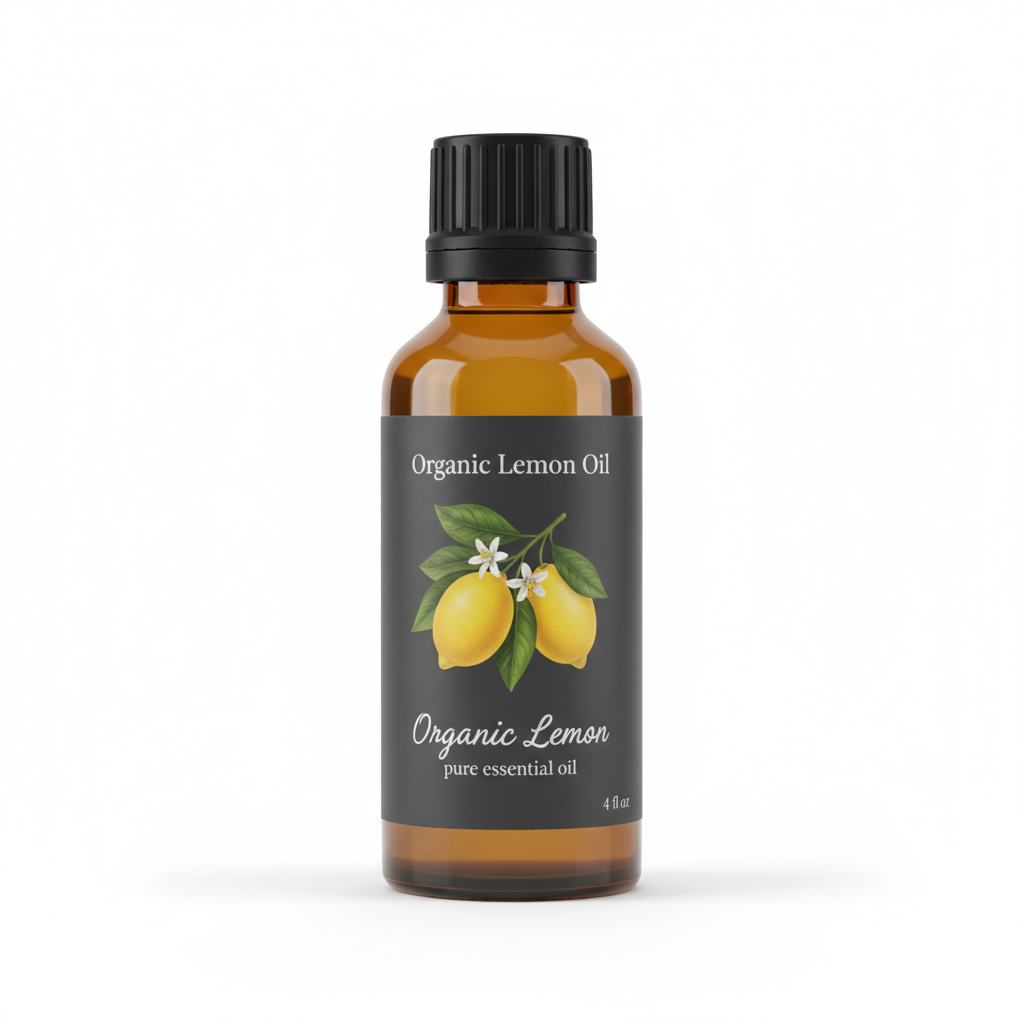
Organic Lemon Essential Oil
Our own Organic Lemon Essential Oil, in sizes from 0.5 oz to bulk.
From $15.99
Shop Now →A big molecule with a disputed smell
A 2025 perspective article titled "The Persistent Myth of Limonene's Smell" points out that the scientific community has not reached consensus on how limonene itself smells, and discusses how the odor attributed to a compound may come from the compound, from derivatives, or both (The Persistent Myth of Limonene's Smell). We find that reassuring in a way, because it matches what your nose tells you: lemon is more than limonene. The European Food Safety Authority's analysis of ten batches of expressed lemon oil shows the supporting cast: limonene averaged about 65%, beta-pinene about 13% and gamma-terpinene about 9%, with citral (geranial and neral) a mere 2% or so combined (EFSA FEEDAP Panel, 2021). PubChem describes citral as having a "strong lemon odor". Reasoning from the numbers, it would not surprise us if a trace component contributes outsized lemon character, the way a pinch of salt shapes a whole dish. That is our inference, not a measured result.
Why two bottles of lemon oil differ
Lemon oil is a range, not a fixed recipe. In one study, researchers analysed 92 Sicilian lemon oils produced between September 2008 and June 2009 on two different industrial extractors, comparing the effect of season and extraction method (Dugo et al., Sicilian lemon oil: Composition of volatile and oxygen heterocyclic fractions and enantiomeric distribution of volatile components). Another team extracted peel oil from four lemon cultivars on four harvest dates from late October to early February and found the oil amounts generally decreased as the fruit ripened (Di Rauso Simeone et al., Variations of peel essential oils during fruit ripening in four lemon cultivars). Fruit, season and machinery all leave a mark, so one batch will not smell exactly like the next, and that is normal for a natural citrus oil.
It also helps explain why a single certificate cannot capture a bottle. The certificate of analysis we publish for one batch lists a relative density of 0.849, a refractive index of 1.474 and an optical rotation of +67.80 degrees at 20 C. Next to EFSA's ten batches, which ran from 0.847 to 0.851, from 1.4732 to 1.4747 and from +65.1 to +66.6, those values sit in familiar territory. Three physical readings cannot tell you the limonene share or the citral share, though, and a certificate describes one batch only. If composition matters to your project, ask us in writing through the contact page before ordering.
The part percentages hide
Cold-pressed lemon also carries heavy, non-volatile molecules called furocoumarins, which do not show up in a terpene table. They are the reason lemon oil is phototoxic. IFRA caps cold-pressed lemon at 2.0% in leave-on products for that reason, and applies the cap where the furocoumarin level is unknown (IFRA, The complete IFRA Standards, 51st Amendment). The Tisserand Institute adds that skin should be kept from UV for at least 12 hours after a phototoxic amount, and that a distilled lemon oil, with far fewer furocoumarins, is not phototoxic (Tisserand Institute, Phototoxicity: essential oils, sun and safety). We sell the cold-pressed oil and do not offer a furocoumarin-free lemon, so we treat that 2.0% as a ceiling, not a target. Our own guidance is 0.5% to 2% in a carrier, with a patch test first and no sun on freshly applied skin.
What happens once the cap comes off
Limonene reacts with air. In guinea pigs, air-exposed d-limonene became a sensitizer while unexposed limonene did not (Karlberg et al., Air oxidation of d-limonene (the citrus solvent) creates potent allergens). In a six-country study, oxidized limonene was patch-tested on 2,900 people with dermatitis and 5.2% reacted (Bråred Christensson et al., An international multicentre study on the allergenic activity of air-oxidized R-limonene). Both used deliberately aged material and dermatitis clinic patients, so they say little about a fresh bottle, which is the point. IFRA's limonene standard asks for a peroxide value under 20 millimoles per litre for limonene-rich natural materials. The protection a buyer controls is simple: keep the cap on, keep the bottle cool and dark, and use it while it is bright. Our storage post has the details.
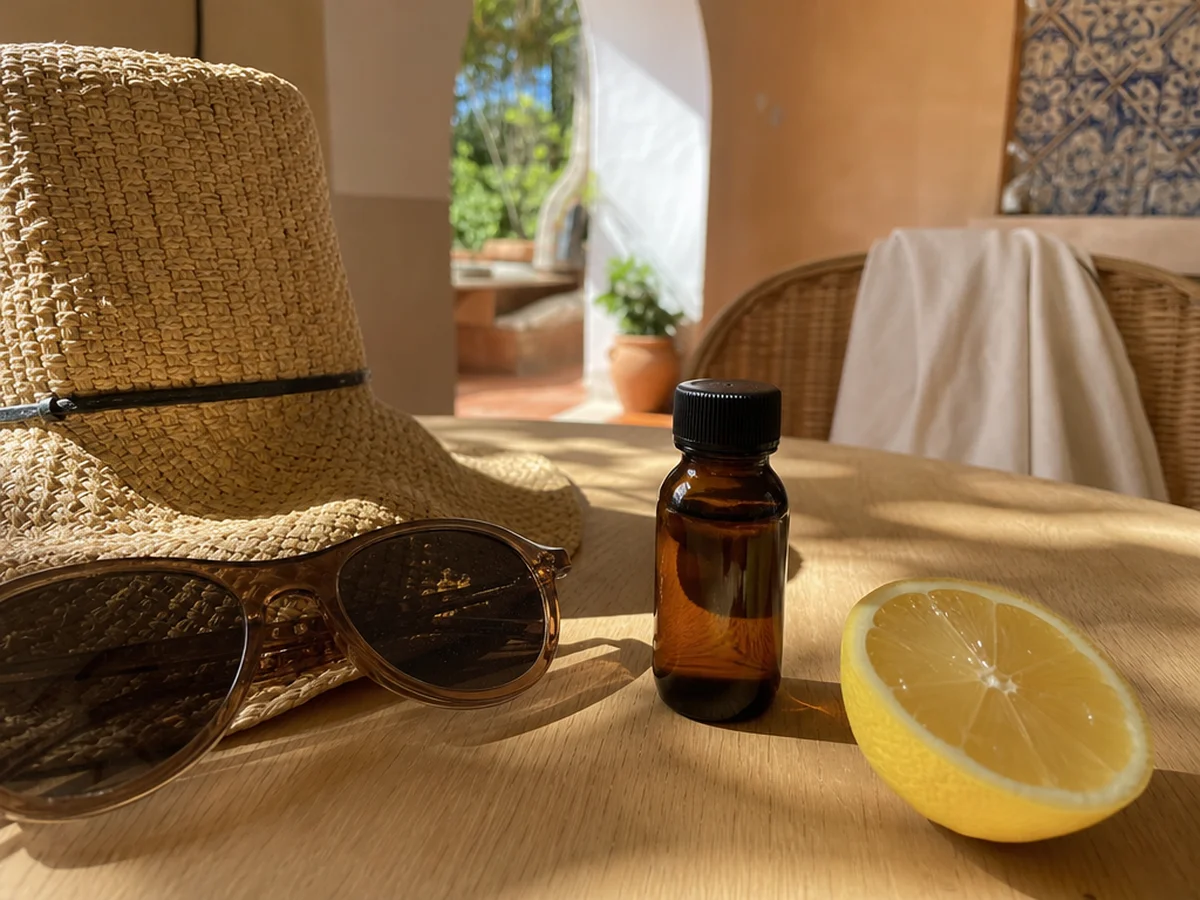
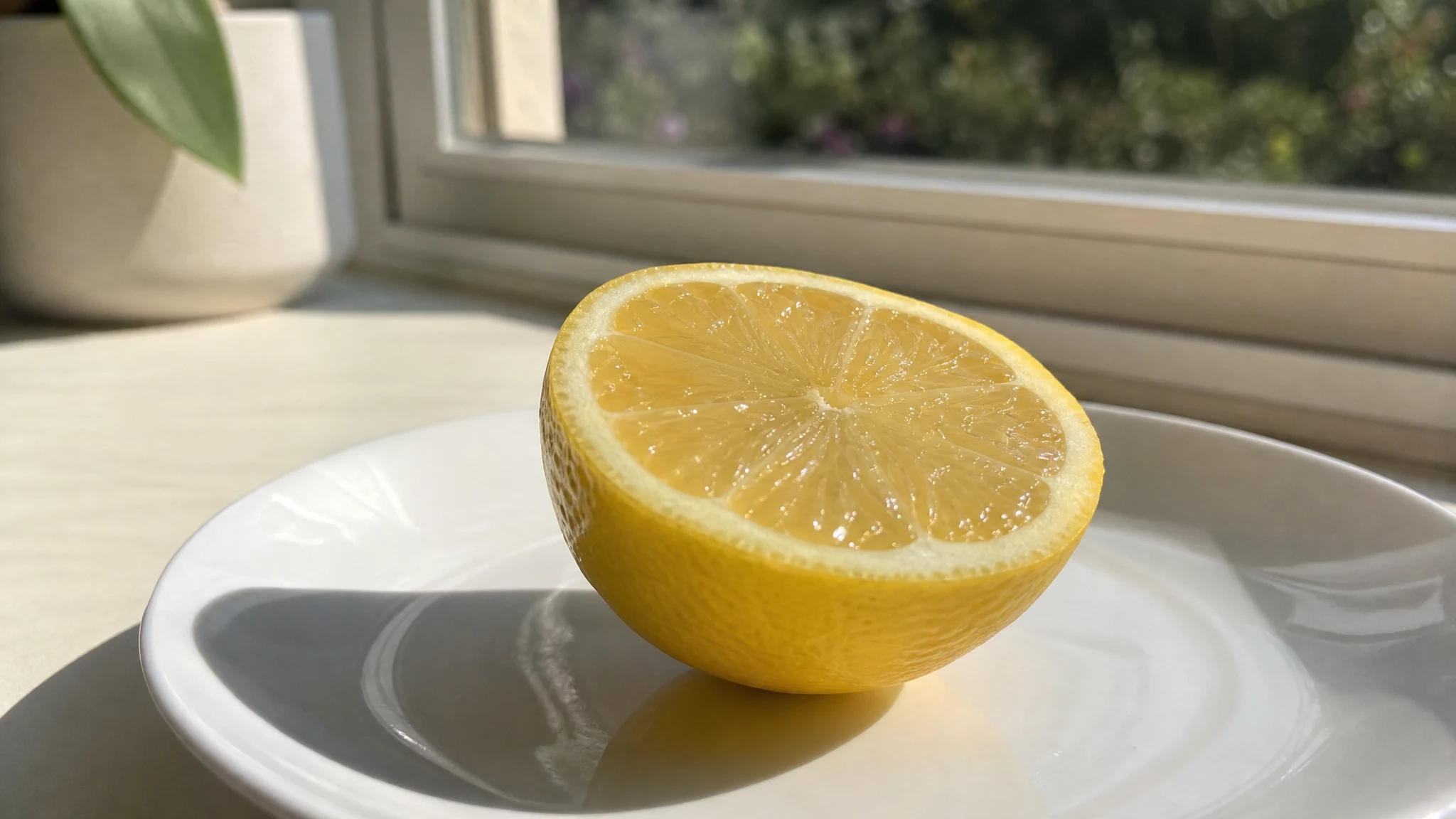
You do not need a laboratory to appreciate all this. Next time you have a fresh lemon and a bottle of lemon oil, smell them one after the other. Notice what the fruit has that the bottle does not, the juicy, watery freshness, and what the bottle has that the fruit only hints at, the concentrated peel brightness. Your nose will tell you more than a table of numbers can.
If you want to go deeper, the GC-MS guide shows how a composition table is laid out, the scent post follows the aroma, and the citrus comparison sets lemon beside its relatives.
So the next time you crack a bottle and breathe in that sparkle, remember it is a chorus, and limonene is only the loudest voice.
Organic Lemon Essential Oil
Organic Lemon Essential Oil from our own shop, in sizes from 0.5 oz to bulk.
From $15.99
Shop Now →Sources & Further Reading
- The Persistent Myth of Limonene's Smell. ChemBioChem, 2025. europepmc.org/MED/40191954
- EFSA FEEDAP Panel, 2021. Safety and efficacy of feed additives consisting of expressed lemon oil and its fractions from Citrus limon (L.) Osbeck and of lime oil from Citrus aurantiifolia (Christm.) Swingle for use in all animal species (FEFANA asbl). EFSA Journal. pmc.ncbi.nlm.nih.gov/articles/PMC8085978
- Dugo et al, 2010. Sicilian lemon oil: Composition of volatile and oxygen heterocyclic fractions and enantiomeric distribution of volatile components. J Sep Sci. europepmc.org/MED/20931614
- Di Rauso Simeone et al, 2020. Variations of peel essential oils during fruit ripening in four lemon (Citrus limon (L.) Burm. F.) cultivars. J Sci Food Agric. europepmc.org/MED/31502246
- Karlberg AT, Magnusson K, Nilsson U, 1992. Air oxidation of d-limonene (the citrus solvent) creates potent allergens. Contact Dermatitis. europepmc.org/MED/1395597
- Bråred Christensson J et al, 2013. An international multicentre study on the allergenic activity of air-oxidized R-limonene. Contact Dermatitis. europepmc.org/MED/23510342
- IFRA. The complete IFRA Standards, up to and including the 51st Amendment (January 2024): Lemon oil cold pressed; Limonene. Standards PDF
- Tisserand Institute. Phototoxicity: essential oils, sun and safety. tisserandinstitute.org/phototoxicity-essential-oils-sun-and-safety