Lemon Oil Label Words Decoded: Food Grade, GRAS, Organic
Walk down any essential oil aisle and you will meet labels that sound reassuring: food grade, "therapeutic", GRAS, organic. They sound like grades on a report card, but they are not, and none of them tells you that a bottle of neat lemon oil is meant to be swallowed. Ours is an aroma and skin-use oil, labelled for no internal use, and it helps to know what each of those words is actually doing.
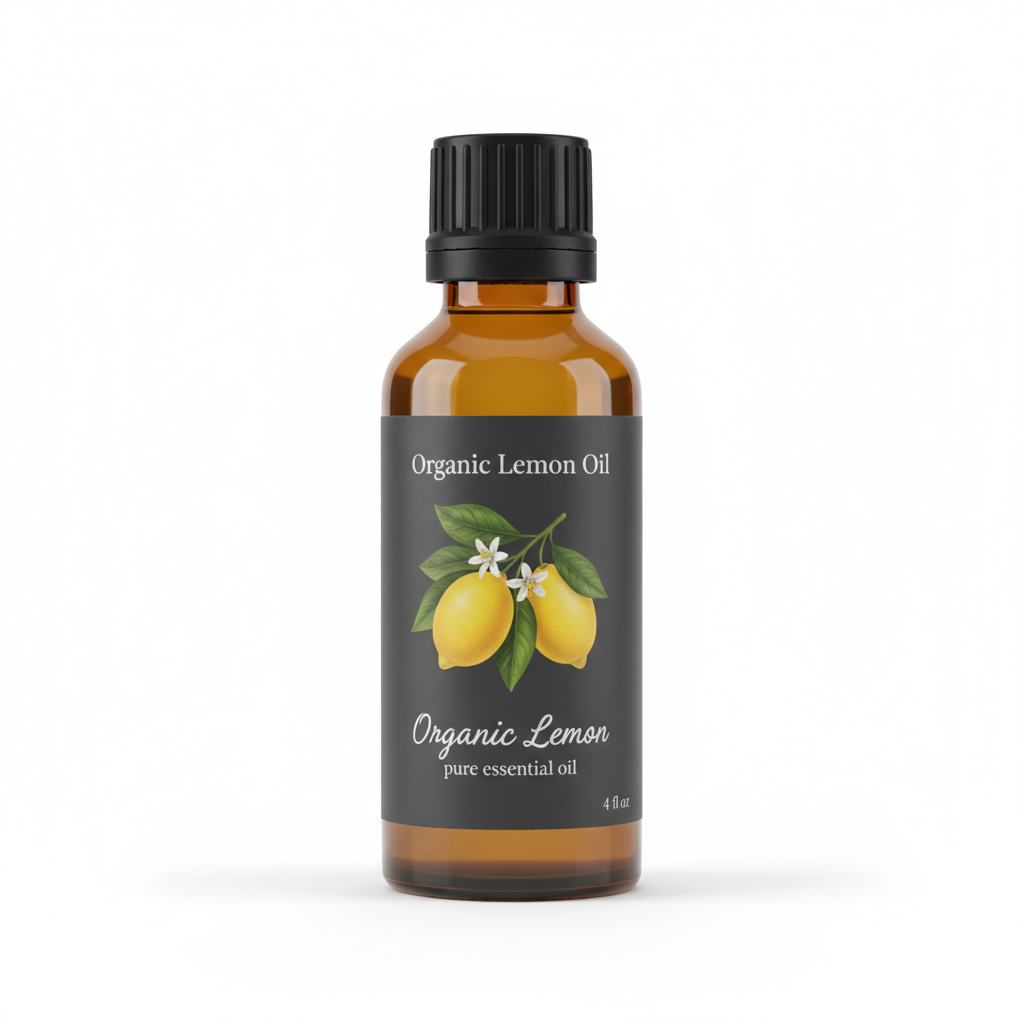
Organic Lemon Essential Oil
Our own Organic Lemon Essential Oil, in sizes from 0.5 oz to bulk.
From $15.99
Shop Now →Four label words, decoded
| Label word | Where it comes from | What it does not tell you |
|---|---|---|
| Therapeutic-grade claims | No grading scale is defined in the FDA material or federal regulations we read. FDA says a product's category depends on its intended use, judged partly by what the label claims | Any measured quality. It is a seller's phrase, and to a regulator it reads as a claim about use |
| Food grade | 21 CFR 182.1 lists "appropriate food grade" and being "prepared and handled as a food ingredient" among its conditions for substances regarded as safe | That a given bottle meets it. It describes how a food ingredient is made and handled, not a badge that makes a skin-care oil a food |
| GRAS | 21 CFR 182.20 lists lemon (Citrus limon) among essential oils and extractives generally recognized as safe "for their intended use" | Anything about swallowing a bottle of neat oil. The listing is tied to a use in food |
| Organic | 7 CFR 205.100 requires certification (with listed exemptions) for products sold, labeled or represented as organic | A flavour grade, a food-use status or a safety level. It certifies how something was produced and handled |
FDA explains GRAS this way: a substance added to food needs premarket approval unless it is "generally recognized, among qualified experts, as having been adequately shown to be safe under the conditions of its intended use" (FDA, Generally Recognized as Safe (GRAS)). Lemon sits on the list because lemon oil is used in tiny amounts as a flavouring. That is a very different thing from the contents of a half-ounce or sixteen-ounce bottle of concentrated oil.
Concentration changes everything
A skin blend at the top of our range is 2% lemon oil. The bottle is 100%, fifty times stronger. An ounce holds about 591 drops, which is a lot of concentrated material, and the fragrance industry's own standard caps lemon oil at 2.0% in leave-on skin products because of phototoxicity. The same standard adds a flavour requirement for lip and oral products: the material must also be recognised as a flavouring ingredient under the IOFI Code of Practice (IFRA, The complete IFRA Standards, 51st Amendment). In other words, even that rulebook treats "fine in a lipstick" and "fine in a skin cream" as separate tests with separate paperwork.
Poison Control notes that some essential oils "can be poisonous if they are absorbed through the skin or swallowed," that choking on one can send it into the lungs, and that children "have thin skin and immature livers, which might make them more susceptible to toxic effects than adults." Its examples are other oils, so we read that as guidance on the whole class. If anyone swallows an essential oil, the page directs readers to its online tool or to a poison center at 1-800-222-1222 (Poison Control, Essential oils: Poisonous when misused). We keep ours capped, away from children and pets, and we ask you to do the same.
What "therapeutic" is really doing
FDA says that whether a product is a cosmetic or a drug "is determined by a product's intended use." Its example: a massage oil that only lubricates and scents the skin is a cosmetic, while one intended for relieving muscle pain is a drug (FDA, Is It a Cosmetic, a Drug, or Both? (Or Is It Soap?)). Putting that beside the label word is our reading, not a quoted rule: "therapeutic-grade" has no scale behind it, yet it hints at a health purpose. That is why we leave the phrase out and describe our oil by what it is.
What to look for instead
- The Latin name. Ours is Citrus limon. Lemon-scented oils from other plants, like lemongrass or lemon eucalyptus, are different materials, and our look-alike comparison sorts them out.
- The extraction. Our oil is cold-pressed from the peel. Distilled and furocoumarin-free lemon oils are separate materials, and we do not offer a furocoumarin-free lemon.
- The batch paperwork. The certificate of analysis we publish for one batch (LEMFBACLARO001A) lists botanical name, peel, appearance, a relative density of 0.849 against a stated range of 0.840 to 0.855, a refractive index of 1.474 (1.473 to 1.477) and an optical rotation of +67.80 degrees (+57.0 to +78.0). If you need a composition report, a residue panel or a peroxide value, ask us in writing through the contact page before ordering and keep the answer in writing.
- The organic paperwork. If a certificate matters for your purchase, ask in writing for it before ordering. The organic certification article explains what the scheme covers.
- The intended use. Ours is aroma and diluted skin use. The ingestion article goes further on why we do not suggest swallowing it.
A thirty-second check at the shelf
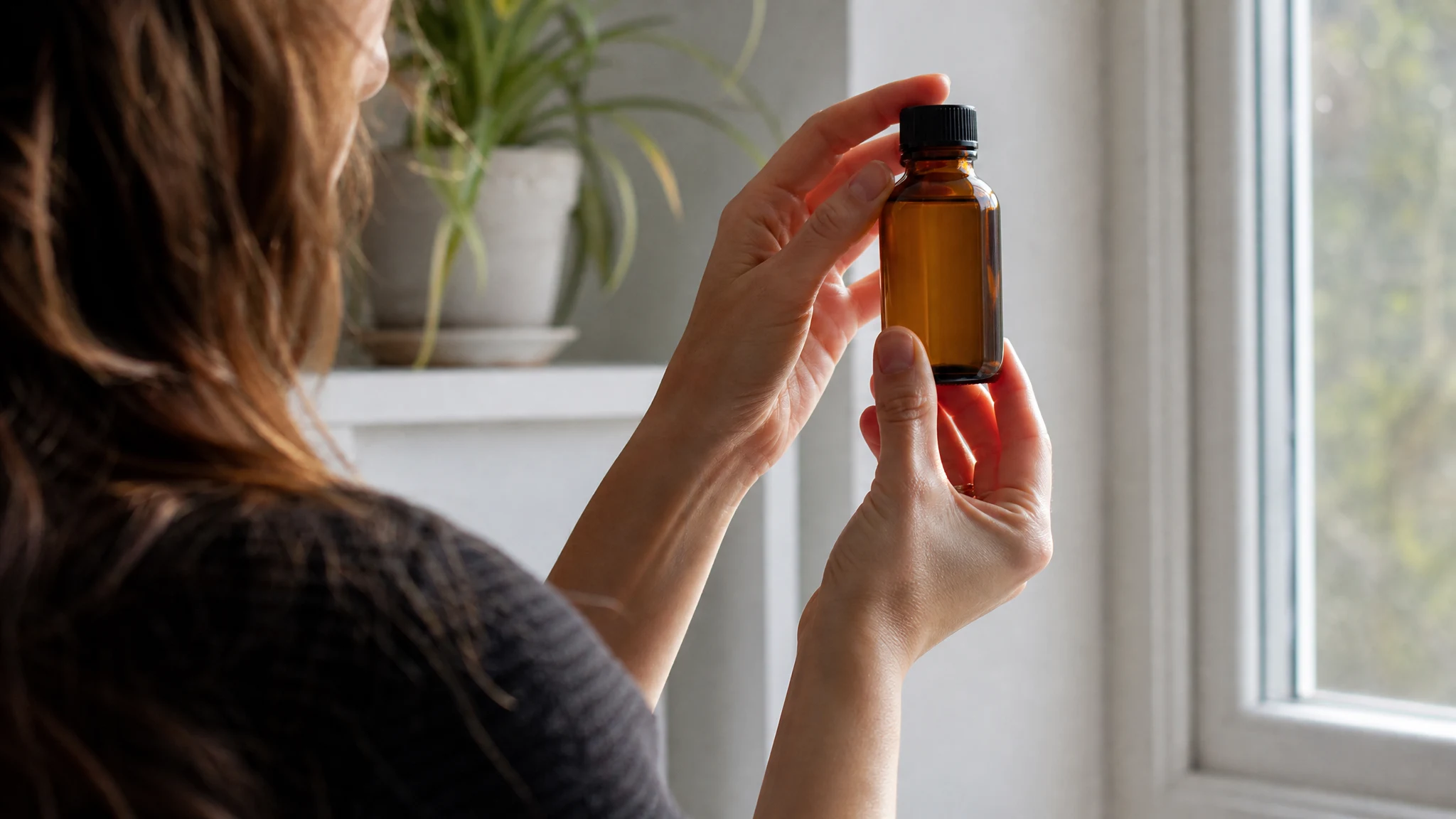
When you are standing in front of a row of bottles, you do not need a laboratory. Turn the bottle around and read the back. Look for the plant name, a clear statement of what the bottle is for, and a lot number you could quote to the seller. Then open the cap, if the shop lets you, and smell it. A good lemon oil smells like a freshly scored peel, bright first and softer after. If the label is loud and the details are thin, put it back.
If it is lemon flavour you want in food or drink, that is a different product with its own label, made by someone who has taken responsibility for that use, and it lives in the baking aisle. For anything medical, a pharmacist or physician is the right person to ask. For dilution and sun rules on skin, start with our skin guide.
A label word is only as good as the paperwork and the stated use behind it, and ours says what the oil is for plainly.
Organic Lemon Essential Oil
Organic Lemon Essential Oil from our own shop, in sizes from 0.5 oz to bulk.
From $15.99
Shop Now →Sources & Further Reading
- Legal Information Institute. 21 CFR 182.1 - Substances that are generally recognized as safe. law.cornell.edu/cfr/text/21/182.1
- Legal Information Institute. 21 CFR 182.20 - Essential oils, oleoresins (solvent-free), and natural extractives (including distillates). law.cornell.edu/cfr/text/21/182.20
- FDA. Generally Recognized as Safe (GRAS). fda.gov, GRAS
- FDA. Is It a Cosmetic, a Drug, or Both? (Or Is It Soap?). fda.gov, cosmetic or drug
- Poison Control. Essential oils: Poisonous when misused. poison.org/articles/essential-oils
- IFRA. The complete IFRA Standards, up to and including the 51st Amendment (January 2024), Lemon oil cold pressed. Standards PDF
- Legal Information Institute. 7 CFR 205.100 - What has to be certified. law.cornell.edu/cfr/text/7/205.100