Lemon vs Lemongrass vs Lemon Balm: Key Differences
Lemon, lemongrass and lemon balm all announce themselves with a lemony lift, so it is natural to treat them as cousins that swap in for one another. Chemically, though, lemon is the odd one out. Lemongrass and lemon balm are both built around citral, while cold-pressed lemon is built around limonene, and that one difference explains a surprising amount.
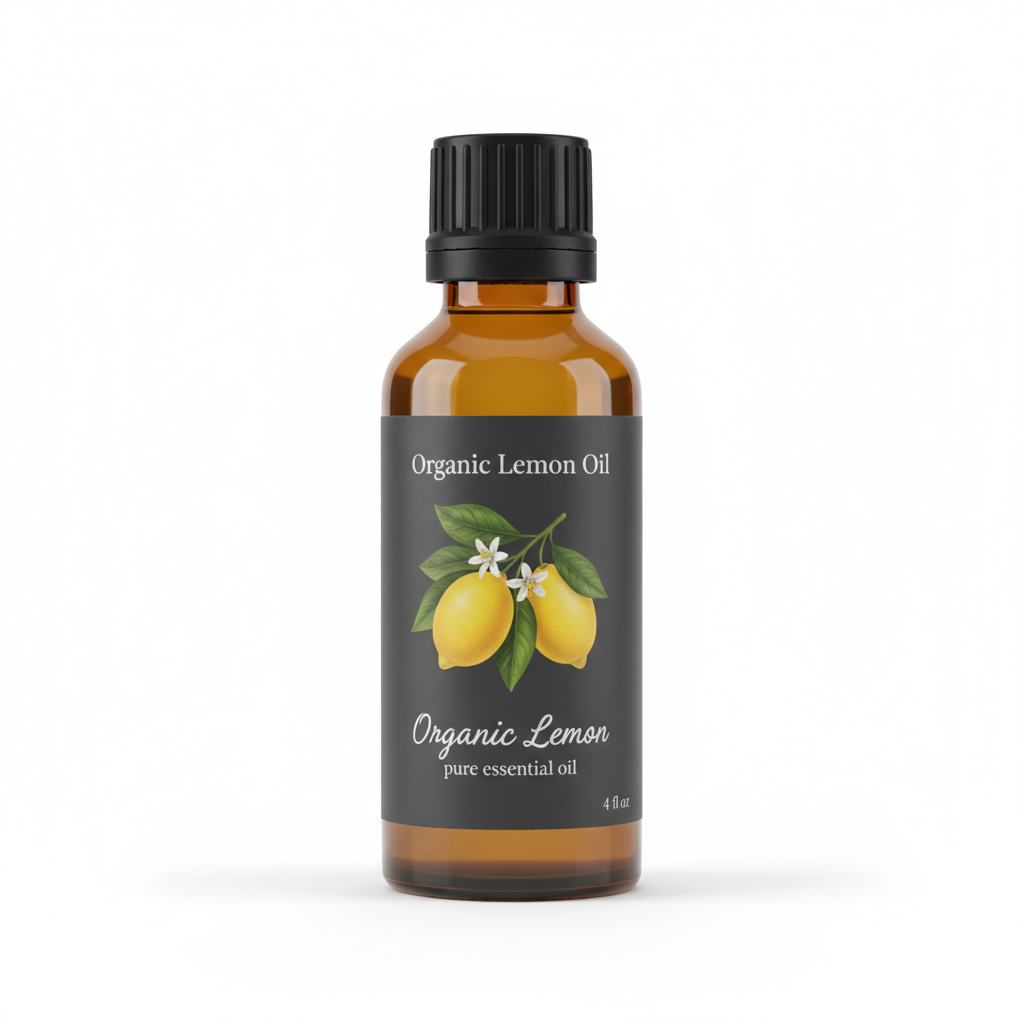
Organic Lemon Essential Oil
Our own Organic Lemon Essential Oil, in sizes from 0.5 oz to bulk.
From $15.99
Shop Now →Read the label in three steps
We find it helpful to say these three steps out loud when we pick up a bottle: what plant, what part, what process. It takes five seconds, and it turns a vague "lemon" into something you can actually use.
Whenever a bottle promises a lemon scent, check the Latin name, the plant part and the process. Citrus limon, peel, expressed: lemon oil. Cymbopogon, leaf of a tall grass, distilled: lemongrass. Melissa officinalis, leaf, distilled: lemon balm, also sold as melissa. A listing with only a common name has not yet told you what you would be buying.
Limonene on one side, citral on the other
Across ten commercial batches, the European Food Safety Authority found cold-pressed lemon oil averaging 64.8% limonene, with beta-pinene and gamma-terpinene behind it (EFSA). A lemongrass oil (C. flexuosus) analysed in a UK laboratory study was dominated by the citral pair, geranial at about 50.5% and neral at about 38.5% (Adukwu and colleagues, 2016). An Algerian lemon balm leaf oil came out at 44.2% geranial and 30.2% neral, with citronellal at 6.3% (Abdellatif and colleagues, 2014).
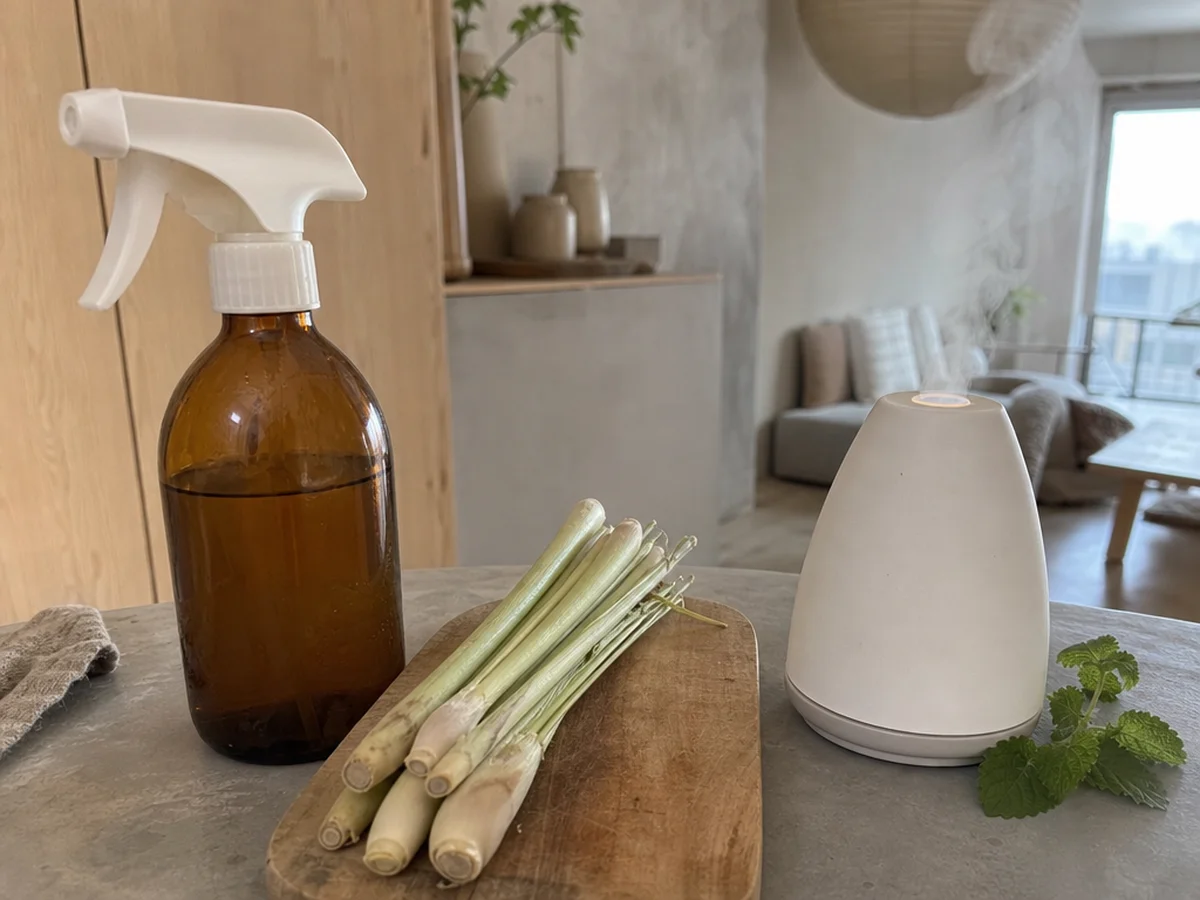
These are single samples, so another harvest, species or distillery will move the numbers. The pattern is what matters: the grass and the herb share a molecule, and the peel does not. It is a lovely detail, because it means the "lemon" you smell in each is a different compound doing a similar job on your nose.
How they differ to the nose
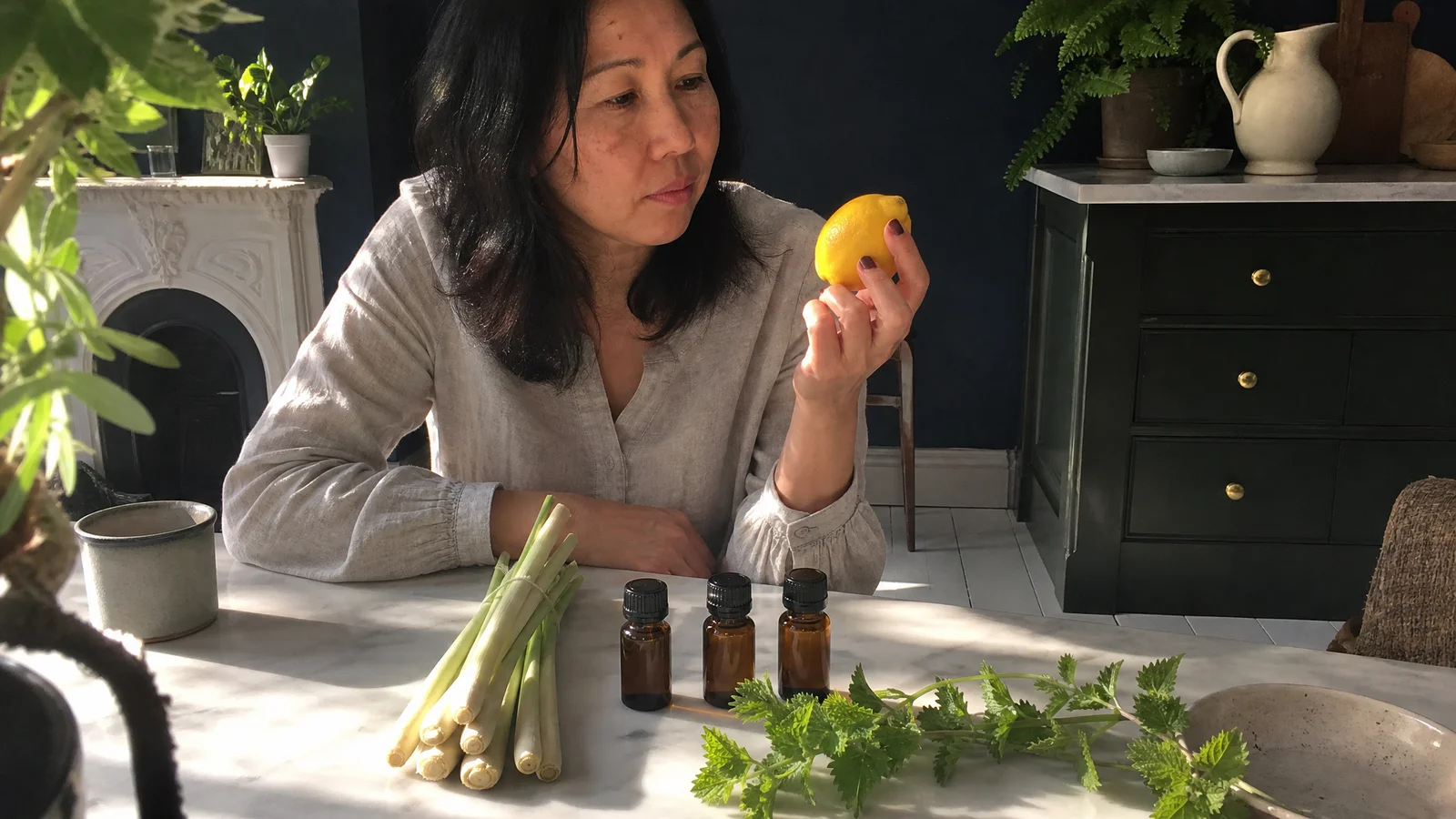
Smell all three and the family resemblance fades quickly. Lemon peel is sparkling, sweet and a little sharp, the scent of a freshly scored fruit. Lemongrass leans greener and grassier, with a fuller, more lingering lemon note. Lemon balm has a softer, leafy character that you may find gentle compared with the other two. These are impressions, not measurements, and your own nose is the judge.
Why lemon balm is the tricky one
The balm leaf oil in that study yielded just 0.34% of dry leaf weight. A separate laboratory study on eucalyptus leaves reported 3.45%, roughly ten times more (Chikhi-Chorfi and colleagues, 2025). Reasoning from two lab yields, true melissa oil takes a lot of plant to make, which is a good reason to buy it with a Latin name, a plant part and a GC report in hand. We do not sell it.
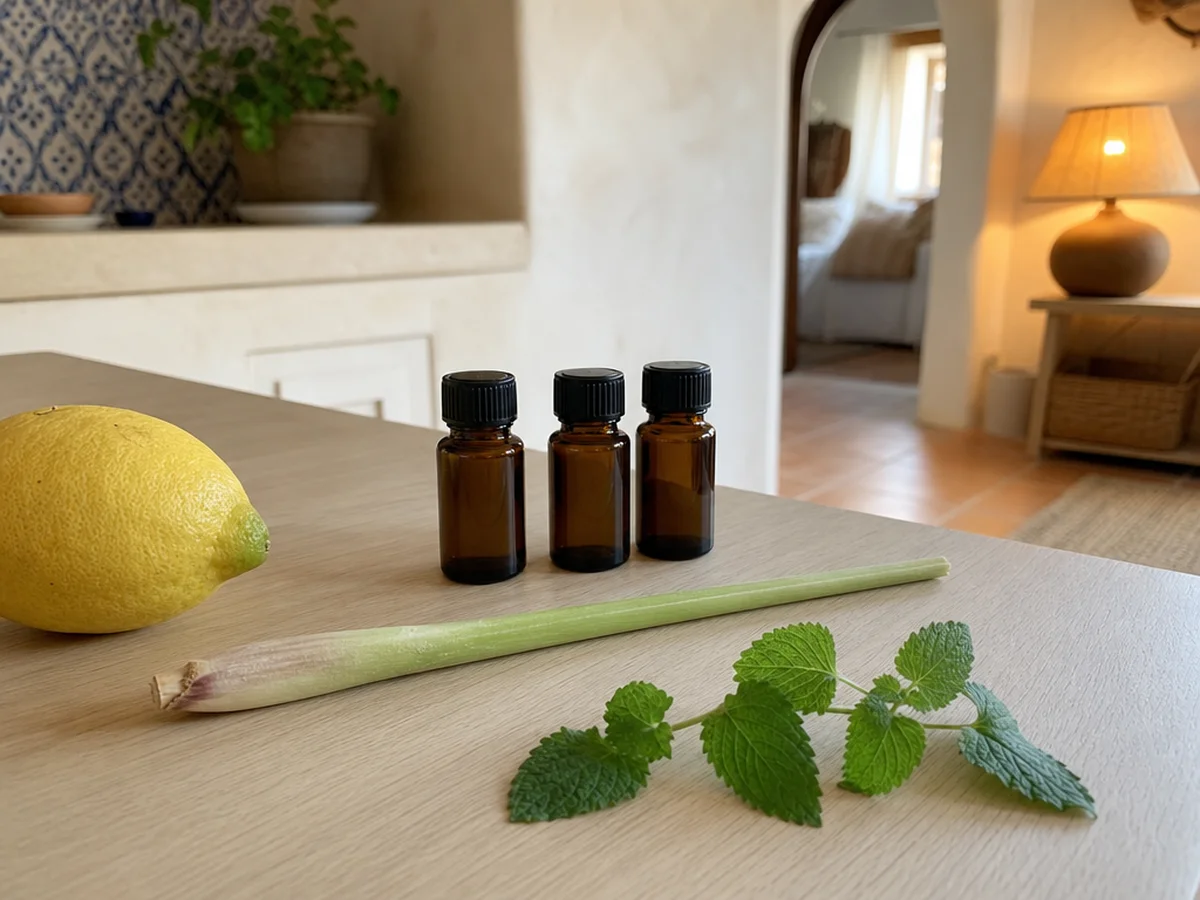
Two limits, two different reasons
This is the practical bit. A skin figure for lemon and a skin figure for lemongrass are not the same kind of number. The lemon figure exists because cold-pressed lemon oil is phototoxic: the Tisserand Institute gives the IFRA limit as 2% and calls it "the safe maximum, not a recommended amount, which might be less" (dilution), and recommends keeping skin out of UV for at least 12 hours after a phototoxic amount (phototoxicity). For lemongrass, the same institute gives a maximum of 0.7% dilution (dermal maximums).
The consequence is easy to remember. A recipe written for lemon at 2% would put lemongrass nearly three times over its figure. A recipe written for lemongrass, moved over to lemon, stays under its old percentage but now brings the sun rule along. For our lemon oil, we suggest the lower end of our 0.5% to 2% carrier-oil range, a patch test, and a sunless day for freshly treated skin. Our skin guide has the rest.
A few habits worth keeping
Write the plant name on the recipe card, not just the word lemon. If you borrow a recipe from a friend, ask which oil they used. And keep a separate dropper or bottle for each, because mixing them up in a hurry is the easiest way to go over a limit.
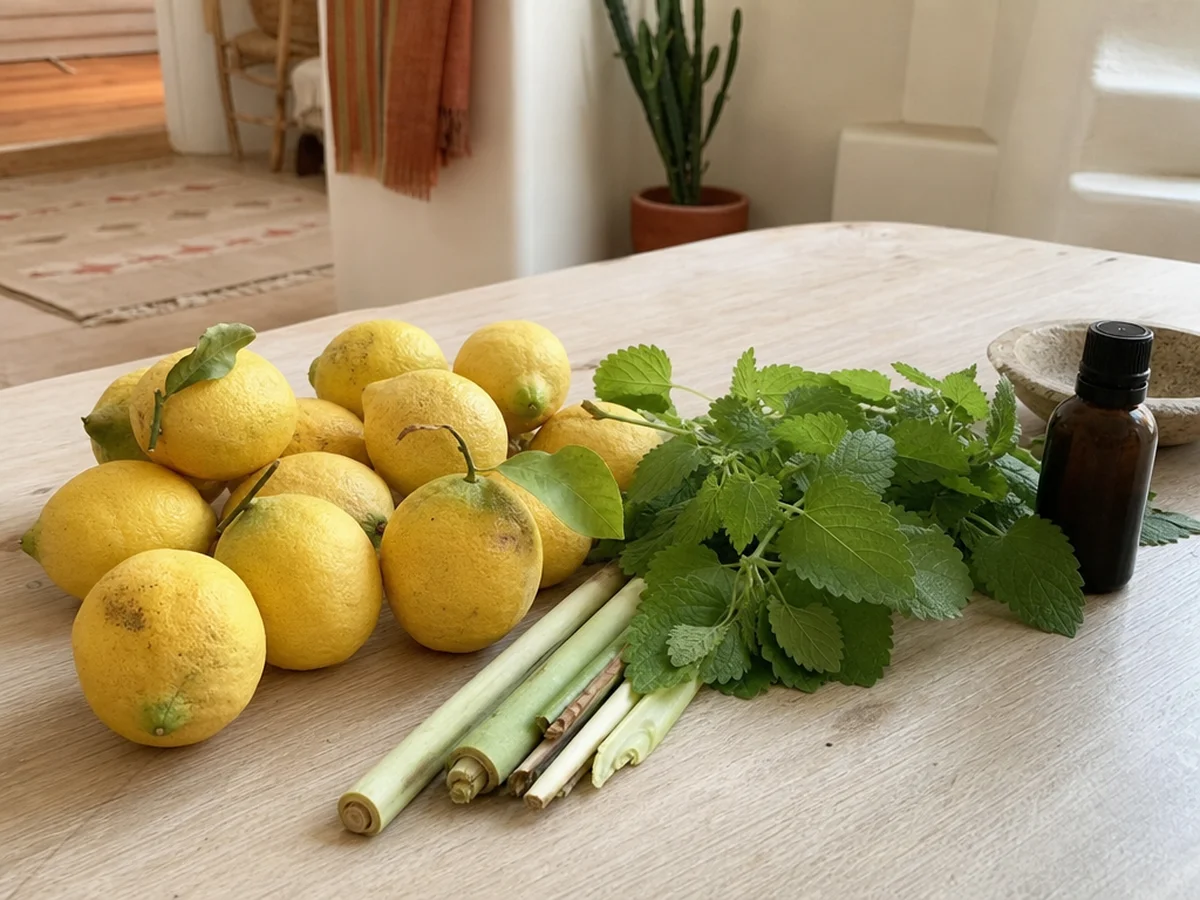
Which one are you after?
- The scent of a freshly scored lemon peel, bright and sparkling: that is cold-pressed lemon, which is what we sell.
- A grassier lemon note: that is lemongrass territory. Use its own figure, not lemon's, and ask for the species and a GC report.
- A "lemon balm" or "melissa" bottle: look for the Latin name and a report showing more than the citral pair.
- A different citrus altogether: see citrus essential oils compared and lemon versus lime.
The leaf oil that is not related to any of them at all is covered in lemon oil versus lemon eucalyptus oil, and our GC-MS guide shows how to read the peaks on any of these. Remember the one rule: the word "lemon" tells you the scent, while the plant and the process tell you how to use it.
If you are building a collection of lemony oils, a small label on each bottle with the plant name in large letters keeps everything straight. It sounds fussy, but it is the kind of tidy habit that pays for itself the first time you reach for the wrong one in a hurry. Our lemon is in the shop, larger sizes are on our bulk page, and our guide to buying organic lemon essential oil in bulk explains how to read a lemon listing before you buy.
Organic Lemon Essential Oil
Organic Lemon Essential Oil from our own shop, in sizes from 0.5 oz to bulk.
From $15.99
Shop Now →Sources & Further Reading
- EFSA Panel on Additives and Products or Substances used in Animal Feed, 2021. Safety and efficacy of feed additives consisting of expressed lemon oil and its fractions from Citrus limon (L.) Osbeck and of lime oil from Citrus aurantiifolia (Christm.) Swingle for use in all animal species (FEFANA asbl). EFSA Journal, via PubMed Central
- Adukwu EC et al., 2016. Antimicrobial activity, cytotoxicity and chemical analysis of lemongrass essential oil (Cymbopogon flexuosus) and pure citral. Appl Microbiol Biotechnol. PubMed Central
- Abdellatif F et al., 2014. Chemical composition and antimicrobial activity of the essential oil from leaves of Algerian Melissa officinalis L. EXCLI J. PubMed Central
- Chikhi-Chorfi N et al., 2025. Chemical Composition and Insecticidal Activity of Essential Oils from Origanum floribundum and Eucalyptus citriodora Against the Louse Bovicola limbatus. Molecules. PubMed Central
- Tisserand Institute. Dilution for essential oils. tisserandinstitute.org
- Tisserand Institute. Phototoxicity: essential oils, sun and safety. tisserandinstitute.org
- Tisserand Institute. Q&A safety maximums for dermal application. tisserandinstitute.org