Is Italian Lemon Oil Better? What Origin Really Tells You
Ask a room full of lemon-oil fans where the best bottle comes from and a lot of hands will point to Italy. It is a lovely story, with sun-warmed groves, centuries of citrus growing and a name that sounds right on a label. The research is more interesting than the legend, though, and it points to a better question than "which country?"
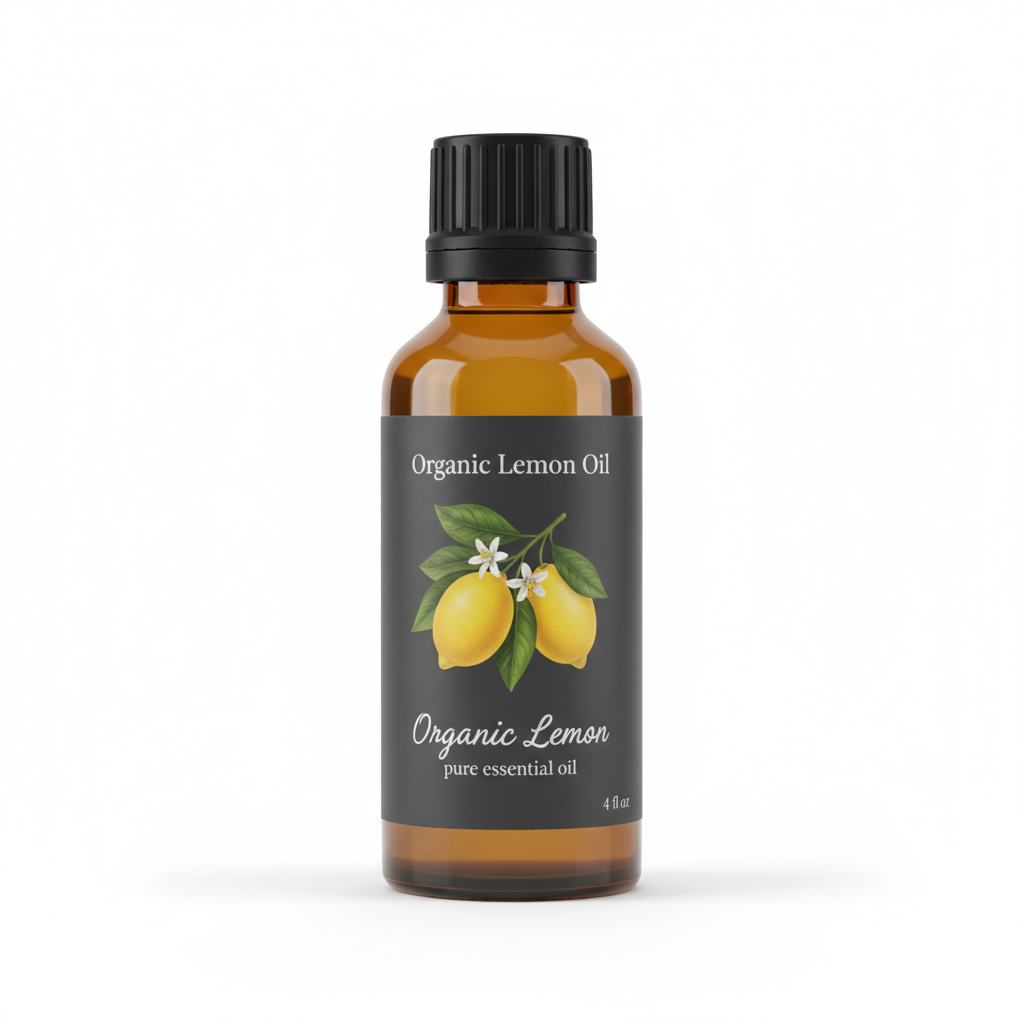
Organic Lemon Essential Oil
Our own Organic Lemon Essential Oil, in sizes from 0.5 oz to bulk.
From $15.99
Shop Now →What ten commercial batches had in common
The clearest evidence we found comes from a European Food Safety Authority review of one producer's cold-pressed lemon oil. Ten batches were analysed. Five came from the Mediterranean and five from outside the EU, including Argentina, Brazil and South Africa. If country decided everything, you would expect two camps. Instead, limonene, the molecule that carries most of that bright lemon smell, sat in a tight band from 61.2% to 66.7% of the oil across all ten, averaging 64.8%. Beta-pinene and gamma-terpinene, the next two big players, averaged 13.3% and 9.0% (EFSA).
That is one producer and ten batches, so it is not a verdict on every lemon oil in the world. It does show that well-made cold-pressed lemon oil from very different places can look strikingly similar on paper.
What changes the oil more than a flag does
Look inside a single region and the variation is easy to find. A team in Sicily analysed 92 industrially cold-pressed lemon oils made between September 2008 and June 2009 using two extraction methods, and they set out to see how season and method shaped the results (Dugo and colleagues, 2010). A separate study followed four lemon cultivars picked on four dates from late October to early February and found that the main hydrocarbon components, limonene among them, fell as the fruit ripened (Di Rauso Simeone and colleagues, 2020). That was a laboratory extraction rather than a commercial press, but the message carries: cultivar, picking date and pressing method all leave fingerprints on the oil.
So two bottles from the same country can differ, and two from different countries can match. A place name is a starting point for a conversation, not a description of what is in the bottle.
Why a story is not a spec
A label can make a promise with a picture of a sunny grove, and it is pleasant to imagine. But a story is not a specification. What a maker wants to know is a plain list: what the plant is, which part, how it was pressed and which lot is in the bottle. We would take a clear lot number over a beautiful photograph every time, and we think you should too.
Where origin earns its keep
Origin matters when it is a requirement. A brand that prints a named place on its own label, or a customer who specifies one, needs that fact documented for the exact lot. There is also a serious science behind checking whether a lemon oil is what it claims to be. One 2023 method measures the carbon-13 signature of the mirror-image forms of certain molecules in a single run and found that in genuine Sicilian lemon oils the two forms of alpha- and beta-pinene carried different values (Cucinotta and colleagues, 2023). It is a tool for authenticity work in a laboratory. For the rest of us, the takeaway is that real verification lives in lot-level analysis, not in a map name.
What does not change with the country
Two things travel with the oil wherever the lemons grew. First, cold-pressed lemon oil is phototoxic, which is why the IFRA standard for it caps use at 2.0% in most leave-on product categories, and why the standard applies whenever the furocoumarin level is unknown (IFRA Standards, 51st Amendment). Our own guidance for skin is to dilute to 0.5% to 2% in a carrier oil, patch test first, and keep freshly treated skin out of the sun. Second, limonene reacts with air, so freshness matters more than a postcode. Our post on storing lemon oil covers how to keep a bottle bright.
Let your nose have a say
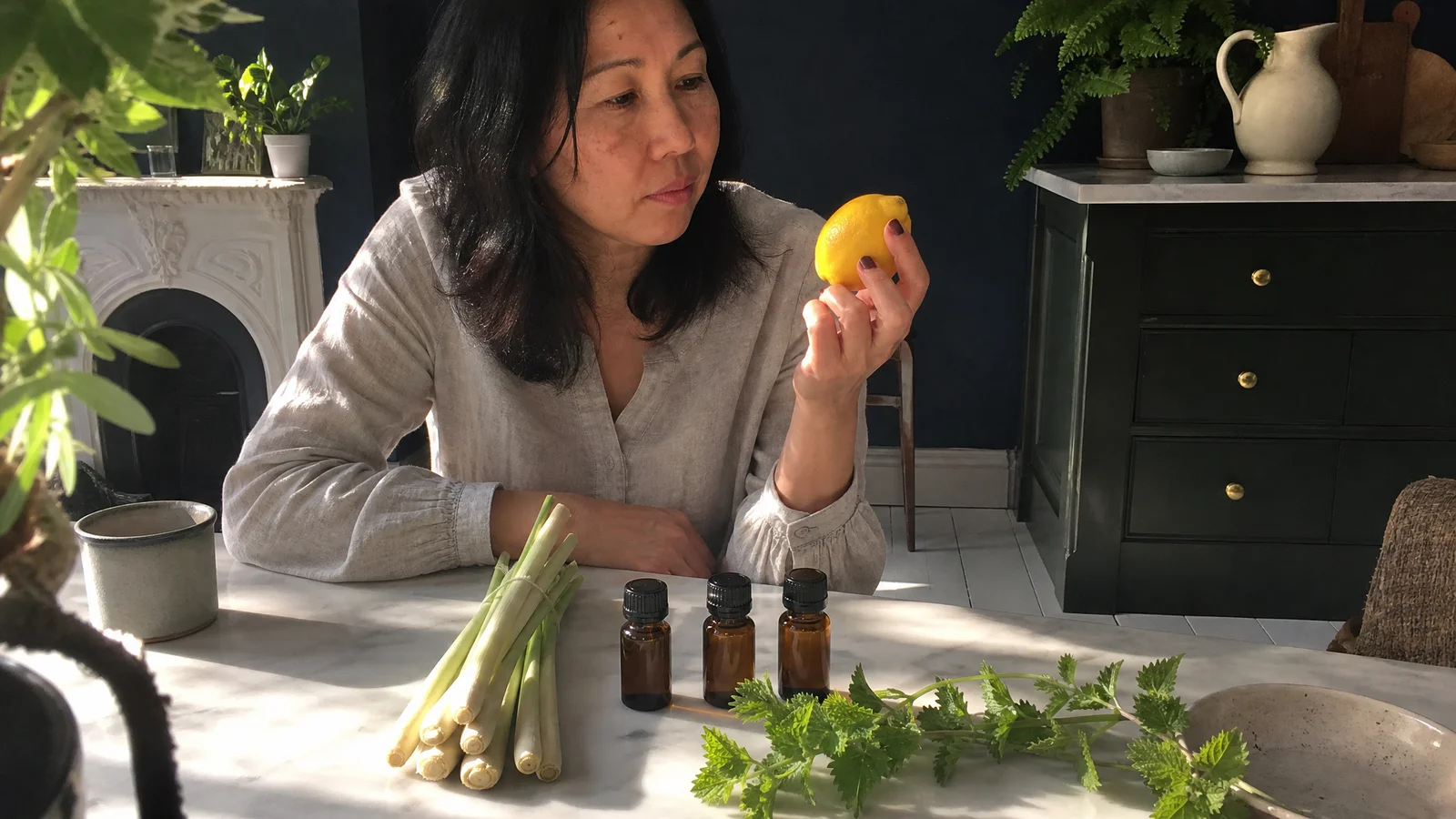
Whatever the label says, your nose is a good judge. Put a drop on a tissue and smell it right away: you should get a bright, juicy peel. Then smell again after a minute, when the top note has lifted and a softer, rounder lemon is left. Compare two oils side by side on separate tissues, and note which you prefer. Preference is personal, and a bottle you love is worth more than a prestigious address.
When you talk to a seller, a few plain questions go a long way: which lot is this, what paperwork exists for it, and who can answer in writing? A seller who answers calmly is one worth returning to.
How we would shop for origin
If you are choosing between lemon oils, we would put these ahead of the country: the botanical name (Citrus limon), the plant part (peel) and the process (cold-pressed). Then ask what documents exist for the lot you will receive. Our GC-MS reading guide shows what a full composition report looks like, and the quality-checks post covers the rest. If you want to know how the oil actually smells, your nose beats the label; we describe the scent in what lemon oil smells like.
Our oil is cold-pressed from Citrus limon peel and sold neat. The Certificate of Analysis we publish for one batch lists density, refractive index and optical rotation but not an origin, so if a named place matters for your product, send us a note through our contact page before ordering and we will give you our answer in writing.
Organic Lemon Essential Oil
Organic Lemon Essential Oil from our own shop, in sizes from 0.5 oz to bulk.
From $15.99
Shop Now →Sources & Further Reading
- EFSA Panel on Additives and Products or Substances used in Animal Feed, 2021. Safety and efficacy of feed additives consisting of expressed lemon oil and its fractions from Citrus limon (L.) Osbeck and of lime oil from Citrus aurantiifolia (Christm.) Swingle for use in all animal species (FEFANA asbl). EFSA Journal, via PubMed Central
- Dugo P et al., 2010. Sicilian lemon oil: Composition of volatile and oxygen heterocyclic fractions and enantiomeric distribution of volatile components. J Sep Sci 33:3374-3385. Europe PMC
- Di Rauso Simeone G et al., 2020. Variations of peel essential oils during fruit ripening in four lemon (Citrus limon (L.) Burm. F.) cultivars. J Sci Food Agric 100:193-200. Europe PMC
- Cucinotta L et al., 2023. Chiral isotopic fractionation in lemon essential oil: A tool for authenticity assessment? J Chromatogr A 1710:464409. Europe PMC
- IFRA Standards, 51st Amendment (the complete IFRA Standards, January 2024), Lemon oil cold pressed. ifrafragrance.org