Can You Swallow Lemon Essential Oil? Why We Say No
The question arrives in a few forms: can I add lemon oil to my tea, to a recipe, to a glass of water? Our answer is no, and the label on our bottle says the same: not for internal use. The confusion has an understandable source. Lemon oil appears on a US government list of flavouring substances, and lemon is the friendliest of kitchen ingredients. Here is what that list actually says.
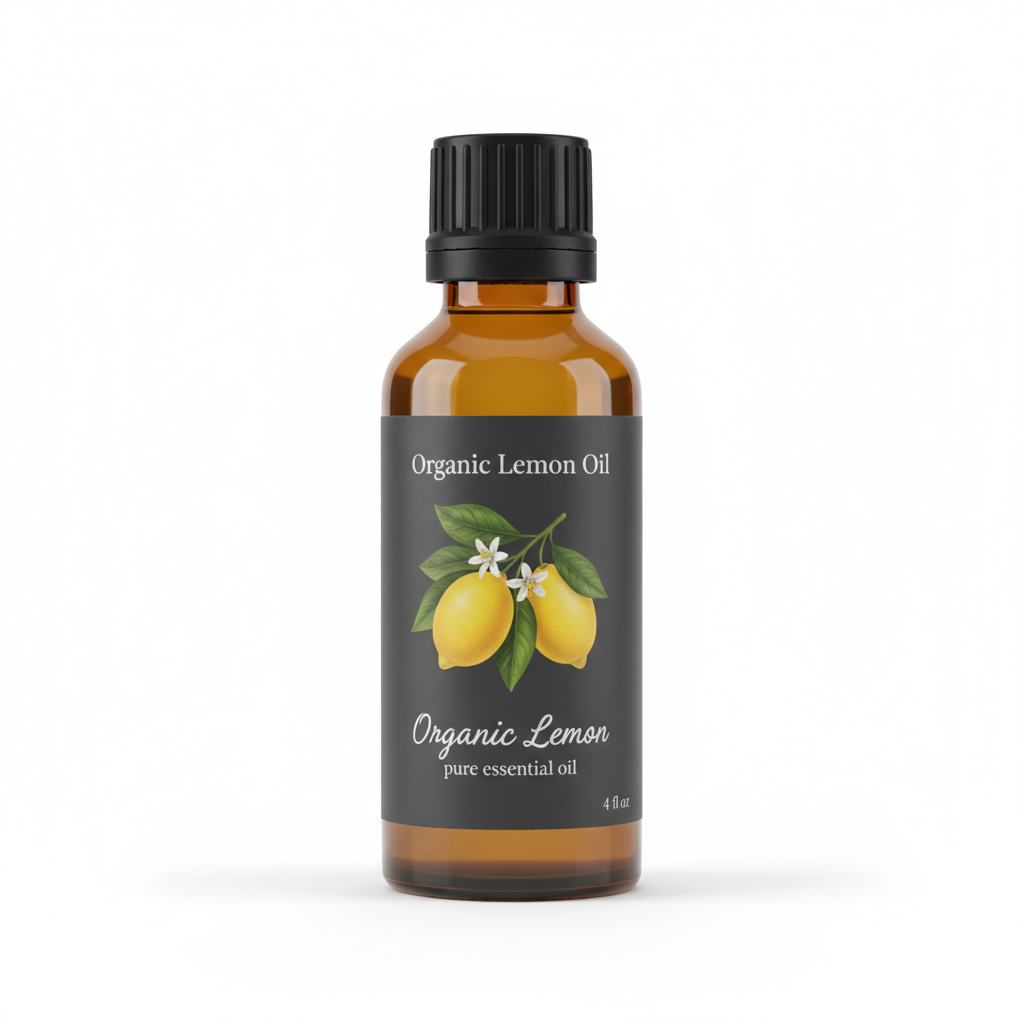
Organic Lemon Essential Oil
Our own Organic Lemon Essential Oil, in sizes from 0.5 oz to bulk.
From $15.99
Shop Now →What the flavouring list says
Title 21 of the Code of Federal Regulations, section 182.20, is headed "Essential oils, oleoresins (solvent-free), and natural extractives (including distillates)." Its opening sentence names substances that are "generally recognized as safe" for "their intended use," and the entries include lemon, Citrus limon. The FDA's own page on GRAS (Generally Recognized as Safe) explains that the finding applies under the conditions of its intended use. The general rule in section 182.1 adds that the amount of a substance added to food should not exceed what is reasonably required for its technical effect in the food.
Put together, that is a narrow statement: lemon oil used as a flavouring, in a trace quantity in food, has this regulatory standing. It says nothing about a dropper of undiluted oil from a bottle sold for aroma, cleaning or crafts. That is a different product with a different label. We sell no food-grade or flavour-labelled lemon oil.
A bottle is a stock, not a trace
A flavouring is a hint. A bottle is hundreds of those hints at once. For the batch on our Certificate of Analysis, relative density is 0.849, so a drop weighs roughly 0.042 g at about 20 drops per ml (droppers vary, so weighing is more reliable). A 0.5 oz bottle holds about 14.8 ml, which is about 296 drops, or around 12.6 g.
| Amount | Weight, about | Drops, about |
|---|---|---|
| 1 ml | 0.85 g | 20 |
| 5 ml | 4.2 g | 100 |
| 0.5 oz bottle | 12.6 g | 296 |
The 5 ml row matters because of a study of poison-centre calls. Lee, Harnett and Cairns reviewed calls to the NSW Poisons Information Centre in Australia from 2014 to 2018 and counted 4,412 essential oil exposures. Nearly two thirds involved people under 15, and toddlers made up almost half of all cases. The oils named most often were eucalyptus and tea tree, and the letter does not single out lemon. The authors write that as little as 5 mL of essential oil can cause life-threatening toxicity in children. At our density that is about 100 drops, roughly a third of a half-ounce bottle. It is a warning about the category and the container, not a measured threshold for lemon, and it is the reason we say to keep every bottle, ours or anyone's, out of children's reach.
Why a swallow is different from a scent
Poison Control explains that choking on a swallowed essential oil can send it into the lungs, where it can cause pneumonia. A thin oil like lemon is one that spreads easily, and that is an extra reason for caution. Claims that pair a bottle with a swallowing instruction also raise a regulatory question. The FDA's aromatherapy page explains that how a product is regulated depends mainly on its intended use, judged from labelling and advertising, and that a plant origin does not stop an ingredient being regulated as a drug. That is why our pages make no health claims, and why we do not suggest putting our oil in water or any drink. Our post on lemon oil in water looks at why the habit does not work even before safety enters the picture.
If someone has swallowed some
In the US, poison.org offers an online tool and a free, confidential line, 1-800-222-1222, open around the clock. It says to call 911 if the person collapses, has a seizure, has trouble breathing or cannot be awakened. Keep the bottle to hand so you can read out the label and size. In the UK, the NHS poisoning page says to call 999 or go to A&E if someone may have swallowed something harmful, and to call 111 if you are unsure. It also says not to make the person sick and not to give them anything to eat or drink. A pharmacist can answer questions about medicines, and a physician can advise on symptoms.
Where lemon flavour really lives
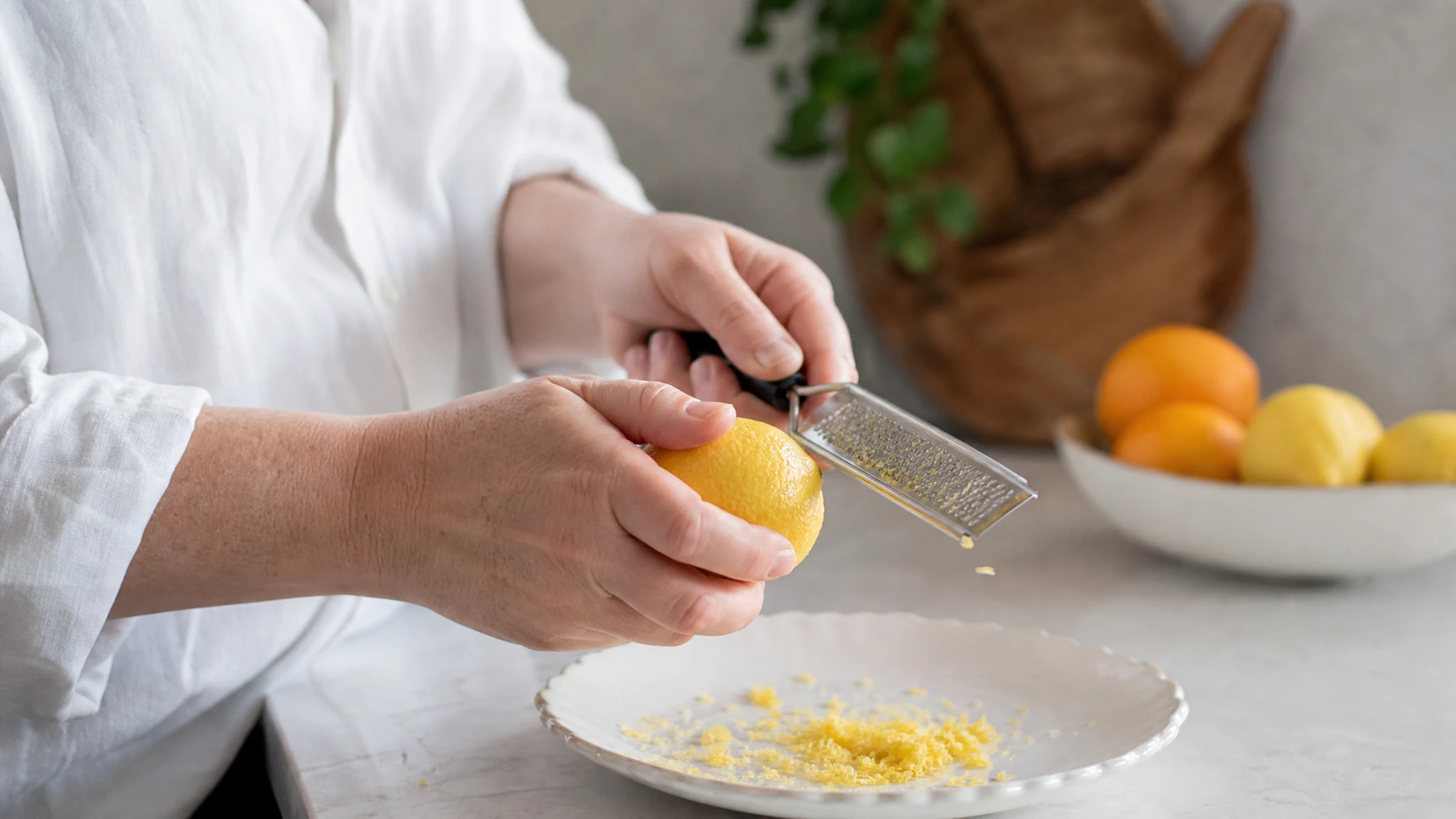
The lemon in a lemon cake comes from zest, the fine yellow part of the peel, and from the juice. Grate a lemon over a bowl and you will see a little cloud of oil rise from the peel and smell exactly like the bottle, only gentler. That is the right way to bring lemon into food: a whole fruit, a zester and a bit of patience. It tastes better than a drop of concentrated oil would, and it is what generations of bakers have used.
Keep the oil bottle away from the spice shelf too. Store it capped, in a cool, dark cupboard that children cannot reach, and well away from anything edible, so it is never mistaken for a flavouring.
What we suggest instead
Use the oil the way we describe it: diluted to 0.5% to 2% in a carrier for skin after a patch test, in a diffuser or a room scent, away from eyes, children and pets, and in a capped bottle in a cool, dark place. Our skin guide and FAQ cover the details. If you want lemon flavour in food or drink, reach for a lemon, or for a product labelled for food from a grocery or baking supplier. The bright zest in a lemon cake and the bright scent from our bottle are close cousins, but they live in different parts of the kitchen.
Organic Lemon Essential Oil
Organic Lemon Essential Oil from our own shop, in sizes from 0.5 oz to bulk.
From $15.99
Shop Now →Sources & Further Reading
- Cornell Law School Legal Information Institute. 21 CFR 182.20: Essential oils, oleoresins (solvent-free), and natural extractives (including distillates). law.cornell.edu/cfr/text/21/182.20
- FDA. Generally Recognized as Safe (GRAS). fda.gov/food/food-ingredients-packaging/generally-recognized-safe-gras
- FDA. Aromatherapy. fda.gov/cosmetics/cosmetic-products/aromatherapy
- Lee KAYR, Harnett JE, Cairns R, 2020. Essential oil exposures in Australia: analysis of cases reported to the NSW Poisons Information Centre. Med J Aust 212(3):132-133. mja.com.au
- Poison Control. Essential oils: Poisonous when misused. poison.org/articles/essential-oils
- NHS. Poisoning. nhs.uk/conditions/poisoning