Lemon Essential Oil FAQ: Skin, Scent, Storage and More
Open a bottle of lemon oil and the scent does the talking: bright, sparkling, a ripe peel scored with your thumbnail. The questions come right after. Is it the same as lemongrass? How much goes on skin? Will it keep? Here are the ones we expect to hear most, answered the way we would across the counter.
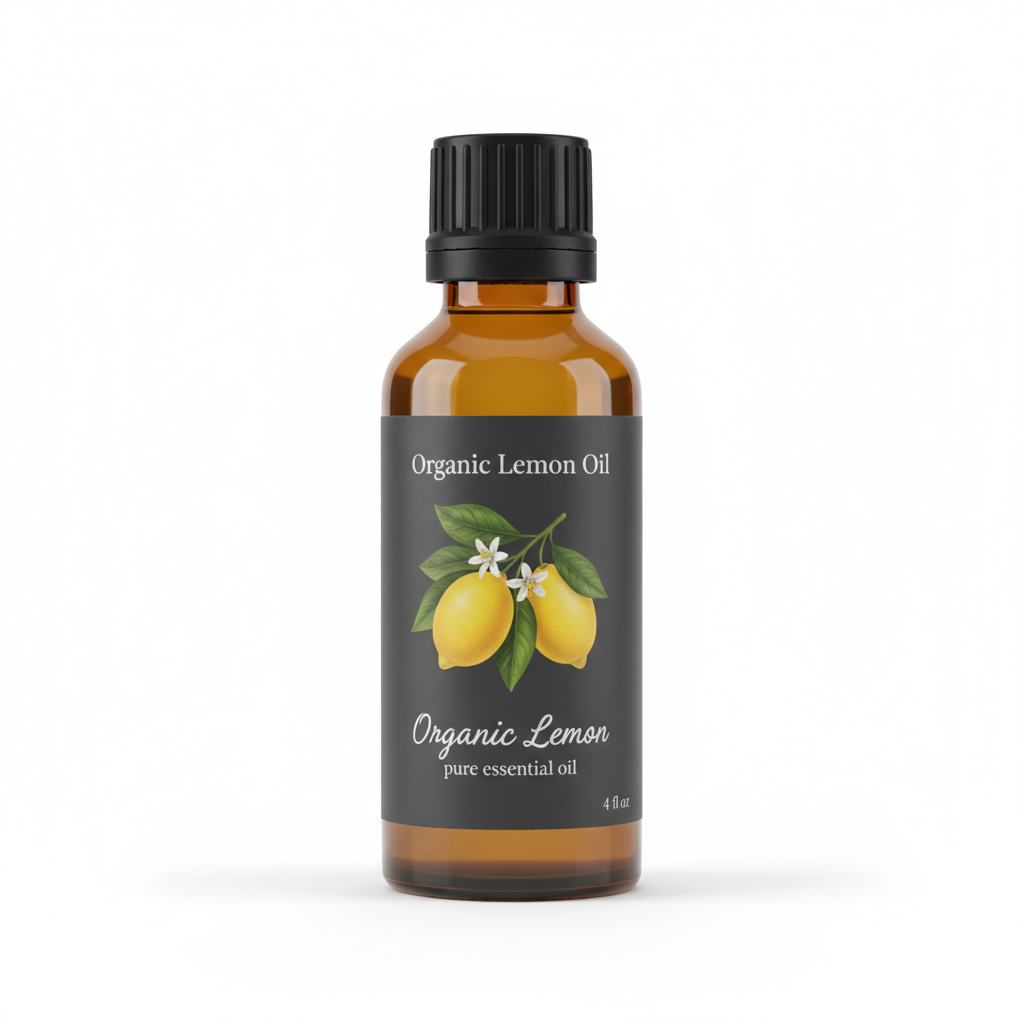
Organic Lemon Essential Oil
Our own Organic Lemon Essential Oil, in sizes from 0.5 oz to bulk.
From $15.99
Shop Now →About the oil
What is lemon essential oil, and how is it made?
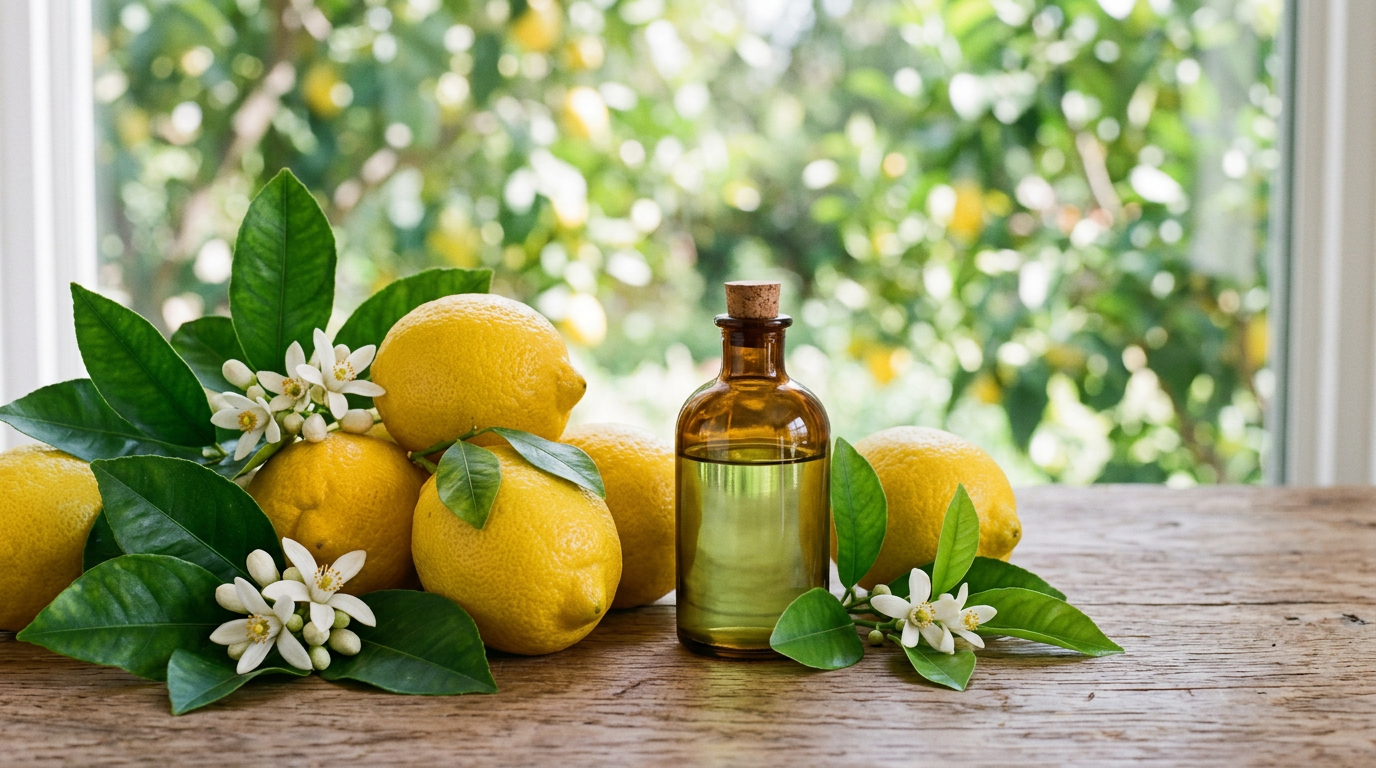
It is the aromatic oil from the peel of the lemon, Citrus limon. We sell a cold-pressed lemon oil, which means the oil is released from the peel mechanically, with no steam. It is mostly limonene: in ten batches of expressed lemon oil analysed for the European Food Safety Authority, d-limonene averaged about 65% (Safety and efficacy of feed additives consisting of expressed lemon oil and its fractions from Citrus limon (L.) Osbeck and of lime oil from Citrus aurantiifolia (Christm.) Swingle for use in all animal species (FEFANA asbl)). Our post on how lemon oil is made walks through the steps.
Is it the same as lemongrass or lemon eucalyptus?
No. Lemon oil comes from the fruit peel, lemongrass from a grass and lemon eucalyptus from tree leaves. They smell lemony for different chemical reasons and are not interchangeable in a recipe. The Tisserand Institute lists a dermal maximum of 0.7% for lemongrass, well below lemon's 2%, which is one practical reason to keep them straight (Q&A safety maximums for dermal application - Tisserand Institute).
What does it smell like, and what blends with it?
Zesty, sparkling and sunny, and it sits as a top note, so it is the first thing you notice and the first to fade. We find it pairs naturally with peppermint, basil, lavender, rosemary, bergamot and sweet orange. We sell only the lemon oil, so you will find those at a craft or supply shop.
Is it organic?
We describe our oil as organically grown. If you need organic paperwork for your own records or labels, ask us in writing through the contact page before you order and we will tell you what we can provide.
What will I notice when I open the bottle?
The first sniff is the brightest one: a burst of fresh peel, the way a lemon smells just after you score it. Give it a few seconds and the scent settles into something softer and a little sweeter. Because lemon is a top note, that bright opening is the best part, and it is the reason we like to smell the oil from a tissue or the cap rather than straight from the neck of the bottle. The oil itself is thin and pale yellow, nothing like the thick, golden oils you may be used to.
On skin
How much can I use?
We recommend 0.5% to 2% in a carrier oil, which works out to roughly 3 to 12 drops per ounce of carrier, with a patch test first. Treat 2% as the ceiling. The Tisserand Institute calls the 2% figure for lemon the safe maximum, not a recommended amount, and its guideline ranges start lower: 0.2% to 1% for sensitive skin and 0.5% to 1.2% for the face (Dilution for essential oils - Tisserand Institute). Many people will be happiest toward the low end. Our skin guide has more detail.
Why does everyone mention sunlight?
Cold-pressed lemon oil carries furocoumarins, which can make skin react to UV light. That is why the limit exists, and it is why we advise keeping sun off freshly treated skin. Tisserand suggests avoiding UV for at least 12 hours after a phototoxic amount (Phototoxicity: essential oils, sun and safety - Tisserand Institute). We do not offer a furocoumarin-free lemon, which is a separate material that smells different.
Can I use it neat?
We always dilute it. A neat oil is 100%, which is fifty times the top of our range, and no guideline we know of assumes undiluted use on skin.
What about pregnancy?
That is a conversation for your midwife or obstetrician, who knows your history. We gathered what the sources say in our pregnancy post.
Around the house
Can I swallow it or put it in water?
No. Ours is an external cosmetic oil and we say not to take it internally. If anyone swallows essential oil, call poison control or a physician. For pets, see our pet post.
Does it clean?
It is an oil, so it loosens sticky and greasy residue and adds a fresh scent, and it does not sanitize anything. The cleaning post sorts the jobs that suit it.
How long does it keep?
About 1 to 2 years unopened, capped, cool and away from light, and the date on your bottle governs. Citrus oils age faster than most because limonene reacts with air, so the color can deepen a little as the bottle ages. Our storage post has the habits that help.
What can I see before I buy?
The Certificate of Analysis on our site gives the density, refractive index and optical rotation for one batch. If you want a GC-MS report or anything else, ask us in writing through the contact page before you order. Any lemon oil seller should be happy to answer that question.
Small habits we like
- Write the date on the bottle. When you open it, jot the month on a label. It takes ten seconds and saves you guessing later.
- Cap it straight away. Lemon is quick to escape, and a capped bottle keeps its sparkle far longer than one left open while you work.
- Weigh when you can. A small kitchen scale is kinder to your recipes than counting drops, since every dropper is a little different.
- Start small. One or two drops in a diffuser is often plenty, and you can always add another.
None of these are rules. They are the sort of tips we would pass across the counter to a friend who has just picked up their first bottle of lemon oil.
If your question is not here, send it through the contact page. We are always glad to add the next one.
Organic Lemon Essential Oil
Organic Lemon Essential Oil from our own shop, in sizes from 0.5 oz to bulk.
From $15.99
Shop Now →Sources & Further Reading
- Safety and efficacy of feed additives consisting of expressed lemon oil and its fractions from Citrus limon (L.) Osbeck and of lime oil from Citrus aurantiifolia (Christm.) Swingle for use in all animal species (FEFANA asbl)
- Dilution for essential oils - Tisserand Institute
- Phototoxicity: essential oils, sun and safety - Tisserand Institute
- Q&A safety maximums for dermal application - Tisserand Institute