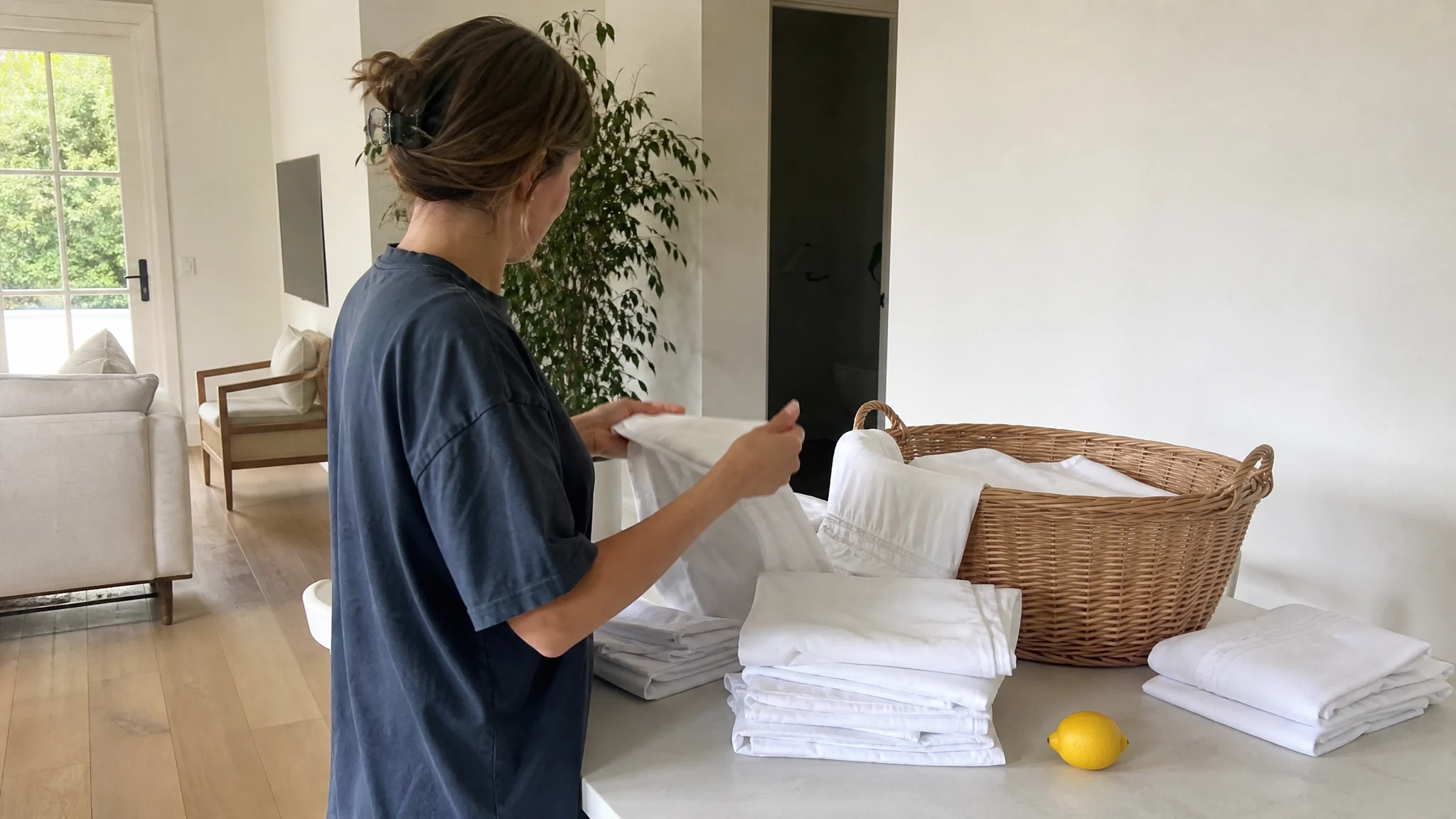
Lemon Oil for Laundry: Scent the Cupboard, Not the Wash
Open a linen cupboard that smells faintly of lemon and you understand why people want the scent in their laundry. The good news is that it is easy to get there. The best place for lemon oil is the shelf where clean clothes live, and the washer and dryer are the places we would leave it out.
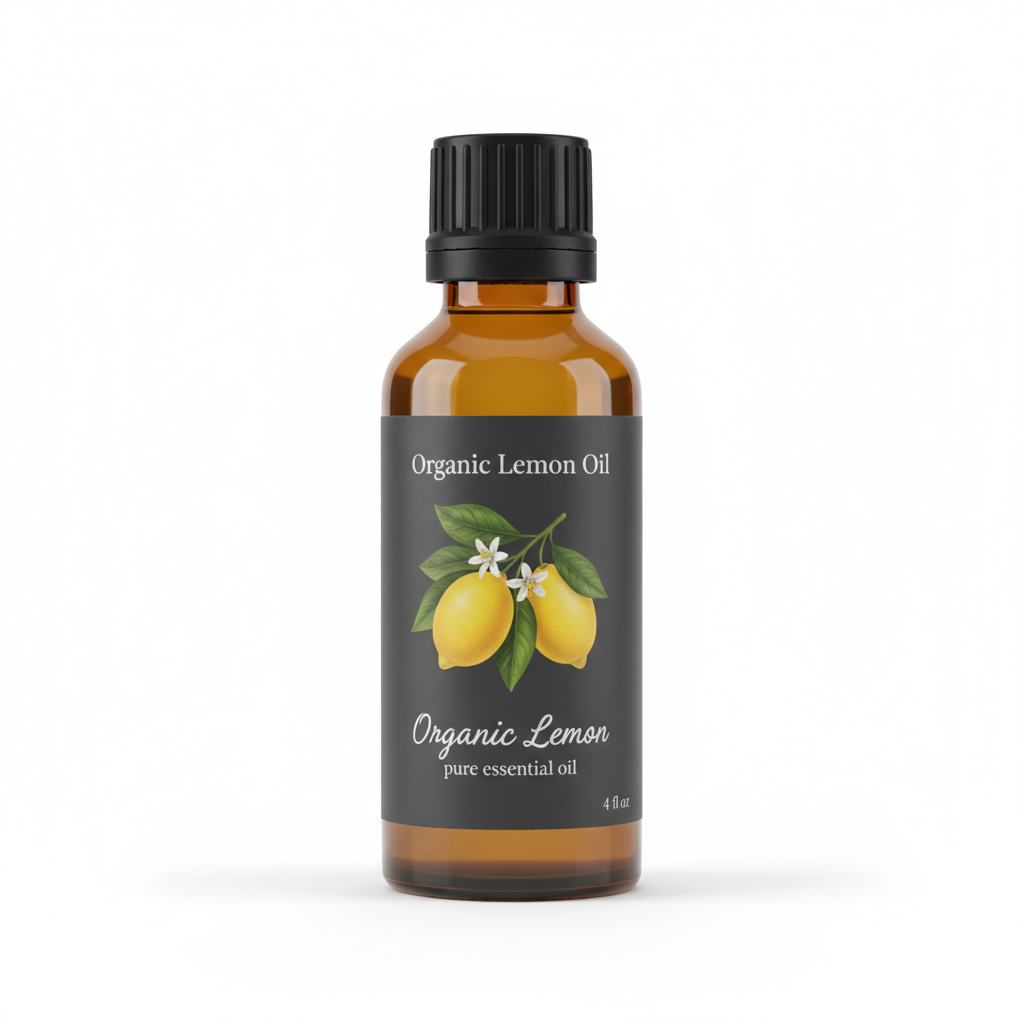
Organic Lemon Essential Oil
Our own Organic Lemon Essential Oil, in sizes from 0.5 oz to bulk.
From $15.99
Shop Now →Why the wash is the wrong address
Oil and water do not mix, and lemon oil is a good example. PubChem lists limonene, the main component of lemon oil, at about 13.8 mg per litre of water at 25 C, while it mixes freely with fixed oils (PubChem, (+)-Limonene, CID 440917). So drops added to a wash will not dissolve. They float, cling to the drum or seals, or settle on fabric as small oily spots. Getting oil to disperse takes a solubilizer, which is a craft-shop ingredient, and our room spray post goes through why.
There is a second reason, and it is simpler. Scent is not cleaning. The CDC describes cleaning as the step that "removes most germs, dirt, and impurities from surfaces" (CDC, When and How to Clean and Disinfect Your Home). Detergent and a proper wash do that work. Lemon oil adds a lovely aroma on top, and a towel is only fresh if it was washed well first.
Why we skip the dryer too
A wool ball or cloth with oil on it tumbling in a hot dryer is a popular tip, and it is one we do not pass on. The same PubChem entry gives limonene a closed-cup flash point of 48 C, which is low enough to take seriously around a heated appliance. Pairing an oily cloth with a heated drum is a combination we would rather avoid, so we scent clothes after they come out, and your dryer manual comes first.
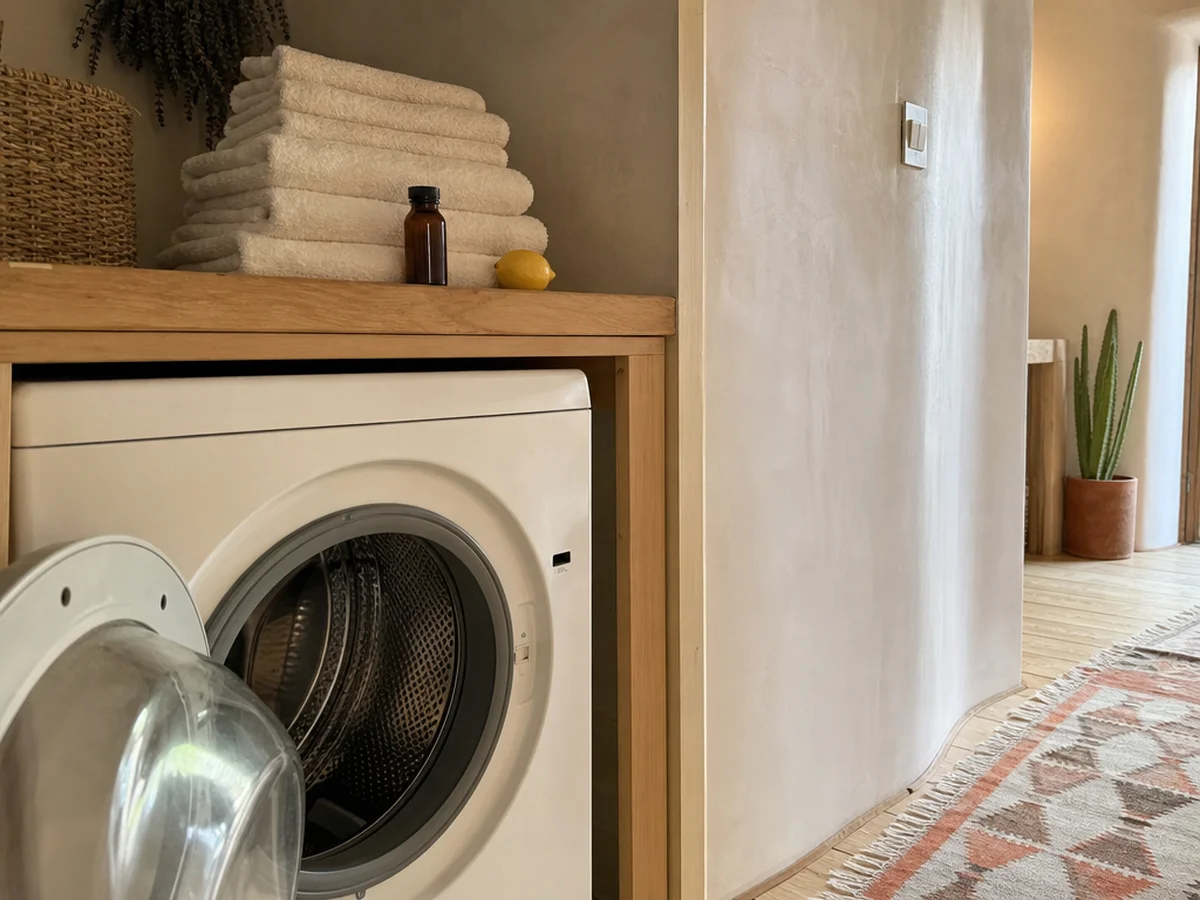
The cupboard is where lemon shines
IFRA, the fragrance industry's standards body, sorts home products by how much they touch skin. Fragrancing sachets, dryer sheets and drying-machine deodorizers sit in Category 12, products not meant for direct skin contact, and the IFRA lemon oil standard lists no restriction there. Detergents, softeners and fabric sprays sit in Category 10A, also unrestricted for lemon (IFRA, Guidance for the use of IFRA Standards, June 2023; IFRA, The complete IFRA Standards, 51st Amendment). Those are classifications for manufactured products, so we read them as a sign that a sachet is a natural fit, not as a recipe.
Here is a simple sachet, worked out from the numbers:
- Put about 5 drops of lemon oil on a cotton ball. At roughly 20 drops per millilitre and the relative density of 0.849 on our certificate of analysis, that is about 0.2 g of oil.
- Tuck the cotton ball into a small cloth or paper bag that closes, so the oil cannot wick onto linen.
- Set the bag on a shelf, not between folded clothes, and replace it when the scent fades. Lemon is a top note, the quickest part of a scent to lift, so expect it to need a refresh first.
- Keep the bag away from heat, and out of reach of children and pets.
The reason for keeping oil off the fabric itself is skin. A shirt sits against you for hours, and lemon oil has two documented skin behaviours: it is phototoxic in sunlight, and as it oxidizes its main component, limonene, becomes a recognized allergen. The Tisserand Institute notes that skin should be kept from UV for at least 12 hours after a phototoxic amount of an expressed citrus oil, so we simply keep the oil off anything worn.
Little touches for the linen cupboard
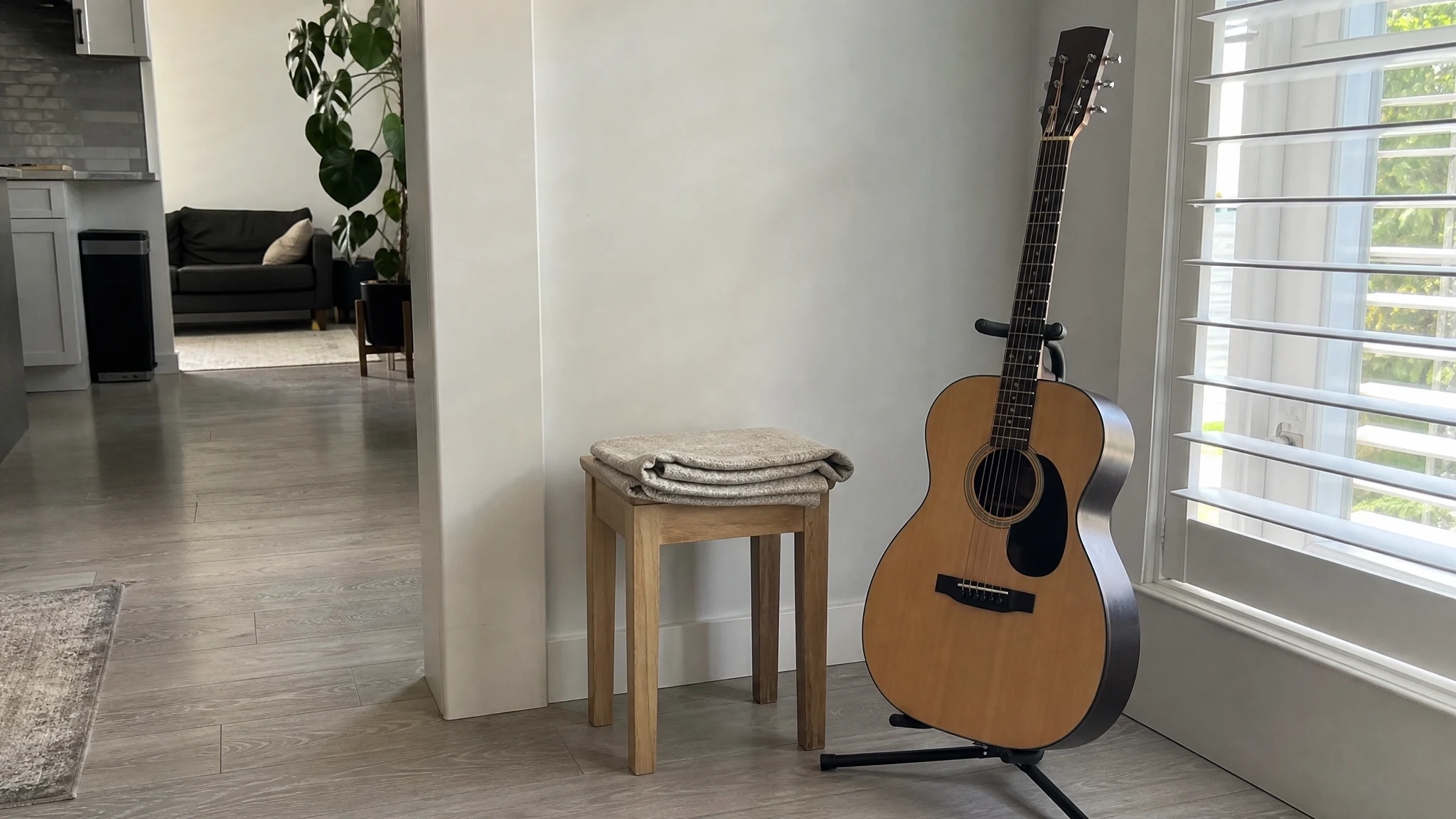
A sachet is a small thing, but it is easy to make it feel nice. Choose a tidy cloth bag or a small paper envelope and tie it with string, and it looks as good as it smells on the shelf. Slip one in a drawer of tea towels, behind the towels in the bathroom cupboard, or in a basket of spare pillowcases, as long as the cotton ball stays inside its bag.
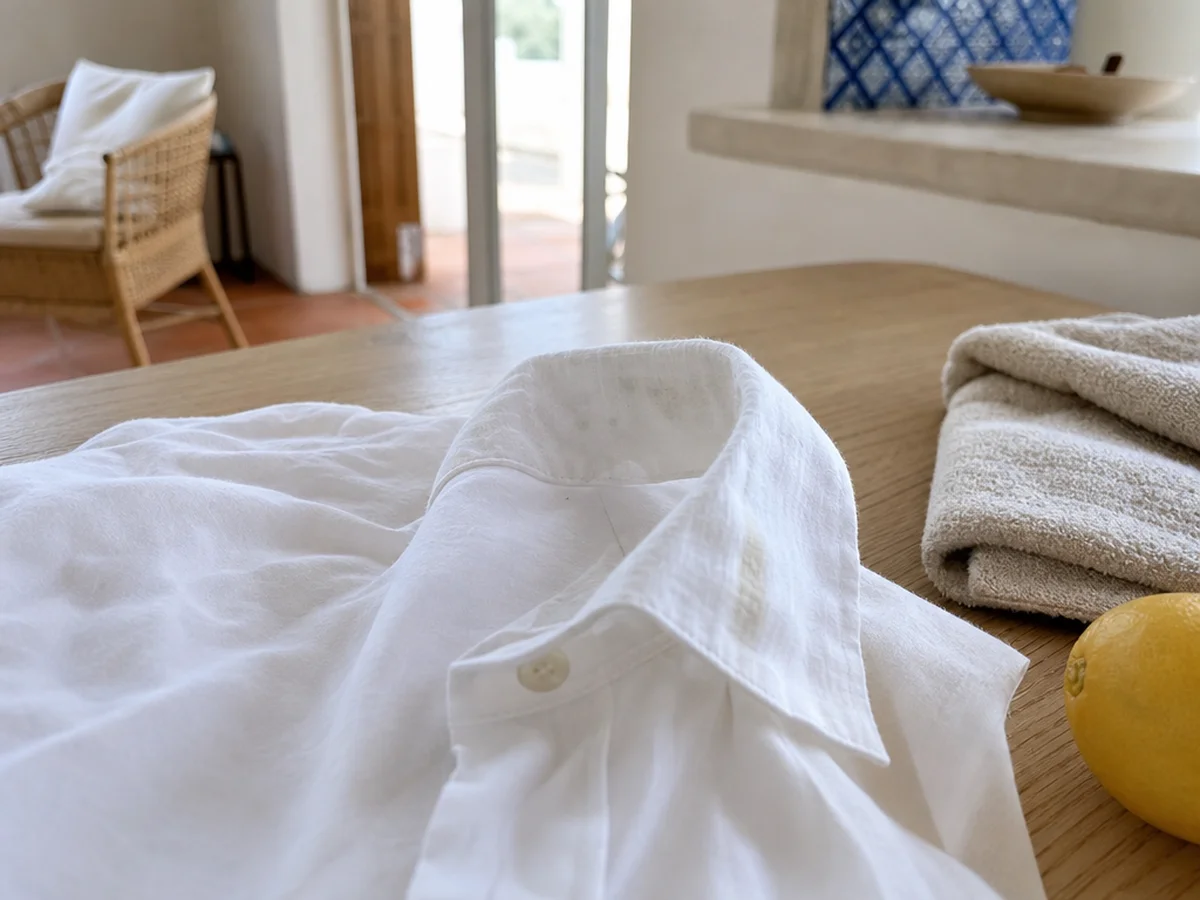
When you open the cupboard door, you will notice the lemon first, then it settles into the background, which is exactly how a top note behaves. If you want a little depth, lavender and bergamot are both on our blending list and go well with lemon, though you will find them at a craft or supply shop. Refresh the sachet when the scent fades, and smell the bag, not the linen, to decide when.
Fresh oil matters
That allergen point is worth a closer look, because it is why a fresh bottle is a better scenting tool than an old one. A 1992 guinea pig study found that d-limonene exposed to air became a sensitizer while unexposed limonene did not (Karlberg et al., Air oxidation of d-limonene (the citrus solvent) creates potent allergens). A later patch-test series of 5,773 people being tested for dermatitis found contact allergy to oxidized limonene in 5.1% (Sukakul et al., Contact allergy to oxidized linalool and oxidized limonene). Both used deliberately oxidized material, so they do not give a rate for a fresh bottle. They do explain our habit of keeping the cap on, the bottle cool and the oil used up while it is bright. Our storage post has the details. If anyone in your home reacts to scented laundry, ask a dermatologist before swapping in an essential oil.
Put together, the plan is easy: wash well, dry as the manual says, and let a small lemon sachet do the scenting in the cupboard. Our home use guide covers the other jobs lemon oil handles well around the house. If you refresh a lot of cupboards, you can pick up our lemon oil in the shop, find larger sizes on our bulk page, and read our guide to buying organic lemon essential oil in bulk before ordering.
Organic Lemon Essential Oil
Organic Lemon Essential Oil from our own shop, in sizes from 0.5 oz to bulk.
From $15.99
Shop Now →Sources & Further Reading
- PubChem. (+)-Limonene, CID 440917. pubchem.ncbi.nlm.nih.gov/compound/440917
- CDC. When and How to Clean and Disinfect Your Home. cdc.gov, clean and disinfect your home
- IFRA. Guidance for the use of IFRA Standards (30 June 2023). Guidance PDF
- IFRA. The complete IFRA Standards, up to and including the 51st Amendment (January 2024). Standards PDF
- Tisserand Institute. Phototoxicity: essential oils, sun and safety. tisserandinstitute.org/phototoxicity-essential-oils-sun-and-safety
- Karlberg AT, Magnusson K, Nilsson U, 1992. Air oxidation of d-limonene (the citrus solvent) creates potent allergens. Contact Dermatitis. europepmc.org/MED/1395597
- Sukakul T et al, 2022. Contact allergy to oxidized linalool and oxidized limonene: Patch testing in consecutive patients with dermatitis. Contact Dermatitis. europepmc.org/MED/34561893