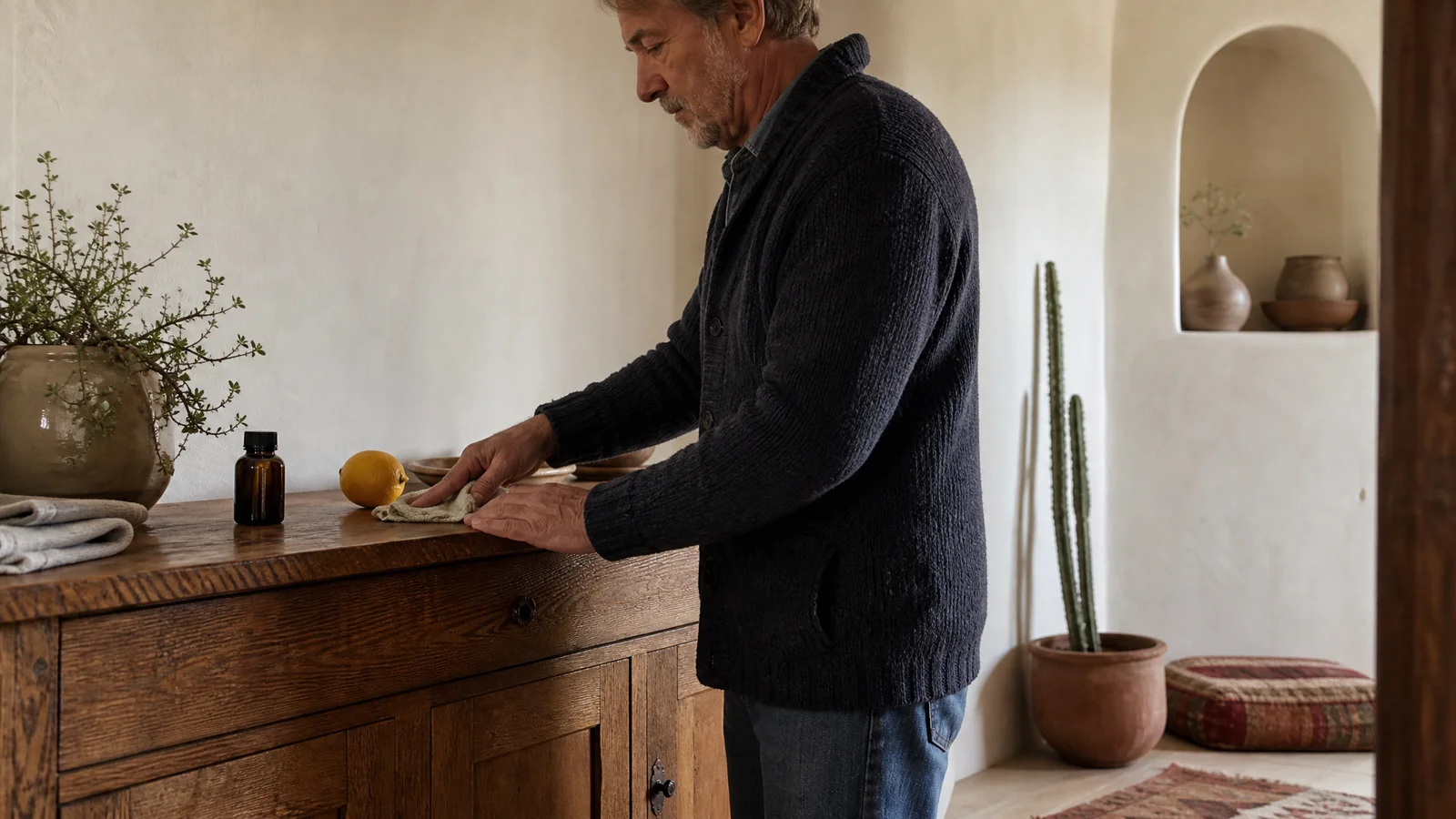
Does Wood Furniture Need Lemon Oil? What Conservators Say
A table that has lost its glow often gets a splash of "lemon oil" and a rub with a cloth. It looks better for an afternoon, which is why the habit lasts. But the best guidance we found, from conservators who look after museum furniture, says wood does not actually need feeding, and that changes what a bottle of lemon essential oil is for in a home with wood in it.

Organic Lemon Essential Oil
Our own Organic Lemon Essential Oil, in sizes from 0.5 oz to bulk.
From $15.99
Shop Now →What conservators say
The Canadian Conservation Institute's note on furniture finishes states that wood does not need to be "fed" with polishes and restoration mixtures to replenish natural oils or moisture. It warns that commercial polishes can create a sticky build-up that attracts dust and dirt, and it recommends damp dusting followed by buffing, complemented with careful, infrequent waxing, using a paste wax free from colorants and perfumes (Care of Furniture Finishes - Canadian Conservation Institute (CCI) Notes 7/2). The note is written for museum pieces, so it is more careful than most homes need, but the logic travels well: a tired-looking surface is usually carrying dust, hand oils and old polish, and more oil on top builds the film rather than clearing it.
Know your finish first
Most furniture wood is coated rather than bare, with paint, shellac, lacquer, varnish, wax or a cured oil. Each behaves differently, and the same note advises testing on a small, unobtrusive area before cleaning. That habit is worth borrowing for anything you add to a surface. If a piece is valuable or inherited and the finish is a mystery, a furniture conservator is the right person to ask.
Routine care that works
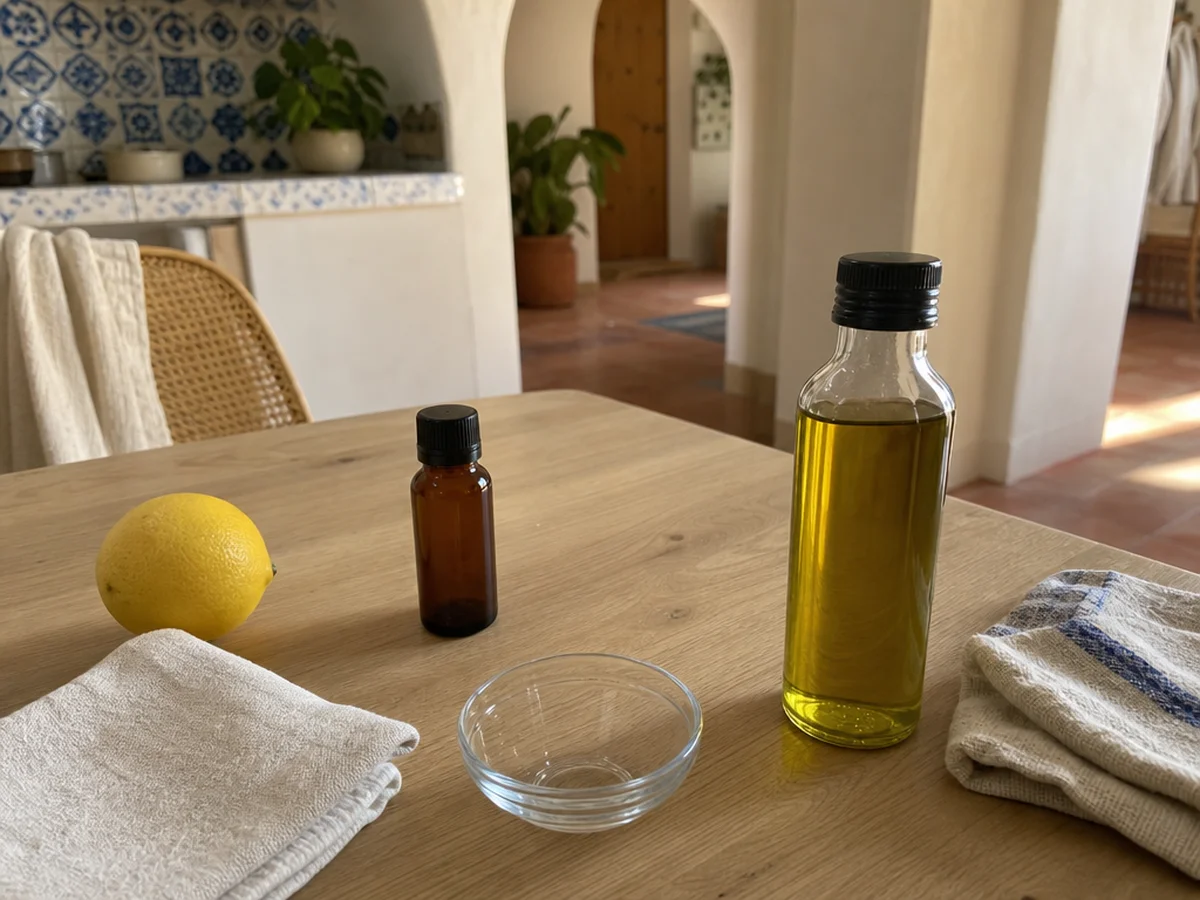
For a sound finish, the sequence is gentle: a soft dry cloth for dust, a barely damp cloth when it needs more, a dry cloth straight after, and an occasional coat of plain paste wax. The conservators suggest leaving painted surfaces to a professional, and for old wax or greasy dirt they name mineral spirits, a solvent with strong fumes that needs ventilation. Wax, cloths and solvents are hardware store items, so we point you there rather than to our shelf. What we can offer is the scent, and that is a pleasure of its own: wood, warm sun and a hint of lemon make a very good-smelling room.
Where lemon oil fits
Our lemon oil is a cold-pressed peel oil, sold neat, and mostly limonene. PubChem describes D-limonene as miscible with fixed oils and nearly insoluble in water, so it blends into oily or waxy films and much of it drifts off as scent. That is why it is lovely as a fragrance and a poor candidate for polishing. We have no finish-testing data for neat lemon oil, so we do not recommend rubbing it into furniture, and we would not stir it into the paste wax that conservators suggest keeping plain.
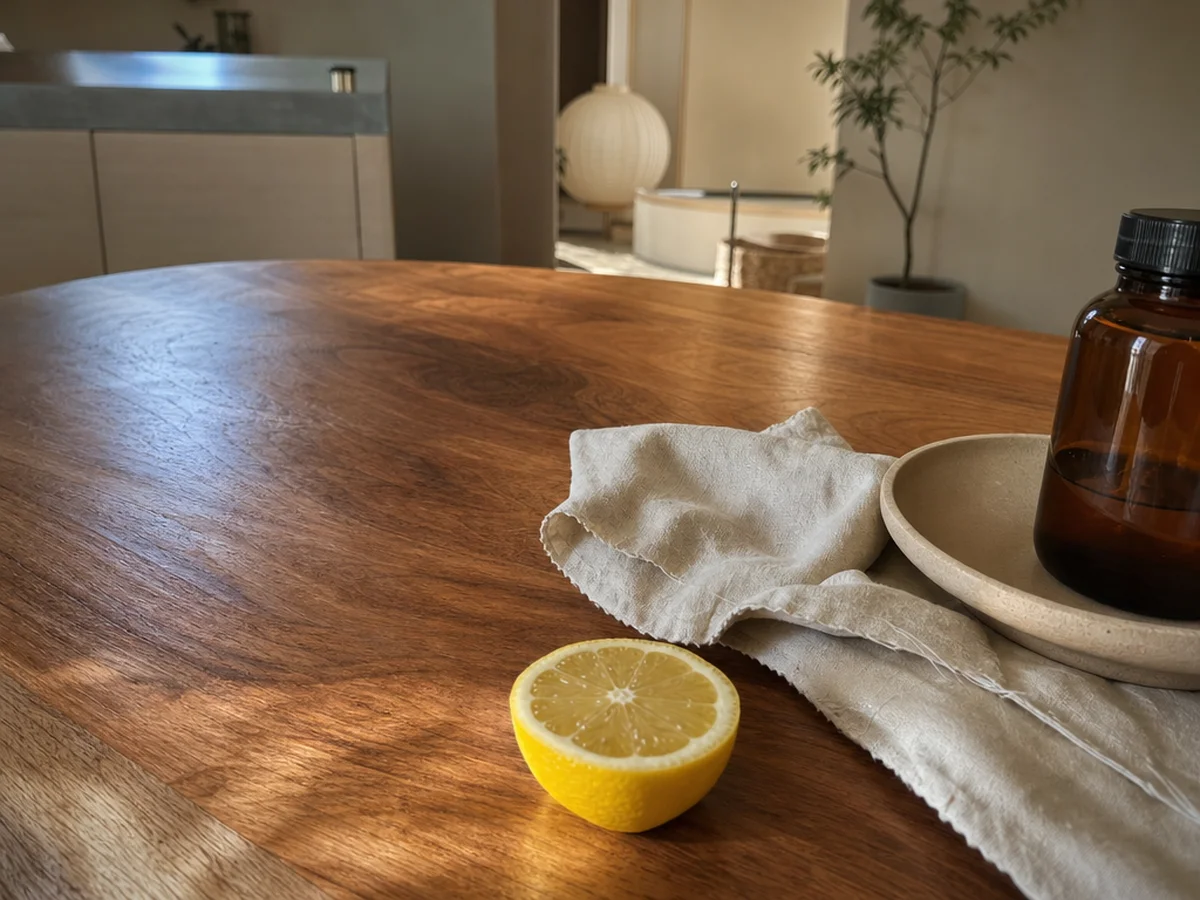
If you are curious and want to try a trace on your own piece, test the way the conservators do. These steps are our suggestion:
- Choose a hidden spot, such as the underside of a table.
- Put 1 or 2 drops on a cotton swab and roll it over a coin-sized patch.
- Wait several minutes, then look in raking light for clouding, softness or stickiness. Check again the next day.
- Skip painted, veneered or inherited pieces.
Hands matter too. A cloth wet with neat oil is a skin exposure, so wear gloves. The Tisserand Institute calls 2% the safe maximum for lemon oil on skin rather than a recommended amount (Dilution for essential oils - Tisserand Institute), and our own guidance is 0.5% to 2% in a carrier with a patch test.
The smell of a cared-for room
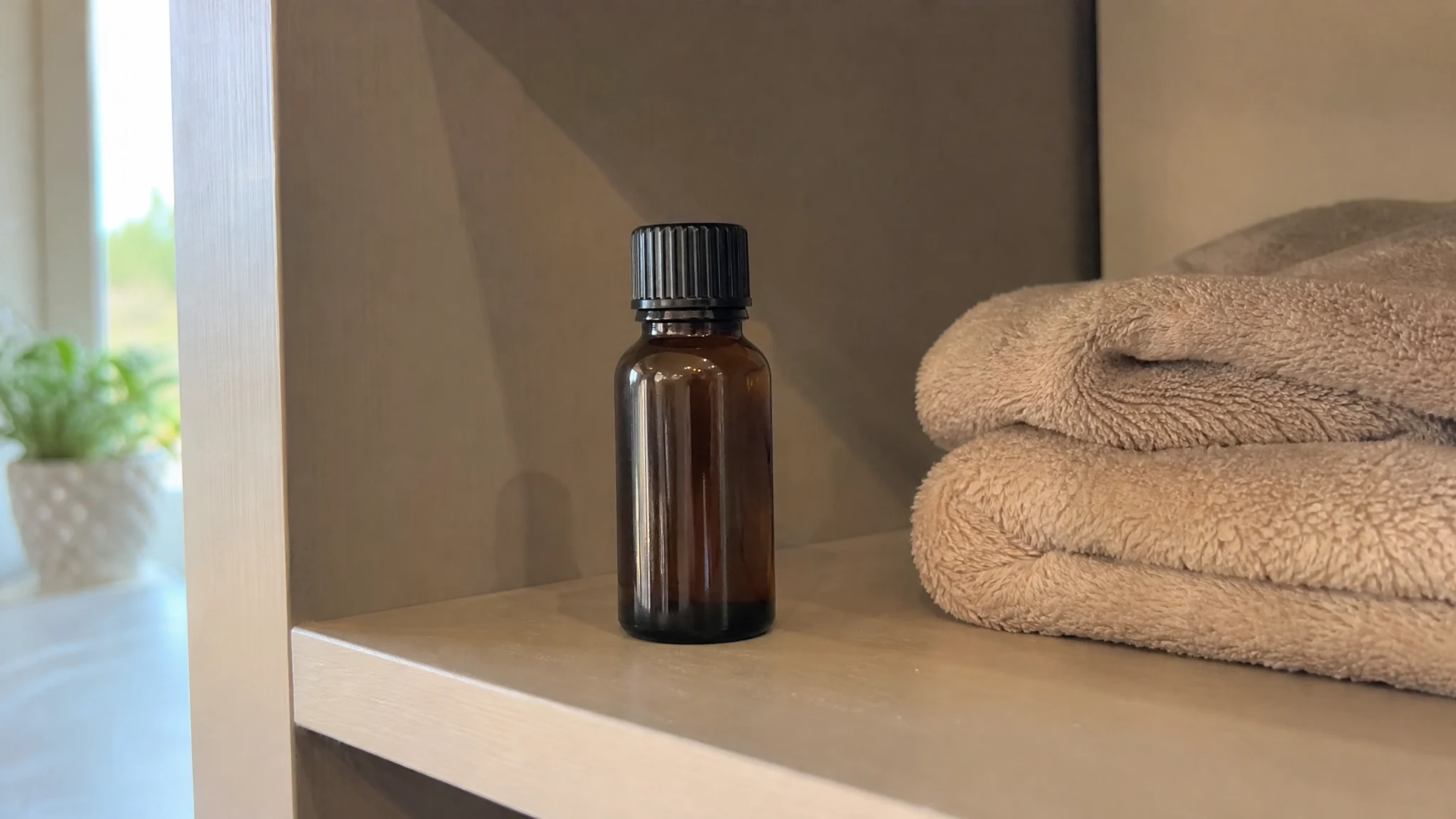
The nicest thing about a well-kept wooden room is how it smells: warm timber, a trace of wax and maybe a window open. Lemon sits beautifully in that picture. A couple of drops in a diffuser, or on a cotton ball in a small saucer on a high shelf, adds a clean, sunny note without touching the furniture. Place it where the oil cannot be knocked over or reach the surface, and keep it out of the way of children and pets.
Tidy habits help too. Fold your dusting cloths after use, wash them regularly and keep your cleaning cloths separate from any that have held oil.
What you will notice with a plain cloth
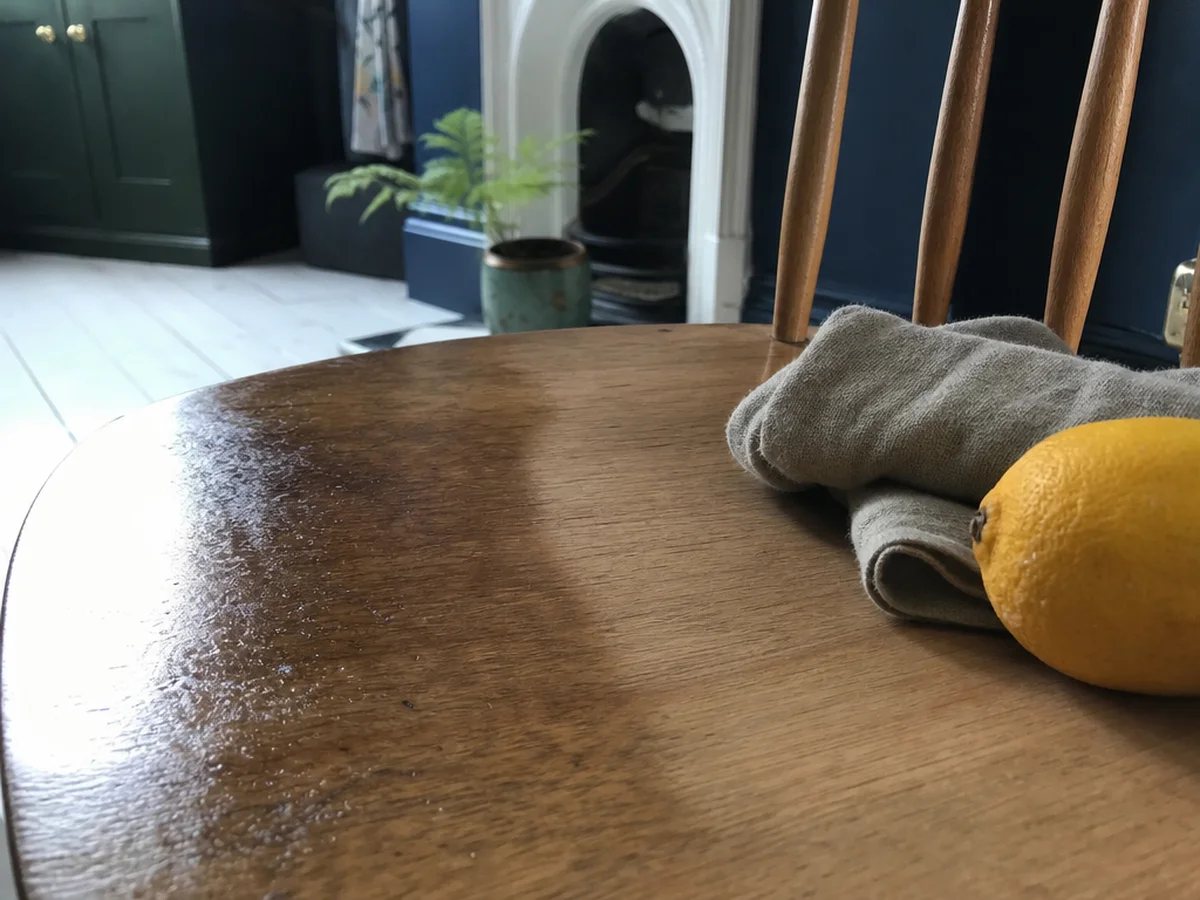
If you try the conservators' routine, give it a moment before judging. A soft, barely damp cloth lifts the dust and the film of hand oils, and the wood often looks richer simply because it is clean. Buff with a dry cloth and you will see the grain come up and the light move across the surface. It is a modest, satisfying job that takes a few minutes, and it leaves the surface ready for wax when it needs it.
A better plan for a wood-filled room
Dust with a soft dry cloth, damp-dust when needed, buff, and wax occasionally with a plain paste wax from a hardware store. Then let lemon oil do what it does best, which is to make the room smell like sunshine. Our room spray post covers scenting the air, our cleaning post sorts the jobs that suit it, and a related instrument question is in the fretboard post.
Beautiful wood mostly asks for clean surfaces and a gentle hand, and a lemon-scented room is a nice reward for both.
Organic Lemon Essential Oil
Organic Lemon Essential Oil from our own shop, in sizes from 0.5 oz to bulk.
From $15.99
Shop Now →