Judging Lemon Oil Quality: Smell, Price or Paper Test?
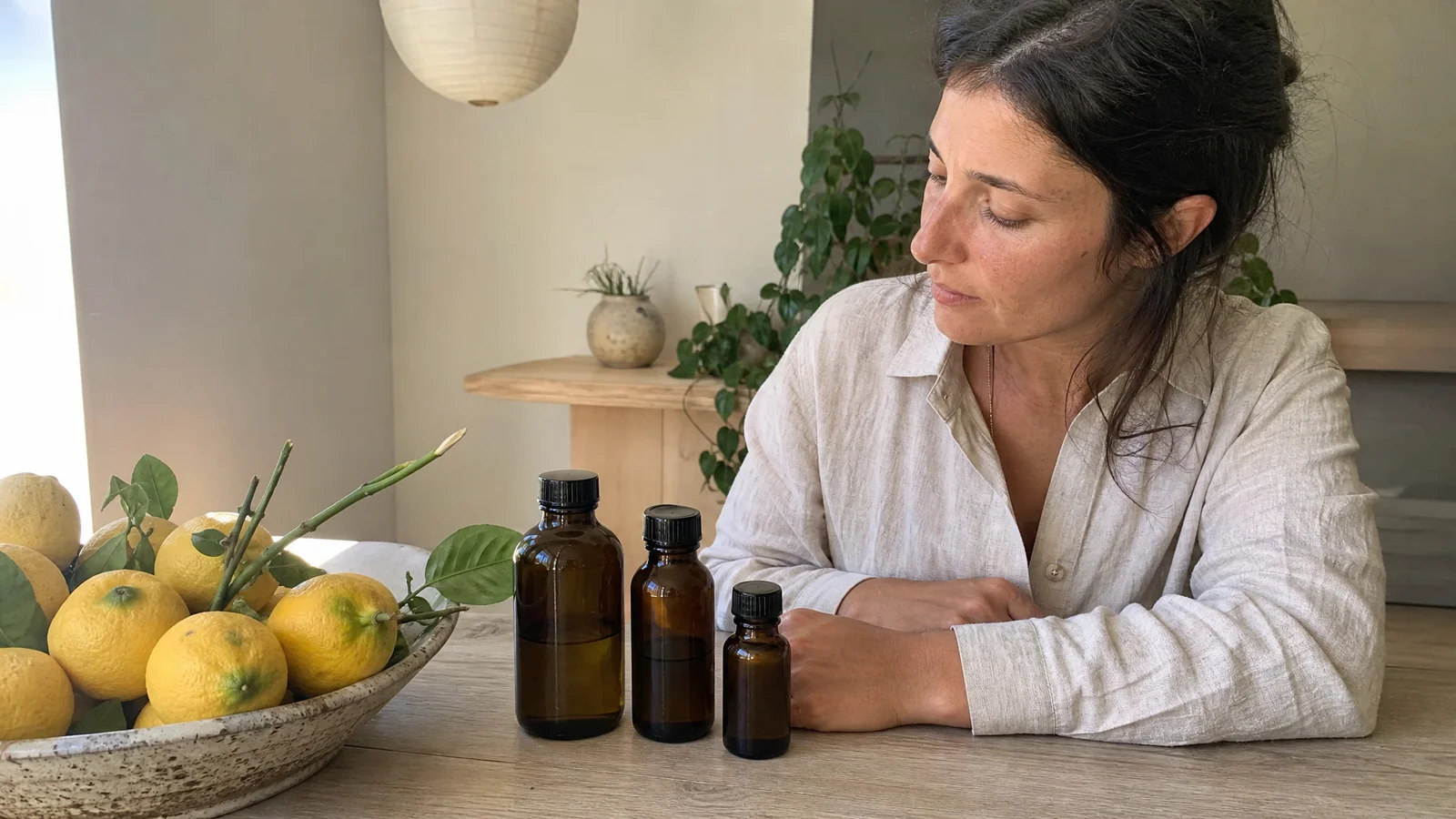
Pour two good lemon oils side by side and they will not smell quite the same. That is not a flaw in either one. It is how a natural citrus oil behaves, and it is the reason smell, price and the famous paper spot test cannot settle whether a bottle is what it says it is.
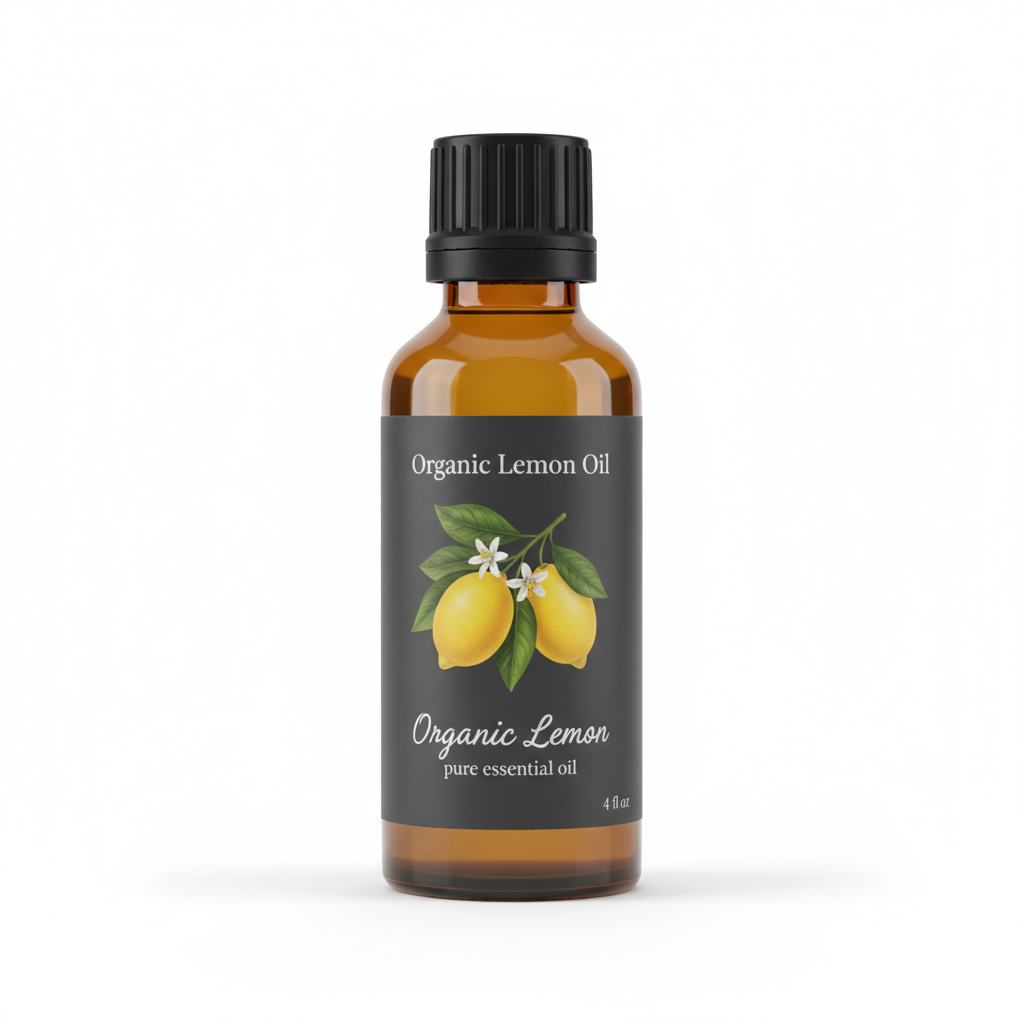
Organic Lemon Essential Oil
Our own Organic Lemon Essential Oil, in sizes from 0.5 oz to bulk.
From $15.99
Shop Now →Why your nose is not enough
We love the way a good lemon oil smells, so this is not a case against using your nose. It is a case for using it honestly. Smell is wonderful for deciding whether you enjoy an oil, and for noticing when something has gone flat. It is much less useful for deciding whether two bottles are the same material, because a nose gets tired after a few sniffs and is easily swayed by whatever you smelled just before.
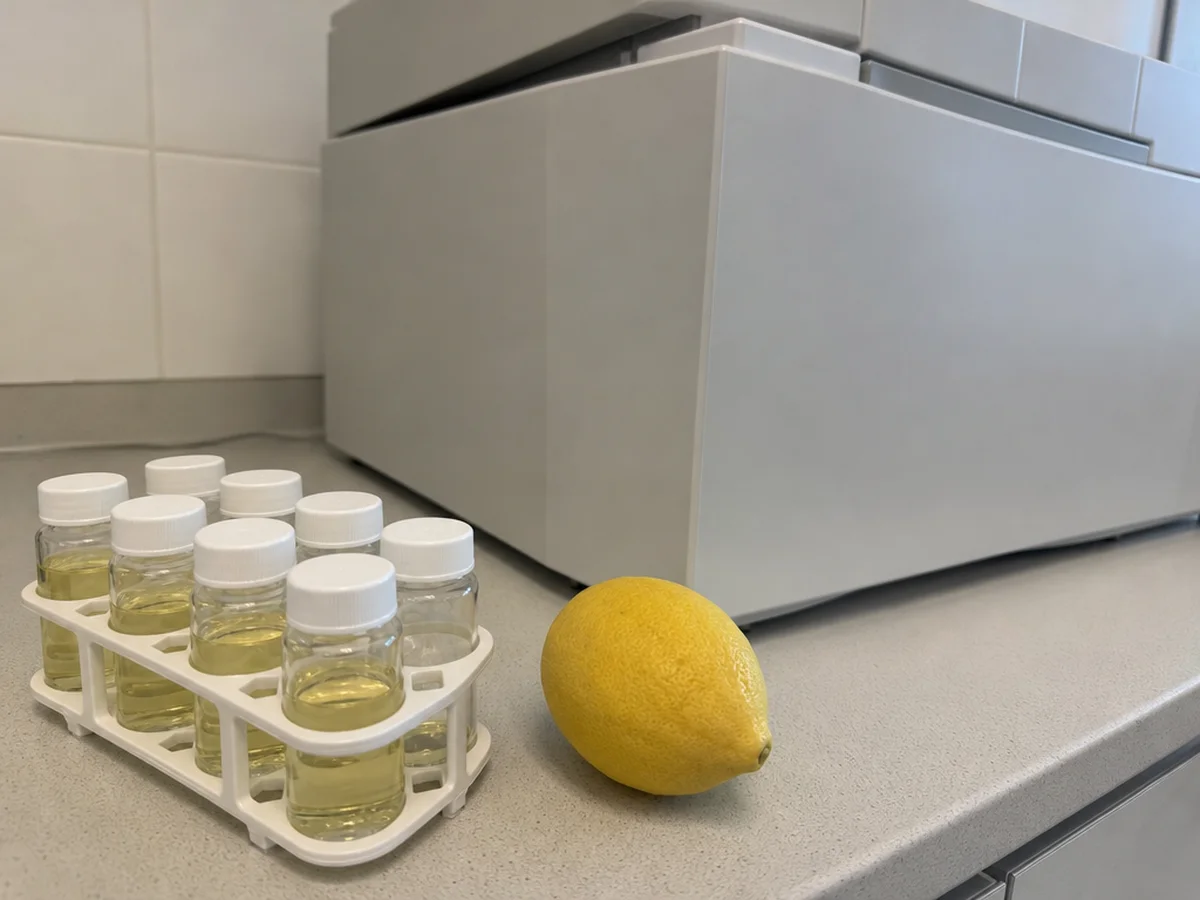
Lemon peel oil changes with the fruit. A study of four lemon cultivars harvested on four dates between late October and early February found that the main compounds, d-limonene, beta-pinene and gamma-terpinene, shifted as the fruit ripened. A separate study of 92 Sicilian lemon oils pressed over a single season by two industrial methods was designed around the same point: season and equipment both move the numbers. So a bottle that smells a touch greener or sharper than the last one is not suspicious, and a bottle that smells exactly as expected has not proved anything either.
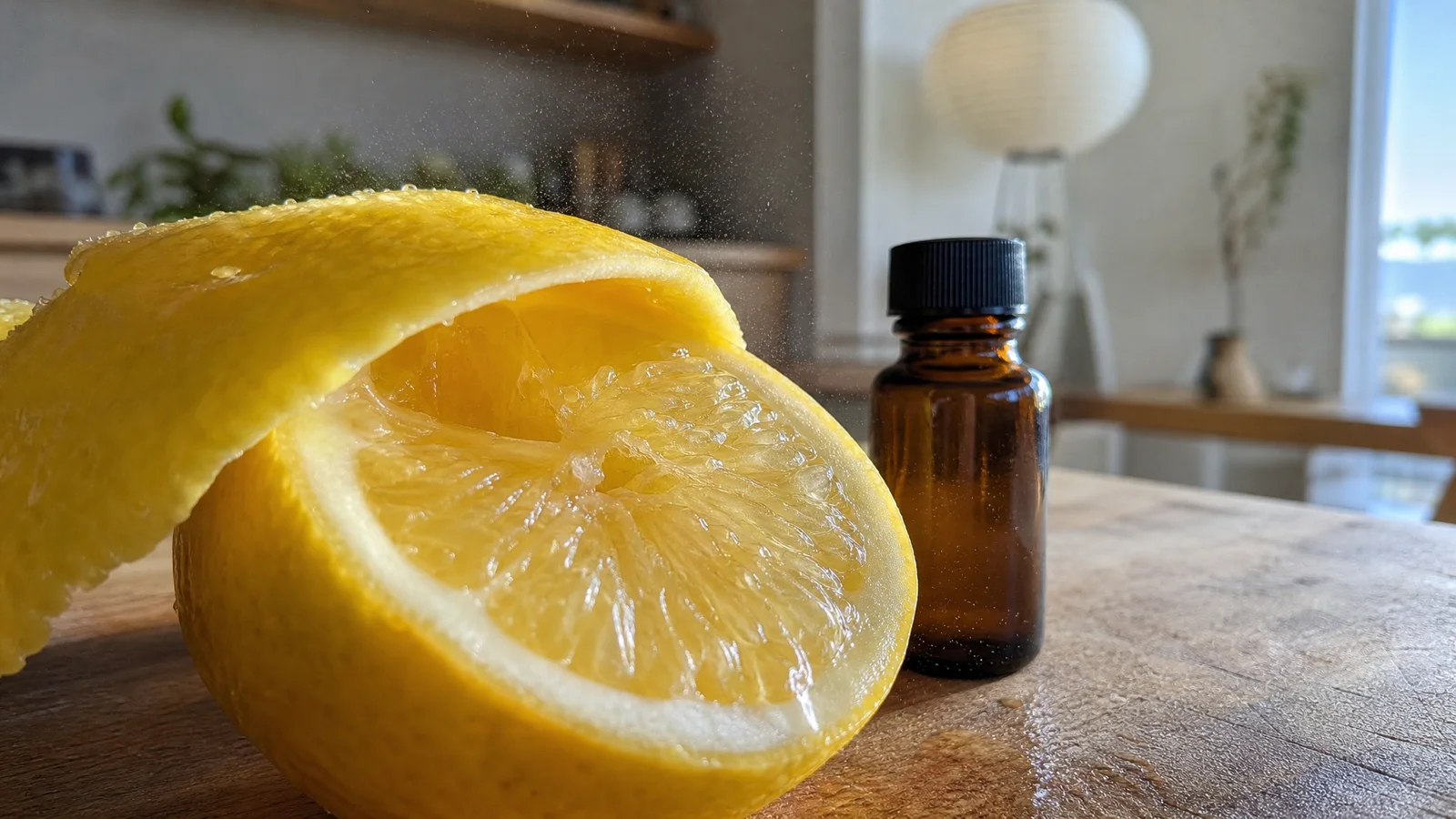
The paper spot test, a drop on paper that should evaporate without a ring, is a fair way to spot a heavy fixed oil mixed in. Our reasoning is that a lighter added fraction would evaporate like the real oil, so a clean spot is reassuring about one thing and silent about the rest. Price works the same way: a very low price is worth a question, and a high price is not a guarantee. Our post on what drives lemon oil prices explains why.
How the specialists check
Real authenticity work happens in a laboratory. The Sicilian study ran gas chromatography with mass spectrometry on the volatile fraction, liquid chromatography on the non-volatile part, and a mirror-image analysis of twelve volatile compounds. A 2023 paper took that further by combining mirror-image separation with carbon isotope measurement, and reported that in genuine lemon oils the two mirror forms of alpha- and beta-pinene carry different carbon isotope values. These are research tools used on Sicilian oils. You are not going to order them for a single small bottle, and you do not need to. What you can do is ask which of the simpler documents exist for the lot.
| Document | What it helps with |
|---|---|
| Botanical name and plant part (Citrus limon, peel) | Confirms the seller is describing lemon peel oil |
| Stated method (cold-pressed or distilled) | Tells you which sun rules apply |
| Density, refractive index, optical rotation | Shows a batch falls within expected ranges for those three properties |
| GC or GC-MS report | Shows which compounds are present and in what proportions |
| Peroxide value | Shows how oxidized the limonene is today |
The Certificate of Analysis for one batch of our oil sits in the middle of that table: appearance, density, refractive index and optical rotation. If you need a GC-MS report for your own product, ask us in writing through the contact page before you order, and our post on reading a GC-MS report shows what to look for when it arrives.
A fair way to compare two bottles
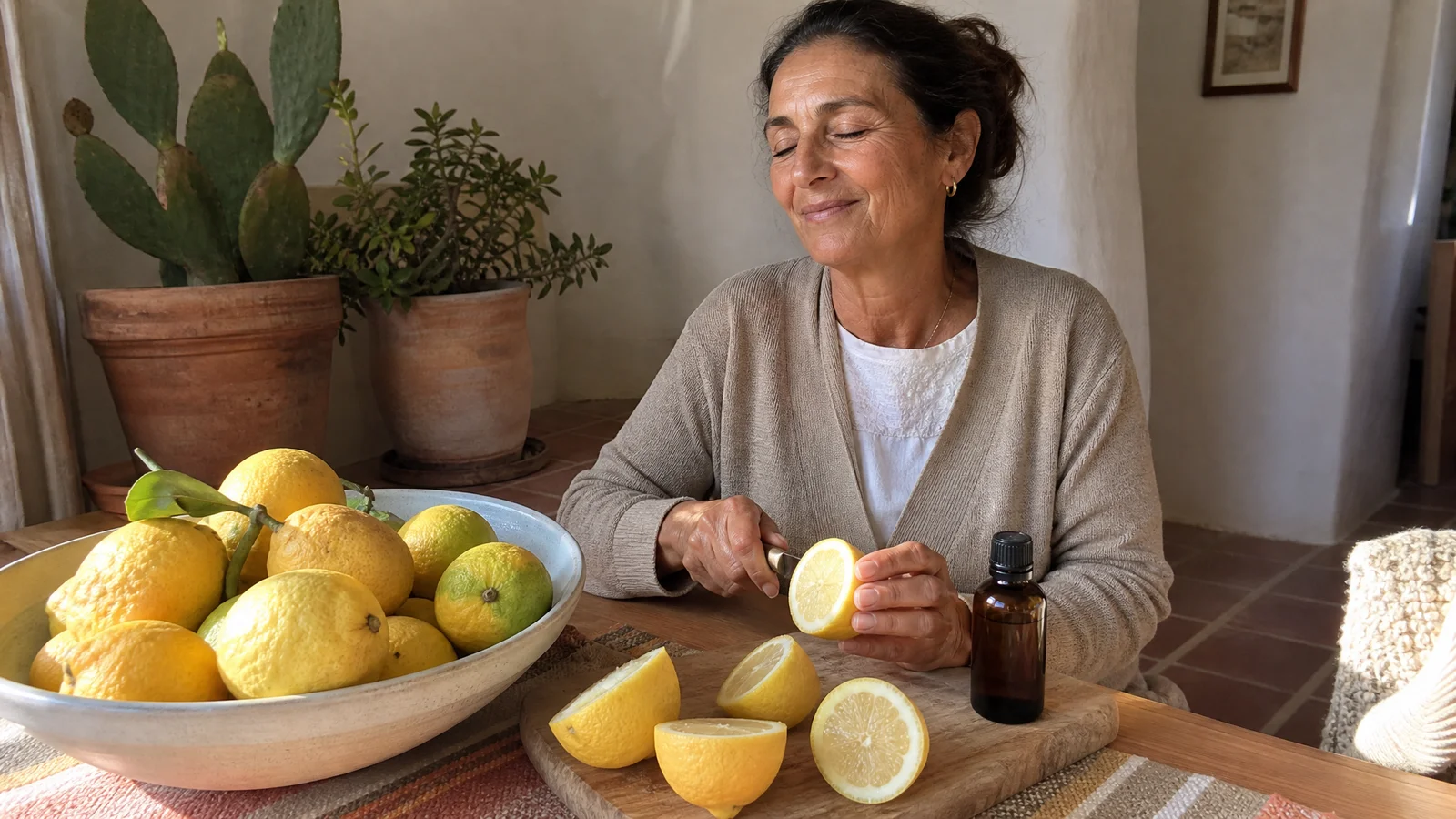
If you have two bottles and want to see them side by side, give yourself a fair setup. Use unscented paper strips, label them with a letter instead of a name, and smell each one fresh, then again after a few minutes. Take a break between samples by smelling something neutral, like a clean sleeve. Write down what you notice in plain words: sharper, rounder, greener, sweeter.
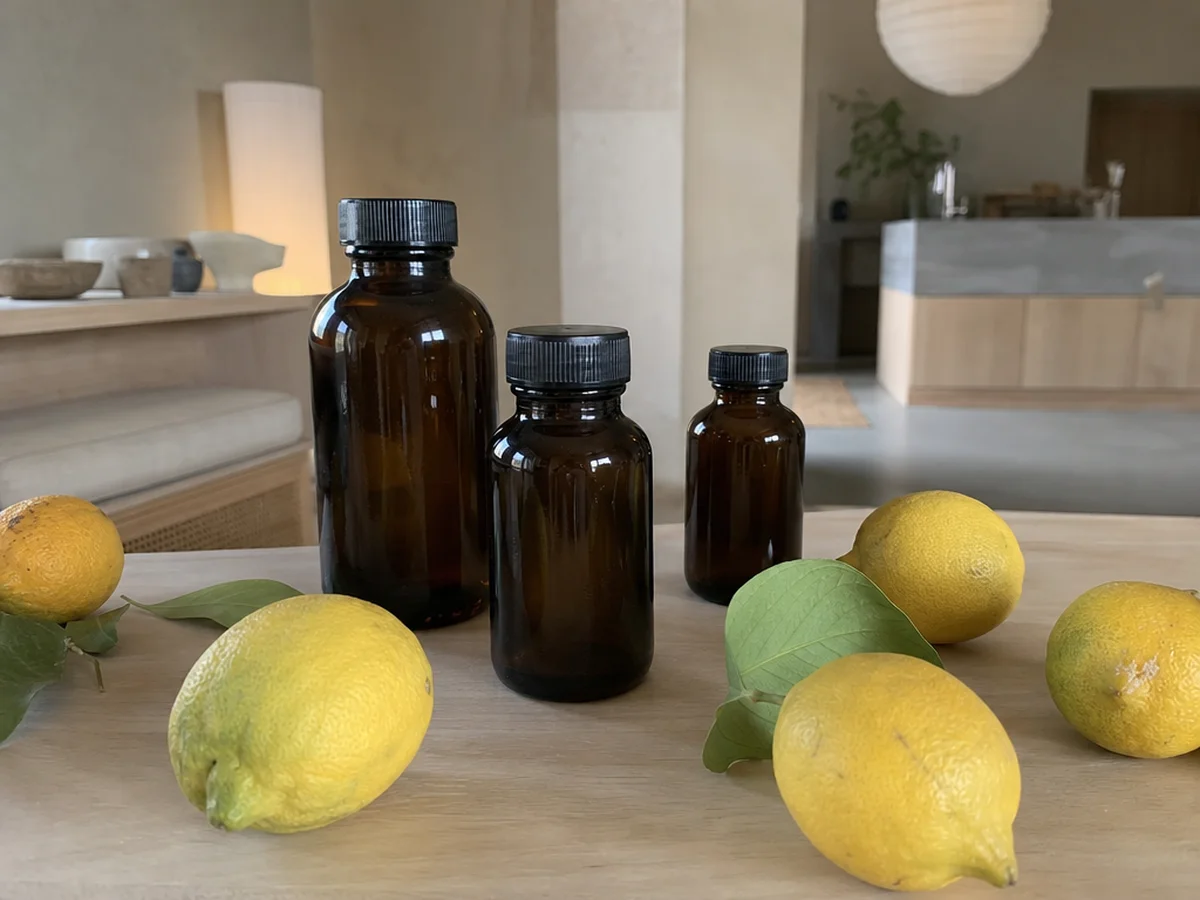
Those notes are about preference and character, not about quality in a laboratory sense. Still, they are a lovely way to learn what you like, and they make your questions to a seller far more specific.
The two checks that look after you
Freshness is the first. IFRA’s limonene standard says oxidation products of limonene, especially hydroperoxides, are potent sensitizers, and asks that limonene-rich natural products stay under a peroxide value of 20 millimoles per liter. It also notes that adding 0.1% BHT or alpha-tocopherol has shown great efficiency. A seller who can give you a peroxide value is giving you something far more useful than a paragraph of adjectives, and whichever oil you choose, buying a size you will finish soon keeps it fresher.
Sun care is the second. The IFRA standard on cold-pressed lemon sets 2.0% as the ceiling in most leave-on products, because of the oil’s phototoxicity. A label with no dilution advice and no sun note has skipped the thing the standard exists for. We suggest 0.5% to 2% in a carrier oil, a patch test first, and no sun on freshly treated skin.
What your eyes can add
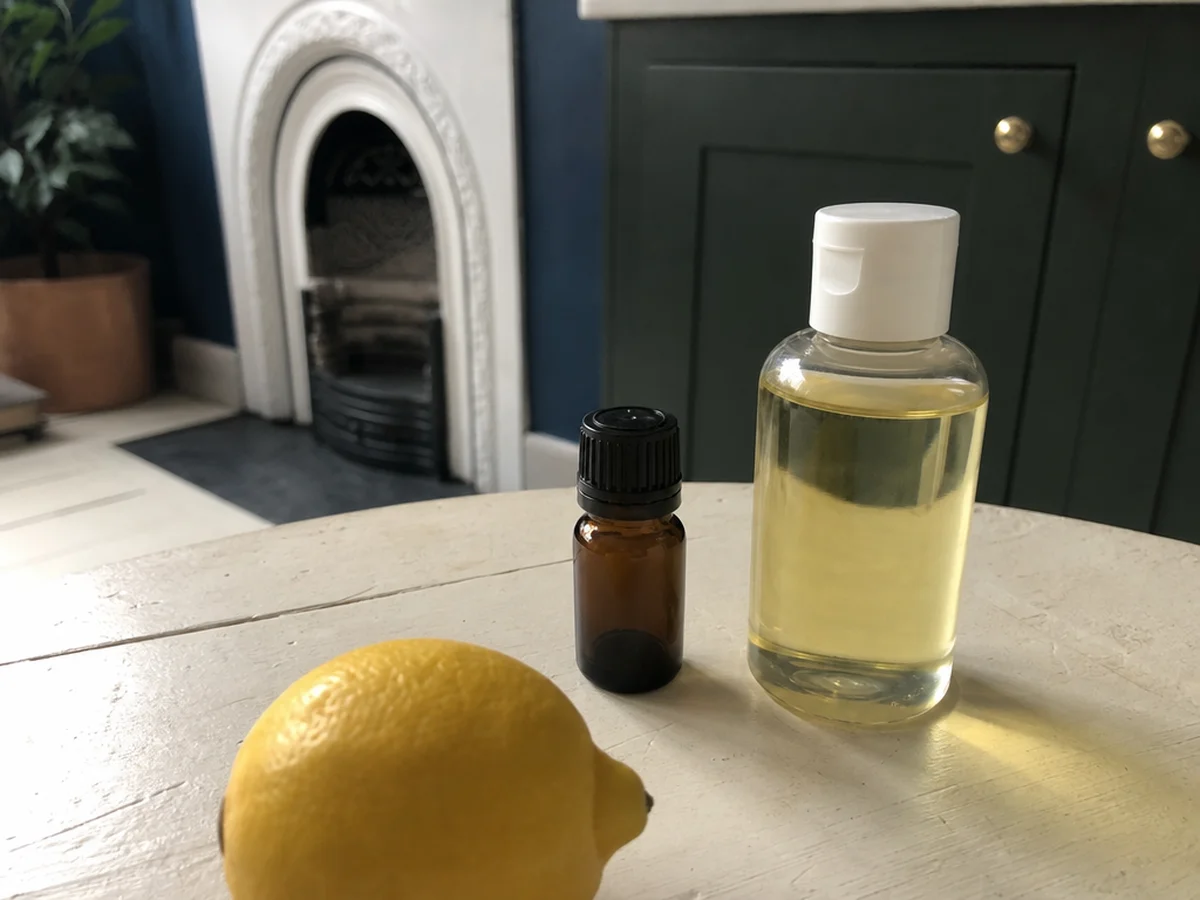
Appearance is a modest clue, but a real one. Fresh lemon oil is thin and pale yellow. Because cold-pressed citrus oil oxidizes faster than steam-distilled oils, its color can deepen slightly with age and exposure to air or light. A bottle that has clearly darkened compared with another is a good reason to keep that one for non-skin uses, and to store the next one capped, cool and dark.
In short, trust the paperwork you can read over the impressions you cannot measure, and ask for it kindly. Good sellers like the question.
Asking for paperwork can feel awkward the first time. It does not need to. A short, friendly message that names the lot or size you are considering and the document you would like is all it takes, and you will learn something from the way it is answered.
Organic Lemon Essential Oil
Organic Lemon Essential Oil from our own shop, in sizes from 0.5 oz to bulk.
From $15.99
Shop Now →Sources & Further Reading
- Variations of peel essential oils during fruit ripening in four lemon (Citrus limon (L.) Burm. F.) cultivars, Di Rauso Simeone et al., Journal of the Science of Food and Agriculture, 2020
- Sicilian lemon oil: Composition of volatile and oxygen heterocyclic fractions and enantiomeric distribution of volatile components, Dugo et al., Journal of Separation Science, 2010
- Chiral isotopic fractionation in lemon essential oil: A tool for authenticity assessment?, Cucinotta et al., Journal of Chromatography A, 2023
- IFRA Standards, 51st Amendment, International Fragrance Association (standards for lemon oil cold pressed and for limonene)