Where to Buy Organic Lemon Oil: Five Questions to Ask
Where you buy lemon oil matters less than what the seller can tell you about the bottle. A maker’s site, a marketplace listing and a shop on the high street can all offer something lovely, and the same five minutes of reading works in all three. We sell one lemon oil ourselves, so think of this as a method you can use on us too.
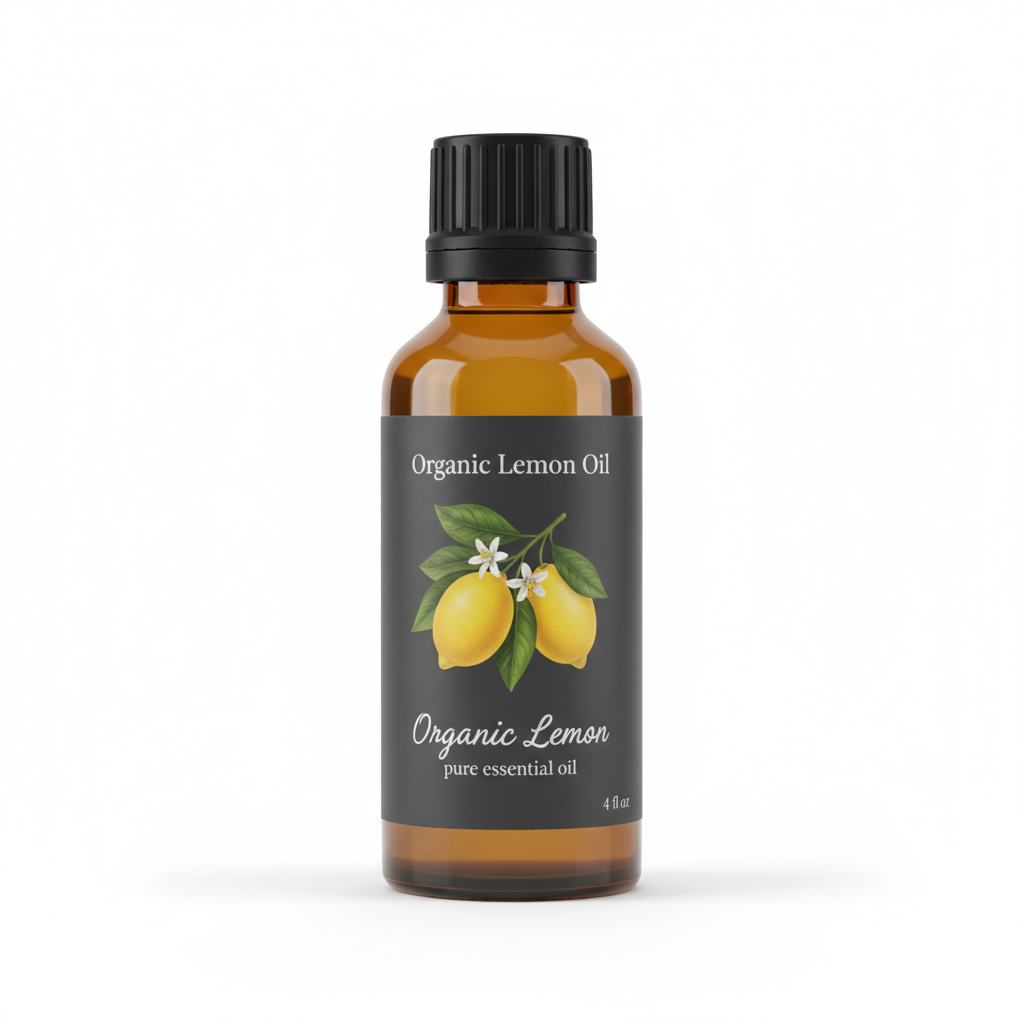
Organic Lemon Essential Oil
Our own Organic Lemon Essential Oil, in sizes from 0.5 oz to bulk.
From $15.99
Shop Now →Start with the label
Think of the label as the seller's first sentence to you. If it is clear and specific, the rest of the conversation usually goes well.
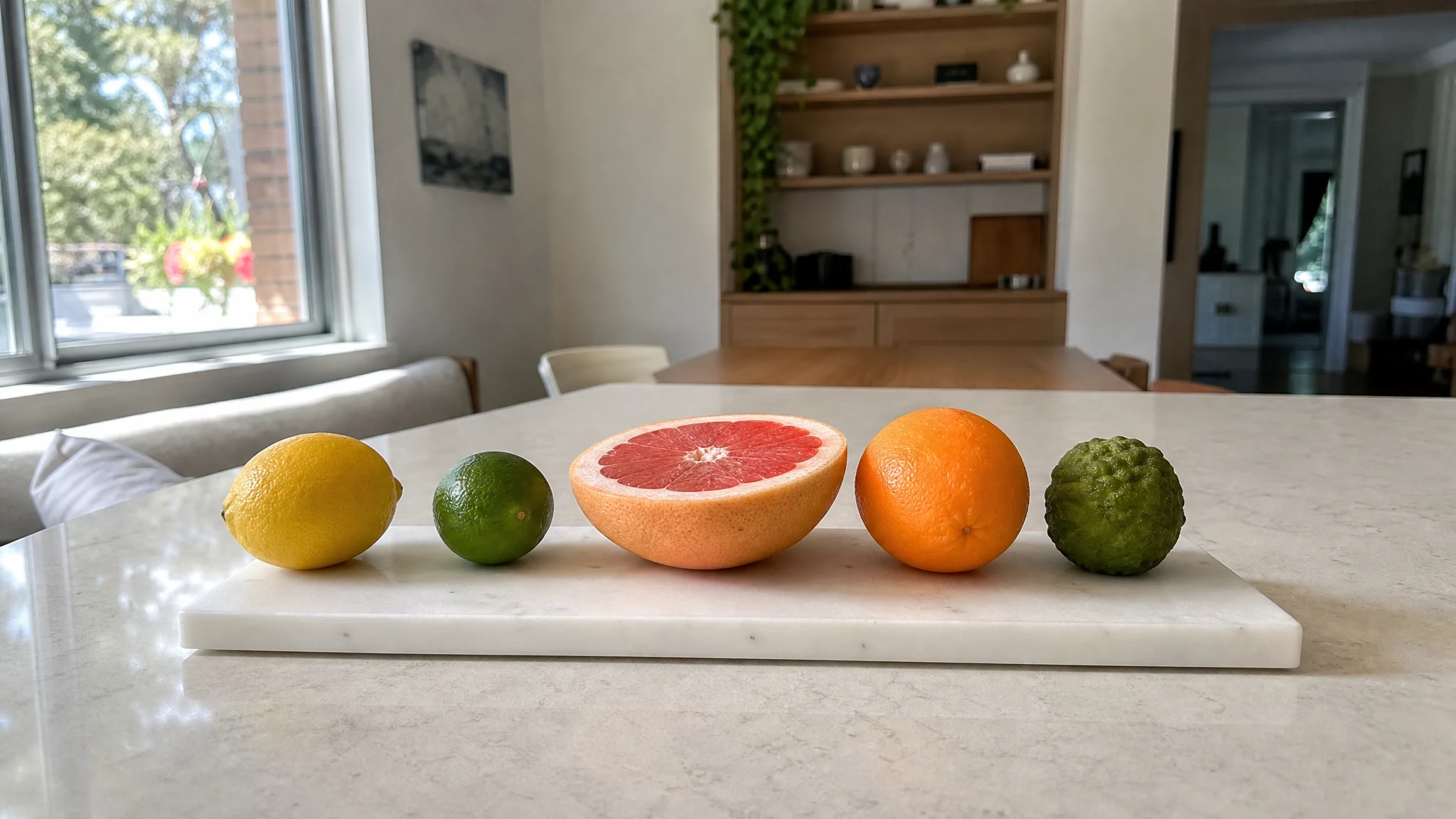
Real lemon essential oil is Citrus limon, from the peel. The label should say so, with the botanical name and the plant part. Wording like "lemon scent" or "fragrance oil" describes something else, and lemongrass, lemon eucalyptus and lemon balm are entirely different plants (our guide to the lemony look-alikes sets them side by side).
The next line to find is the method: cold-pressed or distilled. It decides the sun rules. The Tisserand Institute reports that distilled lemon oil contained 22 times less bergapten and 930 times less citropten than expressed oil in one study, and calls the distilled oil not phototoxic. Cold-pressed oil, which is what we sell, keeps its furocoumarins and follows the IFRA ceiling of 2.0% in most leave-on products. Neither is better in itself. They suit different jobs, and a label that does not say which one you are holding has left out the most useful fact.
The three places to look
A maker’s own site is usually the easiest place to get specifics, because the same business is selling and answering. Look for a stated method, dilution guidance and a link to a Certificate of Analysis. Ours, for one batch, lists density, refractive index and optical rotation. If you need more, such as GC-MS data or an organic certificate, ask us in writing through the contact page before you order.
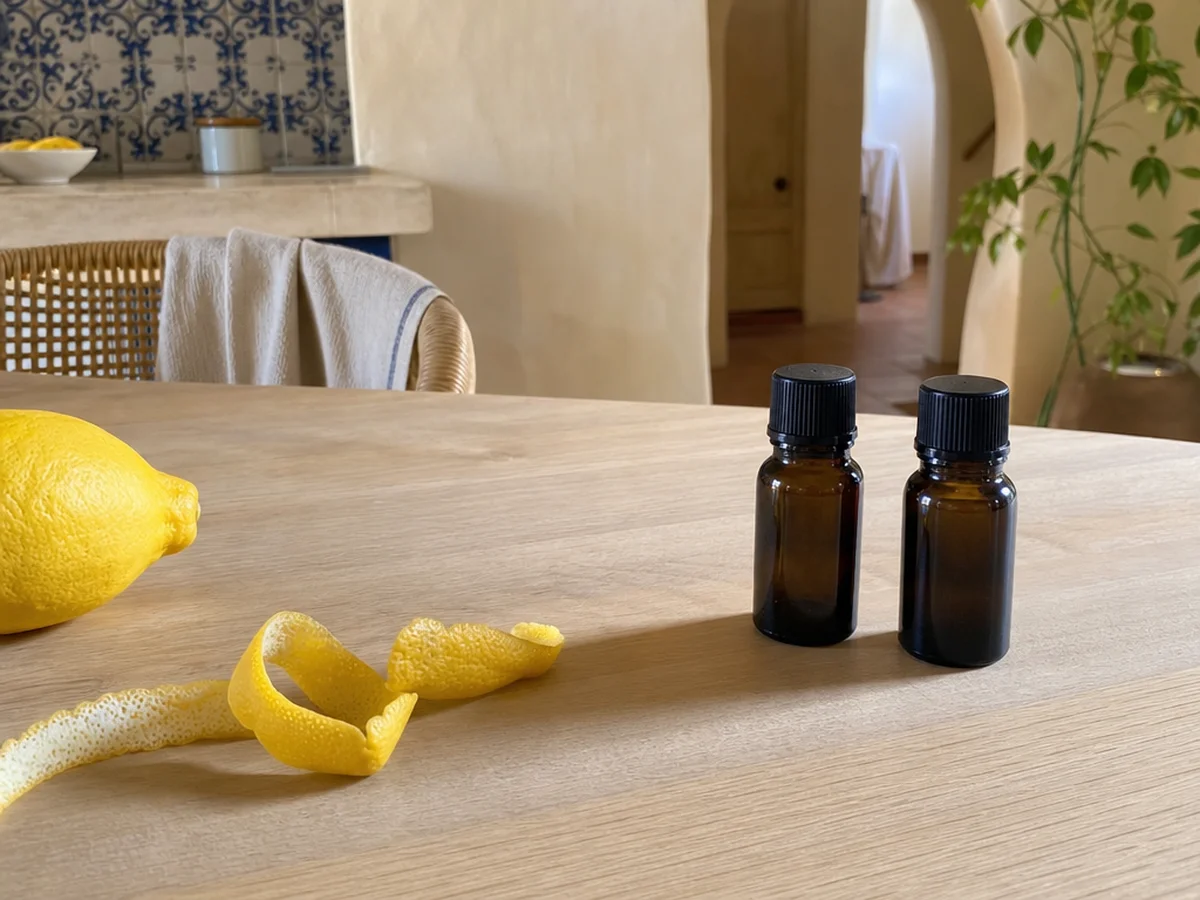
A marketplace listing can hide who packed the oil. Look for the botanical name, method and any date or lot code in the photos of the actual label, not only in the description. If a listing will not tell you who bottled the oil, you cannot ask for paperwork, so a small first bottle is the sensible way in. Our post on choosing a bottle size shows how little you need.
A local shop lets you check the bottle in your hand. Dark glass, a cap that seals and a label with the botanical name are the things to see. A bottle that has sat in a sunny window is worth passing over. In a 1992 animal study, limonene exposed to air became a skin sensitizer while unexposed limonene did not, so fresh, well-stored stock is the better choice. That study does not measure a shelf, but it explains why we ask you to keep ours capped and out of light.
Small first, then bigger
If it is your first time with a seller, start with a small bottle. It lets you smell the oil, look at the label and see how the order is handled without committing to much. If you like what you find and you use it up, you will know exactly what to order next time.
When the bottle arrives, check that the cap is tight and the label matches your order. Open it, smell it and look at the color. A thin, pale yellow oil with a bright lemon scent is what you want. Then write the date on the bottle and put it in a cool, dark cupboard.
What every good seller tells you about skin
The safety note is the easiest tell. A seller who knows cold-pressed lemon gives a dilution range, a patch test and a sun warning. Ours is 0.5% to 2% in a carrier oil, patch test first, and no sun on freshly treated areas. The Tisserand Institute calls 2% the maximum rather than a recommended amount, so we suggest you start at the low end. Our post on lemon oil on skin goes into the reasoning.
Reading between the lines
Pay attention to how a seller writes. Specific words such as a botanical name, a method and a plain dilution range suggest someone who knows the product. Vague words such as "premium" or "finest" tell you nothing you can check. You do not need to be suspicious, just curious, and happy to move on if the answers stay fuzzy.
Shipping details matter too. Ask how the oil is packed and how long it is likely to sit in transit, especially in hot weather. A bottle that travels in a cool box and arrives within a few days is in better shape than one that spends a week in a warm truck.
Five questions that work anywhere
- What are the botanical name and plant part, and is it cold-pressed or distilled?
- Is there a document for the lot I will receive, and can I see it before I pay?
- If the oil is called organic, who is the certifier, and can you send the certificate?
- Is there a lot code or date on the bottle?
- What dilution and sun guidance do you give?
A clear, quick answer to those five tells you a lot, and a seller who enjoys answering them is usually one you will enjoy buying from again.
Whichever route you take, ask your questions in writing so the answers are on file. It keeps everyone honest and makes the next order simpler.
Organic Lemon Essential Oil
Organic Lemon Essential Oil from our own shop, in sizes from 0.5 oz to bulk.
From $15.99
Shop Now →Sources & Further Reading
- Phototoxicity: essential oils, sun and safety, Tisserand Institute
- Dilution for essential oils, Tisserand Institute
- IFRA Standards, 51st Amendment, International Fragrance Association (standards for lemon oil cold pressed and for limonene)
- Air oxidation of d-limonene (the citrus solvent) creates potent allergens, Karlberg, Magnusson and Nilsson, Contact Dermatitis, 1992