Choosing a Lemon Oil Size: From 0.5 oz to Bulk
Order the smallest bottle that covers a project you can name today. A big bottle looks like better value, but lemon oil goes a very long way, and a bottle you open again and again is a bottle you are still working through a year later. Here is how each size translates into things you can actually make.
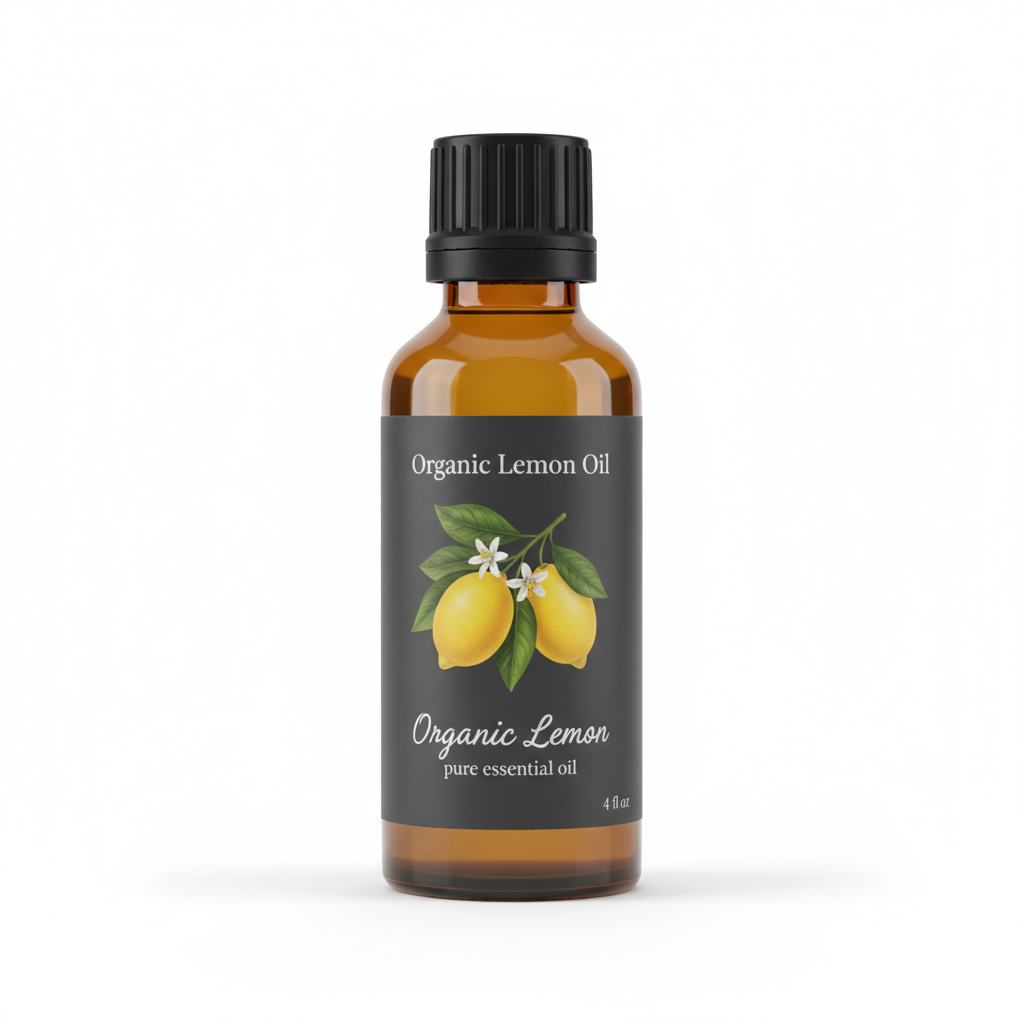
Organic Lemon Essential Oil
Our own Organic Lemon Essential Oil, in sizes from 0.5 oz to bulk.
From $15.99
Shop Now →Begin with the finished product
We sell one lemon oil, cold-pressed from the peel and sold neat. The sizes are 0.5, 1, 2, 4, 8 and 16 oz, then 5, 25, 100 and 400 lb on our bulk page. Since the oil is undiluted, your project sets the amount. We recommend 0.5% to 2% in a carrier oil for skin, which works out to roughly 3 to 12 drops per ounce of carrier. IFRA caps cold-pressed lemon at 2.0% in the finished product for most leave-on categories, and the Tisserand Institute calls that figure the safe maximum, not a recommended amount. So plan around the low end. Planning for 2% means buying more than you will use.
What each size makes
This is our arithmetic, not a promise. It uses the density of 0.849 on the Certificate of Analysis, 29.57 ml per fluid ounce and about 20 drops per ml. Droppers vary, so weigh when the percentage matters. The last column counts finished 1 oz leave-on bottles at 1%.
| Size | Oil | Approximate drops | 1 oz bottles at 1% |
|---|---|---|---|
| 0.5 oz | 14.8 ml | 296 | about 50 |
| 1 oz | 29.6 ml | 591 | about 100 |
| 2 oz | 59.1 ml | 1,182 | about 200 |
| 4 oz | 118 ml | 2,366 | about 400 |
| 8 oz | 237 ml | 4,731 | about 800 |
| 16 oz | 473 ml | 9,461 | about 1,600 |
The surprise is how modest the numbers on the right feel in daily life. Someone making a few body oils or a room spray now and then will not finish even a 4 oz bottle quickly. Rinse-off and non-skin products use oil faster, which is where larger sizes begin to make sense. If you are making soap, candles or cleaners, work out the percentage your recipe needs, then use the table in reverse.
Why a smaller bottle stays nicer
Lemon oil is mostly limonene, and limonene reacts with oxygen. In a 1992 animal study, air-exposed d-limonene was a skin sensitizer while limonene kept from air gave no significant response, and IFRA’s limonene standard says oxidation products, especially hydroperoxides, are potent sensitizers. From that we reason that every time you pour from a bottle, the air that replaces the oil is air the rest of it will sit in. A full bottle holds little air, a quarter-full bottle holds a lot. That is our inference from the chemistry, not a measured shelf life, and the date or lot information on the bottle you receive governs.
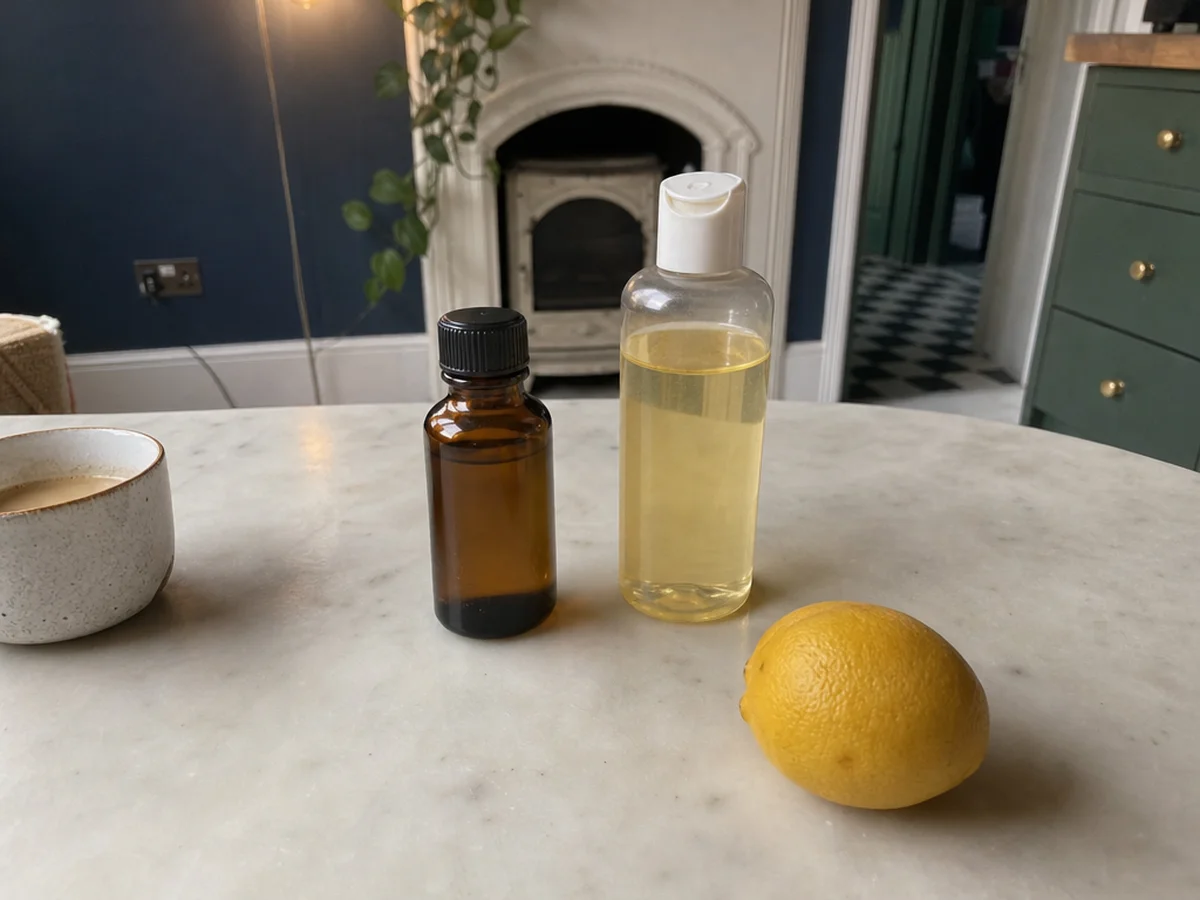
The habits that follow are easy. Keep the bottle capped in a cool, dark place. For larger sizes, pour a working amount into a small airtight glass bottle and leave the stock bottle closed, which is the same advice we give on the bulk page. Our post on storing lemon oil has the rest.
Think in projects, not bottles
A helpful trick is to write down the things you want to make this year on a sheet of paper. Beside each, jot how often you would make it and the percentage it needs. A few room sprays, a batch of soap and a couple of body oils might add up to far less oil than you expected. Then look at the table again and find the smallest bottle that covers your list with room to spare.
If you are not sure, start small. You can always come back for a larger size once you know what you really use, and a smaller bottle spends less time open to the air.
There is a quiet pleasure in finishing a bottle of something you love while it still smells wonderful. Lemon is a scent that is best enjoyed fresh, and a size you use up in a season or two means the last drop smells almost as bright as the first. Think of it as buying a loaf of bread rather than a freezer full of it.
Small habits that stretch a bottle
- Write the date you opened it on the label.
- Pour what you need into a small working bottle and keep the main bottle closed.
- Measure with a clean dropper or a small scale, and never pour straight into a mixture.
- Wipe the neck before capping, so the cap does not stick.
Picking your size
- Trying the scent or a first project: the 0.5 oz or 1 oz. Even the smaller one covers dozens of small bottles.
- A few skin or room products each month: 2 oz or 4 oz, with a decanted working bottle.
- Regular soap, candle or cleaner batches: 8 oz or 16 oz, if you can say how much you use each month.
- A business testing a formula: order a sample bottle first and try the oil in your own product before moving to pounds. Our wholesale page has a sample bottle and a consultation form for this.
If you need a particular document before a larger order, such as an organic certificate or a composition profile, ask us in writing through the contact page. Curious how the price side works? What drives lemon oil prices pairs well with this one.
Organic Lemon Essential Oil
Organic Lemon Essential Oil from our own shop, in sizes from 0.5 oz to bulk.
From $15.99
Shop Now →Sources & Further Reading
- IFRA Standards, 51st Amendment, International Fragrance Association (standards for lemon oil cold pressed and for limonene)
- Dilution for essential oils, Tisserand Institute
- Air oxidation of d-limonene (the citrus solvent) creates potent allergens, Karlberg, Magnusson and Nilsson, Contact Dermatitis, 1992