Lemon Basil Peppermint Blend: Ratios and Safety Notes
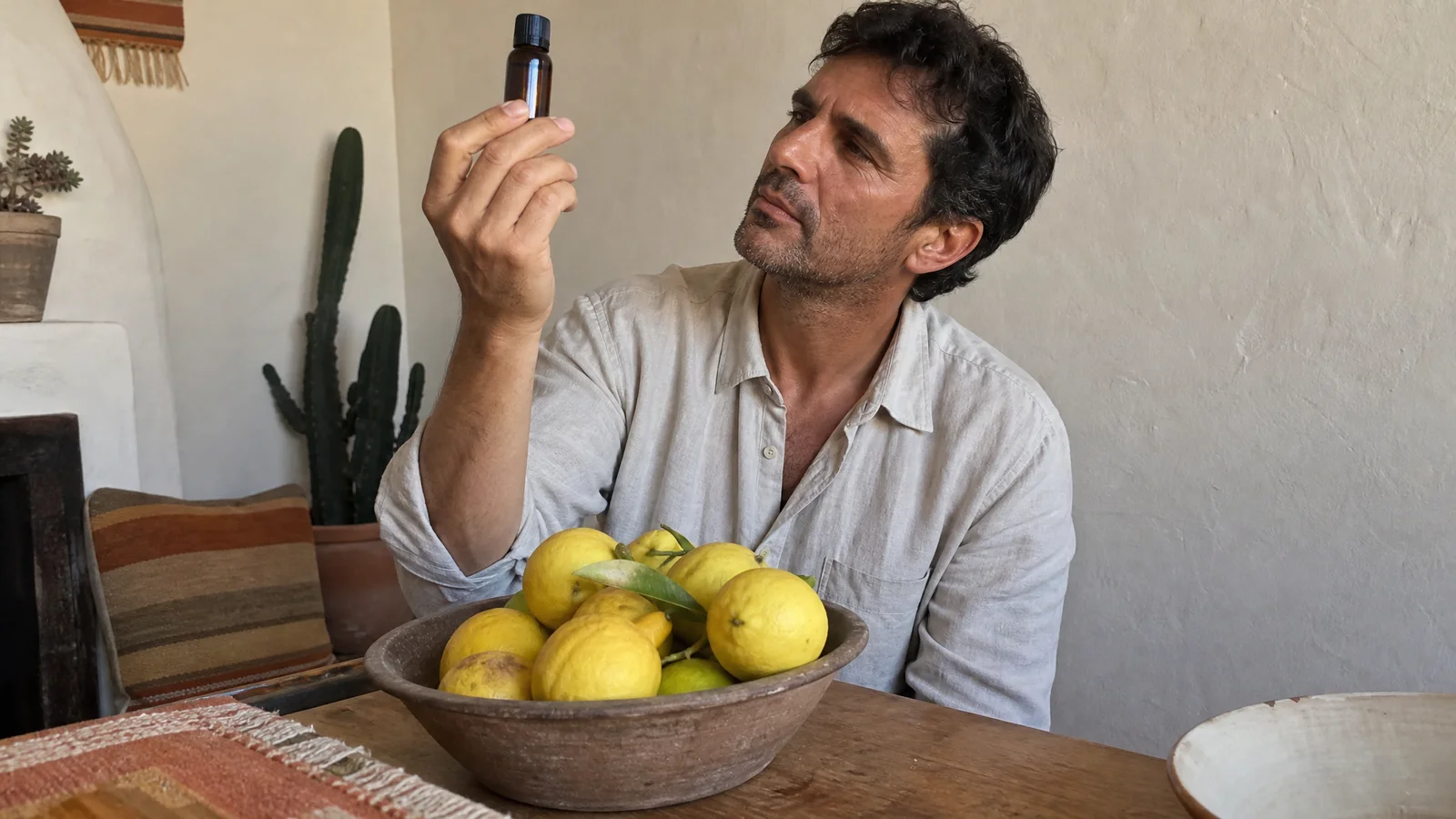
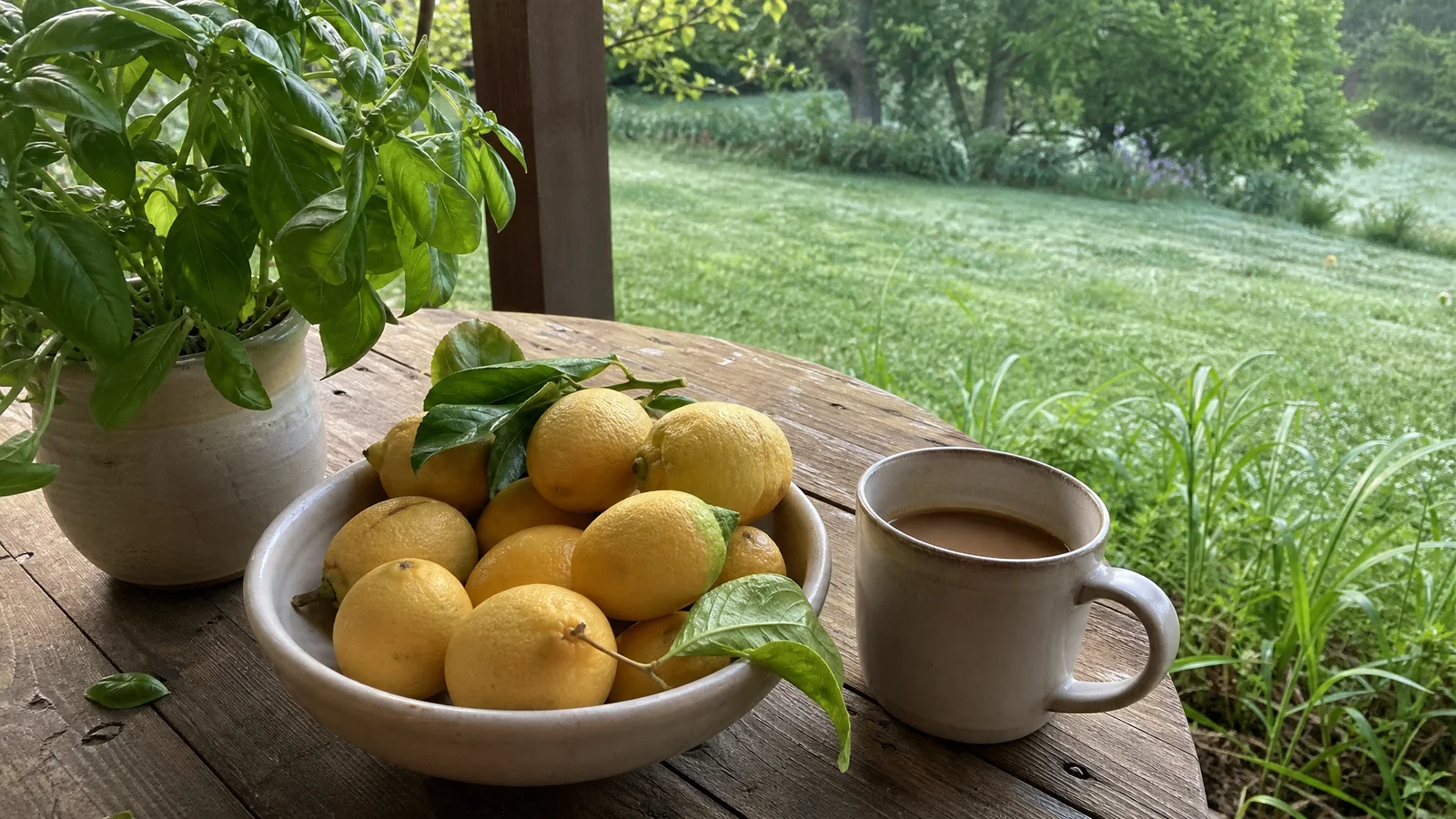
Picture a cool morning, the back door open, and a scent that smells like lemon zest with something green and herbal behind it. That is the idea behind this blend: lemon in front, basil for a leafy lift, and a little peppermint for a clean, cool edge. It is easy to write down. The part worth slowing down for is the basil, because two bottles with the same name can be very different oils.
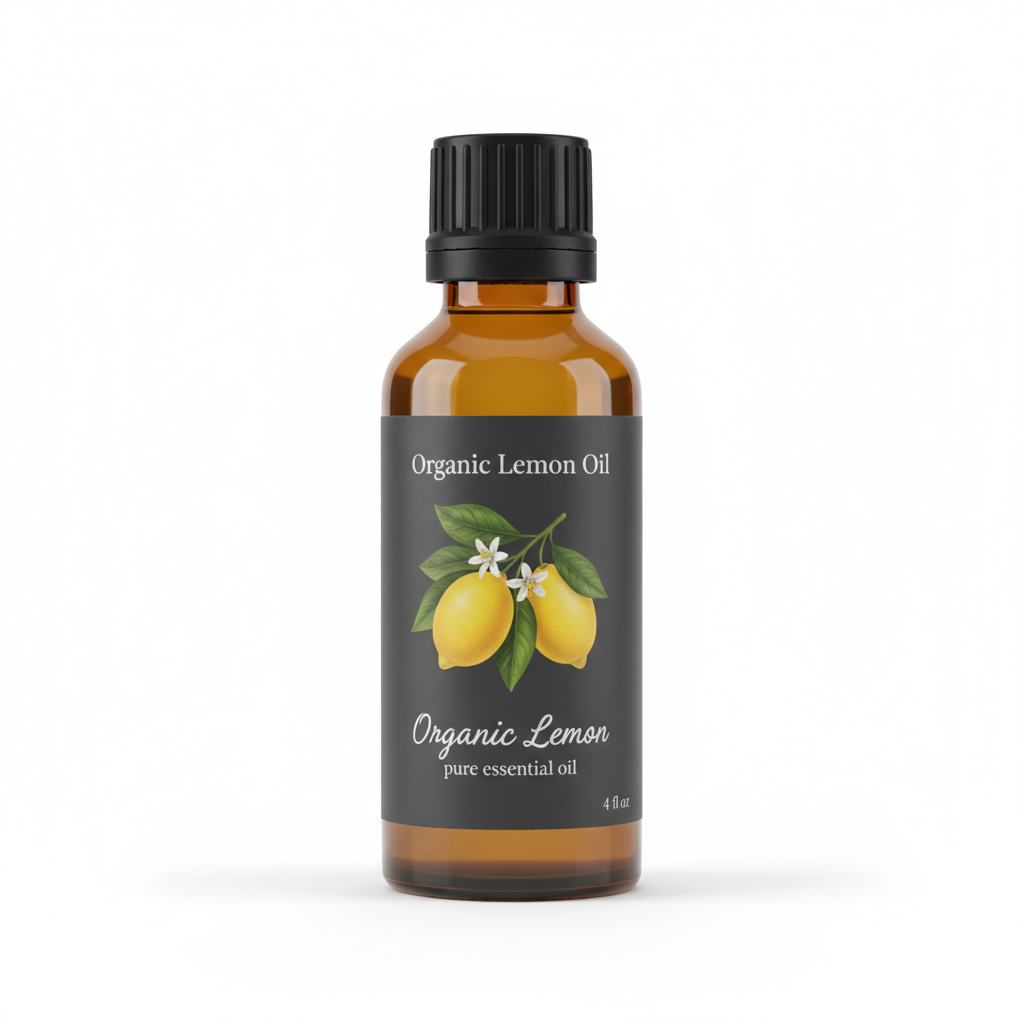
Organic Lemon Essential Oil
Our own Organic Lemon Essential Oil, in sizes from 0.5 oz to bulk.
From $15.99
Shop Now →Why we build it around lemon
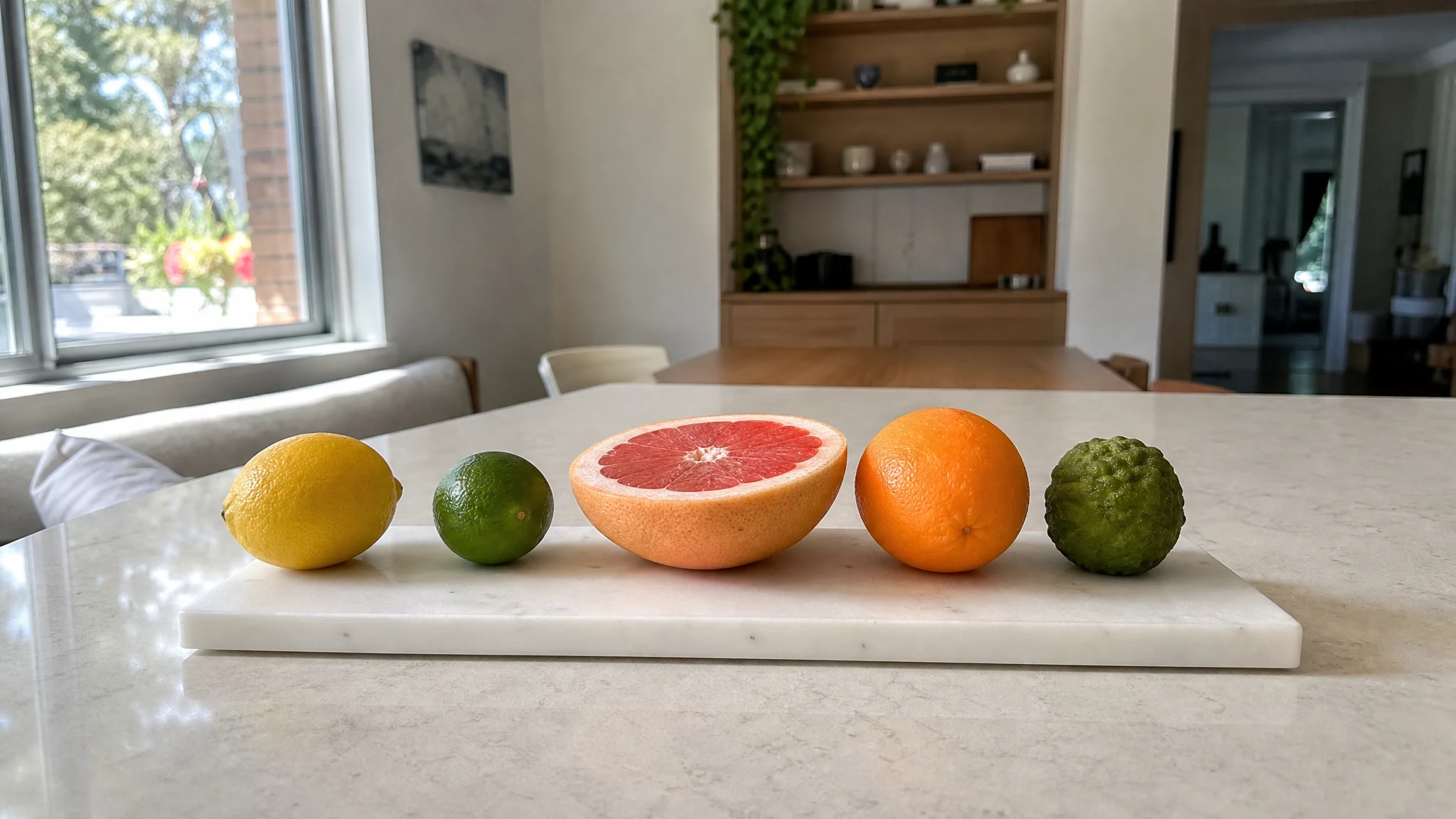
Lemon is the oil we sell, and a peel-pressed lemon note is the bright, sunny top of the blend. Lemon, basil and peppermint are all names we list among the oils that pair well with our lemon, and it makes sense on the nose: citrus lifts, mint cools, basil rounds it with a green, slightly sweet edge. Our pairing guide covers more combinations. We sell only lemon, so basil and peppermint come from an aroma supplier or craft shop.
The basil you choose changes the blend
"Basil" on a label can mean very different chemistry. A 2026 study of Ocimum basilicum grown in Qatar found an oil rich in linalool, at 31.53%, with 12.91% eucalyptol, while the lemon basil from the same study, Ocimum africanum, was mostly citral at 78.34%. Another 2026 analysis of a basil oil found 73.0% estragole and 7.2% methyl eugenol. Same genus, entirely different bottle.
It matters because estragole is a restricted fragrance material. IFRA's limits for it in finished products are tiny in some categories, as low as 0.00021%. Our recommendation is simple: buy basil from a supplier who names the chemotype and provides a GC-MS report, and look at the estragole line before you look at the label. A linalool-type basil is the one we would reach for here.
A starting ratio and the drop math
We suggest 6 parts lemon, 2 parts basil and 1 part peppermint, counted in drops. This is a scent suggestion, not a safety-derived figure. In a 100-drop stock bottle that works out like this:
| Oil | Parts | Share | Drops in 100 |
|---|---|---|---|
| Lemon | 6 | 66.7% | 67 |
| Basil (chemotype stated) | 2 | 22.2% | 22 |
| Peppermint | 1 | 11.1% | 11 |
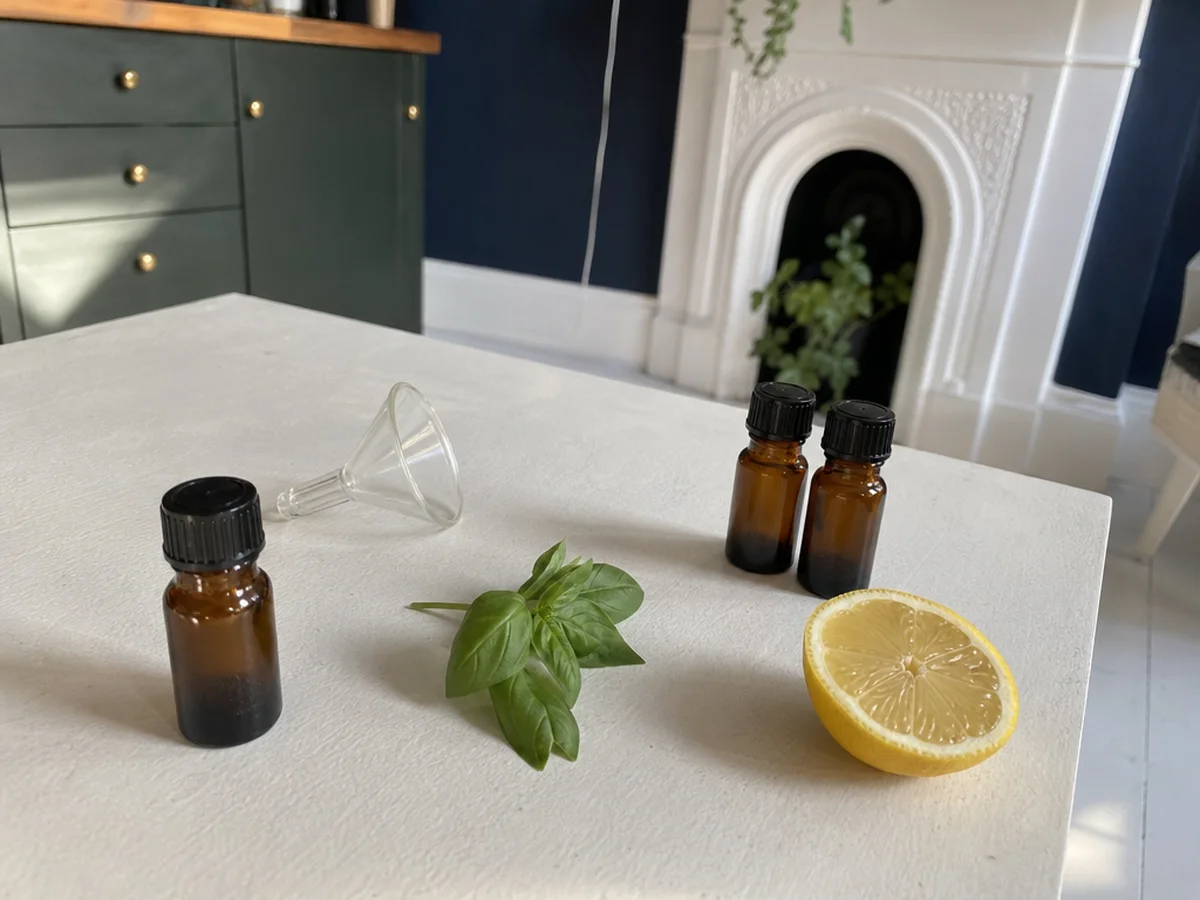
At roughly 20 drops per ml, 100 drops is about 5 ml. Droppers vary, so if you want precision, weigh the oils. The Certificate of Analysis we publish for one batch of our lemon lists a relative density of 0.849, so 67 drops is about 2.8 g. Store the stock in a small amber glass bottle, capped, somewhere cool and dark, and make small amounts rather than a large batch.
How the scent unfolds
Before you commit to a whole stock bottle, smell the three oils together on a paper strip. Hold the strip a little way from your nose and give it a minute. Lemon arrives first, bright and zesty. The peppermint follows with its cool edge, and the basil, if you chose a linalool-type one, settles underneath as a soft green note. Because lemon is a top note, it fades first, and the blend will smell greener and cooler an hour later than it did when you made it. That change is normal and rather charming.
Make a tiny amount the first time, write the drop counts on the bottle label with the date, and sniff it again the next day before you decide whether to adjust the ratio.
In the diffuser
Diffuser makers publish their own guidance for drops per session, and we would follow the low end of it. Run it briefly in a ventilated room and stop if anyone feels a headache, cough or irritation. There is a reason to favor cool devices: a 2025 pilot study of tea tree oil found a heat diffuser released about ten times the terpenes of an ultrasonic one, with several above long-term exposure limits. Tea tree is not in this blend, and lemon oil contains alpha-pinene too, so the takeaway is practical: short sessions, an open window, a cool device.
A note on sprays and reed diffusers
IFRA's guidance excludes aromatherapy applications from its scope, so its figures do not certify a diffuser blend. They are still the best reference points for the same materials in other products. If the basil in the table were the 73.0% estragole oil, it would contribute about 16.2% estragole to the blend (0.73 x 22.2%). Dividing IFRA's estragole limits by that gives the most of this blend a finished product could hold: about 0.0058% in a reed diffuser, 0.014% in a manual spray, and 0.68% in a candle. This is our arithmetic on one sample, not a safety assessment. The point is that a linalool-type basil changes everything, and if you cannot find the estragole figure for yours, keep the blend for the ultrasonic diffuser and out of sprays and reeds.
Lemon has its own rule too. IFRA caps cold-pressed lemon at 2.0% in leave-on categories, including manual air freshener sprays, because it is phototoxic. If the blend reaches skin, rinse it off and keep that skin out of strong sun; Tisserand advises at least 12 hours. Our skin guide has the details.
Children, pets and pregnancy
The NCCIH says peppermint oil should not be applied to the face of infants or young children because of the risk of inhaling menthol, and calls it "possibly safe when inhaled as aromatherapy." We would keep this blend out of rooms where babies and small children sleep. For pregnancy and nursing, ask an OB/GYN or midwife; our pregnancy post reports what sources say about lemon. For animals, the ASPCA says a short diffuser session in a space a pet cannot reach is not likely to be an issue, and birds should not be around one. It lists lemon as toxic to dogs and cats, and our pet guide goes deeper. If anyone swallows an oil, call Poison Control at 1-800-222-1222, and for a pet, the Animal Poison Control Center at (888) 426-4435. Our oil is never for taking by mouth.
Blends are a small pleasure, and the good ones come from knowing what is in the bottle. Pick your basil carefully and the rest is just a bright morning.
Organic Lemon Essential Oil
Organic Lemon Essential Oil from our own shop, in sizes from 0.5 oz to bulk.
From $15.99
Shop Now →Sources & Further Reading
- Mechmechani S et al., 2026. Chemotypic Diversity, Antioxidant, Antimicrobial, and Antibiofilm Activities of Essential Oils from Arid-Grown Ocimum basilicum and Ocimum africanum and Their Representative Active Components. Molecules. doi.org
- Sytykiewicz H et al., 2026. GC-MS Profiling, Antioxidant and Enzyme Inhibitory Activities of Basil (Ocimum basilicum L.) and Clove (Syzygium aromaticum L.) Essential Oils and Their Binary Mixtures. Molecules. doi.org
- IFRA. IFRA Standards, 51st Amendment (Estragole; Lemon oil cold pressed). ifrafragrance.org
- IFRA. Guidance for the use of IFRA Standards, 51st Amendment. ifrafragrance.org
- Zisook RE et al., 2025. Volatile organic compound and particle emissions from the use of tea tree oil in essential oil diffusers. J Occup Environ Hyg. doi.org
- Tisserand Institute. Phototoxicity: essential oils, sun and safety. tisserandinstitute.org
- NCCIH. Peppermint Oil. nccih.nih.gov
- ASPCA. The Essentials of Essential Oils Around Pets. aspca.org
- ASPCA. Toxic and Non-toxic Plants: Lemon. aspca.org
- Poison Control. Essential oils: Poisonous when misused. poison.org