What Does Lemon Oil Smell Like? A Closer Sniff
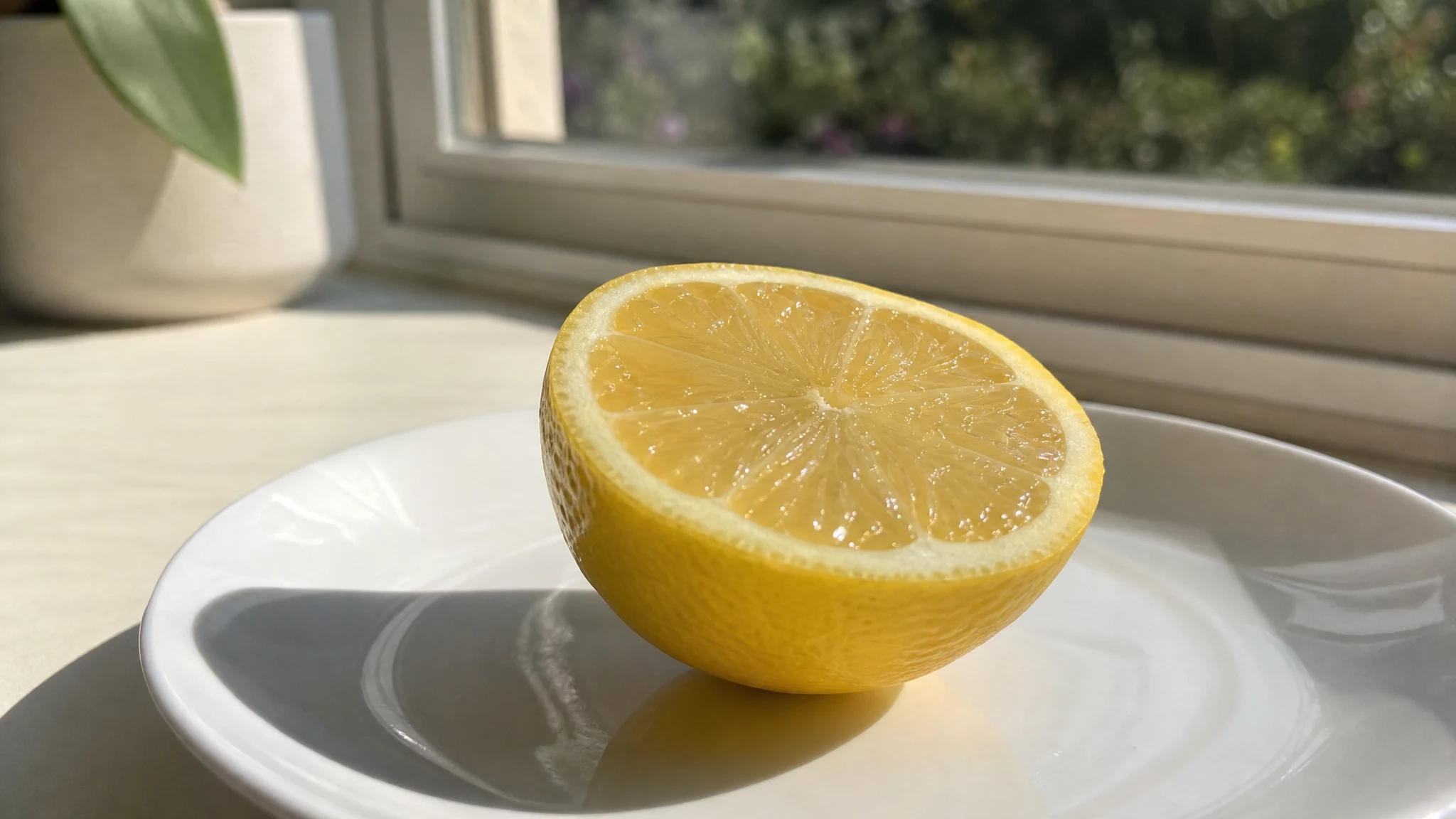
Score a ripe lemon peel with your thumbnail and you get the smell we are after: bright, zesty, a little sweet, and gone in a breath. Lemon oil is that moment captured in a bottle. What makes it fun to explain is that the smell we call "lemon" comes from a surprisingly small part of the oil.
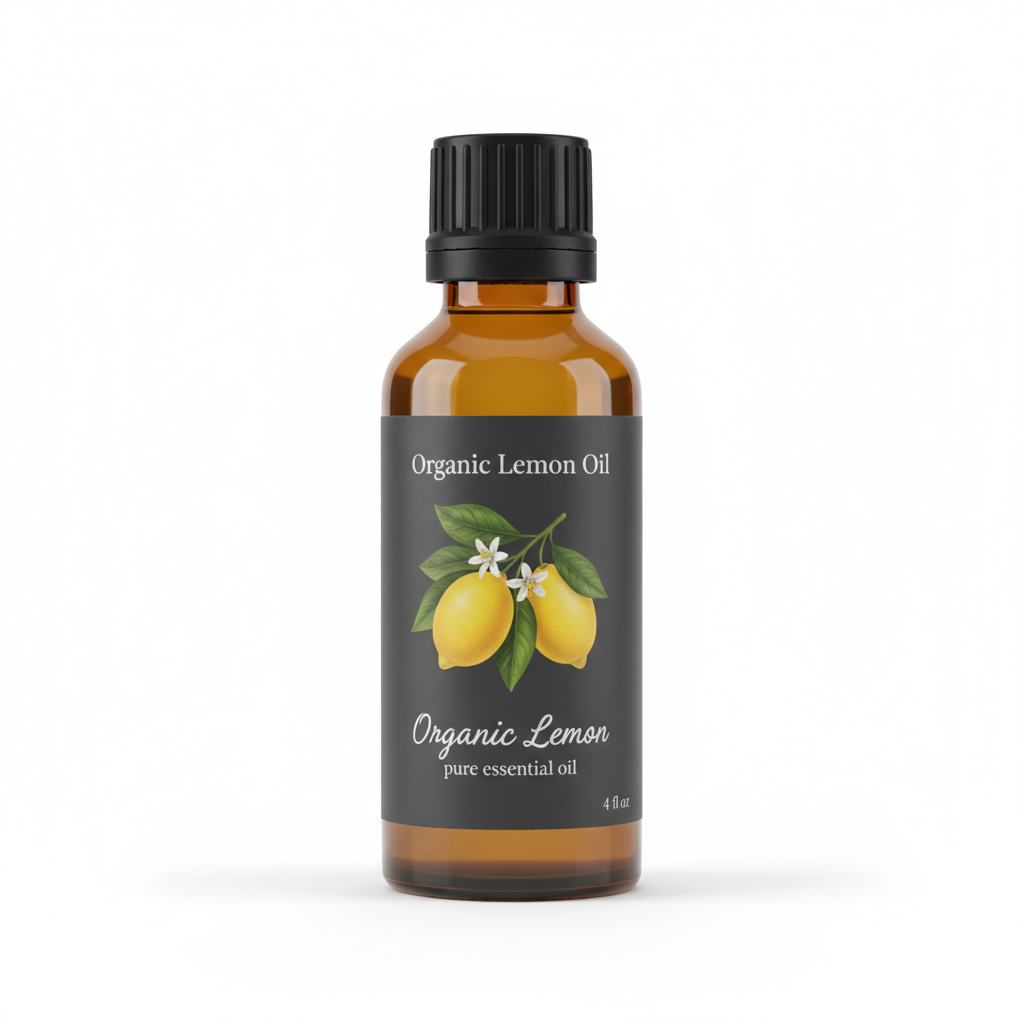
Organic Lemon Essential Oil
Our own Organic Lemon Essential Oil, in sizes from 0.5 oz to bulk.
From $15.99
Shop Now →A citrus body with a lemon sparkle
Before the chemistry, a plainer description. The first impression is sparkle: sweet, sharp and very clean, like the zest you grate over a dish just before serving. Behind that comes a rounder, juicy citrus note, and under it a faint, slightly resinous edge that makes the smell feel fresh rather than sugary.
Most of lemon oil is limonene. In ten batches of expressed lemon oil analysed by the European Food Safety Authority, limonene averaged about 65% of the oil, with beta-pinene near 13% and gamma-terpinene near 9%. Limonene smells citrusy, and PubChem's records describe it as a "citrus odor" and, elsewhere, a pleasant lemon-like one. The sharper lemon character that makes your nose say "lemon" rather than just "citrus" is usually credited to citral, a pair of molecules called geranial and neral. PubChem's record for citral describes a "strong lemon odor," and in those same ten batches geranial averaged only about 1.3% and neral about 0.9%.
So the picture we like is limonene as the broad, fresh body of the scent and citral as the sparkle on top. That is our reading of the numbers, not a result from a single experiment. Scent researchers do not agree on everything, and a 2025 perspective in ChemBioChem goes as far as saying even limonene's own smell lacks a scientific consensus, which is a reason to enjoy the mystery rather than be too confident about it.
Why the first sniff is the best sniff
Lemon is a top note in perfumery, meaning it is the first thing you smell and the first thing to fade. The chemistry fits: limonene boils near 177 to 178 C and evaporates readily, so the bright opening leaves a strip of paper or a wrist faster than heavier components do. If you want to enjoy the full sparkle, smell it fresh, and expect the aroma to soften within the hour.
Why one bottle does not smell like the next
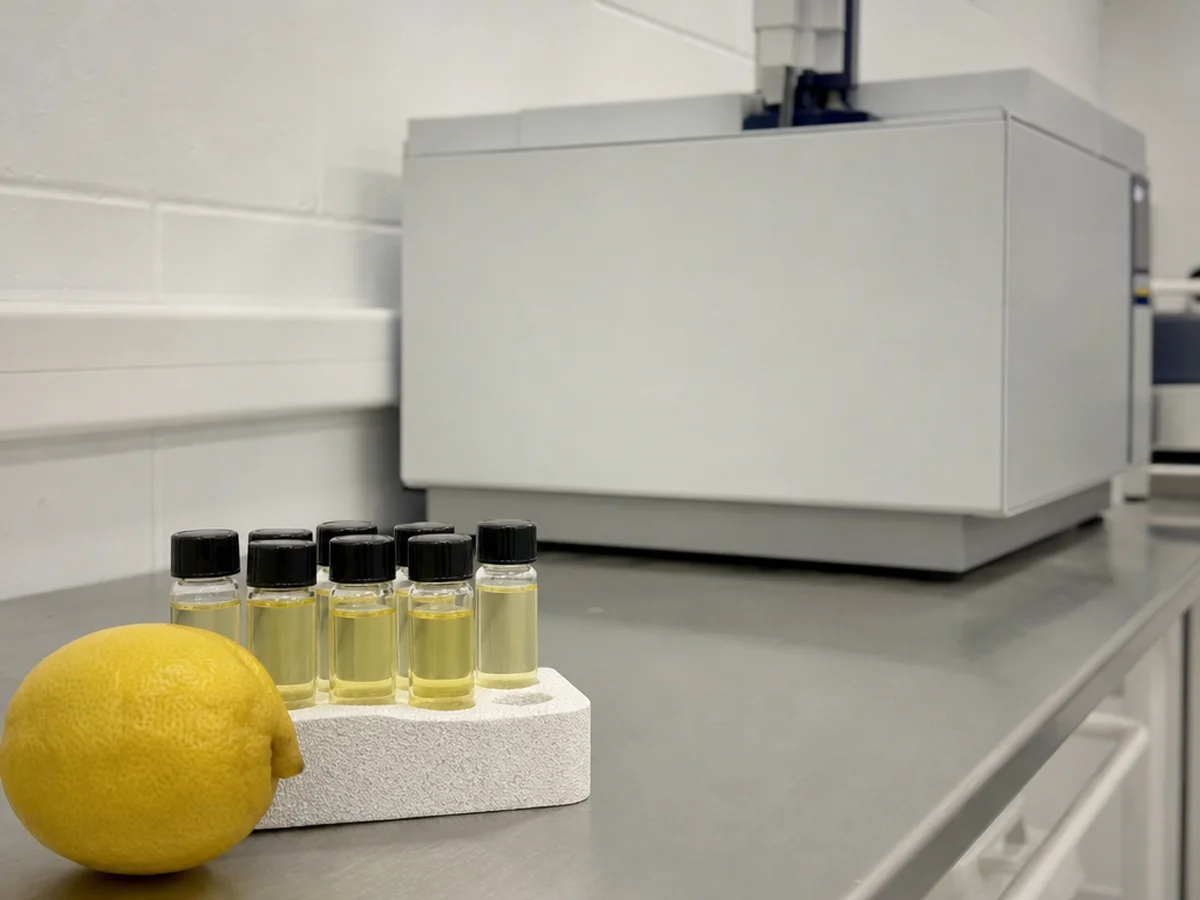
Lemon oil is a natural material, so it varies. Researchers who followed four lemon varieties picked on four dates from late October to early February found the main hydrocarbon components in the peel oil, limonene included, dropped as the fruit ripened. The EFSA batches show the same restlessness: geranial alone ranged from about 0.65% to 2.08% across ten batches, which is more than a threefold swing in the very component that gives lemon its snap. Whether a nose can hear that difference is not something these papers test, but it is a plausible place to look when two lemon oils seem to differ.
Age matters too. Limonene reacts with air, and an old, half-used bottle is no longer quite the material in the tables above. Our oil is a cold-pressed citrus oil, so colour can deepen slightly with age and exposure to air or light. Keep it capped, cool and out of the light, and decant working amounts into a small bottle if you use it often. Our storage guide covers the details.
A fun way to compare lemon oils
If you want to compare two lemon oils by nose, here is a simple suggestion of ours, not a validated sensory protocol.
- Open both bottles in the same session, so you are comparing fresh with fresh.
- Put a drop on unscented paper strips, labelled with a code rather than a name, and ask a friend to shuffle them. Keep undiluted oil off skin.
- Sniff right away, again after ten minutes, and again after an hour. The change over that hour is the top note fading.
- Rest your nose between samples by smelling your sleeve, and do not trust the third strip in a row.
Our Certificate of Analysis for one batch lists the smell as "Unique aroma of lemon" alongside density, refractive index and optical rotation, and our GC-MS guide shows what a full composition report would add if you want to dig deeper.
How to smell it well
A few habits make the smell much easier to enjoy. Hold the bottle a hand's width from your nose rather than right under it, and take a short, gentle sniff. Do not inhale deeply from the bottle. Try it in a room with fresh air, away from cooking smells, and give your nose a rest between sniffs.
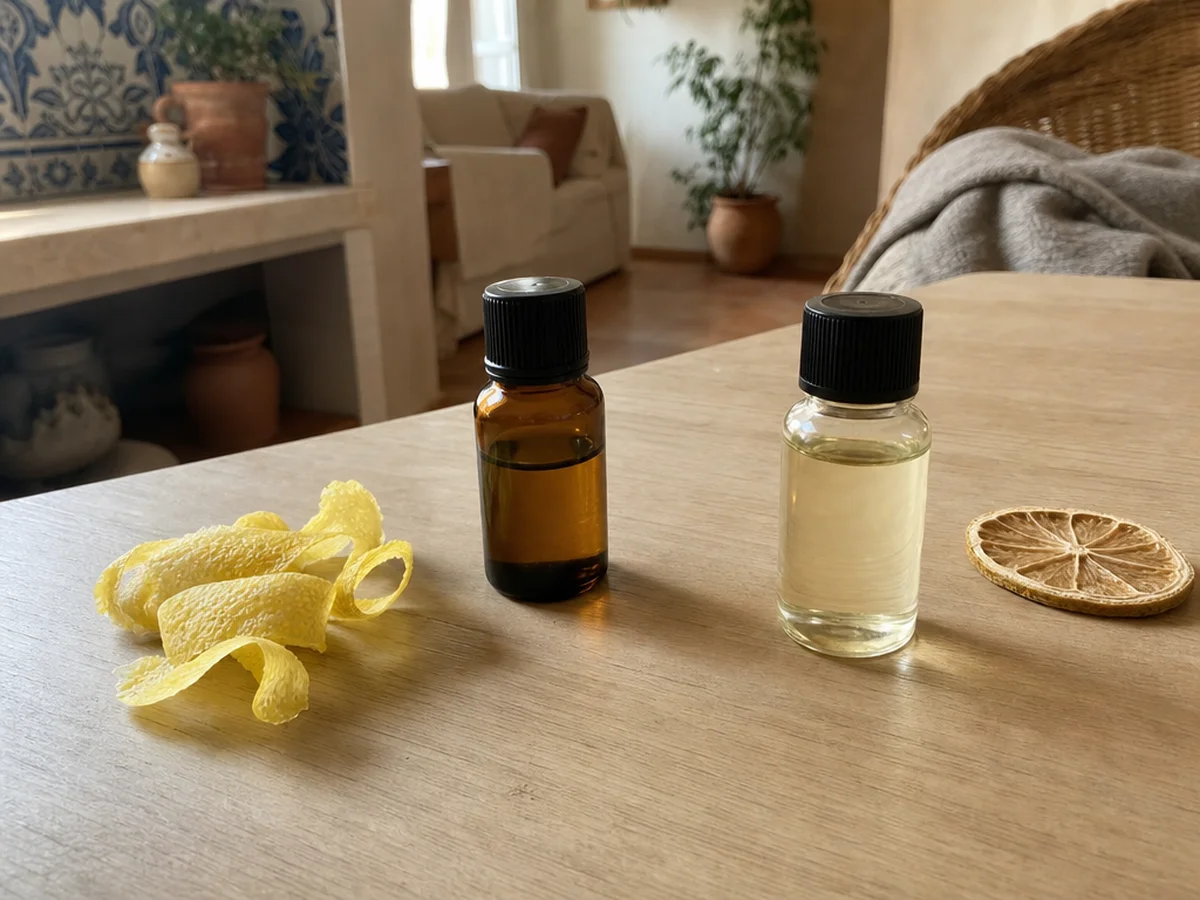
If you have a paper strip, put a drop on it and walk away. Come back in a few minutes and notice how the sparkle has softened into something gentler. That quiet fade is the top note leaving and is a normal part of lemon.
Lemon among its friends
Lemon blends well with peppermint, basil, lavender, rosemary, bergamot and sweet orange; our pairing guide goes through the combinations, and the citrus comparison shows how the family differs. For more on what is in the bottle, Inside Lemon Oil unpacks the chemistry. Ventilate the room when you diffuse, and keep the oil away from pets.
Everyone's nose is a little different, so take your time and trust your own impression. If a smell makes you smile, you have found something worth keeping.
Organic Lemon Essential Oil
Organic Lemon Essential Oil from our own shop, in sizes from 0.5 oz to bulk.
From $15.99
Shop Now →Sources & Further Reading
- EFSA FEEDAP Panel, 2021. Safety and efficacy of feed additives consisting of expressed lemon oil and its fractions from Citrus limon (L.) Osbeck and of lime oil from Citrus aurantiifolia (Christm.) Swingle for use in all animal species (FEFANA asbl). EFSA Journal
- PubChem, Limonene (CID 440917)
- PubChem, Citral (CID 638011)
- Di Rauso Simeone et al., 2020. Variations of peel essential oils during fruit ripening in four lemon (Citrus limon (L.) Burm. F.) cultivars. J Sci Food Agric
- Roth et al., 2025. The Persistent Myth of Limonene's Smell. ChemBioChem