Lemon vs Sweet Orange Oil: Which Citrus Fits?
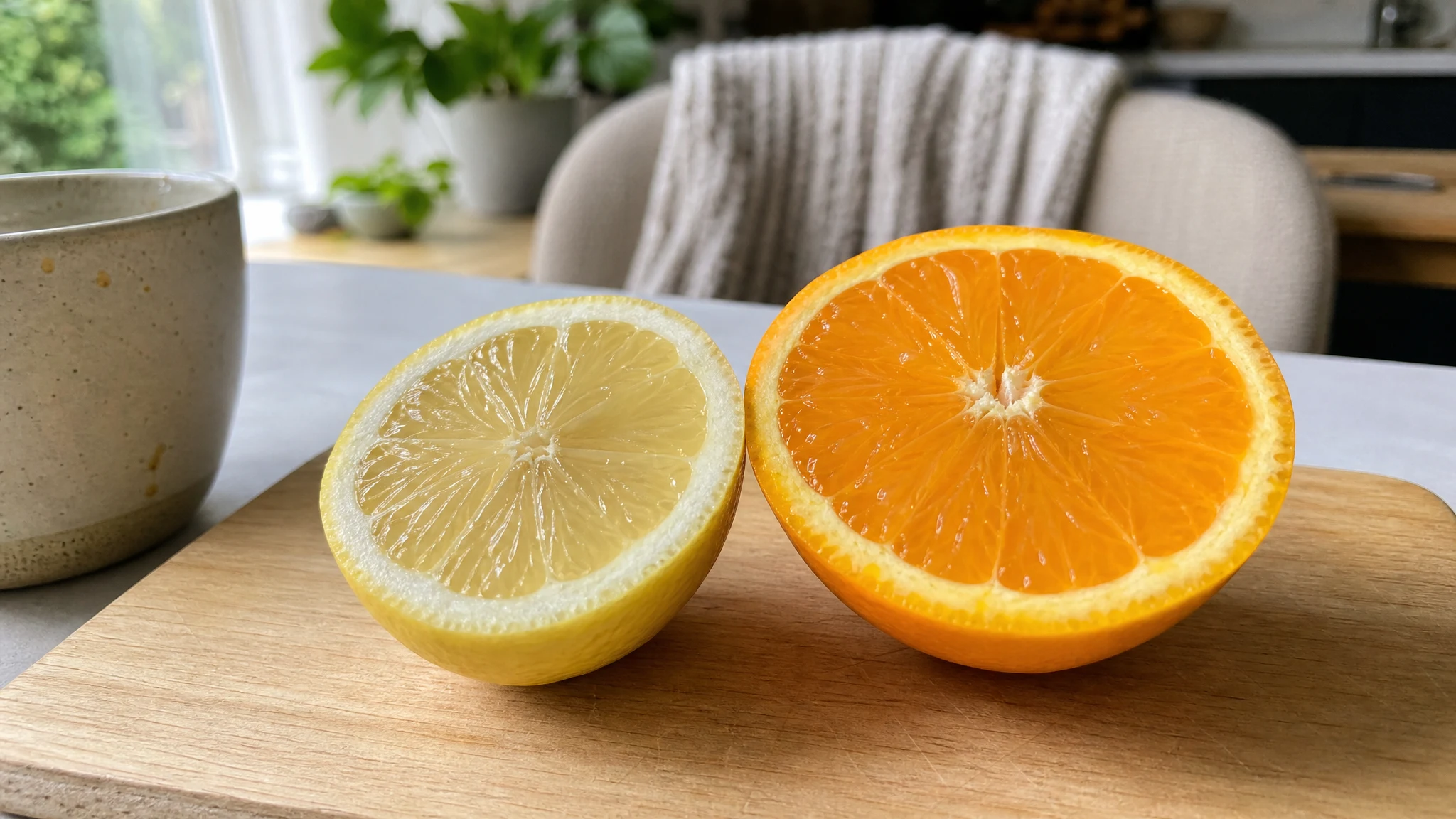
Lemon and sweet orange are the two citrus oils most people meet first, and they are easy to mix up in a drawer. Both smell like fruit, both are pressed from peel, and both are mostly limonene. Put them side by side, though, and they are not interchangeable: lemon is the sharp one, orange the soft one, and one of them asks for more care on skin.
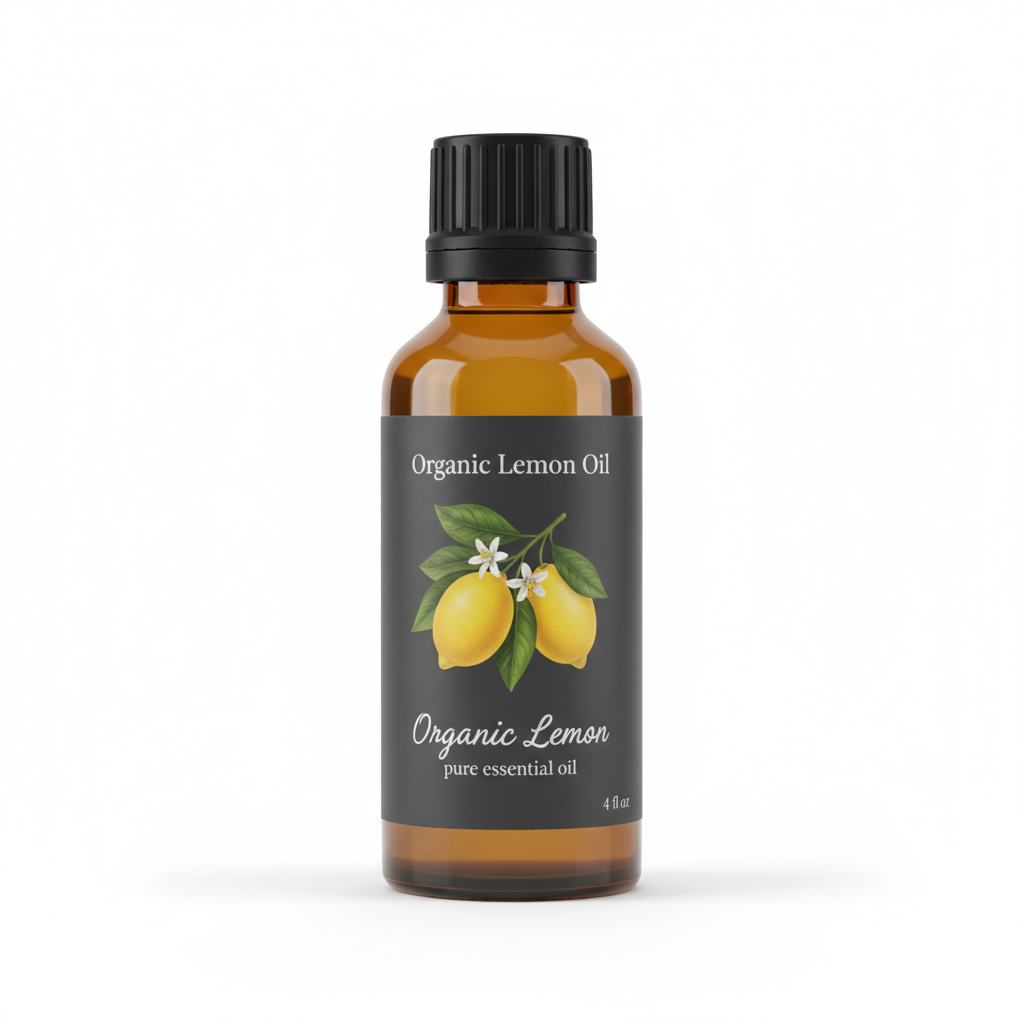
Organic Lemon Essential Oil
Our own Organic Lemon Essential Oil, in sizes from 0.5 oz to bulk.
From $15.99
Shop Now →Aroma: sparkle against sweetness
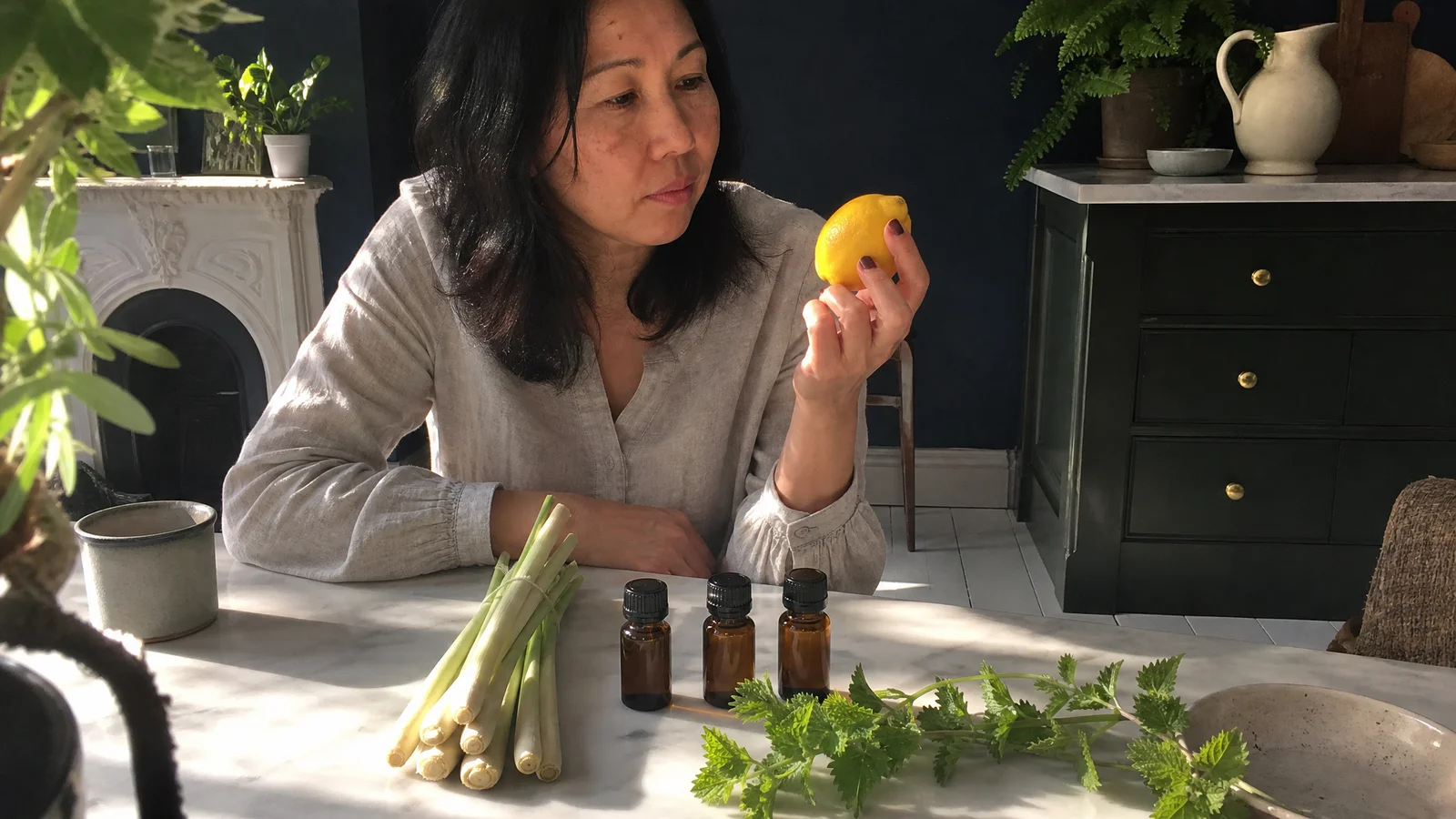
Our lemon oil smells zesty and sunny, like scoring a ripe peel with your thumbnail. Sweet orange is rounder and sweeter, closer to the juicy fruit than the peel. Both are top notes, so both lift quickly and fade quickly, but orange feels warmer while it lasts. If you want a room to smell freshly cleaned, lemon is the better choice. If you want it to smell welcoming, orange is hard to beat, and the two together are a natural pair, as we show in our lemon blending notes.
Chemistry in one paragraph
Lemon oil is mostly limonene, but the rest matters. In ten batches of expressed lemon oil, d-limonene averaged about 65 percent, with beta-pinene near 13 percent and gamma-terpinene near 9 percent, plus a small slice of the citral isomers geranial and neral, together near 2 percent (Safety and efficacy of feed additives consisting of expressed lemon oil and its fractions from Citrus limon (L.) Osbeck and of lime oil from Citrus aurantiifolia (Christm.) Swingle for use in all animal species (FEFANA asbl)). Citral is described by PubChem as having a strong lemon odor, so it is a sensible guess for where lemon's sharp edge comes from. Composition varies by origin and harvest for any citrus oil, and a certificate for the specific bottle is the only reliable guide to its numbers.
Skin and sun: the real difference
This is where the two oils part company. Cold-pressed lemon oil is phototoxic. IFRA caps it at 2.0 percent in finished products across most categories, and the standard states that it is set because of lemon oil's phototoxic effects (IFRA Standards, up to and including the 51st Amendment (January 2024)). The Tisserand Institute treats that figure as a maximum, not a recommendation, and suggests ranges such as 0.5 to 1.2 percent for the face (Dilution for essential oils). Our guidance is 0.5 to 2 percent in a carrier oil with a patch test first, we would begin at the low end, and we ask you to avoid sun on freshly applied areas.
Sweet orange is a gentler story. In the Tisserand Institute's answer to a reader's question, sweet orange is generally thought not to be phototoxic even when expressed (Citruses: a comparison of different oils). That is a statement from experts rather than a licence to ignore the rest. Orange oil is also mostly limonene, so it oxidises, and an old orange bottle is as much a skin question as an old lemon one. Keep it capped, keep it cool, and check any blend with a patch test.
Which should you reach for?
- Cleaning-day scent, closets, drawers: lemon, for its bright, clean edge.
- Warm, family-friendly rooms: sweet orange, for its rounder sweetness.
- Diffusing: either, or half and half. The drops-and-grams arithmetic in our lemon room spray notes helps you scale a mix.
- Leave-on skin products: think about the sun first. Lemon needs the lower dilution and the shade; check orange against the IFRA guidance for your own product.
We sell lemon only. Sweet orange is easy to find at a craft supply shop; since the same name can cover very different bottles, smell it before you buy, and keep in mind that researchers who bought bergamot and mandarin oils online found sweet orange named as one possible cheaper substitute (Type and magnitude of non-compliance and adulteration in neroli, mandarin and bergamot essential oils purchased on-line: potential consumer vulnerability.). Our own citrus oils comparison has the limits for the rest of the family.
In the end it is about how you want a room to feel: lemon for brightness, orange for warmth, and both for the days you cannot decide.
Organic Lemon Essential Oil
Organic Lemon Essential Oil from our own shop, in sizes from 0.5 oz to bulk.
From $15.99
Shop Now →Sources & Further Reading
- Safety and efficacy of feed additives consisting of expressed lemon oil and its fractions from Citrus limon (L.) Osbeck and of lime oil from Citrus aurantiifolia (Christm.) Swingle for use in all animal species (FEFANA asbl), EFSA Journal, 2021.
- IFRA Standards, up to and including the 51st Amendment (January 2024).
- Dilution for essential oils, Tisserand Institute.
- Citruses: a comparison of different oils, Tisserand Institute.
- Type and magnitude of non-compliance and adulteration in neroli, mandarin and bergamot essential oils purchased on-line: potential consumer vulnerability. Pierson et al., Scientific Reports, 2021.