Lemon vs Bergamot Oil: How They Differ
Lemon is a bright, sharp, clean-smelling oil, and bergamot is its more elegant cousin. Both are pressed from the peel of a citrus fruit, so they get compared constantly. They are different enough that choosing the wrong one for a project is easy, and the difference in skin limits is bigger than most people expect.
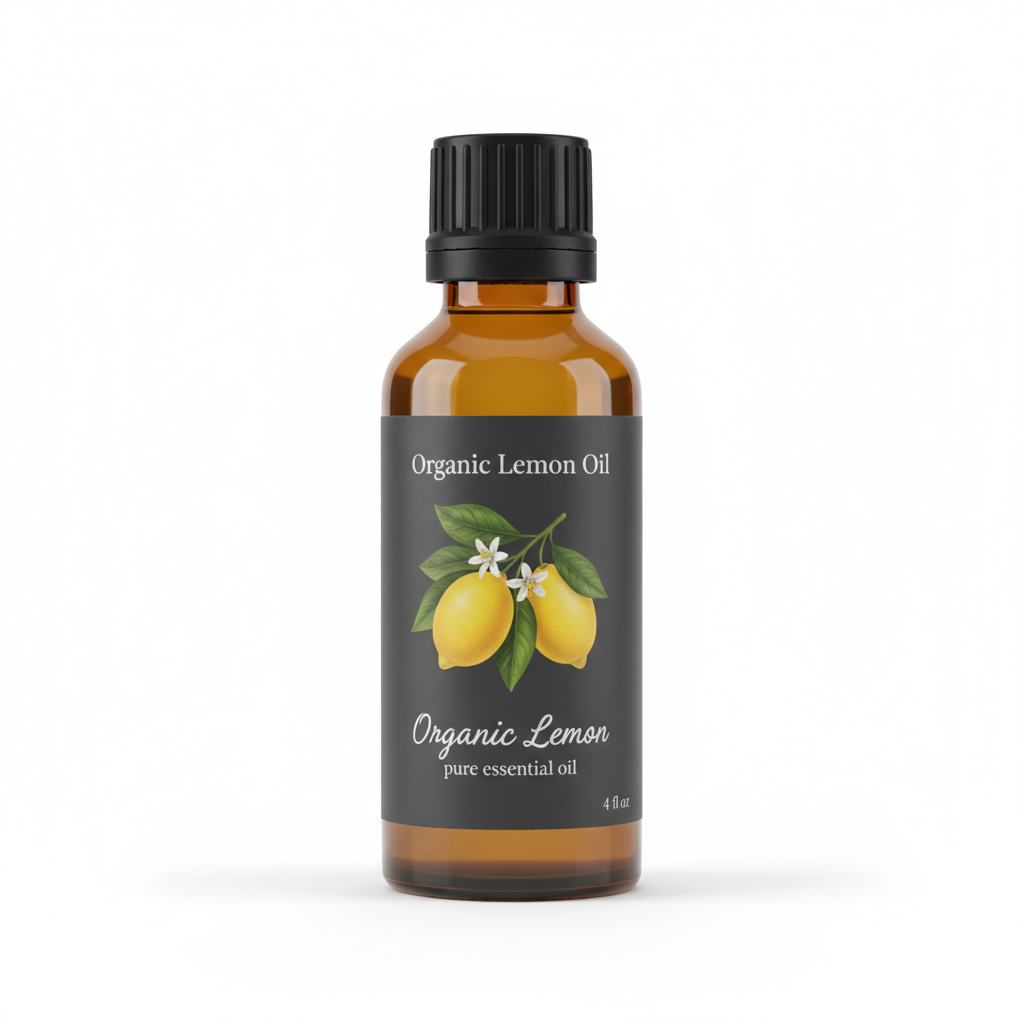
Organic Lemon Essential Oil
Our own Organic Lemon Essential Oil, in sizes from 0.5 oz to bulk.
From $15.99
Shop Now →The fruit and the scent
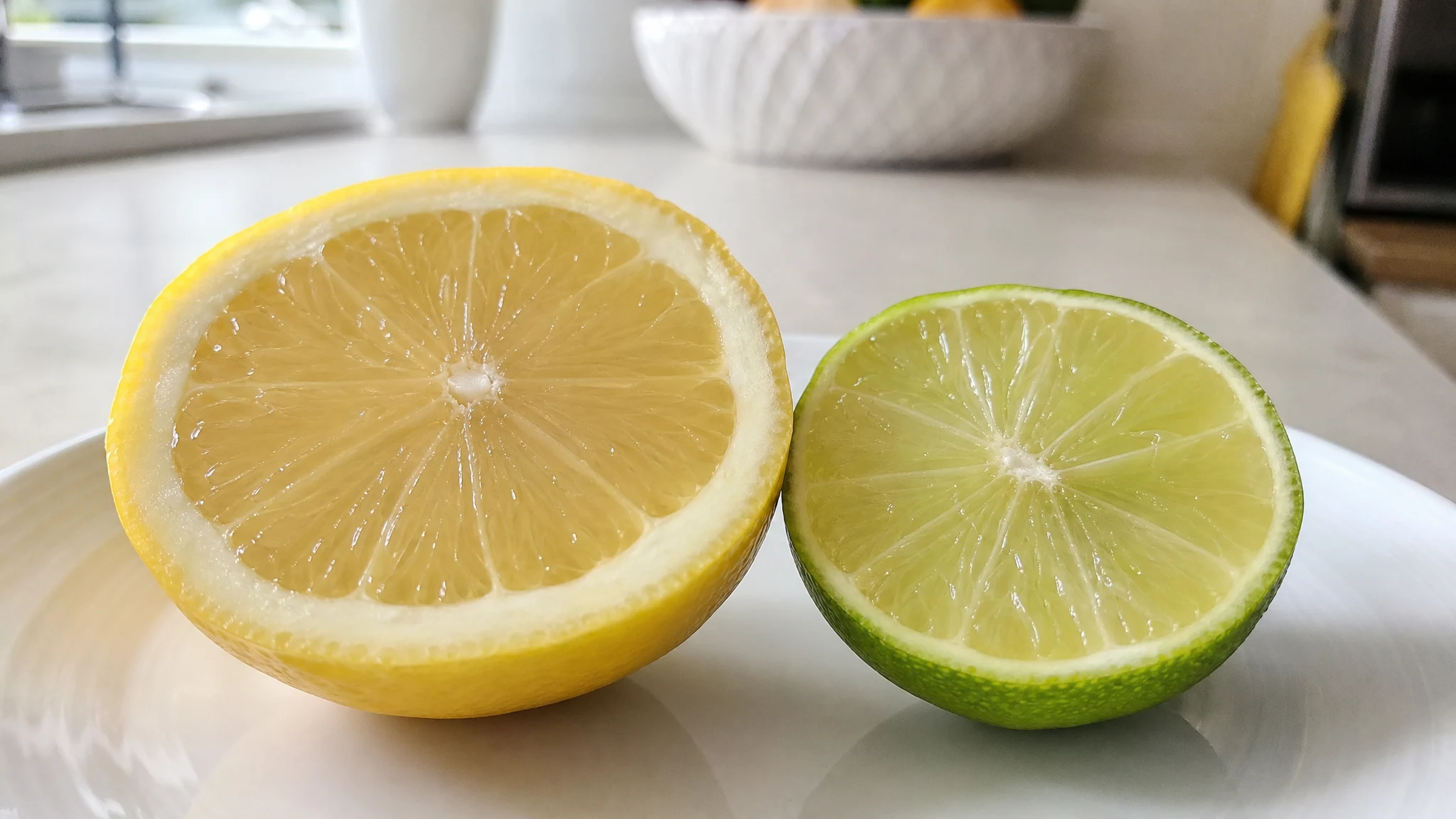
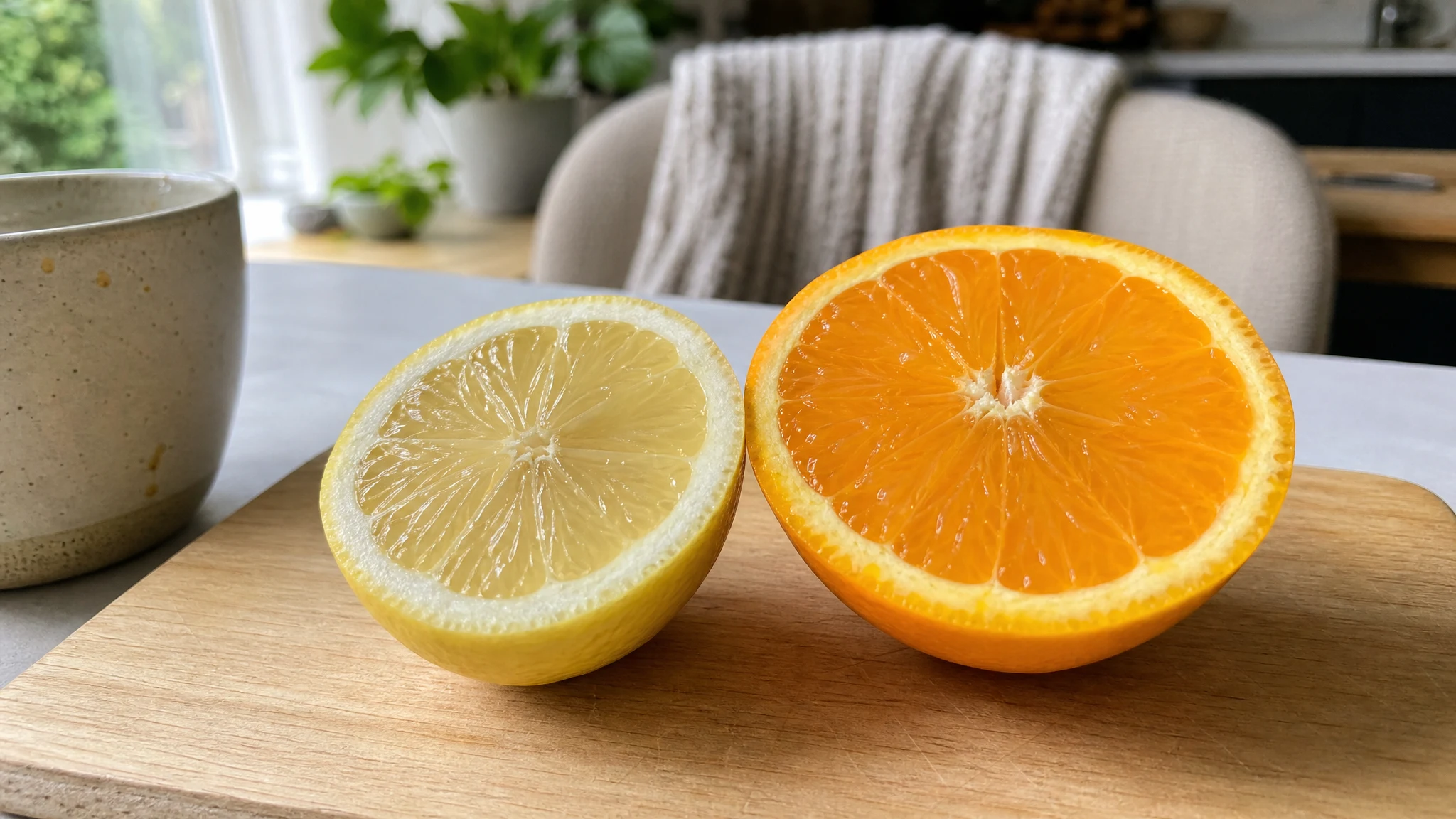
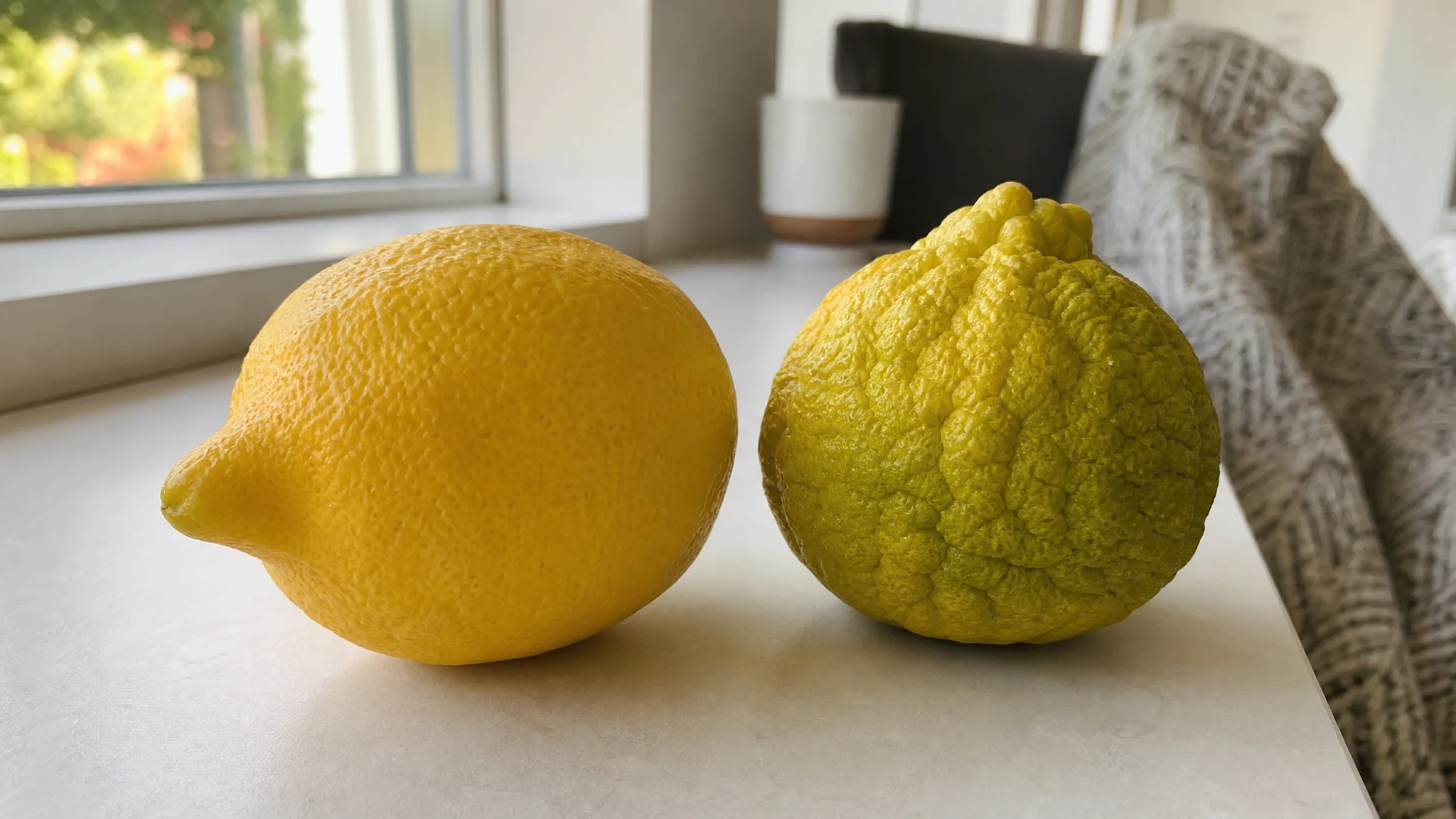
Lemon is the fruit you know. Our oil, cold-pressed from the peel of Citrus limon, smells zesty, sparkling and sunny, exactly like scoring a ripe peel with a thumbnail. Bergamot comes from a different citrus and is usually described as citrus with a floral, softer, more perfumed edge. It lifts a blend the way lemon does but, by that description, leaves a more perfumed trail. Part of that perfumed quality is thought to come from alcohols and esters such as linalool and linalyl acetate, which are the compounds that researchers say are sometimes added to bergamot oil when it is adulterated (Type and magnitude of non-compliance and adulteration in neroli, mandarin and bergamot essential oils purchased on-line: potential consumer vulnerability.). Lemon owes more of its character to limonene with a little citral; in expressed lemon oil, d-limonene averaged about 65 percent across ten batches (Safety and efficacy of feed additives consisting of expressed lemon oil and its fractions from Citrus limon (L.) Osbeck and of lime oil from Citrus aurantiifolia (Christm.) Swingle for use in all animal species (FEFANA asbl)).
In short, lemon is a bright snap. Bergamot is a bright snap with a floral finish.
The skin limits are not close
Here the two part ways sharply. Under the IFRA standards, expressed lemon oil is limited to 2.0 percent in finished products in most categories, while expressed bergamot oil is limited to 0.40 percent, five times lower (IFRA Standards, up to and including the 51st Amendment (January 2024)). Both limits exist because the oils are phototoxic. The IFRA rules also add the furocoumarin-containing oils together: take each oil's share of its own limit and the shares must sum to 100 percent or less. A worked example makes it clear:
- Lemon at 0.5 percent is 25 percent of its 2.0 percent limit.
- Bergamot at 0.2 percent is 50 percent of its 0.40 percent limit.
- Together that is 75 percent, so this blend sits inside the combined limit.
The arithmetic is why we would never copy a bergamot recipe and swap lemon in or out without checking. Tisserand also notes that a bergamot oil from which the furocoumarins have been removed is not phototoxic (Citruses: a comparison of different oils), which is one reason bergamot labelled that way exists. We sell lemon, cold-pressed, and we do not offer a furocoumarin-free lemon, so for lemon the guidance holds: we suggest 0.5 to 2 percent in a carrier, a patch test first, and no sun on freshly applied areas; we would begin at the low end.
Which one for which job
- Cleaning sprays, closets and linen scent: lemon. It is the cleaner-smelling of the two, and the IFRA tables show no restriction for household cleaning products.
- Diffuser blends: either. Lemon gives sparkle; bergamot gives a perfumed layer. We list bergamot among lemon's good partners, and what blends with lemon oil shows how to build around it.
- Anything left on skin: look at the numbers first and keep both low.
Bergamot is not something we sell. If you want to try it, a craft supply shop is the place, and it is worth reading the label for the botanical name and asking the seller what the oil is, given what that adulteration study found. Our citrus limits comparison lines up lemon, lime, bergamot and grapefruit together, and our lemon dilution chart turns percentages into drops.
Both belong on a citrus lover's shelf, and knowing which one tolerates a sunny afternoon is half the skill.
Organic Lemon Essential Oil
Organic Lemon Essential Oil from our own shop, in sizes from 0.5 oz to bulk.
From $15.99
Shop Now →Sources & Further Reading
- IFRA Standards, up to and including the 51st Amendment (January 2024).
- Citruses: a comparison of different oils, Tisserand Institute.
- Type and magnitude of non-compliance and adulteration in neroli, mandarin and bergamot essential oils purchased on-line: potential consumer vulnerability. Pierson et al., Scientific Reports, 2021.
- Safety and efficacy of feed additives consisting of expressed lemon oil and its fractions from Citrus limon (L.) Osbeck and of lime oil from Citrus aurantiifolia (Christm.) Swingle for use in all animal species (FEFANA asbl), EFSA Journal, 2021.