
What Does Lemon Essential Oil Smell Like? Zest, Sunshine, and Sharp Green Notes
Open a bottle of cold-pressed organic lemon oil and something immediate happens. Before you can think about it, your nose registers a burst of brightness so clean and sharp it almost feels like a physical sensation. That first impression is not an accident. It is a direct result of the oil's chemical architecture, and understanding that architecture helps explain why the lemon oil smell is one of the most recognized, and most imitated, scents in the world.
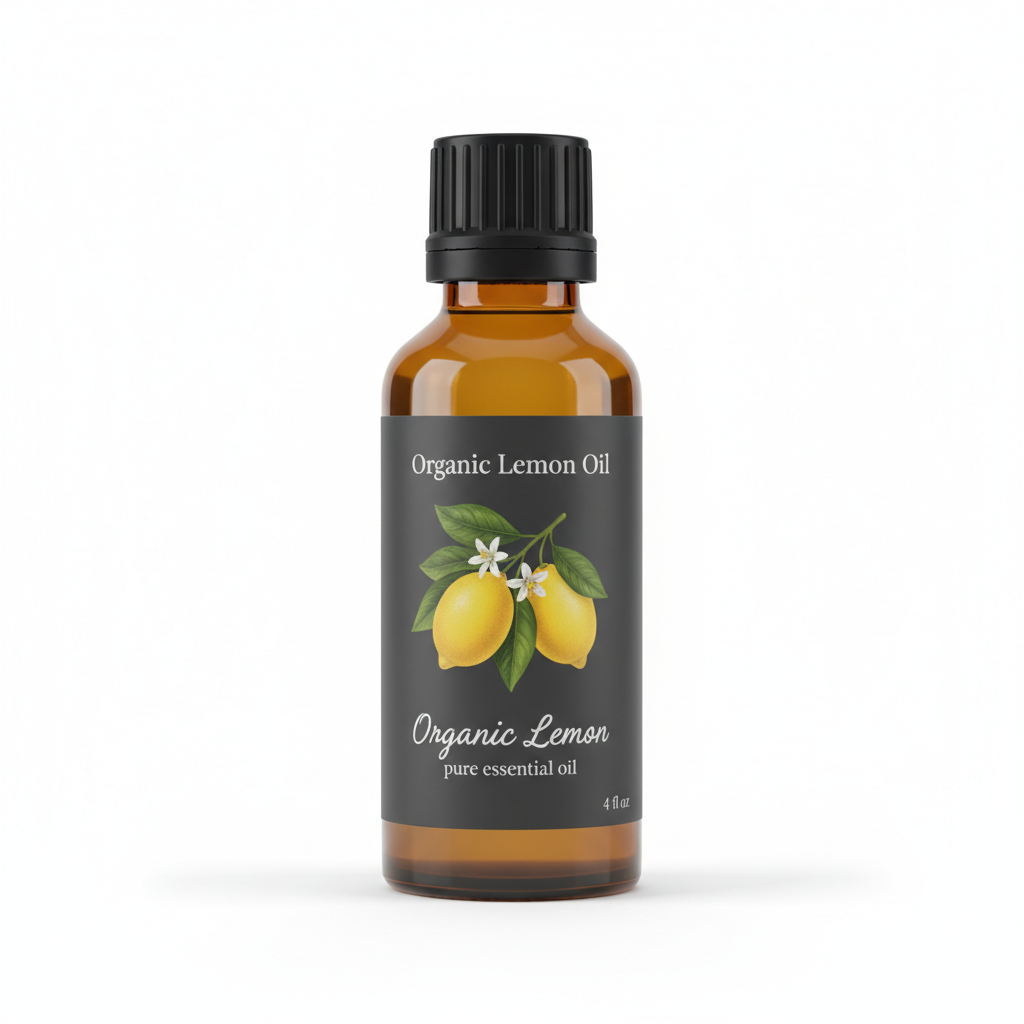
Organic Lemon Essential Oil
Our own Organic Lemon Essential Oil, in sizes from 0.5 oz to bulk.
From $15.99
Shop Now →This deep dive covers the full lemon scent profile: what you actually smell, why you smell it, which molecules are responsible, and what current research observations tell us about those compounds. We will also walk through sourcing indicators and the safety considerations every user should know before reaching for the bottle.
First Impressions: Describing the Lemon Oil Smell
Professional perfumers and aromatherapists reach for a fairly consistent vocabulary when describing what lemon oil smells like. The top note arrives as a sharp, sparkling citrus burst. Beneath that opening, a softer solar warmth emerges, sometimes described as the dry, slightly powdery feeling of sun on citrus skin. Then, if you linger, faint green and herbaceous facets appear at the edges.
Cold-pressed lemon oil, in particular, carries a quality that synthetic lemon fragrance simply cannot replicate: a slight waxy, almost fatty undertone that comes directly from the outer flavedo of the peel. This is the scent of the whole fruit, not just a single molecule extracted and amplified. That complexity is part of what makes organic lemon oil distinct from its synthetic counterparts.
A useful sensory map looks something like this:
- Top note: Sharp, sparkling, almost electric citrus brightness
- Heart note: Warm, solar, slightly sweet with a dry quality
- Base facets: Faint green, herbaceous, lightly waxy
The entire profile is fleeting by nature. Citrus top notes are highly volatile, meaning they diffuse quickly. That is a feature in a diffuser blend, but it also means that in a perfume or skincare product, formulators often anchor lemon oil with lower-volatility carriers or fixatives to extend its presence.
The Chemistry Behind the Scent Profile
The lemon scent profile is not the product of a single molecule. It is a chorus, with a very loud lead singer.
d-Limonene: The Star Compound
Limonene typically makes up between 60 and 80 percent of cold-pressed lemon oil by volume, depending on cultivar, harvest season, and geography. It is a cyclic monoterpene, and its scent is immediately recognizable as "citrus." Interestingly, limonene exists in two mirror-image forms. The d-form (found in lemon, orange, and most citrus peels) smells brightly citrusy. The l-form (found in pine needles and some herbs) smells more resinous and turpentine-like. Cold-pressed lemon oil contains almost exclusively d-limonene, which is why the oil smells so characteristically and cleanly bright.
Research has examined d-limonene extensively in food science, cosmetic chemistry, and aromatic contexts. These observations are early-stage and should not be read as established clinical outcomes, but they give useful background for understanding why this compound appears in so many cosmetic and household formulations.
Beta-Pinene and Gamma-Terpinene
After limonene, beta-pinene and gamma-terpinene are among the most significant contributors to the lemon scent. Beta-pinene adds the sharp, slightly resinous green quality that keeps lemon oil from smelling purely sweet. It is responsible for that edge, the note that makes lemon oil smell like the actual rind rather than lemon candy. Gamma-terpinene contributes warmth and a faintly herbal character, softening the overall profile.
Linalool and Citral
Citral, present in smaller but meaningful percentages, is actually a mixture of two isomers: geranial (citral A) and neral (citral B). Both carry a strong lemon scent that is slightly softer and more floral than limonene's sharpness. Citral is the compound most associated with the "lemon verbena" or "lemongrass" facet that some noses detect in certain lemon oil samples. Linalool, typically present in trace amounts, adds a very faint floral, almost lavender-adjacent softness to the background.
Sabinene, Myrcene, and Minor Terpenes
A range of minor terpenes, including sabinene, myrcene, and alpha-pinene, fill out the aromatic picture. Their individual concentrations are small, often below one percent, but collectively they contribute to the depth and naturalness of the lemon oil smell. This is precisely why a gas chromatography (GC) report on a quality organic lemon oil shows dozens of compounds, not just one or two.
How Extraction Method Shapes the Smell
The extraction process has a direct and significant impact on the final scent. Cold-pressing (also called expression) mechanically ruptures the oil glands in the outer peel without heat, preserving the full aromatic complexity of the fresh fruit. Steam-distilled lemon oil, by contrast, smells noticeably different: slightly cooked, more uniform, and lacking some of the sharper green facets that cold-pressing delivers.
If you want to understand exactly how cold-pressing captures that complexity, a detailed look at the cold-pressing process explains the mechanics step by step.
Organic certification also matters here. Peel from conventionally grown lemons can carry pesticide residues in the outer layers, and those compounds can carry through into the expressed oil. Certified organic sourcing reduces that risk significantly and is a baseline quality standard worth insisting on.
Sourcing and Quality Indicators
Not all lemon oils smell the same, and the differences are not subtle. Several factors influence the final aromatic profile:
| Factor | What to Look For | Why It Matters |
|---|---|---|
| Origin | Sicily, Calabria, or Argentine-grown Citrus limon | Terroir affects terpene ratios and aromatic depth |
| Extraction method | Cold-pressed (expressed), not steam-distilled | Preserves the full, fresh-peel scent profile |
| Certification | Certified organic by a recognized body (e.g., USDA, EU) | Reduces pesticide carryover into the expressed oil |
| GC/MS report | Third-party gas chromatography and mass spectrometry analysis | Confirms compound percentages and absence of adulterants |
| Harvest timing | Winter harvest is often preferred for aroma intensity | Limonene concentrations can vary seasonally |
| Packaging | Dark glass bottle with a tight seal | Limonene oxidizes readily when exposed to light and air |
A reputable supplier will make GC/MS reports available on request or publish them directly on the product page. If that transparency is absent, that is a meaningful signal about quality standards.
Adulteration is a genuine concern in the essential oil market. Synthetic limonene or cheap cuts with other citrus oils are sometimes used to extend volume. A trained nose can sometimes detect this as a flatness or harshness in the scent, but GC/MS testing is the reliable confirmation.
Research Observations: What Scientists Are Exploring
The research literature on lemon oil and its constituent compounds is growing, particularly around d-limonene and citral. It is worth being clear about what the current body of work actually represents: most studies are in vitro (cell-based) or animal models, and findings cannot be directly applied to human outcomes without further clinical research. With that framing in mind, here are some of the directions researchers have explored.
Some research suggests d-limonene may interact with olfactory receptors in ways that influence mood-related pathways. A 2014 study published in Chemical Senses observed that citrus aromas, including limonene, appeared to affect self-reported alertness and mood states in human subjects, though researchers noted the need for larger controlled studies before drawing firm conclusions.
Citral has been observed in laboratory settings to have notable effects on skin cell behavior, which has generated interest in its potential role in cosmetic formulations. Research published in Flavour and Fragrance Journal and related publications has described citral's aromatic potency and its behavior in formulation chemistry, relevant context for understanding why it appears in many fragrance compositions.
Beta-pinene and gamma-terpinene have been studied in the context of their aromatic volatility and diffusion behavior. These observations are most relevant to understanding how lemon oil performs in diffuser applications and how its scent profile evolves over time in a space.
None of these research threads constitute clinical proof of any specific outcome. They represent early and ongoing scientific inquiry into compounds that humans have used aromatically for centuries.
Safety Profile and Contraindications
Cold-pressed lemon oil carries a specific and important safety consideration that every user should understand before applying it to skin: it is phototoxic.
The phototoxicity comes from naturally occurring furanocoumarins, specifically bergapten (5-MOP) and other compounds present in the expressed peel oil. When these compounds contact skin and are then exposed to UV light (sunlight or tanning beds), they can cause significant skin reactions, ranging from redness to long-lasting darkening of the skin.
Key safety rule: Do not apply diluted cold-pressed lemon oil to skin that will be exposed to sunlight or UV sources within 12 to 18 hours of application. Distilled versions have lower furocoumarin content, but cold-pressed organic lemon oil should always be treated as phototoxic.
For a comprehensive overview of dilution ratios, photosensitivity guidelines, and guidance on use around children, the full safety guide covers these topics in detail. A brief summary of the key points:
- Dilution: For topical use on adults, a 2 percent dilution or lower is a common starting point. That is approximately 12 drops of essential oil per 30 ml (1 ounce) of carrier oil.
- Patch testing: Always perform a patch test on a small area of inner arm skin before broader topical use. Wait 24 hours and observe for any reaction before proceeding.
- Children: Exercise additional caution with essential oils around young children. Consult a qualified healthcare provider before use on or around children under the age of 10.
- Oxidized oil: Limonene is prone to oxidation. Oxidized citrus oil is more likely to cause skin sensitivity. Store lemon oil in a cool, dark place with the cap tightly sealed, and note the batch date. Discard if the scent changes significantly or if the oil is more than one to two years old.
- Consultation: If you are pregnant, nursing, managing a health condition, or taking any medications, consult a qualified healthcare provider before adding essential oils to your routine.
How the Scent Behaves in Formulation and in the Diffuser
Understanding the scent profile on paper is one thing. Knowing how it behaves in actual use is where that knowledge becomes practical.
In a diffuser, lemon oil is one of the fastest-moving aromatic materials you can work with. Its high volatility means the room fills with scent almost immediately, but it also means the diffusion session needs to be relatively short (15 to 30 minutes is a common recommendation) to avoid olfactory fatigue. It blends very well with other top and middle notes: eucalyptus, peppermint, and rosemary for an energizing morning atmosphere; bergamot and lavender for softer, more rounded evening blending.
In skincare and hair formulations, the photosensitivity concern limits where and how it can be used. It performs well in rinse-off products (shampoos, body washes) or in products intended for nighttime use only. The fresh, clean scent makes it a popular natural fragrance choice for surface sprays and linen mists, where it contributes to a bright, airy atmosphere without the skin exposure concerns.
Perfumers often use cold-pressed lemon oil as an opening note precisely because of its volatility. Its sharpness punctuates the first impression of a fragrance, then gives way to the heart notes underneath. Extending its presence requires layering it with materials like lemon myrtle or citral-rich components that carry the "lemon" impression longer.
The Organic Difference in the Bottle
Side by side, organic cold-pressed lemon oil and its conventional counterpart may smell superficially similar to a casual nose. The differences are in the details. Organic sourcing tends to produce oil with a slightly more complex, textured aromatic profile because the fruit develops under less chemical intervention, which some researchers and perfumers suggest allows the full terpene profile to develop more naturally.
Whether or not that difference is consistently measurable in GC/MS analysis is a topic of ongoing discussion among aromatic professionals. What is more straightforwardly supported is that organic certification provides meaningful assurance about what is not in the oil: synthetic pesticide residues that could otherwise carry through the cold-pressing process into the final product.
For a broader orientation to the category before going further into the chemistry, the complete guide to organic lemon oil provides a solid foundation.
The lemon oil smell is, at its core, a snapshot of summer citrus groves preserved in a small glass bottle. The science behind it is genuinely fascinating, a precise interplay of terpenes, minor esters, and trace components that together produce something no synthetic formulation has fully replicated. Knowing the chemistry does not diminish the sensory pleasure of that first bright burst. If anything, it deepens it.