Lemon Oil Safety Basics: Photosensitivity, Dilution, and Kids
Cold-pressed lemon oil is one of the most beloved ingredients in natural skincare and home fragrance. That bright, clean citrus scent feels almost universally welcome. But lemon oil also comes with specific safety considerations that deserve your full attention before you reach for the bottle. Photosensitivity reactions, dilution missteps, and careful use around young children are the three areas where most problems arise. This guide walks through each one clearly, step by step.
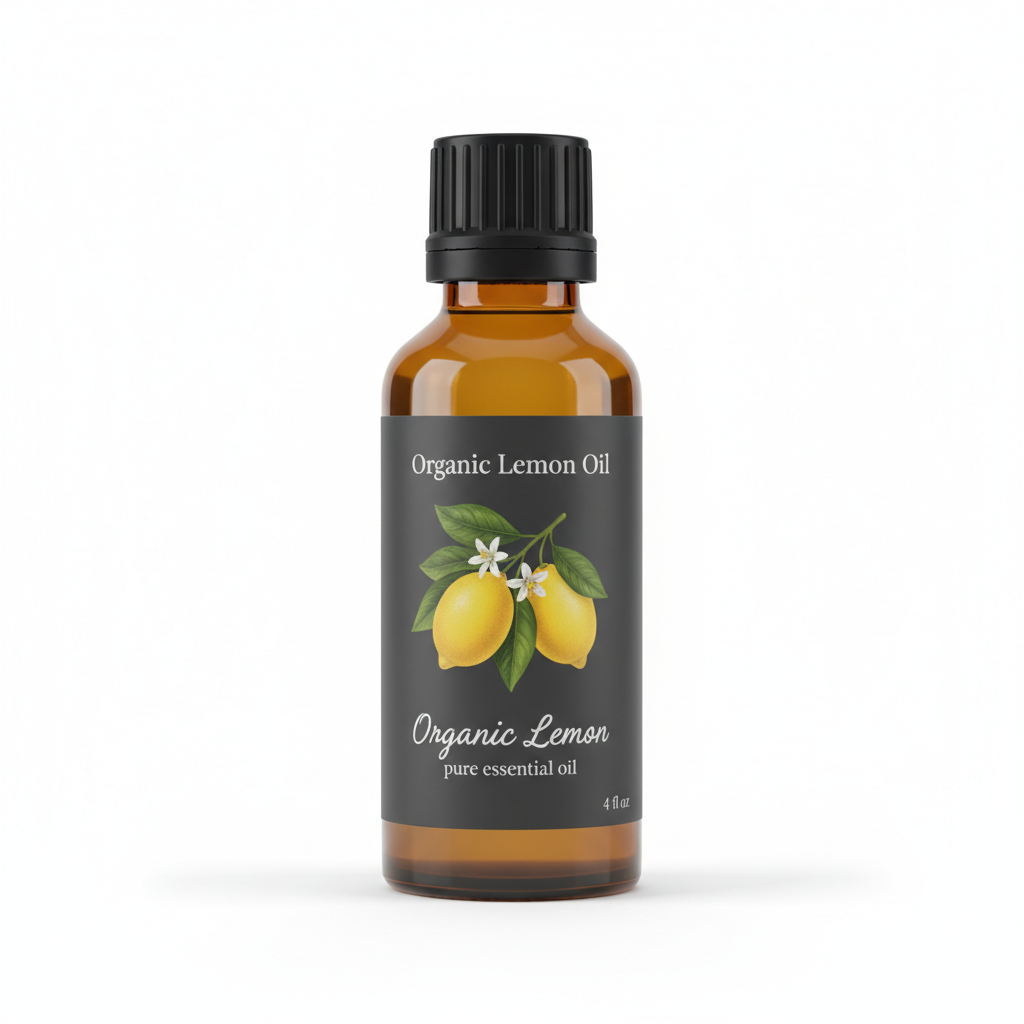
Organic Lemon Essential Oil
Our own Organic Lemon Essential Oil, in sizes from 0.5 oz to bulk.
From $15.99
Shop Now →If you are new to this ingredient, it helps to start with a solid foundation. Our complete guide to cold-pressed organic lemon oil covers sourcing, production methods, and what to look for when choosing a quality product. Once you have that context, the safety information below will make even more sense.
Understanding Lemon Oil Photosensitivity
This is the single most important safety topic with cold-pressed citrus oils, and it is frequently underestimated. Let's start with the science before moving to practical steps.
What causes lemon oil photosensitivity?
Cold-pressed lemon oil is expressed directly from the outer peel of the fruit. That mechanical pressing process preserves aromatic compounds beautifully, but it also retains a class of naturally occurring plant chemicals called furanocoumarins. The most significant of these is bergapten, sometimes listed as 5-methoxypsoralen.
Furanocoumarins are phototoxic. When they come into contact with skin and that skin is then exposed to UV light (sunlight or tanning beds), a reaction may occur. This is not an allergic response in the traditional sense. It is a photochemical process. The furanocoumarin molecules absorb UV energy and then release it in a way that can damage skin cells. The result may range from mild, uneven darkening of the skin to more significant redness and irritation in the exposed area.
Steam-distilled lemon oil is different. The distillation process largely removes furanocoumarins because these heavier molecules do not travel with the steam. If lemon oil photosensitivity is a concern for you, steam-distilled versions carry a much lower phototoxic risk. However, many aromatherapy and skincare enthusiasts prefer cold-pressed for its fuller, truer-to-fruit scent profile. If you are working with cold-pressed, the steps below are essential.
How long does the risk last?
Research and professional aromatherapy guidelines generally suggest avoiding direct UV exposure on skin where you have applied cold-pressed lemon oil for a minimum of 12 hours. Some guidelines extend that window to 18 hours, particularly after more concentrated application. The specific timeframe can vary based on how much oil was used, how it was diluted, and individual skin characteristics. When in doubt, err toward the longer window.
Key point: Lemon oil photosensitivity applies specifically to UV exposure on skin where the oil was applied. It does not affect your eyes or internal use (though internal use of essential oils carries its own separate cautions and is outside the scope of this cosmetic-focused guide).
Step-by-Step: Safe Topical Use of Cold-Pressed Lemon Oil on Skin
Follow these steps any time you plan to apply cold-pressed lemon oil to skin, whether in a DIY blend, a lotion, or a body oil.
What you will need
- Cold-pressed organic lemon essential oil
- A carrier oil suited to your skin type (fractionated coconut oil, jojoba, sweet almond, or similar)
- A clean measuring dropper or pipette
- A dark glass mixing bottle (amber or cobalt, 1 oz or 2 oz)
- A small notebook or label maker for recording your blend and date
- A skin-safe patch test area (inner forearm is ideal)
Step 1: Choose your application timing carefully
Before you mix anything, look at your schedule. Plan to apply lemon oil blends in the evening, or at any time when you know the treated skin will not be exposed to sunlight or UV light for at least 12 hours. A bedtime wind-down routine is a practical and natural fit. If morning application is important to you, consider using a steam-distilled lemon oil instead, or confine the blend to areas that will be fully covered by clothing all day.
Step 2: Dilute to a safe concentration
Never apply undiluted (neat) lemon oil directly to skin. This is a firm rule, and it applies to all essential oils, not just lemon. The International Fragrance Association (IFRA) and professional aromatherapy organizations publish dermal use limits for phototoxic oils. For cold-pressed lemon oil intended for leave-on skin products, a commonly referenced guideline places the maximum at approximately 2% in your final blend, and some guidance goes lower for sensitive skin or for products used near the face.
Here is a simple dilution reference:
| Dilution Level | Drops of Essential Oil per 1 oz (30 ml) Carrier | Typical Use Case |
|---|---|---|
| 0.5% | 3 drops | Sensitive skin, face blends, children over 6 |
| 1% | 6 drops | General adult body use, daily application |
| 2% | 12 drops | Occasional adult use, not for face or children |
For cold-pressed lemon oil specifically, staying at or below 1% for any product you might wear into sunlight is a cautious and widely recommended practice. The 2% figure applies only when UV exposure is reliably avoided for the full protective window.
Step 3: Conduct a patch test
Even at proper dilution, individual sensitivities vary. Mix your blend at the intended concentration, then apply a small amount (a few drops) to the inner forearm. Cover lightly with a bandage if you like, and keep the area away from sun. Wait 24 hours and observe. Redness, itching, or unusual skin changes suggest you should not use that blend on larger areas. If the patch site remains comfortable and unchanged, you can proceed with confidence.
Step 4: Apply to skin that will stay out of the sun
Apply your diluted blend as planned, to areas of skin that will not receive UV exposure within the safety window. Common choices for evening routines include the soles of the feet (a popular aromatherapy application point), the lower legs under pajamas, or the upper chest if you are staying indoors. Avoid applying near the eyes or on broken skin.
Step 5: Track and label your blends
Write down the date you made the blend, the oils used, the carrier, and the dilution ratio. Label your bottle clearly. Cold-pressed lemon oil has a shorter shelf life than many other essential oils (typically 6 to 12 months from opening, sometimes less). Oxidized citrus oil is more likely to cause skin sensitization, so freshness matters.
Common mistakes to avoid
- Applying in the morning and going outdoors: This is the scenario most likely to cause a photosensitivity issue. The timing step is not optional.
- Assuming sunscreen fully protects you: Sunscreen may reduce but not necessarily eliminate phototoxic risk from furanocoumarins. Do not rely on it as a substitute for timing and dilution caution.
- Using old or improperly stored oil: Store your lemon oil in a cool, dark place with the cap tightly sealed. Oxidized citrus oils are more likely to cause sensitization even at otherwise safe dilutions.
- Skipping the patch test: It takes 24 hours and a small amount of product. It is always worth doing.
- Measuring by feel rather than by drops: Dilution matters. Use a dropper or pipette, not a pour.
Lemon Oil Safety for Children
Children's skin and developing systems interact with essential oils differently than adult physiology does. This section covers the key considerations, along with practical guidance for parents and caregivers.
Age guidelines
Most professional aromatherapy organizations advise against applying any essential oils topically to infants under 3 months of age. For babies between 3 months and 2 years, essential oil use on skin is generally considered best avoided except in specific, very low concentration situations guided by a qualified aromatherapist or healthcare provider.
For children between 2 and 6 years old, essential oils may be used in very low dilutions (around 0.25% to 0.5%) with appropriate oils and appropriate applications. Lemon oil in this age group warrants extra caution precisely because of the photosensitivity factor. Children spend significant time outdoors, often unpredictably, which makes controlling UV exposure more difficult.
For children 6 and older, a 0.5% to 1% dilution is a commonly referenced starting range for topical use of gentle oils. Lemon oil can be part of a blend at this level, applied in the evening, to areas that will remain covered.
Diffusing lemon oil around children
Diffusion is often considered a lower-risk way to enjoy lemon oil's bright, cheerful scent in a family home, because it avoids direct skin contact and therefore sidesteps the photosensitivity concern. That said, a few practical points apply:
- Diffuse in well-ventilated spaces. Do not run a diffuser continuously for hours on end in a small, closed room.
- Intermittent diffusion (30 to 60 minutes on, then off) is a more balanced approach than continuous running.
- Keep diffusers out of reach of young children. Undiluted essential oil can cause serious skin irritation if a curious child gets into the water reservoir.
- If a child shows any signs of respiratory discomfort when the diffuser is running, discontinue use and increase ventilation.
- For households with very young infants, consult a healthcare provider before diffusing any essential oil regularly.
Never leave essential oils within reach of children
This bears stating directly. Undiluted essential oils are concentrated plant extracts. A small child ingesting even a modest amount of essential oil can experience a serious adverse event. Store all essential oils in a locked cabinet or on a high shelf that children cannot access. This is not an exaggeration of the risk.
Pets in the household
If you have cats or dogs sharing your home with your children, lemon oil safety extends to them as well. Citrus oils in particular are known to be poorly tolerated by cats. Our dedicated article on lemon oil safety for cats and dogs covers this topic in depth. The short version: diffusing citrus oils in a home with cats warrants careful consideration, and topical application on or near pets should be avoided.
Quick Reference: Lemon Oil Safety Checklist
Before any topical application of cold-pressed lemon oil, run through this checklist:
- Is the oil cold-pressed or steam-distilled? Cold-pressed requires phototoxicity precautions.
- Is the oil fresh and properly stored? Check the purchase or opening date.
- Have I diluted to an appropriate concentration for the intended user (adult, child, sensitive skin)?
- Have I done a patch test on this blend?
- Will the treated skin area be protected from UV light for at least 12 hours after application?
- Am I applying this to an area well away from eyes and broken skin?
- If this is for a child, am I using an age-appropriate dilution and an area that can be kept covered?
- Have I consulted a qualified healthcare provider if I have any specific concerns about sensitivities or individual circumstances?
Frequently Asked Questions
Can I use lemon oil in a daytime lotion if I stay indoors?
If you have cold-pressed lemon oil in a leave-on product and you remain entirely out of sunlight (including through windows, since some UV penetrates glass), the phototoxic risk is significantly reduced. However, this requires real discipline about sun avoidance, and it is genuinely difficult to guarantee over a full day. Evening application remains the more reliable approach.
Does washing off the lemon oil reduce photosensitivity risk?
Washing the area thoroughly with soap and water after application may reduce the amount of furanocoumarin remaining on the skin, but professional guidance does not recommend relying on this as a safety measure. The timing guidance (avoiding UV for 12 or more hours) remains the standard recommendation regardless.
Is lemon oil in a rinse-off product safer?
Rinse-off products (shower gels, shampoos, soaps) are generally considered lower risk for phototoxicity because contact time with skin is brief and the product is removed. This is why cold-pressed citrus oils appear more often in rinse-off formulations. Even so, IFRA guidelines still set usage levels for rinse-off products. If you are formulating your own products, research the current applicable guidelines for your specific use category.
Where can I learn more about lemon oil in general?
Our lemon essential oil FAQ covers 15 of the most common questions people have about this oil, from scent profiles to blending suggestions to storage best practices. It is a good companion read to this safety-focused article.
A Note on Consulting Professionals
This article is educational and focused on cosmetic and aromatic use. It is not a substitute for professional guidance. If you have specific questions about your skin, your child's sensitivities, or any individual health circumstances, please consult a qualified healthcare provider before incorporating new topical products into your routine. A certified aromatherapist can also provide personalized blending guidance that goes beyond what a general article can offer.
Lemon oil is a genuinely wonderful ingredient when used with knowledge and care. The bright, sunny quality of its scent makes it one of the most uplifting additions to an evening routine or a home fragrance practice. Getting the safety basics right means you can enjoy it fully, with confidence and without worry.