Lemon Essential Oil FAQ: 15 Common Questions Answered
If you've been exploring lemon essential oil, you've probably run into a lot of conflicting information online. Some sources oversell it. Others bury the practical details you actually need. This lemon essential oil FAQ gathers the most common lemon oil questions and answers them honestly, with a focus on quality, safe use, and what the oil genuinely offers as a cosmetic and aromatic ingredient.
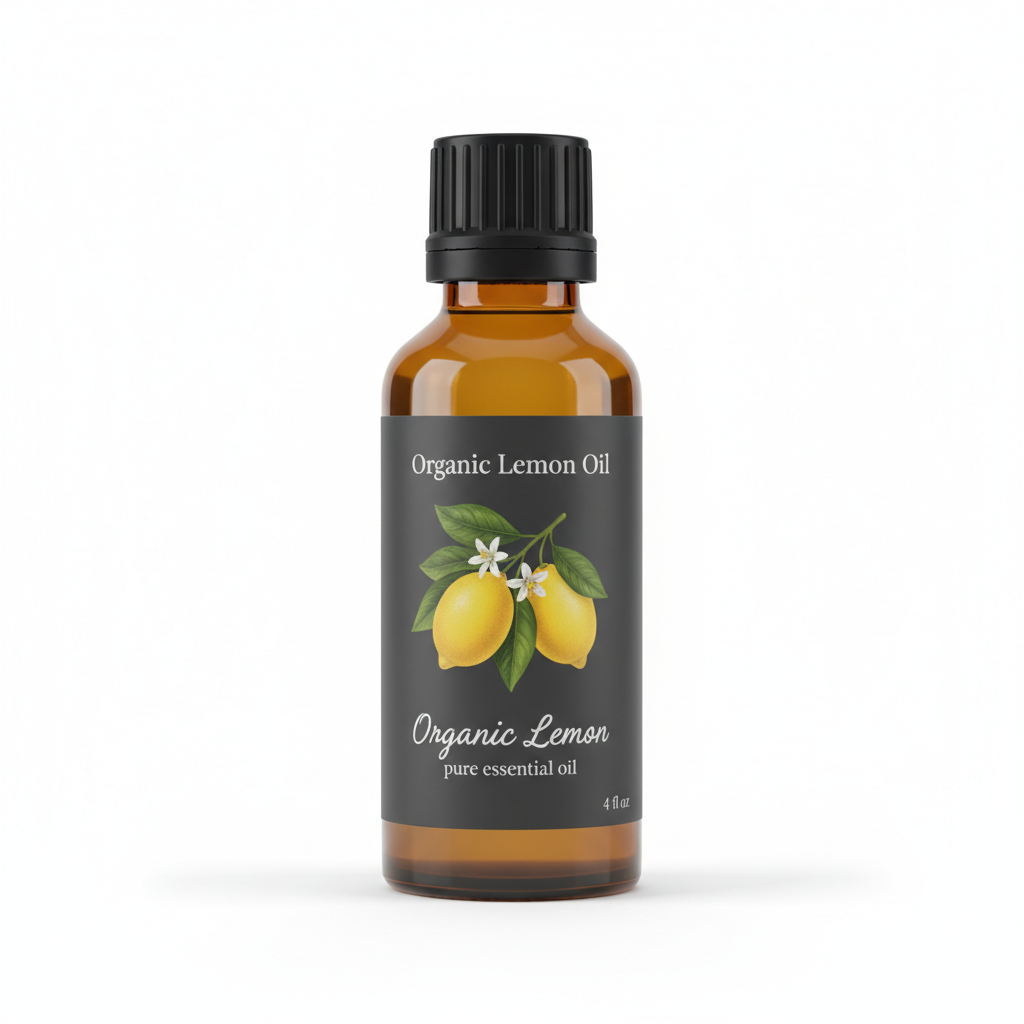
Organic Lemon Essential Oil
Our own Organic Lemon Essential Oil, in sizes from 0.5 oz to bulk.
From $15.99
Shop Now →Questions are grouped by theme so you can jump to what matters most to you right now.
The Basics: What Lemon Oil Is and Where It Comes From
1. What exactly is lemon essential oil?
Lemon essential oil is a concentrated aromatic extract taken from the outer peel of fresh lemons (Citrus limon). It is not made from lemon juice, lemon zest in cooking, or lemon fragrance. The oil contains the volatile aromatic compounds that give a lemon its sharp, familiar scent, along with naturally occurring plant constituents.
2. How is lemon oil made? What does "cold-pressed" mean?
Most lemon essential oil is cold-pressed, meaning the peel is mechanically pressed under low heat to release its oil. No solvents or steam distillation are involved, which helps preserve the bright, fresh aromatic profile the oil is known for. For a fuller explanation of the pressing process, see our complete guide to cold-pressed organic lemon oil.
3. What does "organic" mean on a lemon oil label?
Organic certification means the lemons were grown without synthetic pesticides or fertilizers, and that the supply chain has been audited by a recognized certifying body (such as USDA Organic in the United States). Because pesticide residues can concentrate during pressing, choosing certified organic lemon oil is a meaningful quality consideration, not just a marketing label.
4. Where do the best lemons for oil production come from?
Italy (particularly Sicily and Calabria) has a long tradition of producing lemon oil valued for its rich, true-to-fruit scent. Argentina and South Africa are also significant producers, especially for organic-certified supply. The growing region, soil conditions, and time of harvest all influence the aromatic quality of the finished oil.
5. Is lemon oil the same as lemon fragrance oil?
No. Lemon fragrance oil is a synthetic or blended aromatic product designed to smell like lemon. It does not come from lemon peel and does not contain the same naturally occurring plant compounds as a true cold-pressed essential oil. If you are looking for a genuine botanical product, always check that the label specifies Citrus limon as the botanical name and lists the country of origin.
Scent and Aromatic Use
6. What does organic lemon essential oil smell like?
A high-quality cold-pressed lemon oil smells bright, tart, and genuinely citrusy, close to slicing into a fresh lemon. It is sharper and more complex than most lemon-scented cleaning products or candles. Some batches carry a faint floral or green note depending on the growing region and harvest timing.
7. How can I use lemon oil in a diffuser?
Add 4 to 8 drops to a water-filled ultrasonic diffuser and run it for 30 to 60 minutes at a time in a well-ventilated room. Lemon oil blends well aromatically with other citrus oils, lavender, peppermint, eucalyptus, and many woody base notes. Avoid diffusing for extended periods around pets, particularly cats, who can be sensitive to concentrated aromatic compounds.
8. What scent combinations work well with lemon oil?
Lemon pairs naturally with bergamot for a softer citrus blend, with rosemary for something more herbal and invigorating, and with cedarwood or sandalwood when you want to ground the brightness with warmth. In personal care blending, it is commonly combined with lavender to create a clean, balanced aromatic profile.
Safety and Skin Use
9. Is lemon essential oil safe to apply to skin?
Lemon essential oil can be used on skin when properly diluted in a carrier oil. The general guideline for facial use is 1 percent dilution (roughly 1 drop per teaspoon of carrier oil), and up to 2 to 3 percent for body use. Always perform a patch test on a small area of skin before broader application, and consult a qualified healthcare provider if you have any skin sensitivities.
10. What is phototoxicity, and does lemon oil cause it?
Cold-pressed lemon oil contains naturally occurring compounds called furanocoumarins, which can cause a phototoxic reaction when skin is exposed to UV light after application. This may show up as redness, darkening, or irritation on sun-exposed areas. To reduce this risk, apply diluted lemon oil only to areas that will not be exposed to sunlight for at least 12 hours, or choose a steam-distilled or furanocoumarin-free version for daytime skin use.
11. Can I use lemon oil neat (undiluted) on my skin?
This is not recommended. Applying undiluted essential oils directly to skin can cause irritation or sensitization, even in people who have tolerated diluted versions without issue. The practice of using oils "neat" is common in some communities, but it carries real risk and is not supported by established safety guidelines from organizations such as the International Fragrance Association (IFRA).
12. Is lemon oil safe during pregnancy?
This is a question that should be directed to a qualified midwife or healthcare provider, not answered by an article. Aromatic use in a well-ventilated space is generally considered lower-risk than topical application, but individual circumstances vary significantly. Always seek personalized professional guidance during pregnancy.
Everyday Uses: Home, Hair, and Personal Care
13. Can I use lemon essential oil in homemade cleaning sprays?
Yes. Lemon oil is widely used in DIY surface sprays for its fresh scent and its ability to cut through greasy residue when combined with ingredients like white vinegar or castile soap. A common starting point is 15 to 20 drops per cup of liquid base. Keep in mind that homemade sprays are cosmetic and household products, not registered disinfectants, so efficacy against pathogens is not something we can claim.
14. Can I add lemon oil to shampoo or conditioner?
Many people add a few drops of lemon oil to unscented shampoo or hair masks for the scent and to support the feeling of a clean scalp. A safe starting point is 1 to 2 drops per tablespoon of product. Be mindful of phototoxicity if you spend time outdoors with oil on your hair and scalp, especially in strong sunlight.
15. How do I use lemon oil in a personal care routine?
Lemon oil fits naturally into morning routines when you want an uplifting aromatic note, added to a diffuser while getting ready, or blended into a body lotion at 1 to 2 percent dilution. For evening wind-down rituals, it blends well with lavender in a bath oil or room spray. For a broader look at where lemon oil fits into daily use, our article on lemon oil benefits: fresh facts without the hype covers the cosmetic and aromatic landscape in more detail.
Quality and Buying Guide
16. How do I know if I'm buying a good quality lemon oil?
Look for a bottle that lists the botanical name (Citrus limon), extraction method (cold-pressed), country of origin, and an organic certification mark from a recognized body. A reputable supplier will also provide a Certificate of Analysis (COA) showing the gas chromatography (GC/MS) test results for that specific batch. Price can be a signal: very cheap lemon oil is often adulterated or synthetic.
17. What is GC/MS testing, and why does it matter?
GC/MS stands for gas chromatography/mass spectrometry. It is a lab process that identifies and quantifies the individual chemical compounds in an oil, confirming that the oil is what it claims to be and has not been cut with synthetic additives or cheaper oils. Buying from suppliers who publish batch-specific GC/MS reports is one of the most reliable ways to verify quality.
18. Why does lemon oil come in dark glass bottles?
Light exposure accelerates oxidation, which degrades the aromatic quality and may increase the potential for skin sensitization. Amber or cobalt blue glass blocks most UV light, helping to keep the oil stable. Avoid purchasing lemon oil sold in clear glass or plastic bottles, as these offer little protection during shipping and storage.
Storage and Shelf Life
19. How long does lemon essential oil last?
Cold-pressed lemon oil has a relatively short shelf life compared to many other essential oils, typically 1 to 2 years from the pressing date when stored correctly. Citrus oils are particularly susceptible to oxidation because of their high limonene content. For a detailed look at how to extend shelf life and recognize when an oil has turned, see our guide on how to store lemon oil and keep it fresh.
20. How should I store lemon oil?
Store lemon oil in a cool, dark location away from direct sunlight and heat sources. A drawer, cabinet, or refrigerator all work well. Keep the cap tightly closed after each use to minimize oxygen exposure. Buying smaller bottles more frequently is often a better strategy than purchasing a large bottle that will sit partially used for two or three years.
21. How do I know if my lemon oil has oxidized?
Oxidized lemon oil often smells flat, bitter, or slightly chemical rather than fresh and bright. The color may also deepen slightly. Oxidized citrus oil should not be used on skin, as degraded compounds may be more likely to cause irritation. When in doubt, trust your nose: a genuinely good lemon oil should smell unmistakably like a freshly cut lemon.
Common Misconceptions
22. Can I ingest lemon essential oil?
This FAQ covers lemon oil as a cosmetic and aromatic product only. Questions about internal use fall outside that scope and should be directed to a qualified healthcare provider or a certified aromatherapist with relevant training. We strongly encourage you not to ingest essential oils based solely on online content.
23. Is lemon oil safe around children and pets?
Children and pets can be more sensitive to aromatic compounds than adults. For diffuser use around children, shorter diffusion times and good ventilation are generally recommended. Cats in particular lack certain liver enzymes needed to process many aromatic compounds, so diffusing citrus oils in enclosed spaces around cats requires caution. A veterinarian or pediatrician is the right resource for specific guidance.
24. Can lemon oil replace sunscreen?
No. Lemon oil has no sun-protective properties and, as noted above, cold-pressed lemon oil can increase photosensitivity rather than reduce it. Sunscreen is a separate, regulated category of product. These two things should never be confused.
25. Is more always better when using lemon oil in a blend or recipe?
No. Essential oils are highly concentrated, and using more than recommended does not improve results. It often does the opposite: stronger concentrations increase the likelihood of skin irritation and can make a blend smell sharp rather than pleasant. Start conservatively, evaluate the result, and adjust upward only if needed. This is especially true with lemon oil, which is one of the more potent citrus oils in terms of skin sensitization risk at higher concentrations.
Still Have Questions?
This lemon oil FAQ covers the most common ground, but lemon oil is a subject with real depth. If you want to go further, our complete guide to cold-pressed organic lemon oil covers extraction and sourcing in detail. For cosmetic and aromatic applications, the honest look at lemon oil benefits offers a grounded overview. And if you want to protect your investment in a quality oil, the storage and shelf life guide is worth bookmarking.
These answers are intended to be educational and informational. They are not a substitute for advice from a qualified healthcare provider. If you have specific health concerns, please consult a professional.