Lemon Oil Benefits, Honestly: Fresh Facts Without the Internet Hype
Open any wellness blog and you will find lemon essential oil credited with nearly miraculous powers. The claims multiply fast: detoxifying, energizing, purifying, alkalizing. Some of them contain a grain of truth. Others have drifted so far from the evidence that they deserve a closer look. This article is that closer look.
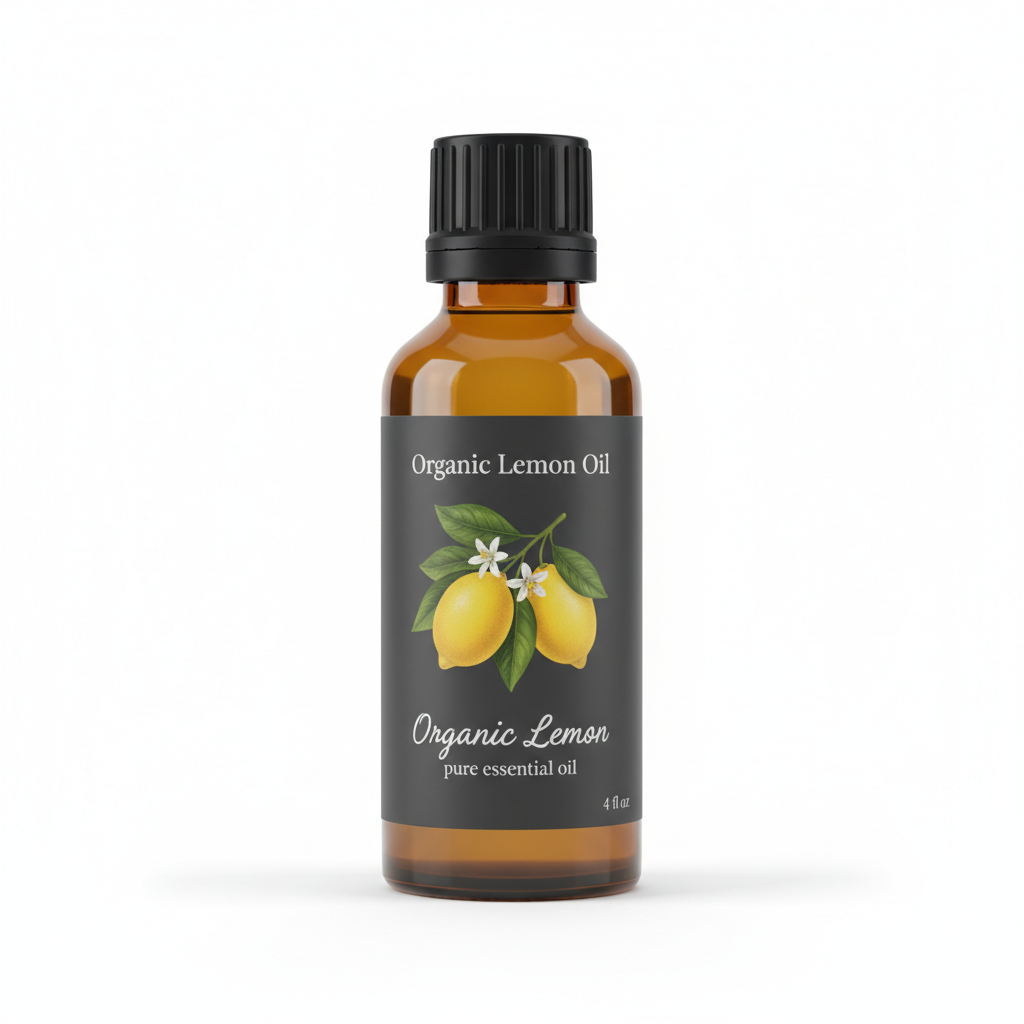
Organic Lemon Essential Oil
Our own Organic Lemon Essential Oil, in sizes from 0.5 oz to bulk.
From $15.99
Shop Now →The goal here is not to deflate enthusiasm for a genuinely lovely oil. Organic cold-pressed lemon oil has real qualities worth appreciating. The goal is to give you a clear-eyed picture of what those qualities actually are, so you can use this oil well and set reasonable expectations before you spend money on it.
What follows is a myth-by-myth walkthrough of the most common claims around lemon oil benefits, with honest context for each one.
Myth 1: "Lemon oil is just lemon juice in a bottle."
The Truth
This one gets the chemistry entirely wrong. Lemon juice is a water-based liquid full of citric acid, vitamin C, and sugars. Lemon essential oil is pressed from the rind, not the fruit flesh, and it contains almost none of those compounds. What it does contain is a concentrated mixture of volatile aromatic molecules, predominantly limonene, along with beta-pinene, gamma-terpinene, and a handful of other constituents.
These two products come from the same fruit but share almost no functional similarity. If you apply lemon juice to skin, you are applying acidic liquid with significant pH implications. If you apply properly diluted lemon oil to skin, you are working with lipid-soluble aromatic compounds that behave very differently. Confusing them leads to incorrect expectations and, in some cases, skin irritation when people assume they are interchangeable.
Why the Myth Exists
The name. "Lemon oil" sounds like it comes from the same place as lemon juice, and the scent reinforces that impression. Understanding what cold-pressing actually extracts from the peel changes the picture completely. For a deeper look at the extraction process, our guide on what organic lemon oil is and how cold-pressing works covers the full story.
Myth 2: "Lemon oil detoxifies your liver when you drink it in water."
The Truth
This is one of the most persistent claims online, and it deserves a straightforward response: essential oils are not intended for internal use in the casual, add-a-drop-to-your-water-bottle sense that wellness content often describes. Regulatory guidance in most markets does not support that kind of use, and the concentration of volatile compounds in essential oils is far higher than anything you would encounter in a food-grade flavoring.
Beyond the safety question, the underlying claim does not hold up. The liver processes what the body needs to process. It does not require botanical assistance from a rind extract. Research on limonene, the primary constituent of lemon oil, has explored various properties in laboratory and animal settings, but those findings do not translate into a recommendation to consume essential oil drops daily.
The lemon oil benefits that are genuinely supported by evidence are aromatic and topical in nature. That is where the interesting, honest story lives.
Why the Myth Exists
Lemon water is a real thing with a long history as a pleasant morning ritual. The leap from "lemon water is refreshing" to "lemon essential oil in water is even better" is understandable but chemically unsound. These are different substances with different appropriate uses.
Myth 3: "All lemon oils are basically the same."
The Truth
The quality range in lemon oil is genuinely wide. At one end, you have certified organic, cold-pressed oil sourced from a single region, with documented limonene content and a batch-specific certificate of analysis. At the other end, you have synthetically extended or partially rectified oils sold under the same name at a fraction of the cost.
Limonene content is a useful indicator. High-quality cold-pressed lemon oil typically contains between 60 and 75 percent limonene by composition. Oils that have been adulterated or cut with synthetic limonene can hit similar numbers on paper, which is why gas chromatography testing from a reputable third party matters. The scent also tells part of the story: genuine cold-pressed lemon oil smells fresh, slightly waxy, and complex. An adulterated version tends to smell flat or aggressively chemical.
Organic certification adds another layer of confidence. Conventional lemon peels can carry pesticide residues, and since the oil is pressed directly from the rind, that is not a trivial concern. Choosing certified organic lemon oil is a straightforward way to reduce that variable.
Why the Myth Exists
Essential oil marketing tends to use similar language across price points, which makes comparison difficult. "Pure" and "natural" are not regulated terms in most markets. Shoppers have limited tools for evaluating what they are actually buying without digging into sourcing documentation.
Myth 4: "Lemon oil in your diffuser will clean the air in your home."
The Truth
This one blends a kernel of chemistry with a significant overstatement. Diffusing lemon oil does introduce limonene and other volatile compounds into the room air. Some preliminary research suggests that certain aromatic compounds may interact with airborne particles under specific conditions. However, that is a very long way from "lemon oil cleans your air" in the sense that an air purifier with a HEPA filter does.
What diffusing lemon oil genuinely does well is create an environment that many people find uplifting and pleasant. The fresh, bright scent is cited consistently in survey-based and observational research as one that people associate with cleanliness and alertness. Whether that scent experience produces measurable changes in focus or mood is still an active area of study, and the current evidence is preliminary rather than conclusive.
There is also a practical caution worth noting. Limonene is a reactive compound. In poorly ventilated spaces, it can interact with ozone to form secondary compounds. Diffusing any essential oil in a well-ventilated room with reasonable airflow is the sensible approach.
Why the Myth Exists
The association between lemon scent and cleanliness is deeply embedded in household product marketing. Generations of cleaning product advertising have trained consumers to connect citrus smell with sanitation. Lemon oil carries that association, which makes the leap to "it cleans the air" feel intuitive even when the evidence does not quite get there.
Myth 5: "Lemon oil is safe to apply directly to skin."
The Truth
Applying undiluted essential oil directly to skin is not a practice that responsible formulators or experienced aromatherapy educators recommend. Lemon oil has a particular additional consideration: it is phototoxic.
Cold-pressed lemon oil contains furanocoumarins, specifically compounds like bergapten, that react with ultraviolet light to produce a photosensitization response on skin. This can appear as significant darkening or irritation on areas exposed to sunlight after topical application. The reaction can be lasting. This is not a minor footnote; it is a consistent, well-documented property of cold-pressed citrus oils that anyone using them topically needs to understand.
The practical guidance: if you are using cold-pressed lemon oil in a leave-on product or applying it to skin, keep that skin out of direct sunlight for at least 12 hours, and ideally 24. Alternatively, look for steam-distilled lemon oil, which does not retain the furanocoumarins, for formulations intended for daytime skin use. Always dilute in an appropriate carrier oil at a safe ratio, typically 1 to 2 percent for leave-on applications.
A patch test before broader application is worth the small effort it takes. Apply your diluted blend to a small area of inner arm skin, wait 24 hours, and check for any reaction before using more widely.
Why the Myth Exists
Essential oils are natural products, and there is a persistent cultural assumption that natural equals gentle or universally safe. That assumption does not hold across the board, and lemon oil is a clear example of why.
Myth 6: "Lemon oil lasts indefinitely if you keep the cap on."
The Truth
Lemon oil is one of the most oxidation-prone essential oils in common use. Its high limonene content, while responsible for that characteristic bright scent, makes it particularly susceptible to degradation when exposed to oxygen, heat, or light. As lemon oil oxidizes, the limonene converts into compounds with different aromatic and skin properties. An oxidized lemon oil smells noticeably duller or slightly resinous compared to fresh oil.
More practically, oxidized lemon oil has a higher likelihood of causing skin sensitization. Using a degraded oil in a topical application is not the same as using a fresh one, even if the bottle has been kept capped between uses.
Cold-pressed lemon oil generally has a shelf life of 12 to 18 months from pressing when stored correctly. Refrigeration extends that window meaningfully. Keeping the bottle away from light and heat, and minimizing the time the cap is off, are the basic storage disciplines that protect your investment. For a full breakdown of storage best practices, the article on how to store lemon oil and manage oxidation is worth reading before you put that bottle in a sunny windowsill.
Why the Myth Exists
Essential oils do not look like they are changing. The bottle stays clear, the color holds, the liquid looks identical. Without a side-by-side scent comparison with a fresh batch, it is easy to assume nothing has happened. The chemistry, however, is ongoing from the moment the bottle is opened.
What the Benefits of Lemon Oil Actually Look Like
Stepping back from the myths: what does the honest picture of lemon oil benefits look like? It is less dramatic than the internet suggests, but it is genuinely appealing.
- Aromatic brightness. Cold-pressed lemon oil has a vivid, complex scent that many people find uplifting during morning routines or daytime work. Diffusing it in a workspace is a simple and pleasant way to set an energetic atmosphere.
- Skincare formulation potential. At proper dilution and with appropriate phototoxicity precautions, lemon oil brings a fresh aromatic note to nighttime skincare rituals. Some formulators use it in cleansing balms or rinse-off products where sun exposure after application is not a concern.
- Scent complexity in blends. Lemon oil pairs naturally with other citrus oils, florals like neroli, and resinous notes like frankincense. Its top-note brightness lifts blends that might otherwise feel heavy.
- Household fragrance applications. Added to an unscented castile soap or a DIY surface spray, lemon oil contributes a clean, familiar scent that makes household routines feel more considered.
- Stress-associated atmosphere. Some observational research and self-report studies suggest that people find citrus scents supportive during mentally demanding tasks. The evidence is preliminary, but the experience is consistent enough to make it a reasonable addition to a focused work environment.
The chemistry behind why lemon oil smells the way it does, and why limonene specifically produces that effect, is genuinely interesting. If you want to go deeper into the constituent-level story, the article on limonene and the chemistry behind lemon oil's scent is a good starting point.
A Note on Sourcing and What It Changes
Much of the confusion around lemon oil benefits comes from assuming that all products sold under that name are equivalent. They are not. An organic, cold-pressed lemon oil from a reputable source with batch-level testing is a meaningfully different product from a commodity citrus oil with no documentation. The scent is different. The constituent profile is different. The skin behavior is different.
When evaluating any claim about lemon oil, it is worth asking: which lemon oil? Pressed from which variety of lemon, grown where, processed how, stored under what conditions? These are not pedantic questions. They shape what the oil actually does and how it performs in use.
The lemon oil benefits worth caring about are real, specific, and grounded in the actual chemistry of a well-sourced rind extract. That is a more modest story than the internet often tells, and a more honest one.