
Lemon Oil, Mood and Energy: What the Studies Measured
One small trial from 2008 carries most of the internet's weight on lemon and mood, and it is a better study than most of what gets built on top of it. It is also 56 healthy adults, one session each of three kinds, short-term, with no patients. This article reports what that trial and its neighbours measured, what the rodent work adds, and what the pooled aromatherapy reviews can and cannot say about lemon. This shop sells its lemon oil as a scent for diffusers and home fragrance, makes no medical claim for it, and does not say it lifts mood or energy.
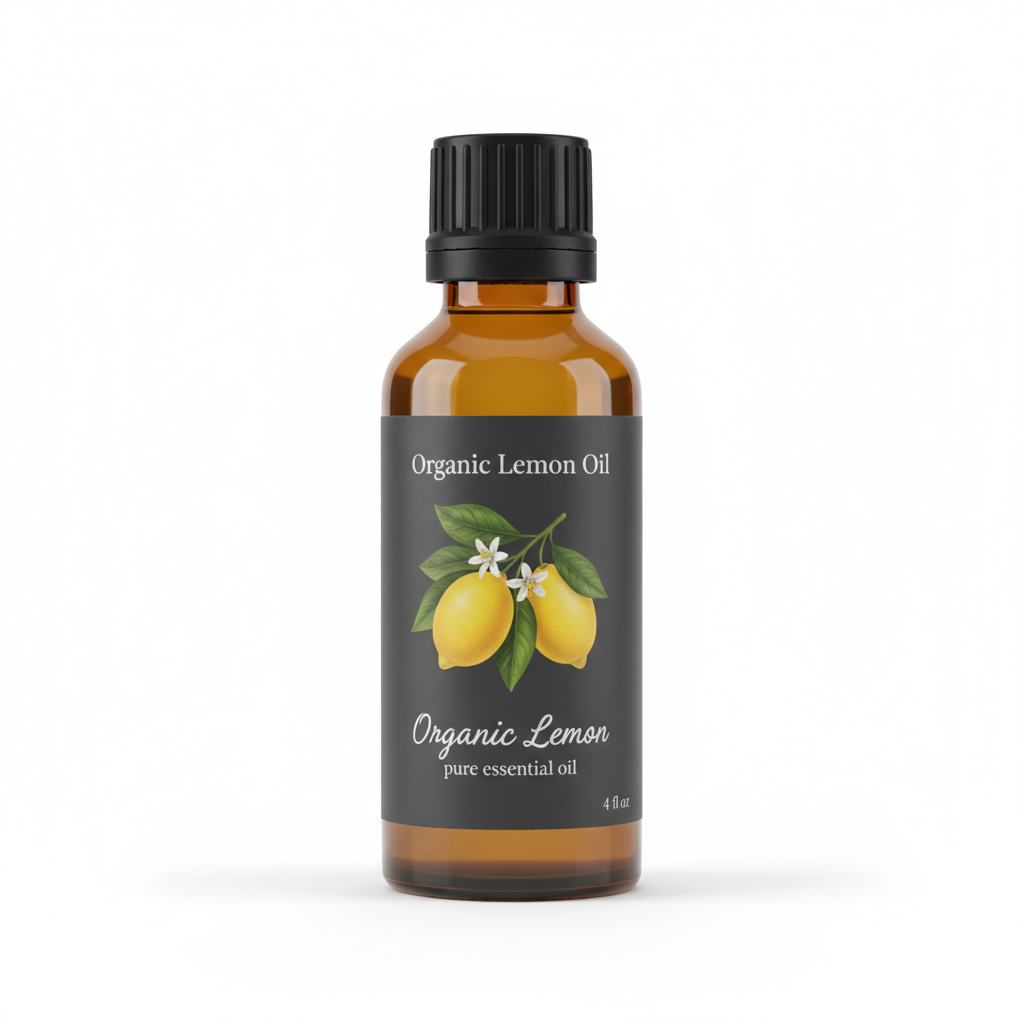
Organic Lemon Essential Oil
Our own Organic Lemon Essential Oil, in sizes from 0.5 oz to bulk.
From $15.99
Shop Now →The trial everyone cites, read closely
Kiecolt-Glaser and colleagues ran a randomized trial in which 56 healthy adults (21 men, 35 women, mean age 24.4) came for three six-hour lab visits at least two weeks apart and smelled lavender, lemon or plain water, one per visit, so each person was their own control. Half were told in advance what odor to expect and what it should do; half were told nothing. A one-minute cold pressor test (a hand in cold water) served as the stressor. The odor was 100 microliters of essential oil on a cotton ball taped between nose and upper lip, over tape so the oil did not touch skin (Kiecolt-Glaser et al., 2008). The paper gives the volume, not a concentration or a composition for the oil.
| Measure | What the paper reported for lemon |
|---|---|
| Self-rated positive affect (PANAS) | Rose more than with lavender or water; still highest after the cold pressor |
| Self-rated negative affect | No lemon-specific effect reported |
| Emotional Stroop (reaction time to depression-related words) | Faster after the stressor with lemon; slower with lavender and water |
| Norepinephrine after the stressor | Stayed higher with lemon |
| Salivary cortisol, IL-6, IL-10, heart rate, blood pressure, pain ratings | No reliable change from any odor (abstract, PubMed 18178322) |
Two readings of that table are possible and the paper does not choose for you. Positive mood went up, and the stress hormones the authors measured did not move. The authors' own list of limits is plain: repeated exposure may have produced odor adaptation, long-term effects were not tested, and whether the experimenters could tell the odors apart was checked only after data collection and in only 30 of the 56 participants. A further limit follows from the design rather than from anyone's error (this is reasoning, not a quote from the paper): a person can tell lemon from water, so nobody in the room is blind to the odor itself, which is why the paper tested the told-in-advance and told-nothing groups separately. Lemon's mood result held in both.
The US National Center for Complementary and Integrative Health, on a page last updated January 2020, describes the same study: lemon "had a positive effect on mood," but neither scent affected stress indicators (NCCIH, 2020). The page does not address depression or nausea.
What the dose arithmetic says about the trial
A tenth of a millilitre sounds like nothing, so it helps to convert it. If the oil had the relative density on the batch on our published COA (0.849, so 1 ml is about 0.849 g), 100 microliters would weigh about 85 mg. That is an illustration only: the trial does not report the density of its oil, and this is not a dose to copy. The point is scale: the result came from a small, controlled amount held at the nose for a short session, which is a different situation from a room scent that fills a space for hours.
Mice and rats are not rooms
Two rodent papers are often quoted as if they confirm the human result. Komiya, Takeuchi and Harada (2006) exposed mice to lavender, rose and lemon oil vapor and reported that lemon had the strongest anti-stress effect across three behavioral tests; the effect was blocked by a benzodiazepine-receptor antagonist (flumazenil) and by a dopamine agonist (apomorphine), and the oil changed dopamine and serotonin turnover in several brain regions (Behavioural Brain Research 172(2), 2006). Ceccarelli and colleagues (2004) exposed male and female rats to lemon oil odor for two weeks and reported less time in the open arms of an elevated plus-maze (a measure read as altered anxiety-related behavior), higher pain thresholds, and lower corticosterone (Brain Research 1001, 2004).
Those are animal results, different species, different exposure lengths and different questions, and the abstracts do not point the same way on the plus-maze. They show that lemon odor does something measurable in a rodent brain. They are not evidence about a person smelling a diffuser, and they say nothing about skin use of the oil.
What the pooled reviews can carry
Herz (2009) analyzed 18 experimental studies of odors and mood, physiology and behavior and concluded that credible evidence exists that odors can affect mood, but that a psychological explanation fit the data better than a pharmacological one, and that inconsistent results came partly from methodological problems (Herz, 2009). Cho and Kim (2023) pooled 32 trials from 27 studies of aromatherapy and depressive symptoms in adults and reported a standardized mean difference of -0.56 (95% CI -0.69 to -0.43). In the same abstract, blended oils outperformed lavender and other single oils, and no effect appeared in postpartum or pregnant women (Cho and Kim, 2023). The abstract names no lemon result.
Taken together, these reviews say aroma as a category can move self-reported mood, and that the mechanism is probably meaning and expectation as much as chemistry. That is reasoning from Herz's conclusion, not a finding about lemon. A pooled number across many oils and many designs cannot be assigned to one bottle.
The energy half of the question
The plan for this article asked about energy as well as mood, and the search found one small study that touches it. Kawamoto and colleagues (2005) had 14 female students do addition work in rooms with and without lemon fragrance. Work efficiency was not affected; the fragrance reduced exhaustion and maintained vigor on the mood measures (J UOEH 27(4), 2005). With 14 people, one participant is about 7% of the sample, and the abstract does not say what form of lemon fragrance was used. The focus evidence has its own page: lemon oil and focus.
What a seller can and cannot say
The FDA decides by intended use: aromatherapy products are regulated mainly by how they are intended to be used, judged from claims in labeling, on websites and in advertising. A product intended only to cleanse or make a person more attractive is a cosmetic; one intended for therapeutic use, such as treating or preventing disease, is a drug (FDA, aromatherapy). That is why this page reports studies and stops there. Our oil is sold neat and our own copy says not to take it internally and to keep it from children and pets.
Low mood is not a scent problem. The NHS describes depression as feeling persistently sad for weeks or months rather than a few days, with lost interest, tiredness and poor sleep, and advises seeing a GP rather than waiting; its page does not mention aromatherapy (NHS, depression). A physician or licensed therapist is the person to ask. In the US, call or text 988 for crisis support, or 911 in a life-threatening situation (NIMH).
For what the bottle smells like, see the smell guide; for a plain reading of every claim in circulation, see benefits, honestly; and for the stress and anxiety studies, the evidence review. Anything that goes on skin or near a child belongs in the safety article.
Organic Lemon Essential Oil
Organic Lemon Essential Oil from our own shop, in sizes from 0.5 oz to bulk.
From $15.99
Shop Now →Sources & Further Reading
- Kiecolt-Glaser et al., 2008. Olfactory influences on mood and autonomic, endocrine, and immune function. pmc.ncbi.nlm.nih.gov/PMC2278291
- Kiecolt-Glaser et al., 2008 (abstract). pubmed.ncbi.nlm.nih.gov/18178322
- NCCIH, 2020. Aromatherapy. nccih.nih.gov/health/aromatherapy
- Komiya, Takeuchi and Harada, 2006. Lemon oil vapor causes an anti-stress effect via modulating the 5-HT and DA activities in mice. pubmed.ncbi.nlm.nih.gov/16780969
- Ceccarelli et al., 2004. Effects of long-term exposure of lemon essential oil odor on behavioral, hormonal and neuronal parameters in male and female rats. pubmed.ncbi.nlm.nih.gov/14972656
- Herz, 2009. Aromatherapy facts and fictions. pubmed.ncbi.nlm.nih.gov/19125379
- Cho and Kim, 2023. Effects of aromatherapy on depression: a meta-analysis of randomized controlled trials. pubmed.ncbi.nlm.nih.gov/37619300
- Kawamoto et al., 2005. The effect of lemon fragrance on simple mental performance and psychophysiological parameters during task performance. pubmed.ncbi.nlm.nih.gov/16358924
- FDA. Aromatherapy. fda.gov/cosmetics/cosmetic-products/aromatherapy
- NHS. Overview, clinical depression. nhs.uk/mental-health/conditions/clinical-depression
- NIMH. Anxiety disorders (988 and 911 guidance). nimh.nih.gov/health/topics/anxiety-disorders