
Lemon Oil Detox and Cleanse Claims: A Fact Check
A search of PubMed on 28 October 2026 for lemon essential oil together with detox or cleanse terms returned 11 records. None of them was a study of people using lemon oil to detoxify anything. We sell no detox product, our oil is labelled not for internal use, and nothing in the sources read for this page supports an essential oil detox or cleanse. This page sets out what was checked, what the body's own clearance organs do, and what regulators have written about health claims on essential oils.
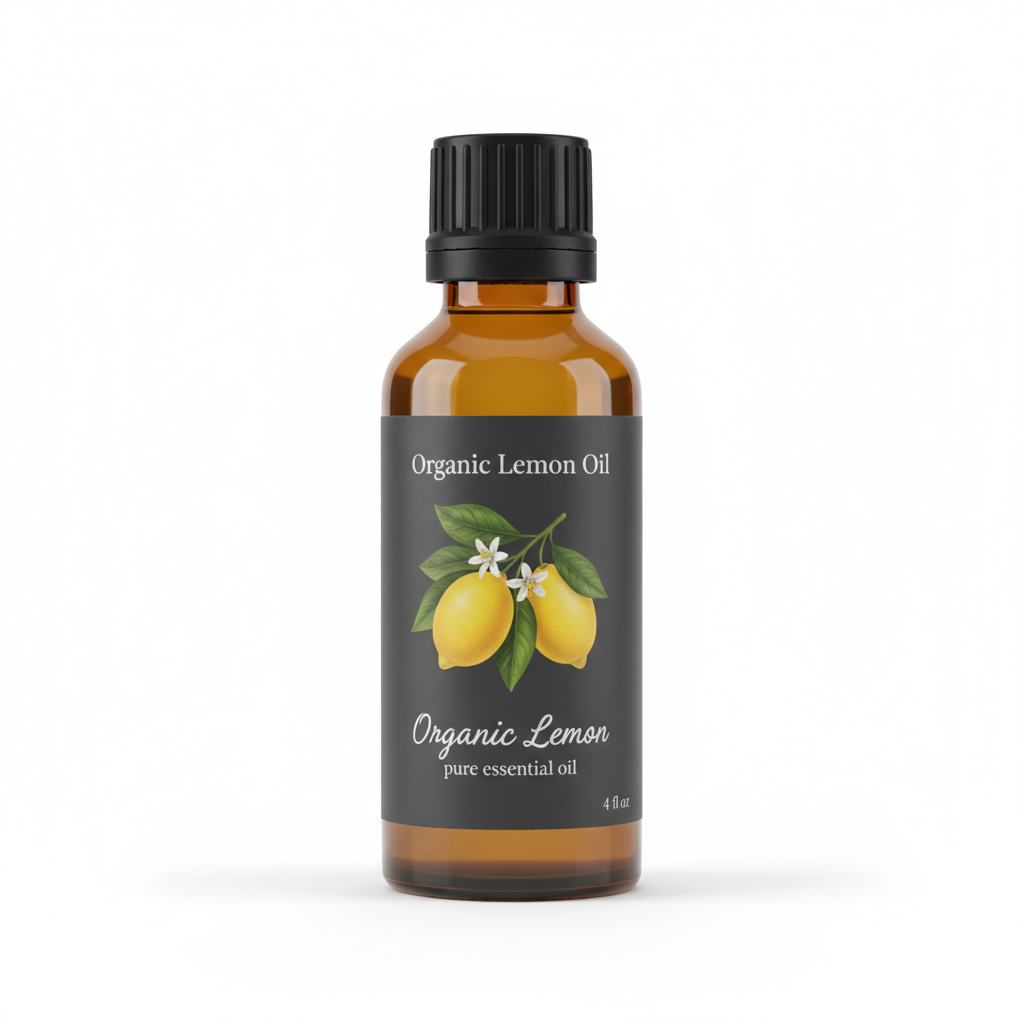
Organic Lemon Essential Oil
Our own Organic Lemon Essential Oil, in sizes from 0.5 oz to bulk.
From $15.99
Shop Now →What the literature search found, record by record
The query was (lemon essential oil) AND (detox* OR detoxification OR cleanse), run on PubMed through its public search interface. PubMed expands "lemon" to citrus terms, so the net is wide. The 11 records, sorted by what their titles and journals indicate:
| Records | What they are |
|---|---|
| 3 | Insecticidal or mosquito studies of citrus oils (Neotropical Entomology 2026; Insects 2024; Pesticide Biochemistry and Physiology 2022) |
| 2 | Plant physiology (poncirus seedlings and ammonium toxicity, 2024; selenium in plants, 2020) |
| 1 | Spoilage bacteria in orange juice (International Journal of Food Microbiology, 2020) |
| 1 | Breakdown of a mould toxin by essential oils in vitro (Frontiers in Microbiology, 2016) |
| 1 | Lemongrass and citral in cancer cell lines (Molecules, 2023) |
| 1 | A 1999 review of animal studies on dietary monoterpenes (Journal of Nutrition) |
| 1 | A 2025 review on essential oils and liver injury (Hepatology Forum) |
| 1 | A 2025 paper in Pesticide Biochemistry and Physiology whose title is truncated in the summary read |
Limiting the same query to human studies or randomized trials returned one record, the lemongrass and citral cell-line paper above. Limits of this check: one database, one query string, one date, titles and journals used for the sorting, and abstracts read for only two records. A different search could surface something this one missed.
Two of the records show where the word "detox" appears in this literature. Crowell's 1999 review (Journal of Nutrition 129(3):775S-778S) summarises mainly rodent studies of d-limonene, a citrus peel component, and cancer. Among its proposed mechanisms are enzymes that detoxify carcinogens. That is an animal finding about an isolated compound, and it is a statement about enzymes in cells, not about a bottle of oil cleansing a person. The 2025 review by Sharma and colleagues (Hepatology Forum 6(4):190-198) covers essential oils from citrus, Allium, spices and rosemary and liver injury models. Its abstract reports no human outcomes and says research is still needed on efficacy, bioavailability and safe doses.
What the liver and kidneys already do
MedlinePlus, the US National Library of Medicine's consumer site, says on its liver diseases page that the liver helps the body digest food, store energy and "remove poisons". NIDDK's page on how the kidneys work (last reviewed June 2018) says the kidneys filter about 150 quarts of blood a day, and "only 1 to 2 quarts become urine". The rest returns to the blood. Arithmetic: 1 of 150 quarts is about 0.7%, and 2 of 150 is about 1.3%, so the kidneys return roughly 99% of what they filter and pass about 1% on. No step in either description has a place for an outside product to speed things up, and neither page mentions essential oils.
What NCCIH says about detox and cleanse products
The US National Center for Complementary and Integrative Health, in its page on detoxes and cleanses (last updated March 2025), says there have been "only a small number of studies" of detox programs in people and that they "have been of low quality". It cites a 2015 review finding "no compelling research to support the use of 'detox' diets for weight management", says there have been no studies of long-term effects, and states that "some 'detoxification' or 'cleansing' programs can be unsafe and falsely advertised." Its examples are diets, fasting, juices and colon procedures, so it does not rule on essential oils specifically. It also does not discuss the liver or kidneys. It advises talking with your health care providers about any complementary approach you use.
The enforcement record
FDA's aromatherapy page (updated 8 September 2023) says how a product is regulated "depends mainly on how [it is] intended to be used", judged from labelling, websites and advertising, and that a plant origin does not keep an ingredient from being regulated as a drug. Two dated documents show what that looks like in practice, and neither is about detox.
- FDA, warning letter to an essential-oil company, 10 June 2022 (reference 615777). The letter treats claims on consultants' websites and social media, and on the company's own sites, as evidence of intended use. It concludes, on the strength of those claims, that the listed products, including the company's essential oils, are drugs, and says no FDA-approved application is in effect for them. Lemon Essential Oil is among the products listed, and the letter quotes consultant material linking lemon oil to a urinary tract infection and to allergy symptoms. That is the letter's content; it is not a finding about any other seller.
- FTC, press release of 18 June 2020: 30 more warning letters, the seventh set, bringing the total to 250 companies and individuals, over claims that products could treat or prevent COVID-19. The categories named included essential oils. The FTC stated that the claimed effects were not supported by scientific evidence, which it said violates the FTC Act, and told recipients to stop and report their steps within 48 hours.
The lesson for a reader is about wording. A claim that a bottle cleanses, purifies or flushes the body is a claim about the body's function, and FDA reads intended use from exactly that kind of language. It is why our pages carry the FDA statement and "We make no medical claims for it."
Where we stand, and who to ask
Our oil is for aroma, cleaning and craft uses. Our safety copy says not to take it internally, to dilute it for skin use, and to keep it from children and pets. Nothing on our pages, and nothing on this one, says the oil detoxifies, cleanses or supports any organ. We have run no studies of our own and make no claim that a study of a cell line, a mouse or a mosquito carries over to a person.
A person who is thinking about a cleanse for a medical reason should talk to a physician. A person who wants help with eating patterns or a specific diet can ask a registered dietitian. For symptoms, the NHS liver disease page (reviewed 9 August 2023) advises contacting a GP if you think you might have liver disease, and lists feeling very tired and weak all the time, loss of appetite, jaundice, itchy skin and feeling or being sick among cirrhosis symptoms. If anyone has swallowed an essential oil, read the ingestion post for the poison help lines, and see why the water trend fails.
For what lemon oil is and is not used for, the benefits post and the FAQ are the places to start.
Organic Lemon Essential Oil
Organic Lemon Essential Oil from our own shop, in sizes from 0.5 oz to bulk.
From $15.99
Shop Now →Sources & Further Reading
- NCCIH, 2025. Detoxes and Cleanses: What You Need To Know. nccih.nih.gov/health/detoxes-and-cleanses-what-you-need-to-know
- NIDDK, 2018. Your Kidneys & How They Work. niddk.nih.gov/health-information/kidney-disease/kidneys-how-they-work
- MedlinePlus, National Library of Medicine. Liver Diseases. medlineplus.gov/liverdiseases.html
- NHS, 2023. Liver disease. nhs.uk/conditions/liver-disease
- FDA, 2023. Aromatherapy. fda.gov/cosmetics/cosmetic-products/aromatherapy
- FDA, 2022. Warning letter to an essential-oil company, 10 June 2022 (reference 615777). fda.gov/warning-letters/young-living-essential-oils-corporate-615777-06102022
- FTC, 2020. FTC sends letters warning 30 more marketers to stop making unsupported COVID-19 claims (18 June 2020). ftc.gov/news-events/press-releases/2020/06
- Crowell PL, 1999. Prevention and therapy of cancer by dietary monoterpenes. J Nutr 129(3):775S-778S (PubMed 10082788). PubMed record 10082788 via NCBI E-utilities
- Sharma K, et al., 2025. Role of essential oils in preventing hepatotoxicity: a comprehensive review. Hepatol Forum 6(4):190-198 (PubMed 41122157). PubMed record 41122157 via NCBI E-utilities