Lemon Oil and Cellulite: A Fact Check of the Evidence
No evidence found supports lemon oil for cellulite, and the shop makes no such claim. The better-studied topical products move thigh circumference by less than half a centimetre in pooled data, and the one essential-oil trial found used a seven-oil herbal gel with no lemon in it. Meanwhile, massaging a phototoxic oil into bare thighs in summer carries a documented cost. This article reports the structure of cellulite, what the reviews found, and where lemon oil fits. It gives no massage recipe.
Organic Lemon Essential Oil
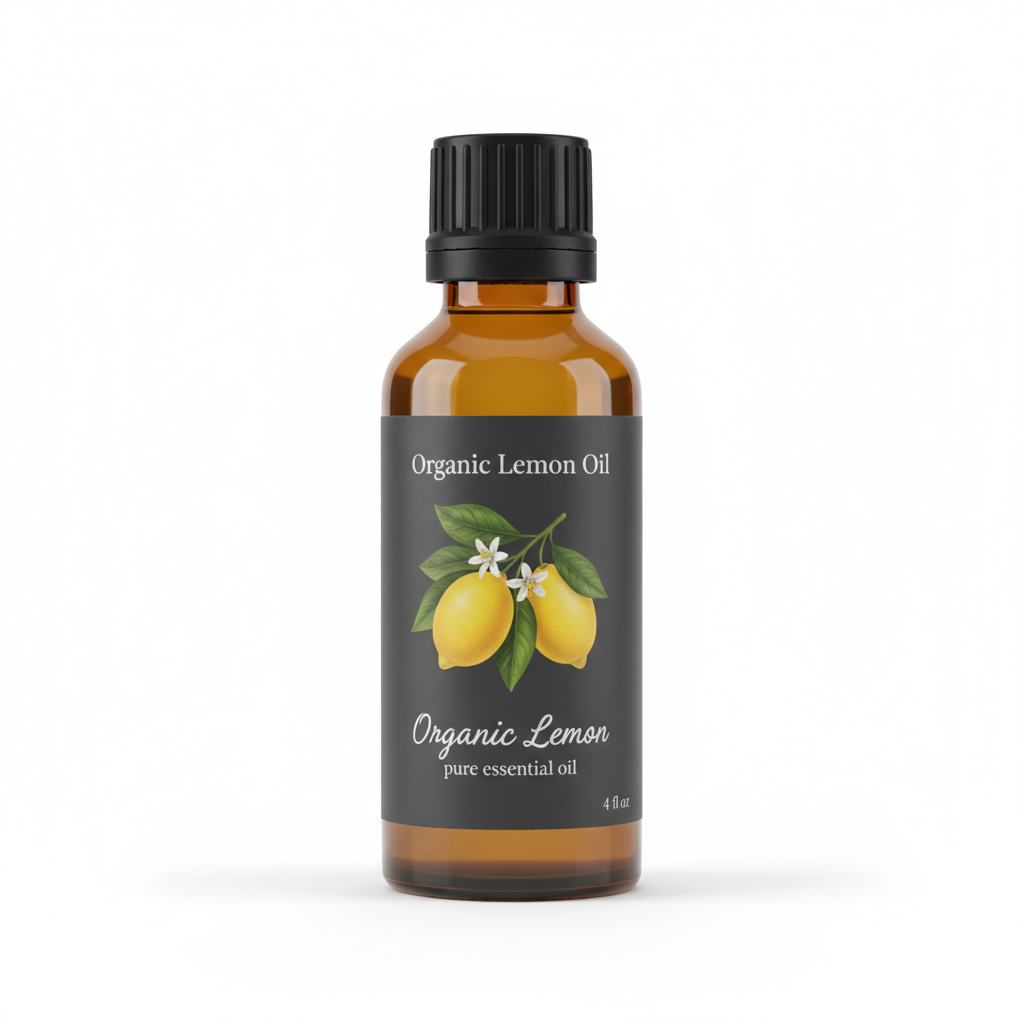
Our own Organic Lemon Essential Oil, in sizes from 0.5 oz to bulk.
From $15.99
Shop Now →What cellulite is, according to the clinics
MedlinePlus describes cellulite as fat collecting in pockets just below the surface of the skin, typically on the hips, thighs and buttocks, with connective fibres linking fat to skin that can weaken or tighten and let fat bulge outward. It states that cellulite "is not harmful to your health" (MedlinePlus, reviewed 10/14/2024). Cleveland Clinic reports that between 80% and 90% of women who have gone through puberty have it, and fewer than 10% of men (Cleveland Clinic, updated 10/28/2021). So what is being sold against is common, described as harmless to health, and attributed to fat and connective tissue under the skin.
What the reviews of treatments found
| Review | Scope | Finding |
|---|---|---|
| Turati et al., 2014 | Cosmetic creams; 21 studies, 7 controlled trials pooled | Pooled thigh circumference difference of -0.46 cm (95% CI -0.85 to -0.08), with significant heterogeneity; authors call it "moderate efficacy" |
| Luebberding et al., 2015 | All cellulite treatments; 67 human studies | Only 19 were randomised placebo-controlled; "no clear evidence of good efficacy" for any treatment evaluated |
| Menon et al., 2024 | Narrative review, PubMed and Embase | Topicals used as adjuncts to lifestyle changes in mild cellulite "have the highest efficacy", but "there are inconsistent data on topical treatments" |
| Lim et al., 2025 | 24 randomised trials, 2,084 patients | Topical therapy was among the interventions; the standouts were shock wave and radiofrequency therapy, plus injectables |
These sources partly disagree, and the disagreement is worth stating. Turati's pooled figure is statistically distinguishable from zero but small: 0.46 cm is 4.6 mm, and the lower end of the confidence interval is under 1 mm (Turati et al., 2014). Luebberding's systematic review found methodological flaws in most studies (Luebberding et al., 2015). Menon's review leans the other way for mild cases but admits the topical data are inconsistent (Menon et al., 2024), and the 2025 randomised-trial review put its weight on devices and injectables (Lim et al., 2025). Cleveland Clinic lists creams containing caffeine or 0.3% retinol as options cosmetic surgeons use for temporary reduction in appearance, says retinol needs at least six months, and says dry brushing, massage tools and foam rollers have no evidence of lasting benefit. None of these sources says anything about lemon oil.
The search for essential oils
On 28 October 2026 a Europe PMC search for essential oil or essential oils with cellulite and topical or massage returned 53 records. A title screen found mostly caffeine delivery papers, device reviews and general herbal reviews, and one randomised trial involving essential oils (plus a formulation paper from the same Thai herbal gel project). A narrower search for lemon oil, lemon essential oil or Citrus limon essential oil with cellulite returned one record, a paper on herbal dietary supplements for dyslipidemia that has nothing to do with skin. That is a title screen of one database, not proof that nothing exists.
The trial is Ngamdokmai and colleagues (2021): a herbal gel containing 5.0% mixed essential oil (ginger, black pepper, java long pepper, turmeric, plai, lemongrass and kaffir lime peel), 5.0% camphor, and tea and coffee extracts, applied twice daily to one thigh while a base gel went on the other, in 18 women who completed the trial (Ngamdokmai et al., 2021). The cellulite severity score on the herbal side fell from 13.4 to 9.9 over 12 weeks. But thigh circumference, skin firmness and blood flow improved on both sides, which the authors attribute to the base formulation, and the herbal effect on circumference "failed to reach a significant threshold". The authors also note that their design cannot separate the contributions of individual compounds, and several of them are named on a petit patent for the product. Lemon oil is not an ingredient; kaffir lime peel oil is the only citrus-fruit oil listed. A seven-oil blend with camphor is a different material from one oil, so the trial says nothing about lemon.
The cost side: bare thighs, sun and a phototoxic oil
This is the part where a claim-free article still has something to say. IFRA caps cold-pressed lemon oil at 2.0% in leave-on body products because of phototoxicity (IFRA Standards, 51st Amendment, 2024), and the guidance applies those limits to skin areas "reasonably expected to be exposed to sunlight" (IFRA Guidance, 2023). Thighs in shorts or a swimsuit are that. Tisserand's page says to keep skin out of UV for at least 12 hours after a phototoxic amount (Tisserand Institute, undated), and DermNet reports redness 24 to 48 hours after the sun, blisters, and pigmentation that can last several years (DermNet, 2021). The pigment risk is the one that matters for this topic: the likely result of the reaction is a brown mark, which is the opposite of the smoothing the product is bought for. A cellulite dimple is harmless by MedlinePlus's account; a blistering burn is not.
The lemon-juice case is not oil, but it shows how severe the reaction can be: a 7-year-old who squeezed lemon juice on her skin in hot sun was admitted for four days with burn-like lesions (Matthews et al., 2017). The NHS advises an urgent GP appointment or NHS 111 for sunburn with blistered or swollen skin, a very high temperature, or feeling dizzy or sick (NHS, reviewed November 2025).
Even properly delivered procedures have a cost. A meta-analysis of collagenase injection and subcision, 14 studies and 1,254 patients, reported bruising in 89% and 99% of patients respectively and skin discoloration in 16% after collagenase injection against 7% after subcision (Foppiani et al., 2024). Those are medical procedures, a different route from a surface oil, and they sit with a dermatologist or plastic surgeon, not a bottle.
What we do and do not say
FDA lists claims that a product will "reduce cellulite" among drug claims, and says intended use can be established through labels, advertising and web content (FDA, content current as of 09/11/2024). We sell one oil, sold neat, and make no claim of that kind, so there is no massage ratio here. Our own copy for any skin use is 0.5% to 2% in a carrier oil, a patch test first, no sun on freshly applied areas, and never to be taken internally. That 2% is IFRA's ceiling, not a target, as worked through in the skin guide. The COA for the published batch shows density, refractive index and optical rotation, and nothing about skin.
MedlinePlus advises understanding the risks and benefits of any cellulite treatment before choosing one. A board-certified dermatologist is the person to ask. For related reading see the dark spots fact check, safety basics and benefits, honestly.
Organic Lemon Essential Oil
Organic Lemon Essential Oil from our own shop, in sizes from 0.5 oz to bulk.
From $15.99
Shop Now →Sources & Further Reading
- MedlinePlus, 2024. Cellulite. medlineplus.gov/ency/article/002033.htm
- Cleveland Clinic, 2021. Cellulite. clevelandclinic.org/17694-cellulite
- Turati et al., 2014. Efficacy of cosmetic products in cellulite reduction: systematic review and meta-analysis. J Eur Acad Dermatol Venereol. europepmc.org/MED/23763635
- Luebberding et al., 2015. Cellulite: an evidence-based review. Am J Clin Dermatol. europepmc.org/MED/25940753
- Menon et al., 2024. A Clinical Guide to the Treatment of Cellulite. Aesthetic Plast Surg. europepmc.org/MED/38057600
- Lim et al., 2025. Comparative Analysis of Cellulite Treatment Modalities: A Systematic Review. Aesthetic Plast Surg. europepmc.org/MED/39547984
- Ngamdokmai et al., 2021. Efficacy of an Anti-Cellulite Herbal Emgel: A Randomized Clinical Trial. Pharmaceuticals. PMC8308550
- Foppiani et al., 2024. Collagenase and tissue subcision for cellulite: systematic review and meta-analysis. Plast Reconstr Surg Glob Open. europepmc.org/MED/38911581
- IFRA, 2024. IFRA Standards, 51st Amendment (Lemon oil cold pressed). ifrafragrance.org/ifra-standards---51st-amendment.pdf
- IFRA, 2023. Guidance for the use of IFRA Standards. ifrafragrance.org/ifra-51st-amendment---guidance
- Tisserand Institute, undated. Phototoxicity: essential oils, sun and safety. tisserandinstitute.org/phototoxicity-essential-oils-sun-and-safety
- DermNet, 2021. Phytophotodermatitis. dermnetnz.org/topics/phytophotodermatitis
- Matthews et al., 2017. Lemons in the Arizona Sunshine. Wounds. europepmc.org/MED/29324427
- NHS, 2025. Sunburn. nhs.uk/conditions/sunburn
- FDA, 2024. Is it a cosmetic, a drug, or both? fda.gov/it-cosmetic-drug-or-both-or-it-soap